
We know the frustration of receiving inconsistent parts. When managing production in Vietnam for our clients, we prioritize clear processes to bridge the gap between US expectations and local execution.
To establish long-term partnerships with Vietnamese welding suppliers, verify legal status via business registration checks and perform on-site audits to avoid traders. Implement strict quality agreements, secure intellectual property rights early, and maintain a local presence to manage daily communication and production schedules effectively.
Let’s explore the specific steps required to build these resilient manufacturing relationships.
How do I verify the technical capabilities of welding factories in Vietnam before committing?
Relying solely on online profiles can be disastrous. We have visited countless “factories” that turned out to be empty offices, wasting weeks of our sourcing team’s valuable time.
You verify capabilities by requesting detailed equipment lists and welder certifications like 6G or AWS D1.1 before visiting. Conduct on-site audits to check specific machinery brands, inspect raw material storage conditions, and test a sample batch to confirm their actual tolerance adherence.
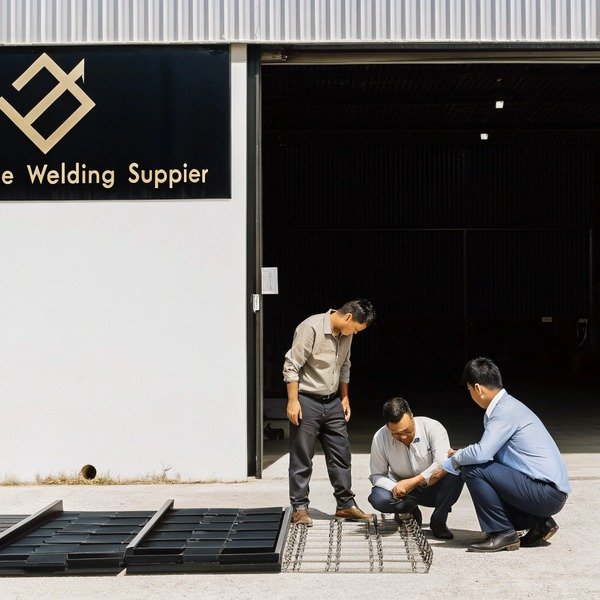
Verifying a supplier in Vietnam requires a hands-on approach that goes far beyond reviewing a PDF brochure or an Alibaba profile. In our years of sourcing custom parts, we have found that the manufacturing landscape here is a mix of highly sophisticated, export-ready 1 export-ready firms and smaller, family-run job shops that may lack the consistency required for Western markets. The first step is to distinguish between a trading company and a true manufacturer. Traders often present themselves as factories, but they lack control over production schedules and quality. To mitigate this, we always request the Enterprise Registration Certificate (ERC) 2 Enterprise Registration Certificate (ERC) and cross-reference the registered business lines with the products they claim to make.
Once the legal status is clear, you must dig into the technical specifics. For welding components, the machinery dictates the capability. A factory claiming high precision must possess modern TIG and MIG welding 3 TIG and MIG welding stations, preferably with automated robotic arms for high-volume orders. We inspect the brands of the machines; Japanese or German equipment (like Panasonic or OTC Daihen 4 OTC Daihen) often signals a higher commitment to quality than generic, unbranded alternatives. Furthermore, the human element is critical. Welding is a skilled trade. We check if their welders hold valid certifications such as 6G or are qualified under AWS D1.1 standards 5 AWS D1.1 standards. High staff turnover is a red flag, so we also ask about their welder retention rates.
Finally, we assess their raw material management. Welding quality is heavily dependent on the base metal. If a factory stores stainless steel sheets outdoors, exposed to humidity and contaminants, the final weld will suffer from porosity or corrosion issues. During our audits, we trace their supply chain back to the steel mill to ensure material traceability. A capability audit is not just about what they can do today, but whether they have the systems to do it repeatedly for the next five years.
Table 1: Technical Capability Checklist for Vietnamese Welding Suppliers
| Verification Category | What to Look For | Red Flag Warning |
|---|---|---|
| Legal Status | Enterprise Registration Certificate (ERC) listing manufacturing. | Registered address is in a residential area or commercial office building. |
| Equipment | Branded MIG/TIG machines, Laser Cutters, Robotic Welding Arms. | rusted, idle machinery or lack of maintenance logs. |
| Workforce | AWS D1.1 or ISO 9606 certified welders; low turnover rate. | No visible safety gear; welders cannot explain the Welding Procedure Specification (WPS). |
| Materials | Indoor, climate-controlled storage; Mill Test Certificates (MTC). | Materials stored on the floor; mixing of carbon steel and stainless steel stock. |
| Quality Lab | CMM, Tensile testers, Ultrasonic testing equipment. | QA room is dusty, disorganized, or used as storage. |
What quality control measures ensure my custom welding parts meet strict specifications?
Defective welds can compromise entire structures. In our QA labs, we reject batches daily because suppliers ignored tolerance limits on engineering drawings provided by the client.
Ensure strict quality control by implementing a mandatory pre-production approval process (PPAP) and requiring third-party or internal inspections during key manufacturing stages. Define clear tolerance limits in your contract and mandate material certificates to prevent sub-standard steel or aluminum usage.

Quality control for custom welding parts in Vietnam must be proactive rather than reactive. By the time a container arrives in the United States, it is too late to fix a structural defect. We have learned that the “Right First Time” mentality is not always the default; it must be enforced through rigorous processes. This starts with the Production Part Approval Process (PPAP). Before mass production begins, we require the factory to produce a pilot run using the exact materials and processes intended for the final order. This sample is subjected to destructive and non-destructive testing to verify weld penetration, strength, and aesthetic finish.
A major challenge we face is the interpretation of “acceptable quality.” A weld that looks fine to a local technician might fail a US client’s cosmetic standards. To bridge this gap, we create “Limit Samples”—physical examples of the minimum acceptable quality and the maximum allowable defect (like minor spatter). These samples are signed by both parties and kept on the production floor. We also insist on a Welding Procedure Specification (WPS) for every unique joint. This document dictates the amperage, voltage, travel speed, and filler material, leaving no room for the welder to guess.
Furthermore, raw material verification is non-negotiable. Vietnam imports a significant amount of steel and aluminum. We mandate Mill Test Certificates (MTC) for every batch of metal delivered to the factory. Our local team often verifies these certificates against independent lab tests to ensure the chemical composition matches strict ASTM or ISO standards 6 ASTM or ISO standards 7 ASTM or ISO standards. Without this step, you risk receiving parts made from lower-grade recycled metal that cracks under stress.
Key Inspection Stages for Welding Production
- Incoming Quality Control (IQC): Verify raw material dimensions and chemical composition (spectrometer test).
- In-Process Quality Control (IPQC): Inspect fit-up gaps before welding; monitor welding parameters (amps/volts) during the process.
- Final Quality Control (FQC): Visual inspection for cracks, porosity, and undercut; dimensional checks using CMM; functional load testing if required.
How can I improve communication with Vietnamese suppliers to prevent project delays?
Misunderstandings kill deadlines faster than logistics issues. Our local staff often have to intervene when simple email instructions get lost in translation or cultural nuance.
Improve communication by using local messaging apps like Zalo for daily updates and providing bilingual engineering drawings. Assign a dedicated local project manager to bridge cultural gaps, ensuring technical queries are resolved instantly rather than waiting days for email replies.
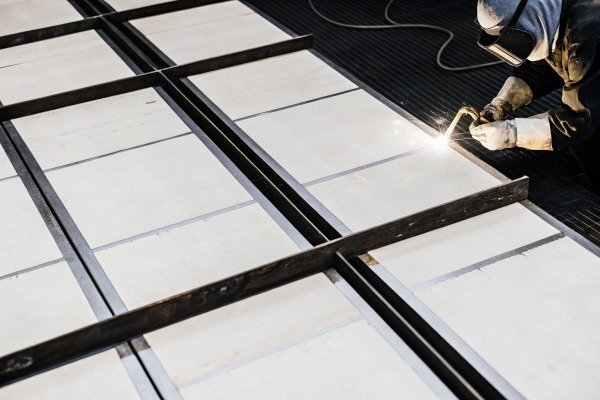
Effective communication in Vietnam goes beyond simply translating words; it requires navigating cultural nuances. In our experience, Vietnamese suppliers are polite and relationship-focused, often hesitating to deliver bad news or admit they don’t understand a technical requirement. A “yes” during a meeting might mean “I heard you,” not “I agree and can do it.” This can lead to disastrous delays if not managed correctly. To counter this, we never rely solely on email for urgent matters. We use Zalo, the dominant local messaging app 8 Zalo, the dominant local messaging app, to create project groups where engineers, QC staff, and managers can share photos and updates in real-time. This informal channel breaks down barriers and encourages faster problem-solving.
Technical documentation must be bulletproof. We advise our US clients to provide drawings that are not only precise but also annotated with visual aids. Converting key notes into Vietnamese prevents shop-floor workers from misinterpreting critical dimensions. We also hold weekly video conferences, but we keep the agenda short and focused on visual progress—showing the part on camera is worth a thousand emails. It is also crucial to understand the local calendar. The Lunar New Year (Tet) 9 Lunar New Year (Tet) is a massive disruption. Factories effectively shut down for two to three weeks, and workforce turnover spikes afterward. We plan our production schedules months in advance to account for this black-out period, ensuring we have buffer stock before the holiday begins.
Ultimately, having a local advocate makes the biggest difference. Our team in Vietnam acts as a bridge, translating the “Western urgency” into “local action” without causing loss of face. We visit the factory floor to explain why a tolerance is critical, rather than just demanding it. This builds respect and aligns the supplier’s goals with ours.
Table 2: Communication Channel Strategy
| Channel | Best Use Case | Frequency |
|---|---|---|
| Official contracts, POs, engineering drawing releases, and formal records. | As needed (Formal). | |
| Zalo / WhatsApp | Daily production photos, quick Q&A, urgent troubleshooting, logistics coordination. | Daily (Informal). |
| Video Conference | Weekly project reviews, resolving complex engineering issues, relationship building. | Weekly. |
| In-Person Visits | Initial audits, relationship bonding (dinners), critical crisis management. | Quarterly or Bi-annually. |
What strategies help me negotiate better payment terms for long-term manufacturing contracts?
Cash flow pressure often breaks potential deals. We find that suppliers are hesitant to offer credit without a proven track record or a local guarantor.
Negotiate better terms by starting with smaller deposit-based orders to build credit history. Transition to open account terms, such as Net 30 or 60, by leveraging a trusted third-party partner who guarantees payment and manages logistics, reducing the supplier’s financial risk.

Negotiating payment terms in Vietnam requires a strategic approach. Unlike domestic US transactions where Net 30 is standard, Vietnamese suppliers typically operate on a deposit basis—often requiring 30% to 50% upfront before they purchase materials. This protects them from the risk of a foreign buyer walking away. However, for a long-term partnership, this ties up your working capital. To shift the balance, you must first demonstrate reliability. We recommend starting with the standard terms for the first few orders. Once you have established a pattern of on-time payments and consistent volume, you can open the conversation about better terms.
The argument for better terms should focus on mutual growth. We explain to suppliers that better cash flow allows us to place larger, more frequent orders. We often structure a “step-ladder” approach: moving from 50% deposit to 30%, then to 100% due upon Bill of Lading (BOL) 10 Bill of Lading (BOL), and finally to Net 30 or Net 60 days. Trust is the currency here. Another effective strategy we use is to leverage our local entity. Because we have a registered office in Vietnam, we can offer local guarantees that a remote US buyer cannot. This reassures the factory that they have legal recourse in their own country.
Additionally, it is vital to discuss how raw material price fluctuations will be handled. Vietnam imports much of its steel, and prices can be volatile. A long-term contract should include a mechanism for price adjustment—for example, if the global steel index moves by more than 5%, the unit price is adjusted accordingly. This transparency prevents the supplier from cutting corners on quality to save margins when material costs rise.
Table 3: Progression of Payment Terms
| Stage | Payment Term Structure | Prerequisite |
|---|---|---|
| Initial Trial | 50% Deposit / 50% Before Shipment | First 1-3 orders; supplier trusts zero risk. |
| Standard Partner | 30% Deposit / 70% Upon Copy of B/L | Consistent volume for 6 months; successful QC history. |
| Strategic Partner | 100% Payment Net 30 Days after B/L | 1+ year relationship; high annual spend volume. |
| Integrated Partner | Net 60 Days / VMI (Vendor Managed Inventory) | Multi-year contract; deep supply chain integration. |
Conclusion
Building partnerships requires presence, patience, and rigorous process control. Start small, verify everything, and leverage local expertise to secure quality and long-term stability for your supply chain.
Footnotes
1. US government resource defining export readiness standards for international trade. ↩︎
2. Official Vietnam government portal for verifying business registration. ↩︎
3. Technical overview of these welding processes from a leading research institute. ↩︎
4. Official website of the specific welding equipment manufacturer mentioned in the text. ↩︎
5. Official page for the Structural Welding Code – Steel referenced in the text. ↩︎
6. Official website of the International Organization for Standardization. ↩︎
7. Official standards organization defining material specifications mentioned. ↩︎
8. Official website of the messaging platform recommended in the text. ↩︎
9. General background information on the cultural event impacting production schedules. ↩︎
10. Educational legal definition of this critical shipping document. ↩︎
 English
  Español de México
  Deutsch
  Français
  Русский
  العربية