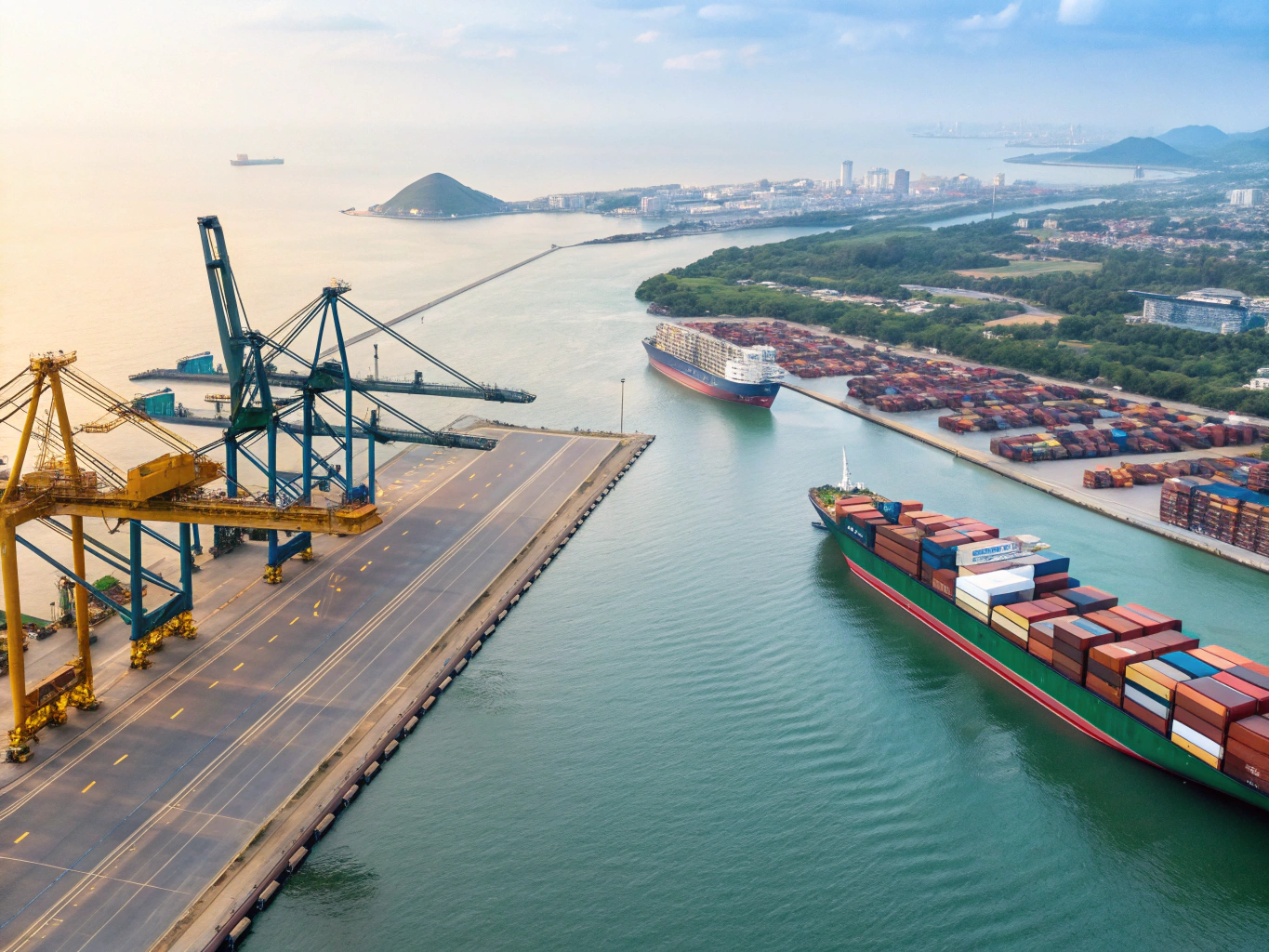
When I first began importing custom metal parts from Vietnam, I assumed all ports worked at roughly the same speed. Later, I learned that port choice alone can change your transit time by more than a week. And when customers push for tight deadlines, a week can feel like forever.
The most efficient ports for importing custom metal parts from Vietnam are usually the ones closest to your supplier, but efficiency also depends on congestion, vessel schedules, inland trucking costs, and customs processing speed. Understanding these details will help you improve delivery reliability and reduce logistics risk.
If you use the wrong port, delays can stack up quickly. But once you choose the right one, the supply chain feels smooth and predictable.
What are the major Vietnamese export ports relevant for metal parts?
The key export ports for metal parts are Cai Mep–Thi Vai Port, Cat Lai Port, and Hai Phong Port. These three handle most containerized metal parts leaving Vietnam.
According to the Vietnam Maritime Administration 1 and World Bank logistics report on Vietnam 2, these ports dominate national export throughput.
Cai Mep–Thi Vai offers deep-water capacity and high efficiency. Hai Phong is ideal for suppliers in northern provinces near Hanoi. Cat Lai handles very high volume but often experiences heavy congestion, especially during peak seasons and before Lunar New Year.

| Port | Location / Region | Strengths | Weaknesses |
|---|---|---|---|
| Cai Mep–Thi Vai | Southern Vietnam | Deep-water, fast loading, direct U.S. routes | Slightly higher trucking cost for some districts |
| Cat Lai Port | Ho Chi Minh City | Close to many factories, low inland cost | Very high congestion, slower processing |
| Hai Phong Port | Northern Vietnam | Near Hanoi, modern, low congestion | Fewer direct U.S. routes than Cai Mep |
| Da Nang Port | Central Vietnam | Good for local suppliers | Often requires transshipment |
The Vietnam Seaport Association 3 notes that Cai Mep handles ~60% of southern exports to the U.S., while Hai Phong dominates the north.
What are the key U.S. import ports that integrate well with Vietnamese shipments?
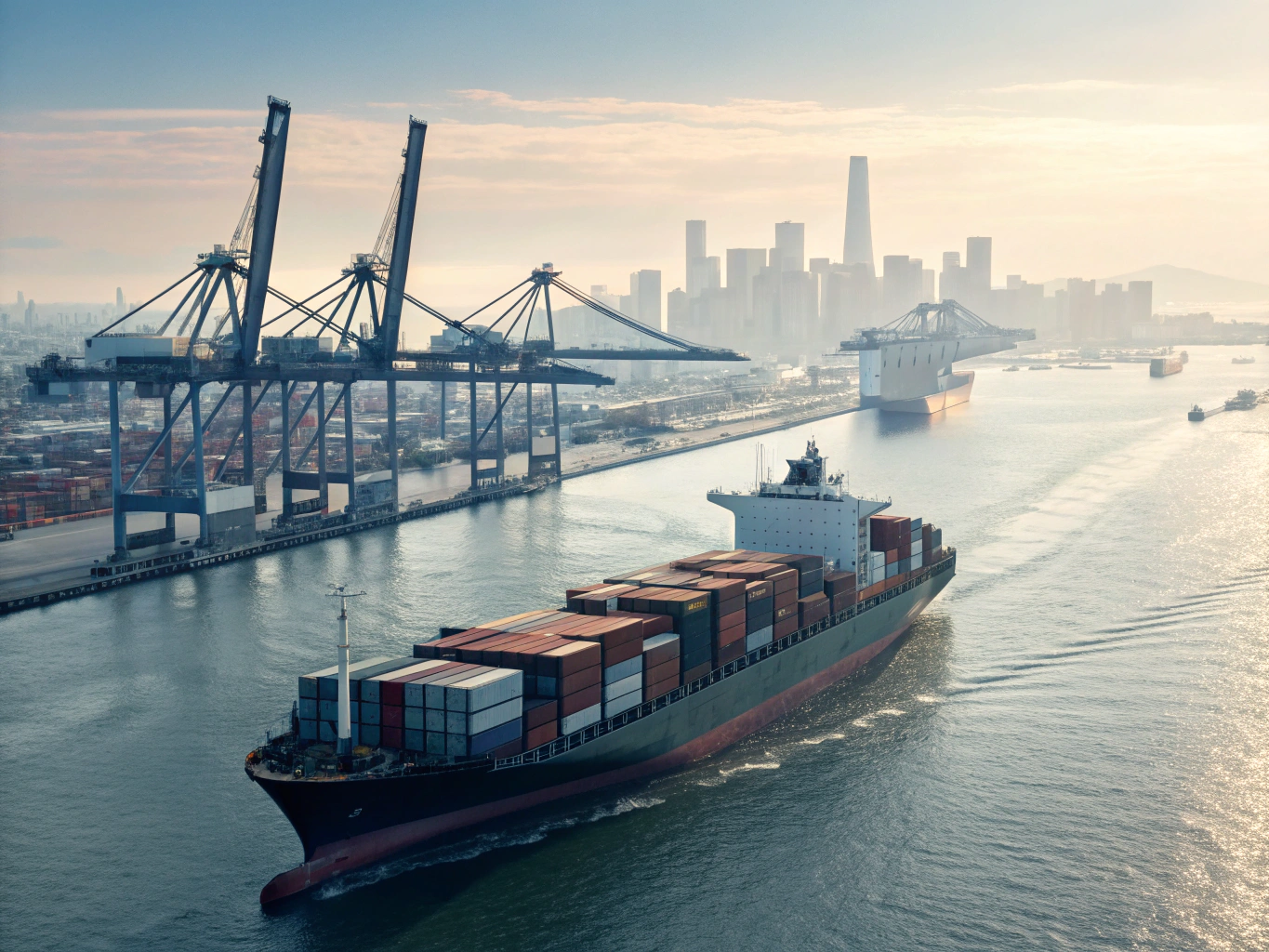
The main U.S. ports connecting efficiently with Vietnam are Los Angeles/Long Beach, Oakland, Houston, Savannah, and New York/New Jersey.
These hubs have established shipping routes and shorter dwell times per U.S. Bureau of Transportation Statistics 4.
Matching the right export and import ports can reduce total delivery time by several days.
| U.S. Port | Strength | When to Use It |
|---|---|---|
| Los Angeles / Long Beach | Fastest transit, many direct Vietnam routes | West Coast distribution or fast delivery needed |
| Oakland | Good for northern California | If you manage inventory near SF Bay Area |
| Houston | Good mid-country hub | If shipping to Texas or central U.S. |
| Savannah | Strong inland rail links | East Coast and Southeast operations |
| New York / New Jersey | Largest East Coast port | For Northeast distributors |
Industry analysis from Port Technology International 5 shows Vietnam–U.S. direct routes increasing annually.
How should you evaluate port transit time, inland logistics and cost trade-offs?
To evaluate port efficiency, look at vessel schedules, inland trucking routes, customs clearance performance, congestion levels, and overall cost.
Recent studies from UN ESCAP’s Transport Division 6 and Vietnam Logistics Review 7 suggest that inland trucking delays can outweigh sea-transit gains if the chosen port is far from the factory.

| Vietnam Port | Overall Efficiency | Congestion Level | Inland Trucking Cost | Best Use Case |
|---|---|---|---|---|
| Cai Mep – Thi Vai | ★★★★★ | Low | Medium | Fast FCL export, direct U.S routes, high reliability |
| Hai Phong (Lach Huyen) | ★★★★☆ | Low–Medium | Low | Northern suppliers, stable lead time |
| Cat Lai Port | ★★☆☆☆ | Very High | Low | Budget shipments, long lead time |
| Da Nang Port | ★★★☆☆ | Medium | Medium | Central Vietnam suppliers |
| Saigon Port | ★★★☆☆ | High | Low | Backup when Cat Lai congested |
You can use public performance data from MarineTraffic Port Analytics 8 to benchmark dwell time and congestion levels.
What contractual terms (Incoterms, FOB/CIF) help optimise port efficiency and risk?
Using the right Incoterms and port-specific clauses helps you protect delivery timelines and reduce logistics risk.
The International Chamber of Commerce Incoterms Guide 9 explains which terms give buyers control of shipping schedules.
For local compliance on export documentation, refer to Vietnam Customs General Department 10.

| Contract Component | How It Improves Efficiency | Example Clause |
|---|---|---|
| Named Port of Loading | Removes ambiguity | “FOB Cai Mep–Thi Vai Port.” |
| Vessel Schedule Requirement | Keeps the supplier accountable | “Supplier must book vessel at least 10 days before loading.” |
| Delay Penalty Clause | Prevents slow port processing | “0.5% per day for delays beyond agreed loading date.” |
| Transshipment Restriction | Ensures fastest route | “No transshipment allowed unless buyer approves.” |
| Buffer Time Provision | Protects against seasonal congestion | “Factory must deliver to port 5 days before vessel ETD.” |
Conclusion
Selecting the optimal Vietnamese export port—and aligning it with U.S. destinations and contract terms—can cut transit time, minimize risk, and improve delivery reliability.
Footnotes
1. Vietnam Maritime Administration overview of national ports. ↩︎
2. World Bank review of Vietnam’s logistics infrastructure. ↩︎
3. Vietnam Port Association data on export distribution. ↩︎
4. U.S. transport statistics on maritime throughput. ↩︎
5. Global port connectivity analysis from Port Technology International. ↩︎
6. UN ESCAP research on Southeast Asia port performance. ↩︎
7. Vietnam Logistics Review insight on trucking and dwell time. ↩︎
8. MarineTraffic analytics showing congestion and vessel calls. ↩︎
9. ICC Incoterms guide outlining buyer/seller responsibilities. ↩︎
10. Vietnam Customs portal on export documentation procedures. ↩︎

 English
 Español de México
 Deutsch
 Français
 Русский
 العربية