When I first contacted a Vietnamese machining workshop for a batch of 30 custom parts, they quoted a minimum of 300 units. I only managed to lower it after showing them our 12-month forecast.
In Vietnam, the minimum order quantity (MOQ) for custom metal parts varies widely based on part complexity, process type, and supplier capacity. It’s negotiable — but only if you come prepared.
Here’s what I’ve learned about MOQ thresholds, how to negotiate lower volumes, how to structure phased MOQ terms — and why larger Vietnamese factories might still set higher MOQs despite smaller job-shops being more flexible.
How do MOQs vary by part complexity?
From my experience, simpler parts almost always allow lower MOQs, while complex multi-operation components push the minimum up significantly.
A simple stamped or sheet-metal part may require only 50–100 units, but a precision-machined or cast component might need hundreds or even thousands.
According to a sourcing-analysis piece, Vietnam’s suppliers are more willing to handle small or medium-sized orders 1

Key Drivers of MOQ:
- Process type: Laser-cut + bend parts are lower MOQ than casting + machining + assembly parts.
- Tooling or fixture cost: Custom tooling must be amortized, which often raises MOQ.
- Material procurement: If suppliers must buy raw materials in bulk, MOQ may be set by volume/weight instead of pieces.
- Factory scale: Small job shops often accept low MOQs; large factories typically require higher volumes for efficiency. Interestingly, many analyses note that Vietnamese suppliers tend to be more flexible with lower MOQs 2
MOQ Estimate by Part Complexity
| Complexity Level | Example Process | Typical MOQ Range |
|---|---|---|
| Low | Laser cutting / basic stamping | 50–100 units |
| Medium | CNC machining with simple finish | 100–300 units |
| High | Casting + precision machining | 500–1000+ units |
Note: Because Vietnam’s metal industry is growing rapidly and includes many medium-sized factories rather than huge mass-production plants (see manufacturing landscape guide) 3, you’ll find more opportunities to negotiate smaller MOQs than you might in more established markets.
Can MOQs be negotiated lower for new buyers?
Absolutely. I’ve negotiated MOQs down for trial runs several times — the key is showing potential for future volume.
If you offer a clear purchase forecast, agree to pay tooling fees, or frame your order as “Phase 1,” suppliers are more willing to cooperate. Fact-sheets on Vietnam manufacturing note that buyers should treat MOQ as part of contract negotiation, not a fixed barrier. 4

How to make a compelling case:
- Show future demand: Let them see your 12-month volume projection.
- Offer to pay tooling up front: This lowers the supplier’s risk of running a small batch.
- Frame it as a trial order: Make it clear this is a prelude to a larger production run.
- Bundle multiple SKUs: If you have multiple parts, combine them to reach a higher total unit count.
- Accept a higher unit price on the trial: This offsets their small-batch inefficiencies.
- Specify payment & inspection terms for the trial: Provide clarity via first-article inspection, deposit, quality acceptance — this reduces supplier risk.
In fact, MOQ negotiation guidelines in Vietnam recommend these same approaches. 5
Do multi-part mixes count toward MOQ?
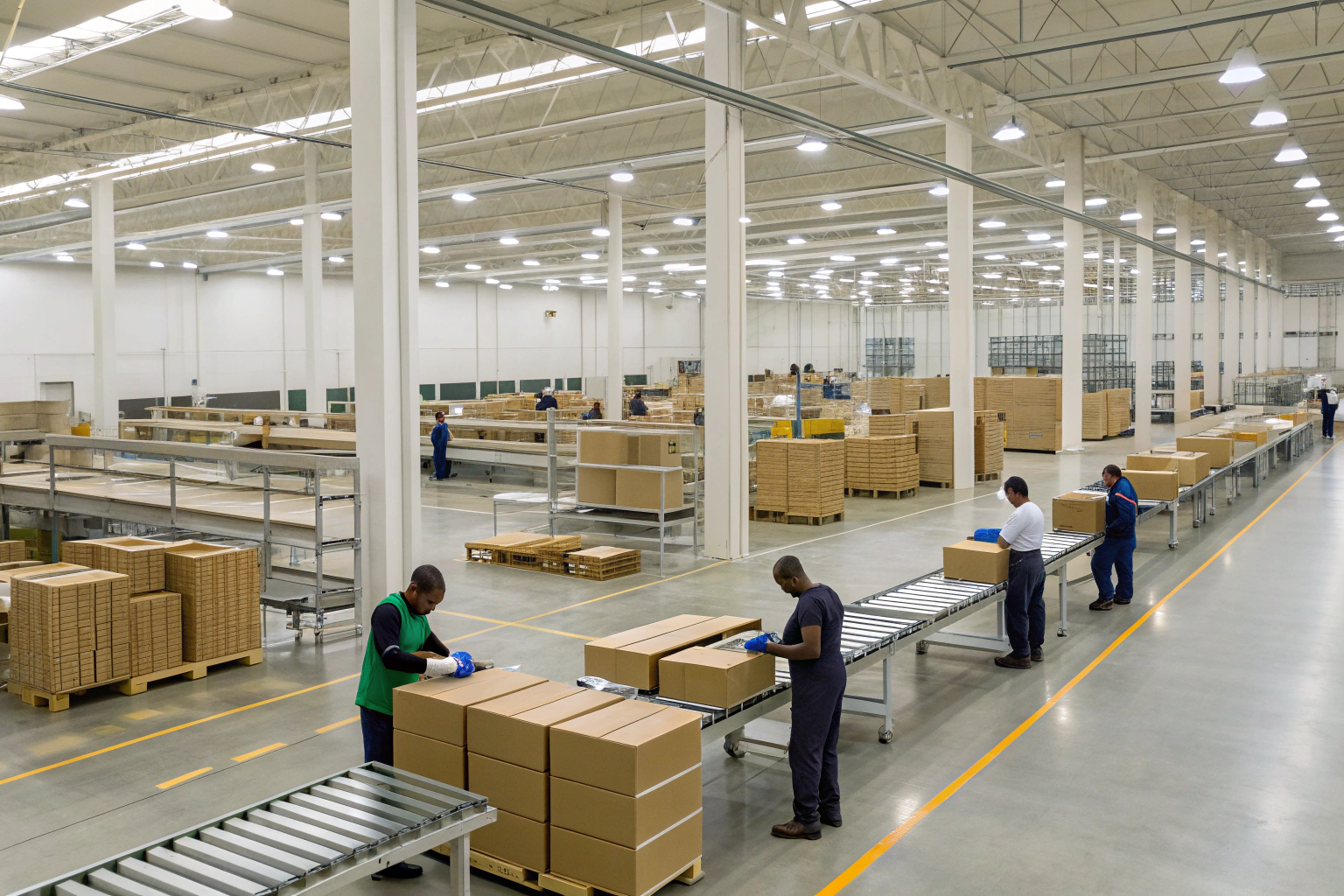
Yes — bundling several parts together in one order is an effective way to meet supplier MOQ requirements.
Even if each SKU has a low quantity, the total combined volume can fulfil the MOQ threshold. The sourcing guides for Vietnam metal parts highlight bundling as a common strategy. 6
Why this works:
- Setup and production workflows often overlap across parts.
- Higher total volume allows better raw material planning and scheduling.
- Supplier sees more opportunity for future engagement.
Best Practices:
- Clearly list quantities for each part in your RFQ but note it’s a combined order.
- Specify that total order volume should meet the MOQ, even if individual parts are small.
- Ask for unit pricing and total pricing for transparency and cost analysis.
Bundling is especially effective if you’re working with CNC-machined or stamped parts that share material type or process setup — this helps offset minimum run constraints. According to Vietnam manufacturing capability guides, suppliers can handle both low-volume and higher volume depending on mix. 7
Should you ask for phased MOQ over time?
Definitely — this is one of the most practical strategies I’ve used.
Structure your MOQ as a phased plan: small trial → ramp-up → full production. This minimises your risk and gives suppliers a clear growth pathway. The Vietnam OEM manufacturing landscape article points out that many Vietnamese factories accept this model. 8

Example: 3-Stage MOQ Structure
- Stage 1 (Trial): 50–100 pieces — higher unit price, used for verification.
- Stage 2 (Pilot Production): 300–500 pieces — slightly better price, validates volume process.
- Stage 3 (Full Production): 1000+ pieces — best price, ongoing supply.
Given Vietnam’s rising manufacturing maturity and growing supply-base for metal parts (see metal industry guide) 9, negotiating a phased plan tends to work better than in more rigid sourcing markets.
Conclusion
Vietnamese suppliers don’t have a fixed MOQ for all parts — it depends on the complexity, tooling, material, and supplier size.
Simple CNC or stamped parts may start at 50–100 units, while casting or molded parts may require 500–5000 units.
But MOQs are not set in stone.
By bundling multiple parts, paying for tooling, showing purchase forecasts, or using phased ordering, you can almost always lower the effective MOQ.
And because you’re dealing with suppliers in a growing market (Vietnam) that are often more open to experimentation with smaller runs, you have more negotiating room than you might assume. Vietnam sourcing benefits overview 10
Footnotes
1. Article stating Vietnam suppliers are more flexible with MOQs compared to larger markets. ↩︎
2. Guide on finding metal suppliers in Vietnam and insight into MOQ flexibility. ↩︎
3. Manufacturing landscape guide emphasising Vietnam’s medium-sized factories. ↩︎
4. Article on sourcing negotiation and MOQ as part of contract in Vietnam. ↩︎
5. Guidance on specifying trial payment & inspection terms as part of MOQ negotiation. ↩︎
6. Guide on bundling parts to meet MOQ thresholds in Vietnam metal sourcing. ↩︎
7. Manufacturing capability documentation about supplier flexibility across volume in Vietnam. ↩︎
8. OEM manufacturing landscape article noting phased MOQ models accepted by Vietnamese factories. ↩︎
9. Metal-industry guide detailing Vietnam’s growing metal parts supply-base and manufacturing maturity. ↩︎
10. Overview guide summarising Vietnam’s sourcing benefits and MOQ flexibility. ↩︎

 English
 Español de México
 Deutsch
 Français
 Русский
 العربية