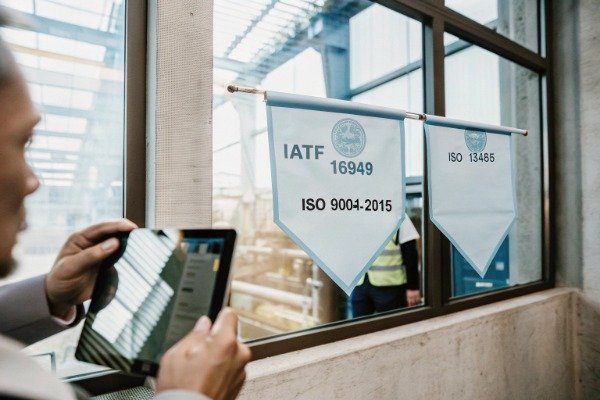
Sourcing reliable blow molding partners is difficult when quality standards vary wildly across regions. At our facilities, we see firsthand how gaps in certification often lead to costly defects and project delays.
You should expect ISO 9001:2015 as the absolute baseline for any credible blow molding manufacturer. This standard ensures a consistent Quality Management System (QMS) for process control. For specialized industries, look for IATF 16949 (automotive) or ISO 13485 (medical) to guarantee strict adherence to safety and performance regulations.
Let's break down why these specific standards matter for your supply chain security and product success.
Do I need to look for specific standards like IATF 16949 or ISO 13485 for specialized parts?
Generic standards often fail to catch critical flaws in high-stakes components. Our engineering team knows that specialized parts demand rigorous, industry-specific protocols to ensure safety and functionality.
Yes, you absolutely need specific standards for specialized parts. IATF 16949 is mandatory for automotive components to prevent defects and reduce variation, while ISO 13485 is required for medical devices to ensure risk management and traceability. Relying solely on ISO 9001 for these applications invites significant regulatory and safety risks.
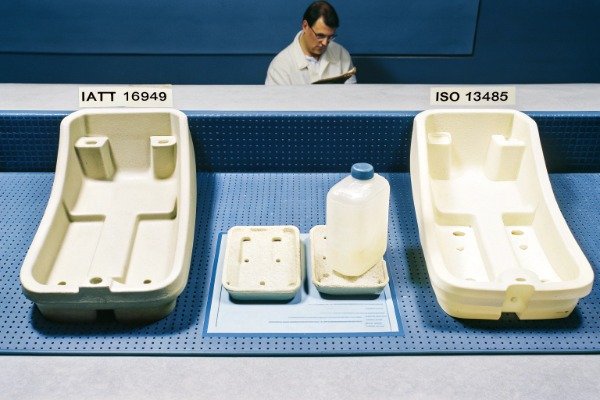
While ISO 9001:2015 is an excellent starting point, it is essentially a generalist standard. In our experience exporting custom parts to the US and Europe, we have found that "general good practice" is insufficient for industries where failure is not an option. If you are sourcing automotive components like fuel tanks, air ducts, or fluid reservoirs, you must look for suppliers holding IATF 16949:2016 certification.
The Automotive Standard: IATF 16949 and VDA 6.3
IATF 16949 goes far beyond basic quality management. It focuses intensely on defect prevention, reduction of variation, and waste reduction in the supply chain. When we develop automotive parts, this standard dictates that we use tools like APQP (Advanced Product Quality Planning) and PPAP (Production Part Approval Process).
Furthermore, as noted in our internal sourcing guidelines, for German or European automotive supply chains, you might also encounter VDA 6.3. This is a process audit standard from the German automotive industry. A supplier with IATF 16949 or VDA 6.3 capabilities demonstrates they can handle the rigorous demands of "right first time" manufacturing. They don't just inspect quality into the product; they design the process to prevent errors from happening.
The Medical Standard: ISO 13485
Similarly, for medical-grade blow molded products—such as reagent bottles or specialized fluid containers—ISO 13485:2016 is non-negotiable. This standard prioritizes risk management and traceability over customer satisfaction. In medical manufacturing, knowing exactly which batch of resin was used for a specific production run is critical for patient safety.
Cost vs. Benefit Analysis
It is important to note that suppliers with these advanced certifications often have higher overheads. You might see a price premium of 5-15% compared to a basic ISO 9001 shop. However, this premium pays for itself by eliminating the hidden costs of rework, recalls, and line stoppages.
Comparison of Key Certifications
| Certification | Primary Focus | Key Requirement | Best Application |
|---|---|---|---|
| ISO 9001:2015 | General Quality Management | Consistent processes and customer satisfaction. | General consumer goods, industrial packaging. |
| IATF 16949 | Automotive Supply Chain | Defect prevention, reduction of variation, PPAP. | Car parts, fuel systems, air ducts. |
| ISO 13485 | Medical Devices | Risk management, sterilization control, traceability. | Medical containers, diagnostic device housings. |
How important are environmental certifications like ISO 14001 when selecting a plastic partner?
Ignoring environmental compliance can lead to unexpected supply chain disruptions and reputational damage. We prioritize sustainable practices to protect our clients from these hidden liabilities and regulatory fines.
ISO 14001 is increasingly critical for mitigating liability regarding waste disposal and resin handling. It verifies that your supplier adheres to international environmental management standards. While not always mandatory for quality, it protects your brand reputation and ensures long-term supply chain stability against tightening global environmental regulations.
In the plastics industry, environmental responsibility is no longer just a "nice-to-have"—it is a risk management tool. When we audit suppliers in Asia, we look for ISO 14001 certification as a sign of operational maturity. A factory that manages its environmental impact well usually manages its production lines well, too.
Mitigating Supply Chain Risk
Governments in manufacturing hubs like China and Vietnam are increasingly cracking down on pollution. Factories without proper environmental controls are often the first to be shut down during regulatory sweeps. By choosing a partner with ISO 14001, you are effectively buying insurance against your supplier being forced to halt production due to environmental violations.
Beyond Greenwashing: Real Efficiency
There is a direct correlation between environmental management and production efficiency. ISO 14001 encourages the reduction of waste. In blow molding, this translates to better regrind management (reusing excess plastic) and energy efficiency. A supplier that tracks their energy consumption and scrap rates is likely using data-driven processing—similar to RJG Master Molder principles—to control wall thickness and cycle times. This scientific approach reduces material waste and ensures you aren't paying for resin that ends up in the trash.
Corporate Social Responsibility (CSR)
Many of our US clients now require CSR scorecards, such as EcoVadis or SA8000 ratings. These go hand-in-hand with environmental certifications. They evaluate how a company integrates ethical issues into their business model. If your brand positions itself as sustainable, sourcing from a non-compliant factory is a PR disaster waiting to happen.
Environmental Impact on Business Metrics
| Risk Category | Without ISO 14001 | With ISO 14001 | Business Impact |
|---|---|---|---|
| Regulatory | High risk of shutdown/fines. | Compliance with local laws. | Supply chain continuity. |
| Cost | High material waste/scrap. | Optimized resource usage. | Stable pricing structure. |
| Reputation | Vulnerable to "dirty plastic" scandals. | Verified sustainable practices. | Brand protection. |
How can I verify that a potential supplier's quality certificates are authentic and valid?
Fake certificates are rampant in international trade, putting your business at significant risk. We always advise clients to rigorously validate documentation before signing any contracts or transferring deposits.
You can verify certificates by contacting the issuing registrar directly or checking their online database using the certificate number. Additionally, request the supplier’s latest audit report and cross-reference the scope of certification to ensure it covers the specific manufacturing processes, like blow molding, relevant to your project.
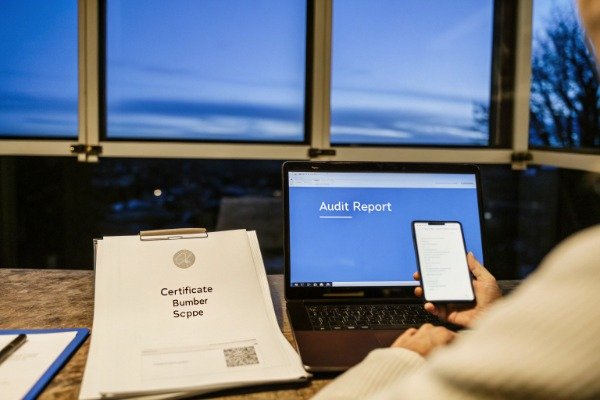
Trust, but verify. This is the golden rule of international procurement. We have encountered numerous instances where suppliers present Photoshop-edited certificates or valid certificates that belong to a completely different company. Ensuring authenticity is a critical step in our supplier audit process.
Personal Protective Equipment 1
Step-by-Step Verification Process
- Check the Registrar: Look at the logo of the certification body (e.g., SGS, TUV, BSI) on the certificate. Go to their official website—do not use links provided by the supplier—and use their "Certificate Search" function.
- Verify the Scope: This is a common trap. A supplier might have an ISO 9001 certificate for "Trading of Plastic Parts" but not for "Manufacturing of Blow Molded Parts." This indicates they are a middleman, not a factory. Ensure the scope explicitly covers manufacturing.
- Check the Address: Does the address on the certificate match the factory location you intend to visit or ship from? If not, they might be borrowing credentials from a parent company or a partner.
Utilizing National Databases
For suppliers in China, the CNCA (Certification and Accreditation Administration of the PRC) maintains a database of all valid certifications issued within the country. If a Chinese supplier's certificate does not appear there, it is likely invalid or unrecognized.
The Role of Site Audits
Documentation is only paper. The ultimate verification is a physical audit. When we conduct on-site inspections, we don't just look at the certificate on the wall. We look for the evidence of the system in action:
- Are there work instructions at every blow molding machine?
- Is there a record of machine maintenance?
- Are rejected parts segregated in a locked "Red Box" area?
- Do they have calibration records for their measuring equipment?
Common Certificate Red Flags
| Red Flag | What It Means | Action Required |
|---|---|---|
| Expired Date | The system may no longer be maintained. | Request current renewal documents immediately. |
| Trading Scope | Supplier is a broker, not a manufacturer. | Clarify their role; demand transparency on the actual factory. |
| Blurry/Altered Text | Potential forgery. | Contact the issuing registrar to confirm authenticity. |
| Unrecognized Registrar | "Pay-to-play" certificate with no real audit. | Check if the registrar is accredited by an IAF member. |
Conclusion
Prioritize ISO 9001 as a baseline, but insist on IATF 16949 or ISO 13485 for specialized components. Always verify certificates to ensure your custom parts meet strict quality and safety standards.
ISO 17025 2
Does a top-tier supplier need ISO 17025 for their internal laboratory?
While external testing is valuable, a manufacturer with an in-house, accredited laboratory offers a significant advantage in speed and quality assurance. We rely on internal testing capabilities to perform immediate validation on new molds without waiting weeks for third-party results.
Corporate Social Responsibility 3
ISO 17025 is the gold standard for testing and calibration laboratories. It confirms that the supplier’s internal lab produces precise, reproducible data. For blow molding, this capability is essential for verifying critical parameters like drop impact resistance, leak integrity, and resin density in real-time.

In the blow molding process, small variations in parison programming or mold temperature can affect the structural integrity of a bottle or tank. A supplier with ISO 17025 accreditation has demonstrated technical competence to test these variables accurately.
The Value of Real-Time Validation
When we launch a new product, we perform "First Article Inspections" (FAI). If a supplier has an ISO 17025 lab, they can perform:
- Leak Testing: Vacuum or pressure decay testing to ensure seals are perfect.
- Drop Testing: Simulating logistics stress to ensure the container won't burst during shipping.
- Top Load Testing: Verifying the bottle can withstand the weight of stacking on a pallet.
Without this certification, you are relying on the supplier's "word" that their testing equipment is calibrated and their methods are sound. ISO 17025 guarantees that their calipers, height gauges, and pressure testers are traceable to national standards.
environmental management standards 5
Technical quality is no longer the only metric for "top-tier" status. Western consumers and governments are increasingly scrutinizing the ethical footprint of supply chains. We have seen major retailers refuse to stock products from factories that cannot prove fair labor practices.
ISO 13485:2016 6
Social compliance certifications like SA8000 or audits like SMETA (Sedex) are vital for protecting your brand from ethical scandals. These standards verify that the manufacturer provides safe working conditions, pays fair wages, and prohibits child labor. Ignoring this aspect can lead to severe reputational damage and exclusion from major retail markets.

While ISO standards focus on the process and the product, standards like SA8000 focus on the people.
The Retailer Requirement
If you plan to sell your blow molded products to big-box retailers (like Walmart, Target, or Tesco), they will almost certainly demand a social compliance audit. A factory that is already SA8000 certified or holds a valid SMETA 4-Pillar audit report is "retail-ready." This saves you months of preparation time.
Red Flags in Labor Practices
During our factory tours, we look for signs that often correlate with poor social compliance:
- Lack of PPE (Personal Protective Equipment) for machine operators.
- Blocked fire exits or poor ventilation in the molding hall.
- Excessive working hours without documented overtime pay.
Factories that cut corners on safety and wages often cut corners on resin quality and mold maintenance as well.
medical devices 8
Social Compliance vs. Quality Standards
| Feature | ISO 9001 (Quality) | SA8000 (Social) | Why You Need Both |
|---|---|---|---|
| Primary Goal | Consistent product output. | Ethical worker treatment. | Good products made ethically. |
| Audit Focus | Processes, documentation, defects. | Wages, hours, safety, rights. | Holistic supply chain security. |
| Risk Mitigated | Defective parts, returns. | PR scandals, legal sanctions. | Total business continuity. |
How to enforce these certifications in your Manufacturing Agreement
Knowing which certifications to look for is only half the battle; ensuring they remain valid throughout your production run is the other. We recommend embedding these requirements directly into your legal contracts.
IATF 16949 9
You must explicitly list required certifications in your Manufacturing Supply Agreement (MSA). Include clauses that require the supplier to notify you immediately if a certificate is suspended or revoked. Furthermore, reserve the right to conduct unannounced "for cause" audits if quality or ethical standards appear to slip.
Key Contractual Clauses
When drafting your agreement with a blow molding partner, consider including the following provisions:
- Continuous Validity: "The Supplier warrants that it shall maintain ISO 9001 and [specific standard like ISO 13485] certification throughout the term of this Agreement."
- Notification Duty: "The Supplier must notify the Buyer within 5 business days of any major non-conformance finding by an external registrar."
- Right to Audit: "The Buyer retains the right to audit the Supplier’s facility and QMS records with 48 hours' notice to verify compliance."
By making these certifications a contractual obligation, you transform them from marketing badges into enforceable performance guarantees. This legal framework ensures that your "top-tier" supplier remains top-tier for the duration of your partnership.
Quality Management System 10
Footnotes
1. Official safety resource regarding the PPE mentioned in factory labor audits. ↩︎
2. Technical definition for the laboratory competence standard discussed. ↩︎
3. Defines the ethical business framework mentioned in the supply chain audit section. ↩︎
4. Replaced malformed URL with stable Wikipedia link for Plastic recycling ↩︎
5. Explains the broader context of the ISO 14001 family of standards. ↩︎
6. Direct link to the official ISO standard page for medical device quality management. ↩︎
7. Links industrial waste management concepts to EPA sustainability standards. ↩︎
8. Replaced broken FDA link with stable Wikipedia link for Medical device ↩︎
9. Provides direct technical background on the automotive quality standard mentioned. ↩︎
10. Fixed malformed URL syntax to point to valid Wikipedia article ↩︎

 English
 Español de México
 Deutsch
 Français
 Русский
 العربية