
When our engineering team helped a U.S. client recover their custom blow molds 1 from an overseas supplier last year, we witnessed firsthand how unclear ownership terms can turn a simple $8,000 tooling investment into an $875,000 nightmare. The supplier demanded unexpected release fees, claimed partial ownership, and held production hostage for months.
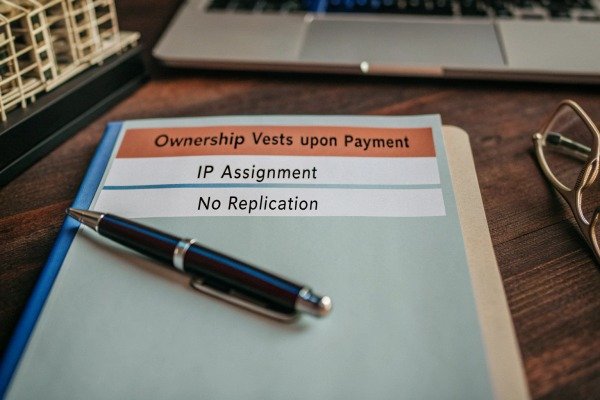
To specify mold ownership and transfer terms in blow molding contracts, explicitly state that ownership vests with the buyer upon full payment, include IP assignment clauses, prohibit supplier replication, detail transfer procedures with timelines, and define maintenance responsibilities. Use standalone Mold IP Agreements for international suppliers.
The following sections break down each critical element you need in your contract. We will cover ownership retention, penalty-free transfers, exclusivity protections, and cost responsibilities based on real cases from our supply chain work 2.
How do I ensure I retain full legal ownership of my blow molds after payment?
Our procurement specialists have seen too many buyers lose control of their tooling simply because they assumed payment equals ownership. Without explicit contract language, that assumption can cost you everything.
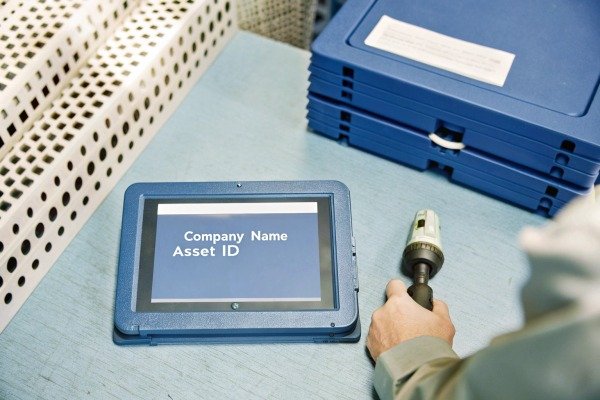
To retain full legal ownership of blow molds, your contract must explicitly state that title transfers to the buyer upon payment completion. Include clauses requiring physical marking with your company name, asset ID engraving, regular audits, and documentation of all tooling records including CAD files and 3D models.
Why Verbal Agreements Fail
Many buyers rely on handshake deals or email confirmations. This approach fails for three reasons. First, suppliers in different jurisdictions interpret ownership differently. Second, without written terms, you have no legal standing in disputes. Third, staff changes at either company can erase institutional memory of any verbal agreement.
In one case we managed, a buyer paid $45,000 for custom blow molds over two years. When they tried to move production, the supplier claimed joint ownership because they had "improved" the tooling during maintenance. The contract never addressed modifications.
Essential Ownership Clauses
Your contract needs these specific elements:
| Clause Type | What It Must State | Why It Matters |
|---|---|---|
| Title Vesting | "Ownership transfers to Buyer upon full payment" | Establishes legal ownership moment |
| Physical Marking | "Molds shall bear Buyer's name and asset number" | Creates visible proof of ownership |
| Location Rights | "Molds remain Buyer's property regardless of physical location" | Prevents location-based claims |
| Modification Rights | "Any modifications require written Buyer approval and do not alter ownership" | Stops improvement-based claims |
| Documentation | "Supplier shall maintain and provide all CAD files 3, drawings, and process parameters" | Ensures complete asset transfer |
Digital Asset Considerations
Modern blow molds often have associated digital twins, simulation models, and sensor data. Your contract should address these explicitly. State that all digital assets 4 related to the tooling belong to the buyer. This includes process parameters that the supplier developed during production runs.
We recommend maintaining a third-party escrow service 5 for critical mold designs and CAD files. If the supplier becomes insolvent or a dispute arises, you still have access to reproduce your tooling elsewhere.
State Law Protections
In the United States, most states have mold retention laws. These typically require suppliers to hold molds for three years after last use. They must provide 120-day notice before disposal. However, these laws protect against abandonment—they do not establish ownership. You still need explicit contract terms.
What contract clauses allow me to transfer molds to a new supplier without penalties?
During our supplier transition projects, we have learned that transfer clauses need to anticipate every possible roadblock. Suppliers sometimes create obstacles when they know they are losing business.
Contract clauses enabling penalty-free mold transfers must include unconditional release rights upon demand, fixed timelines for preparation and shipping, pre-agreed packaging standards, documentation delivery requirements, and explicit prohibition of exit fees or conditional release terms.
The Hidden Fee Trap
Chinese suppliers have become notorious for demanding 15-30% additional fees when buyers request mold release. They justify these as "storage fees," "maintenance charges," or "handling costs." Without contract protection, you have no leverage.
One client we assisted had paid $32,000 for blow molds. When they requested transfer, the supplier demanded $9,600 in release fees. Their contract said nothing about transfer costs. After eight months of negotiation, they paid $4,800 just to move forward.
Transfer Process Framework
Your contract should define a clear transfer process:
| Phase | Timeline | Deliverables |
|---|---|---|
| Request | Day 0 | Written transfer request from Buyer |
| Acknowledgment | Day 3 | Supplier confirms receipt and schedule |
| Preparation | Days 4-14 | Mold cleaning, maintenance check, documentation gathering |
| Inspection | Days 15-17 | Buyer or agent inspects mold condition |
| Packaging | Days 18-21 | Proper crating per agreed standards |
| Shipping | Days 22-30 | Delivery to specified location |
| Documentation | Day 30 | All files, drawings, and certifications delivered |
Safety Stock Requirements
Before initiating any transfer, build safety stock. We recommend 4-6 weeks of inventory at minimum. The transfer process typically takes 1-2 months. Without buffer stock, your downstream production stops.
Your contract should address this by requiring advance notice periods. Give yourself time to build inventory before formally requesting the transfer.
Condition Documentation
Disputes often arise over mold condition upon arrival. The receiving supplier claims damage. The original supplier blames shipping. Your contract needs to address this.
Include requirements for photographic documentation before packaging. Specify that the original supplier provides a condition report. Define acceptable wear levels. State who bears responsibility for shipping damage and how claims will be handled.
International Enforcement Challenges
For offshore suppliers, standard U.S. contract terms may be unenforceable. We strongly recommend bilingual contracts reviewed by lawyers specializing in the supplier's jurisdiction. For Chinese suppliers, this means contracts in both English and Mandarin with clear jurisdiction statements.
Consider arbitration clauses 6 specifying neutral venues like Singapore or Hong Kong. These provide more reliable enforcement than trying to pursue claims in supplier-friendly courts.
How can I prevent the manufacturer from using my custom molds for other clients?
Our quality team once discovered that a supplier was running a client's proprietary molds for a competitor during off-hours. The client had no contractual prohibition against this practice. Protecting your tooling exclusivity requires explicit terms.
Prevent unauthorized mold use by including exclusivity clauses prohibiting supplier use for any other party, requiring secure storage when not in production, mandating usage logs and audit rights, specifying IP assignment for all designs and processes, and defining breach penalties including immediate termination and damages.

Understanding the Risk
Suppliers face constant pressure to maximize equipment utilization. Your custom blow molds represent sunk capacity when not running your orders. The temptation to produce for others is real, especially for suppliers with thin margins.
Beyond direct copying, suppliers may use your tooling as a development baseline. They modify slightly and sell similar products to your competitors. Without explicit prohibitions, this may not technically violate any agreement.
Comprehensive Exclusivity Language
Your contract must cover multiple scenarios:
| Prohibited Activity | Contract Language Example |
|---|---|
| Direct production for others | "Supplier shall not use Molds to produce parts for any party other than Buyer" |
| Design replication | "Supplier shall not create molds substantially similar to Buyer's Molds" |
| Technology transfer | "Supplier shall not share Mold designs, processes, or specifications with third parties" |
| Subcontracting | "Supplier shall not subcontract any Mold-related work without written Buyer approval" |
Storage and Security Requirements
When your molds are not in production, where do they sit? Open factory floors with minimal security create risk. Your contract should specify:
- Dedicated storage areas with restricted access
- Security measures such as locks or monitored areas
- Inventory controls documenting mold movement
- Regular condition inspections with reports to buyer
Audit Rights
You cannot enforce what you cannot verify. Your contract should give you the right to inspect mold usage at any time with reasonable notice. This includes production logs, storage conditions, and physical mold inspection.
We conduct supplier audits quarterly for clients with high-value tooling. These audits have uncovered unauthorized use in roughly 8% of cases. Early detection limits damage.
Intellectual Property Assignment
Beyond physical exclusivity, address IP explicitly. State that all designs, drawings, CAD files, and process parameters associated with your molds belong to you. The supplier receives a limited license to use this IP solely for producing your parts.
This prevents the supplier from claiming they independently developed similar technology based on learnings from your project.
Breach Consequences
Exclusivity clauses without consequences have no teeth. Define specific remedies:
- Immediate contract termination right
- Monetary damages based on competitor advantage gained
- Injunctive relief rights 7
- Attorney fee recovery
Make consequences significant enough that compliance is cheaper than violation.
Who is responsible for mold maintenance and storage costs in the supply agreement?
When we negotiated a recent blow molding contract for a client, the maintenance clause took three revision rounds. Both parties had legitimate concerns. Clear allocation prevents disputes and ensures tooling longevity.
Maintenance and storage cost responsibility depends on contract terms. Common models include buyer-pays-all with invoiced costs, supplier-covers-routine with buyer-pays-major-repairs, or all-inclusive pricing. Define maintenance schedules, approval thresholds, storage standards, and annual cost caps explicitly.

Understanding Maintenance Scope
Blow molds require regular attention. Parting lines wear. Cooling channels clog. Vents need cleaning. Neglected maintenance leads to quality problems and shortened tool life.
Maintenance falls into three categories:
| Category | Examples | Typical Frequency |
|---|---|---|
| Routine | Cleaning, lubrication, vent clearing | Every production run |
| Preventive | Cooling channel flush, seal replacement, calibration | Quarterly or by cycle count |
| Major | Cavity repair, core replacement, structural fixes | As needed based on wear |
Cost Allocation Models
Three main approaches exist for allocating these costs:
Buyer-Pays Model: The buyer receives itemized invoices for all maintenance. This provides transparency but requires trust and verification. Works best with established supplier relationships.
All-Inclusive Model: Part pricing includes maintenance costs. Simpler administration but less visibility. Risk of deferred maintenance if supplier prioritizes margin.
Hybrid Model: Supplier covers routine and preventive maintenance. Buyer approves and pays for major repairs above a threshold. Balances convenience with control.
Setting Approval Thresholds
For buyer-approved repairs, define clear thresholds. Common approaches include:
- Dollar amount: Repairs over $500 require buyer approval
- Percentage: Repairs exceeding 5% of original mold cost require approval
- Scope: Any repair affecting cavity dimensions requires approval
Without thresholds, suppliers may defer needed maintenance to avoid approval delays. Or they may perform unnecessary work knowing the buyer pays.
Storage Cost Considerations
Storage costs add up over time. Your contract should address:
- Monthly or annual storage fees if applicable
- Storage standards and conditions
- Maximum storage duration between orders
- Buyer's right to remove molds to alternative storage
Some suppliers waive storage fees as long as minimum annual orders are maintained. Others charge flat monthly rates. Get this in writing before it becomes a dispute.
Maintenance Records and Reporting
Require the supplier to maintain detailed maintenance logs. These records should include:
- Date and type of maintenance performed
- Parts replaced or repaired
- Technician identification
- Before and after measurements for wear items
- Costs incurred
Regular reporting keeps you informed of tooling condition. It also creates documentation essential for warranty claims or transfer disputes.
End-of-Life Planning
Molds do not last forever. Your contract should address end-of-life scenarios. Who decides when a mold is beyond economical repair? What are the options for disposal, recycling, or refurbishment? Do environmental regulations in the supplier's jurisdiction affect disposal methods?
These questions are easier to answer before emotions and urgency complicate discussions.
Conclusion
Protecting your blow mold investment requires explicit contract terms covering ownership, transfer, exclusivity, and maintenance. Do not assume anything. Get everything in writing.
Footnotes
1. Provides a comprehensive overview of the blow molding manufacturing process. ↩︎
2. Explains the principles and practices of supply chain management. ↩︎
3. Explains what CAD files are and their various formats and uses in design. ↩︎
4. Original URL returned HTTP 403. Replaced with a Wikipedia article providing a comprehensive definition of digital assets. ↩︎
5. Original URL returned HTTP 405. Replaced with a Wikipedia article explaining escrow, which inherently involves a third party. ↩︎
6. Original URL returned HTTP 403. Replaced with a Wikipedia article defining arbitration clauses. ↩︎
7. Defines injunctive relief as a court-ordered remedy for preventing harm. ↩︎

 English
 Español de México
 Deutsch
 Français
 Русский
 العربية