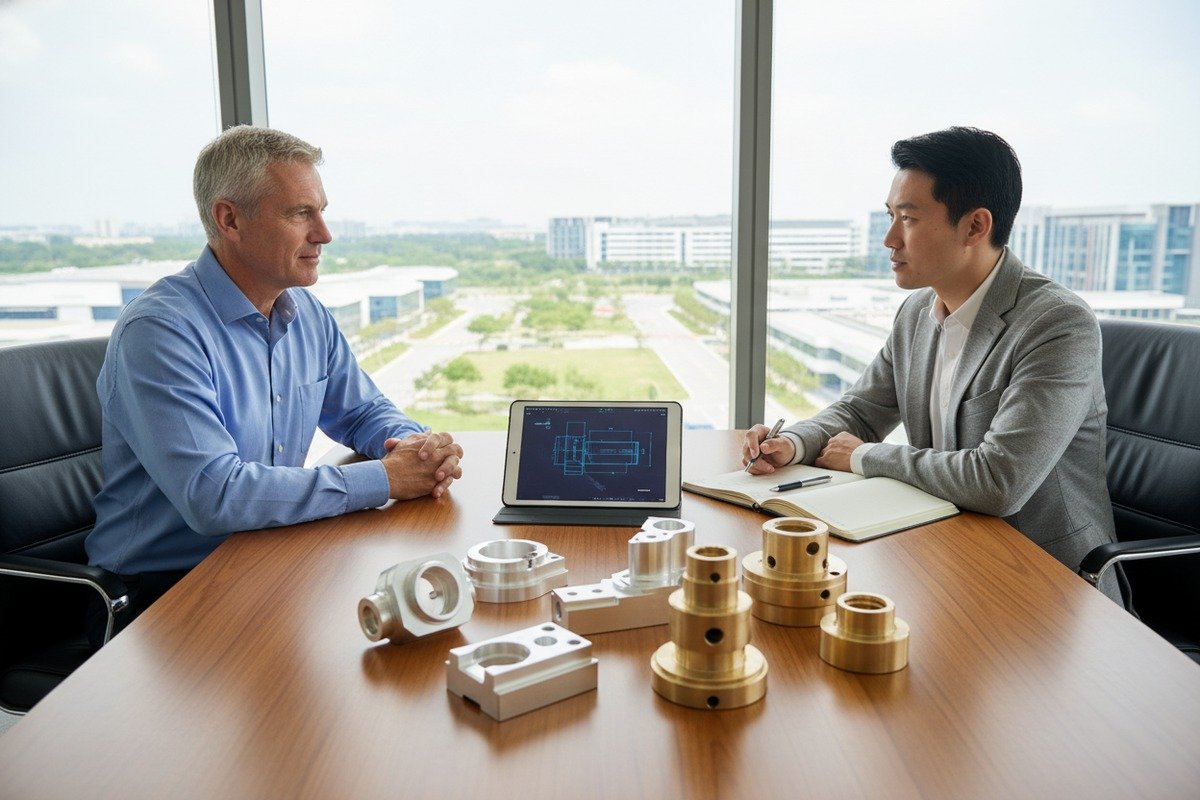
Every week on our production floor, we see the same pattern — engineering teams burning through budgets on revisions that could have been avoided with the right manufacturing partner from day one. industrial product development 1
You optimize industrial product development by partnering with custom manufacturing services that offer co-development expertise, rigorous quality control, flexible production scaling, and supply chain diversification. These services reduce lead times, cut material waste, eliminate costly rework, and accelerate your time-to-market while keeping total project costs under control.
Studies show that over 50% of product development time goes to non-value activities. That is a massive drain on resources. The good news is that the right custom manufacturing approach can fix most of these problems. Below, we break down the key strategies that make it work.
How can I leverage co-development expertise to streamline my industrial product design?
When our engineering team sits down with a new client drawing, we often spot tolerance conflicts 2 or material choices that will cause problems in production — issues that are cheap to fix on paper but expensive to fix on the shop floor.
You leverage co-development expertise by engaging your manufacturing partner early in the design phase, so their process engineers can review drawings, suggest material alternatives, flag producibility issues, and align your design intent with real-world manufacturing capabilities before any tooling begins.
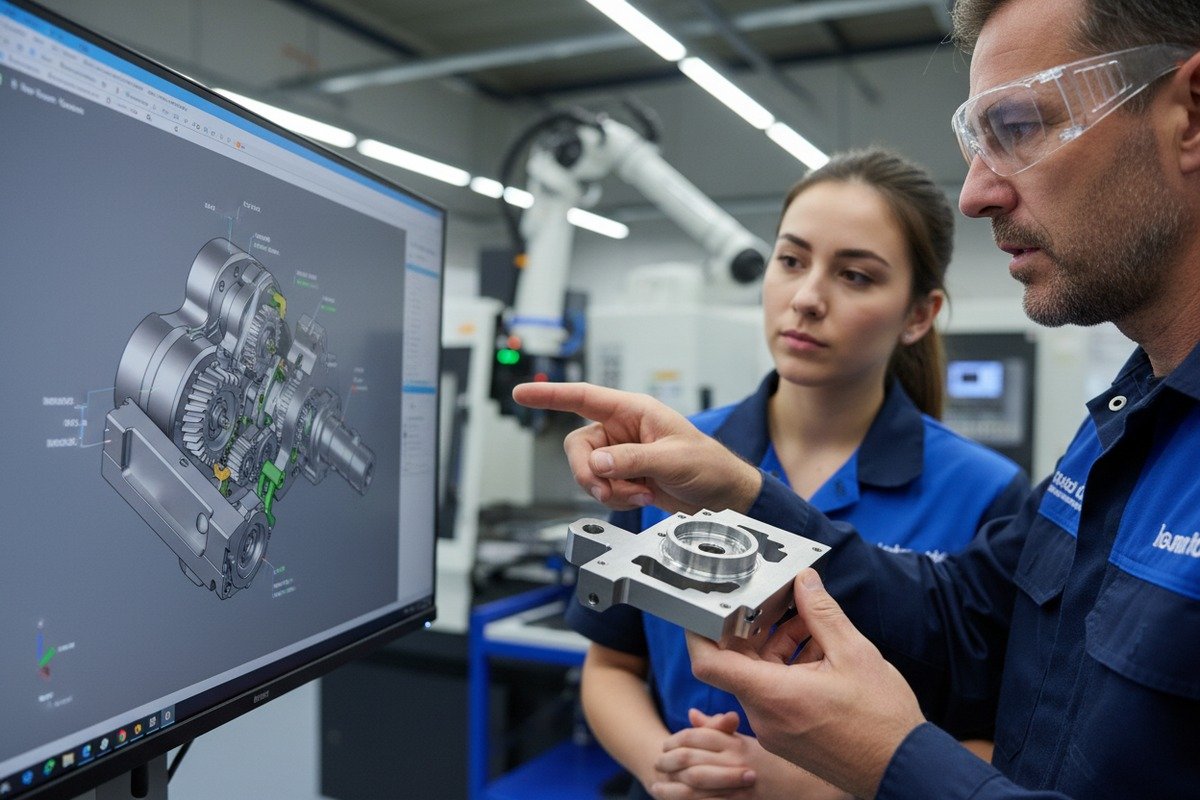
Most product development failures do not happen because of bad ideas. They happen because of poor handoffs between design and manufacturing. When your design team works in isolation, they make assumptions about what a factory can do. Those assumptions often turn out to be wrong. The result is rework, delays, and cost overruns.
Why Early Supplier Involvement Matters
The concept is simple. Bring your manufacturing partner into the conversation before you finalize your design. In our experience working with U.S. purchasing managers, the projects that go smoothest are the ones where we review the drawings together during the prototype stage. We catch things like wall thickness issues, draft angle problems, or unnecessarily tight tolerances that drive up cost without adding function.
This is not about the factory telling you what to design. It is about combining your product knowledge with their process knowledge. Cross-functional collaboration between your engineers and your supplier's engineers cuts revision cycles significantly.
The Co-Development Process Step by Step
| Phase | Your Team's Role | Manufacturing Partner's Role | Output |
|---|---|---|---|
| Concept Review | Share design intent and functional requirements | Assess feasibility and suggest process options | Feasibility report |
| DFM Analysis | Provide 3D models and 2D drawings | Run Design for Manufacturability checks 3 | DFM feedback with redline markups |
| Prototype Build | Approve prototype scope and materials | Produce samples and measure against specs | First article samples with dimensional report |
| Design Iteration | Review samples and request changes | Implement changes and re-sample | Revised samples ready for validation |
| Production Handoff | Sign off on final design | Lock in tooling, fixtures, and process parameters | Production-ready package |
Using MoSCoW to Prioritize Features
Not every feature on your drawing is equally important. We use the MoSCoW method 4 with clients to sort requirements into four buckets. This keeps the co-development process focused on what truly matters.
"Must-have" features are non-negotiable. They define the part's function. "Should-have" features improve performance but are not critical. "Could-have" features are nice additions if budget allows. "Won't-have" features get parked for future versions.
This framework prevents scope creep. It also helps your manufacturing partner allocate resources to the right areas. When everyone agrees on priorities upfront, the design cycle moves faster and produces better results.
One project we handled last year involved a hydraulic manifold block with 14 cross-drilled ports. The original design called for tolerances that required secondary grinding on every port. After our DFM review, we suggested a slight redesign that kept 12 ports within standard machining tolerance. That one change saved the client three weeks of lead time and roughly 20% on unit cost.
What quality control measures will ensure my custom parts meet specifications on the first run?
On our inspection floor, we have a saying — if you are catching defects at final inspection, you are already too late. quality control measures 5 The real quality work happens before the first part is even cut.
Ensuring first-run success requires a layered quality system that includes PPAP documentation, incoming material verification, in-process statistical controls, first article inspection, and final dimensional checks — all tied to your drawing specifications and agreed-upon acceptance criteria before production starts.
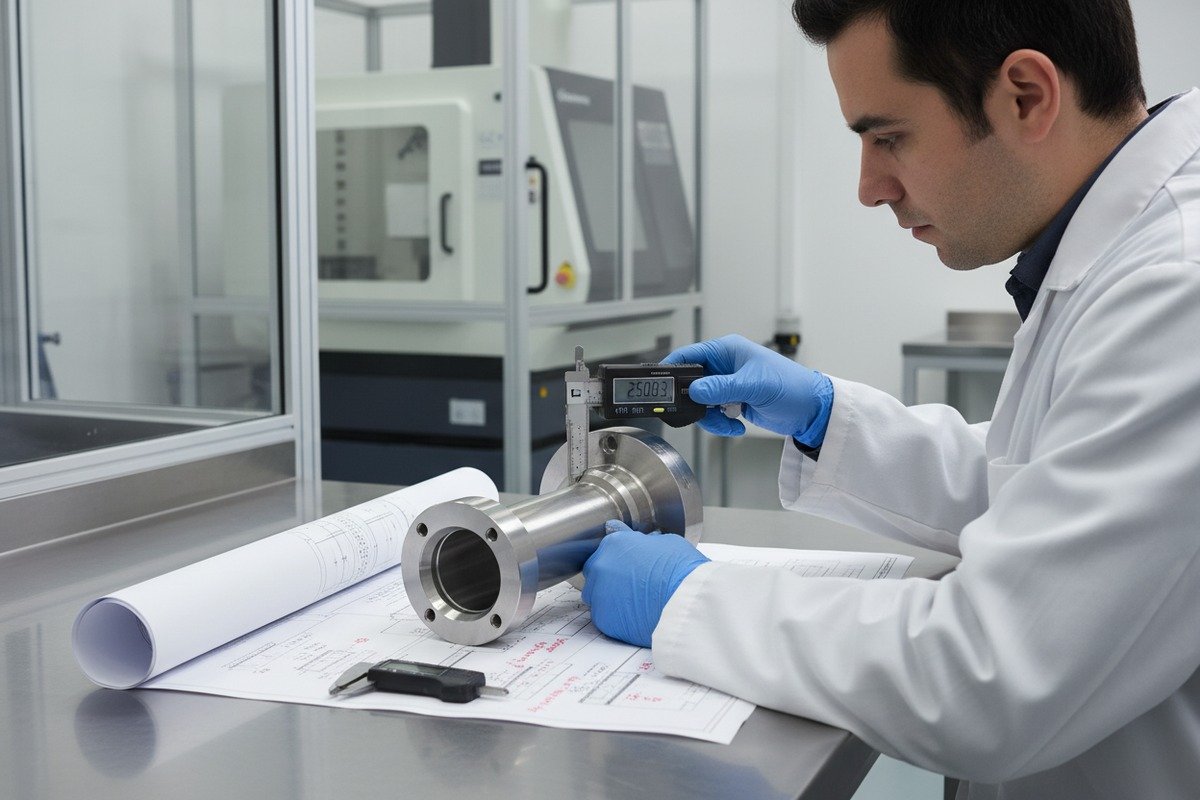
"Right first time" is not just a slogan. It is a measurable goal. And reaching it depends on building quality into the process, not just inspecting for it at the end. Here is how a structured quality control system works in practice.
The PPAP Foundation
Production Part Approval Process 6 is the backbone of quality assurance for custom parts. It is a standardized set of documents that proves your manufacturing partner can consistently produce parts that meet your specifications. We complete PPAP packages for every new project because it forces both sides to agree on exactly what "good" looks like before mass production begins.
A typical PPAP submission includes process flow diagrams, control plans, measurement system analysis, and initial sample inspection reports. It sounds like a lot of paperwork. But each document serves a purpose. The control plan, for example, tells every operator on the line exactly what to check, how often to check it, and what to do if a measurement falls out of range.
Layered Quality Control Checkpoints
| Checkpoint | When It Happens | What Gets Checked | Tools Used |
|---|---|---|---|
| Incoming Material Inspection | Before production starts | Material certificates, hardness, dimensions of raw stock | Spectrometer, hardness tester, calipers |
| First Piece Approval | After machine setup, before batch run | All critical dimensions per drawing | CMM, micrometers, gauges |
| In-Process SPC | During production at set intervals | Key characteristics identified in control plan | Control charts, go/no-go gauges |
| Final Inspection | After all operations complete | Full dimensional layout, surface finish, visual defects | CMM, profilometer, visual standards |
| Pre-Shipment Audit | Before packing and shipping | Random sample per AQL table, packaging integrity | AQL sampling plan, functional checks |
Why Statistical Process Control Beats 100% Inspection
Some buyers ask us to inspect every single part. That sounds thorough, but it is actually less reliable than statistical process control 7. Human inspectors get fatigued. They miss things. SPC uses data from regular samples to monitor the process itself. If the process is stable and capable, the parts will be good. If the data shows a trend toward the tolerance limit, operators correct the process before any defect occurs.
We track Cpk values on critical dimensions. A Cpk of 1.33 or higher means the process is well-centered and capable. When we see a Cpk dropping below 1.0, that is an early warning sign. We investigate and adjust before bad parts get made.
The combination of PPAP upfront and SPC during production is what makes "right first time" achievable. It is not about perfection. It is about having a system that catches problems early and prevents them from reaching your receiving dock.
How do I find a manufacturing partner in Vietnam to reduce my supply chain risks?
Over the past few years, our Vietnam office has grown from two people to seven — and that growth tracks directly with the number of U.S. clients asking us to move production out of China.
You find a reliable Vietnam manufacturing partner by evaluating their local operational presence, conducting on-site supplier audits, verifying quality management systems, checking export experience to your market, and confirming they can manage the full supply chain from raw material sourcing through door-to-door logistics.
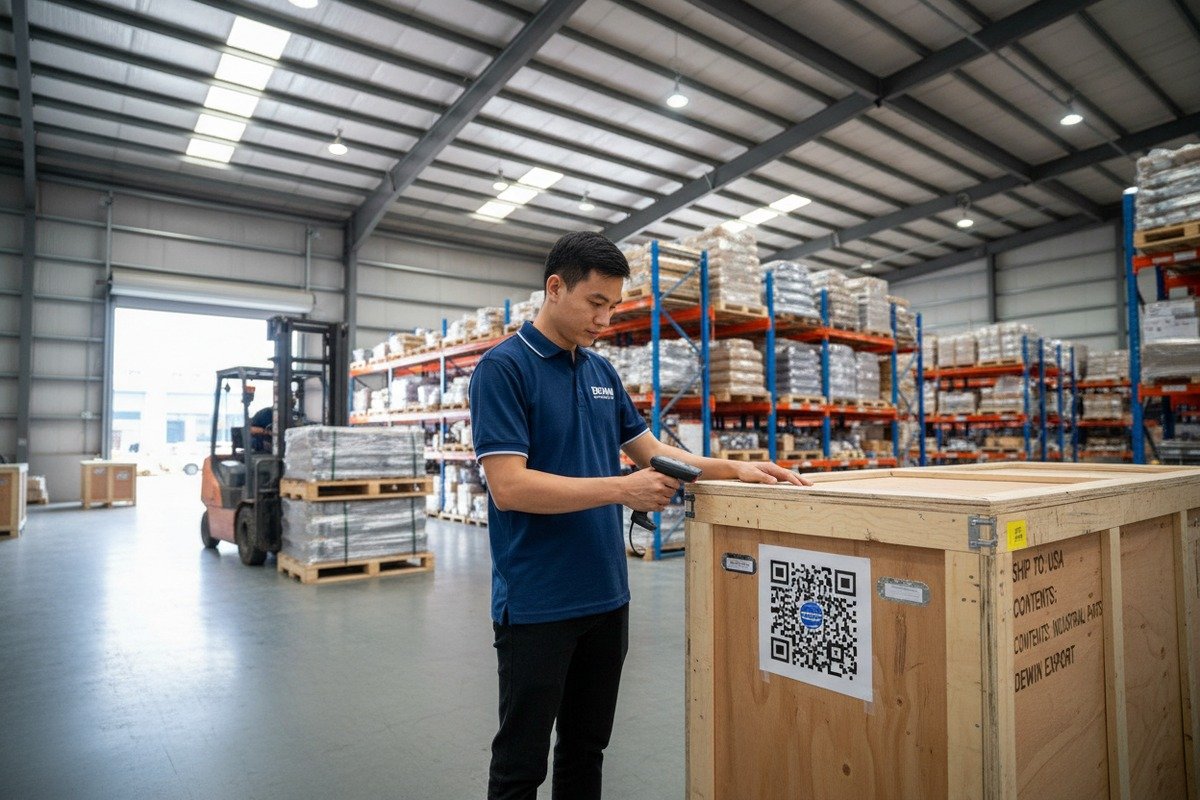
Supply chain diversification 8 is no longer optional for most U.S. importers. Tariff uncertainty, geopolitical tensions, and pandemic-era disruptions taught everyone the same lesson — relying on a single sourcing region is risky. Vietnam has emerged as a leading alternative, but finding the right partner there takes more than a quick Alibaba search.
What to Look for in a Vietnam-Based Partner
The biggest mistake buyers make is treating Vietnam like a direct replacement for China. The manufacturing ecosystem is different. Factory capabilities vary widely. Infrastructure in some provinces is still developing. You need a partner who understands these realities and can navigate them for you.
Here is what matters most. First, do they have people on the ground? A partner with a local team in Vietnam can visit factories, manage production schedules, and handle quality inspections in person. Remote management from another country leads to communication gaps and missed deadlines.
Second, can they conduct proper supplier audits? Before placing any order, your partner should assess the factory's equipment, capacity, workforce skill level, and quality systems. We use a standardized audit checklist that covers over 80 evaluation points. Factories that score below our threshold do not make it onto our approved supplier list.
Comparing Sourcing Regions
| Factor | China | Vietnam | India |
|---|---|---|---|
| Manufacturing maturity | Very high | Growing rapidly | Moderate |
| Labor cost | Rising | Competitive | Low |
| Tariff exposure for U.S. imports | High and unpredictable | Lower, with trade agreements | Moderate |
| Supplier density | Very high | Moderate, concentrated in key provinces | Varies by sector |
| Infrastructure quality | Excellent | Good in major industrial zones | Inconsistent |
| English communication | Variable | Improving, still limited in some factories | Generally good |
| IP protection framework | Improving but concerns remain | Developing | Developing |
Building Resilience, Not Just Shifting Risk
Moving production to Vietnam does not automatically reduce risk. If you simply swap one single-source country for another, you have the same vulnerability in a different location. True supply chain resilience comes from having qualified suppliers in multiple regions, with a partner who can coordinate across all of them.
Our approach is to maintain approved supplier networks in both Vietnam and other Asian markets. When a client needs a specific capability that is stronger in one region, we route that work accordingly. When a disruption hits one area, we have backup options already audited and ready.
The key is preparation. Audit your suppliers before you need them urgently. Build relationships during calm times so they are solid when pressure hits. And work with a partner who has the local presence to manage it all without you needing to fly across the Pacific every quarter.
How can flexible payment terms help me manage the costs of my custom manufacturing projects?
When we talk to purchasing managers about their biggest frustrations with Asian suppliers, cost is rarely just about the unit price — it is about cash flow timing and the financial risk of paying upfront for parts that might not arrive on spec.
Flexible payment terms like open account arrangements with 60 to 90 day credit periods help you manage custom manufacturing costs by preserving working capital, reducing upfront financial risk, aligning payment with your own receivables cycle, and allowing you to invest freed-up cash into other areas of your product development pipeline.
Most Asian suppliers require either full payment upfront or a significant deposit before production. That model puts all the financial risk on the buyer. If parts arrive late or out of spec, you have already paid. Getting refunds or credits from overseas suppliers is difficult and time-consuming. Flexible payment terms shift that dynamic in your favor.
How Payment Terms Affect Your Project Budget
Think about a typical custom manufacturing project. You have tooling costs, material costs, production costs, inspection costs, and shipping costs. If you pay for all of that before the parts land at your warehouse, you are financing your supplier's operations with your own working capital.
With open account terms 9 — say, net 60 or net 90 days — you receive the goods first and pay later. This means you can inspect the parts, confirm they meet specifications, and even deliver them to your end customer before the payment is due. Your cash flow stays healthy. Your financial exposure drops.
Comparing Payment Structures
| Payment Structure | Cash Flow Impact on Buyer | Risk Level for Buyer | Typical Availability |
|---|---|---|---|
| 100% upfront (T/T in advance) | Severe — all capital locked before shipment | Very high — no leverage if quality fails | Common with new or small suppliers |
| 30% deposit + 70% before shipment | Heavy — majority paid before receiving goods | High — limited recourse on quality issues | Standard in Asian trade |
| Letter of Credit (L/C) | Moderate — bank holds funds until documents presented | Medium — bank verification adds a layer of protection | Available but involves bank fees |
| Open Account (Net 60–90 days) | Low — payment after receipt and inspection | Low — full inspection before payment due | Offered by established partners with credit capability |
Why Not Every Supplier Can Offer Credit Terms
Offering open account terms requires the supplier to finance production from their own resources. Small factories usually cannot do this. They need your deposit to buy raw materials. Only partners with sufficient financial strength and established trust relationships can extend credit.
We offer 60 to 90 day open account terms to qualified clients because we understand the cash flow pressures of running an import business. Our clients use that breathing room to manage their own receivables, fund parallel development projects, and avoid taking on short-term debt just to pay suppliers.
There is a practical benefit beyond cash flow too. When you pay after receiving and inspecting goods, your supplier has a strong incentive to get quality right the first time. Late deliveries and defective parts mean delayed payment for them. The financial structure naturally aligns both parties toward the same goals — on-time delivery and right-first-time quality.
If you are evaluating manufacturing partners, ask about payment terms early in the conversation. A partner willing to offer credit is signaling confidence in their own quality and delivery performance. That tells you something important about how they run their operation.
Conclusion
Custom manufacturing services optimize your product development when they combine co-development expertise 10, layered quality control, diversified sourcing in regions like Vietnam, and flexible payment terms that protect your cash flow.
`
Footnotes
1. Explains the structured process of bringing new products to market. ↩︎
2. Explains issues arising from incompatible design specifications in engineering. ↩︎
3. Describes a critical engineering process for optimizing designs for efficient production. ↩︎
4. Authoritative and comprehensive explanation of the MoSCoW method. ↩︎
5. Provides an overview of systems and practices to ensure product quality. ↩︎
6. Detailed explanation of PPAP from a reputable quality consulting firm, referencing AIAG. ↩︎
7. Describes a data-driven methodology for monitoring and controlling manufacturing quality. ↩︎
8. Highlights a strategy to mitigate risks and enhance resilience in global sourcing. ↩︎
9. Defines a payment method advantageous for buyers in international trade. ↩︎
10. Defines collaborative product development with external partners for innovation. ↩︎

 English
 Español de México
 Deutsch
 Français
 Русский
 العربية