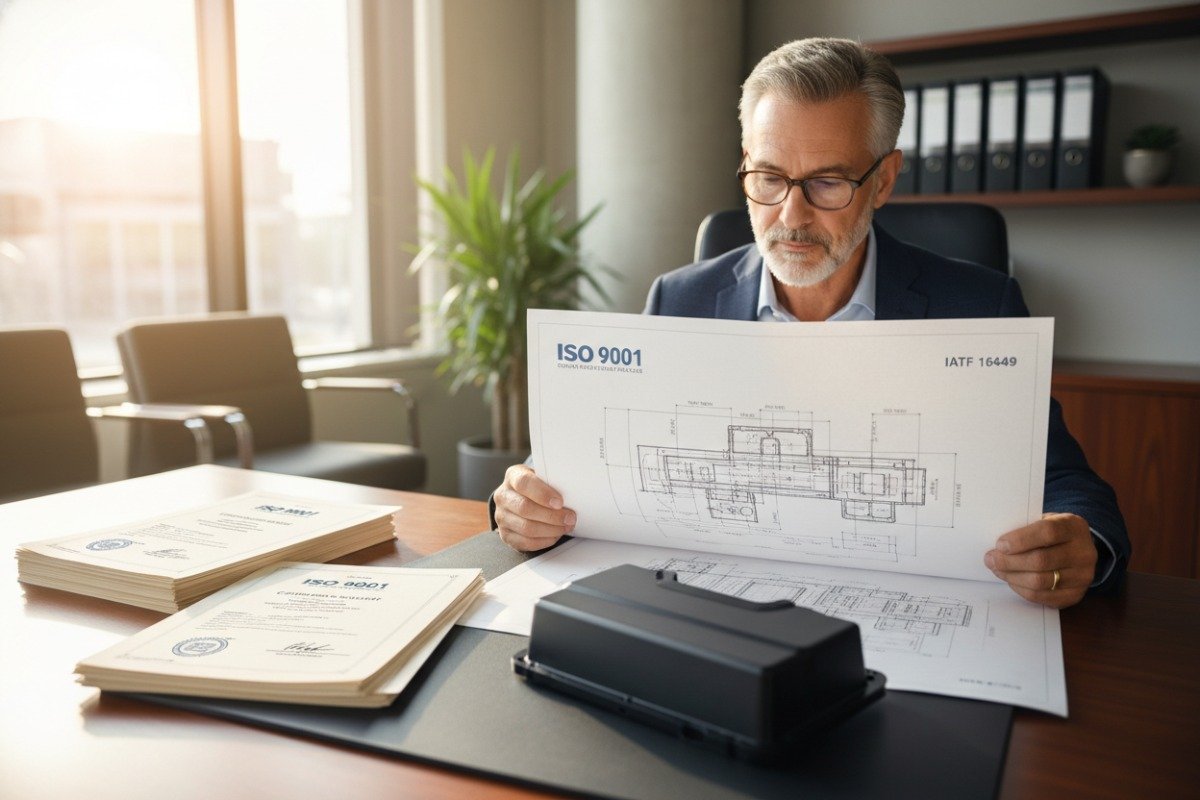
Every year, our team fields dozens of calls from U.S. purchasing managers burned by bad suppliers. They lost money, lost time, and lost trust. The pain is real. And the problem is simple: they picked the wrong factory.
Finding reliable injection molding manufacturers in China requires verifying ISO certifications, conducting factory audits, requesting Western client references, and avoiding middlemen brokers. A structured vetting process—from defining specs to sample runs—reduces risk and ensures consistent quality on custom plastic parts.
The good news? You can avoid most sourcing disasters with a clear, step-by-step approach. Below, we break down the exact process our team uses when helping clients source injection-molded parts from Asia. Let's walk through it together.
How Can I Verify the Legitimacy and Production Capacity of a Chinese Factory?
Our sourcing office in China has visited hundreds of factories over the years. Some look great online but fall apart in person. The gap between marketing and reality can be shocking.
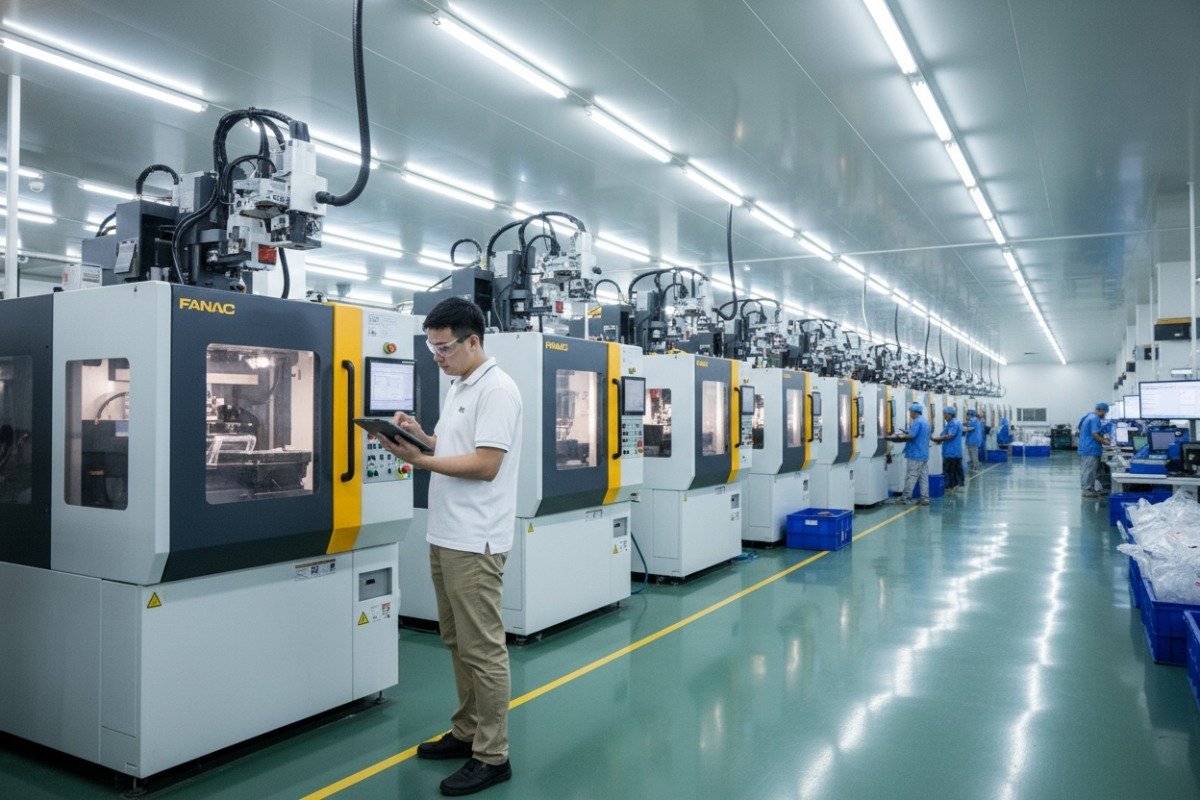
To verify a Chinese factory's legitimacy, check ISO certifications (ISO 9001, IATF 16949, ISO 13485), request customer references from Western markets, conduct virtual or in-person audits, and cross-reference company profiles across multiple directories. Always confirm equipment brands and monthly output capacity.
Start With Certifications
Certifications are your first filter. They don't guarantee perfection, but they show a factory takes quality systems seriously. Look for these:
| Certification | What It Covers | Who Needs It |
|---|---|---|
| ISO 9001 1 | General quality management | All industries |
| IATF 16949 2 | Automotive quality management | Automotive parts buyers |
| ISO 13485 3 | Medical device quality management | Medical parts buyers |
| ISO 14001 4 | Environmental management | ESG-conscious buyers |
A 2025 survey by the China Plastics Machinery Industry Association found that 85% of Chinese injection molding exporters hold at least one ISO certification. But here's the catch—only 60% pass independent third-party audits like SGS. So certifications alone are not enough.
Cross-Reference Multiple Directories
Don't rely on a single source. Check company names across platforms like Alibaba, Made-in-China, industry top-10 lists, and trade databases. If a company appears consistently—like JMT Mould, FOW Mold, or Packson Mold—that's a positive signal. If a company only shows up on one obscure directory, dig deeper.
Tools like Panjiva 5 or ImportGenius let you search actual shipment records. You can see which factories are genuinely exporting to the U.S. and Europe. This is one of the most underused verification methods.
Conduct Factory Audits
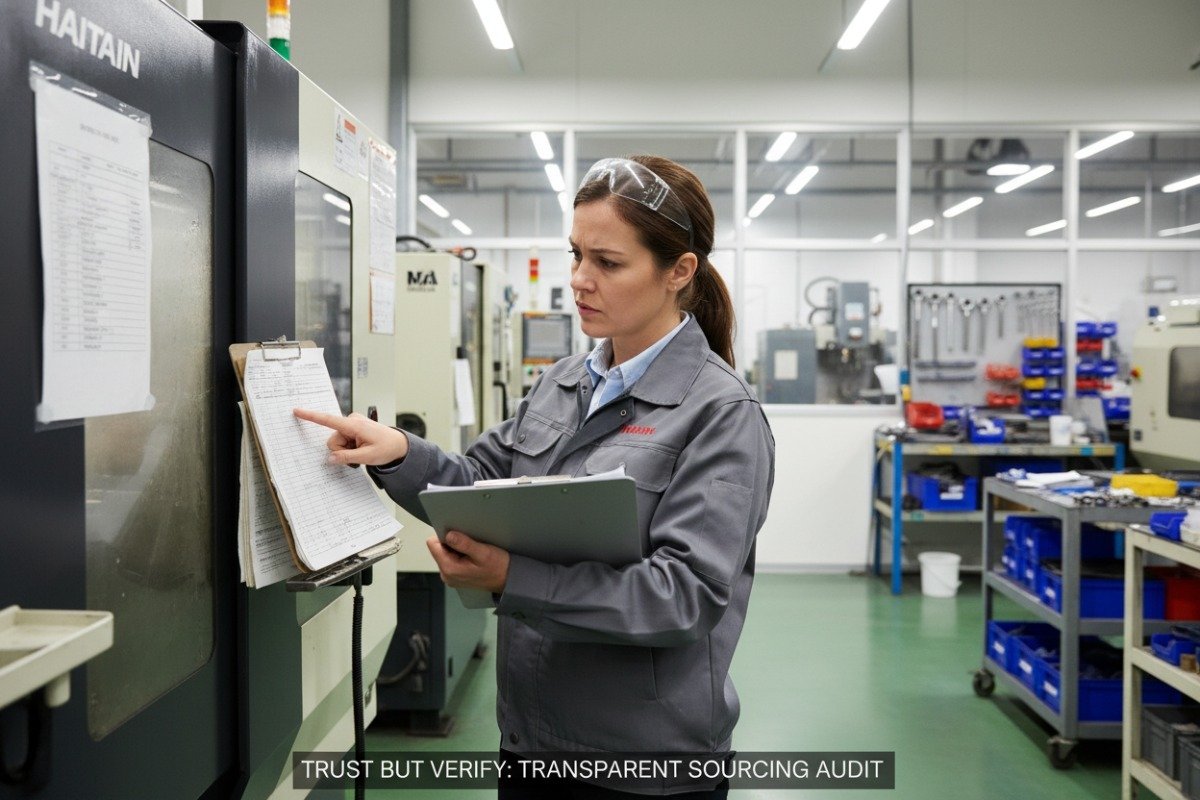
Nothing replaces seeing a factory with your own eyes. If you can't travel, a video call walkthrough works as a starting point. When our team audits a factory, we check:
- Machine brands (Swiss, Japanese, or Taiwanese equipment signals investment in quality)
- Shop floor cleanliness and organization
- Number of machines vs. claimed capacity
- Raw material storage and traceability
- Worker training records
For example, a factory claiming 40–50 molds per month should have at least 20–30 CNC machines and a dedicated mold testing area. If the numbers don't add up, walk away.
Request Western Client References
Reputable factories will share references. Some firms offer contacts from 50+ U.S. and European clients for direct verification. If a factory refuses to provide references, that's a red flag. Call those references. Ask about on-time delivery, communication quality, and how the factory handled problems.
Over 5,000 injection molding firms operate in China. The sector dominates globally, with China holding roughly 40% of worldwide capacity. But scale doesn't equal reliability. Your job is to separate the proven performers from the noise.
What Steps Should I Take to Ensure My Plastic Parts Meet My Specific Quality Standards?
When we co-develop custom parts with clients, the biggest lesson we've learned is this: vague specs lead to vague results. Quality problems almost always trace back to unclear requirements at the start.
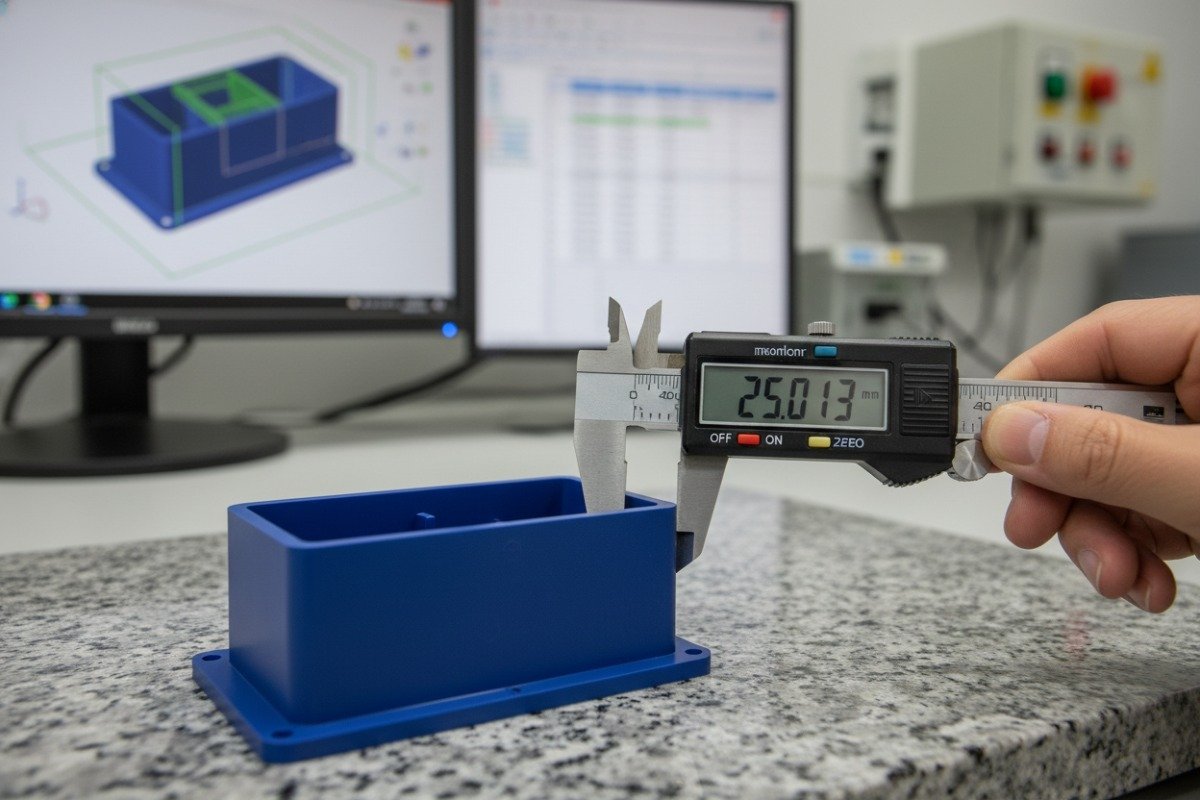
To ensure plastic parts meet your quality standards, provide detailed 2D/3D drawings with tolerances, material grades, and surface finish requirements. Then implement a quality control plan that includes first article inspection (FAI), PPAP documentation, in-process checks, and pre-shipment inspection by a third party.
Define Your Specs Before You Send an RFQ
This sounds obvious, but it's where most projects go wrong. Your drawings must include:
- Material grade (e.g., ABS Chimei PA-757, not just "ABS")
- Tolerances for critical dimensions (e.g., ±0.05mm)
- Surface finish (SPI standards or VDI textures)
- Color (Pantone or RAL number)
- Gate location preferences
- Parting line requirements
If you leave any of these open, the factory will make assumptions. Those assumptions may not match your expectations. We've seen projects fail simply because a drawing said "smooth finish" without specifying a grade.
Use a Structured Quality Control Plan
A proper QC plan covers every stage of production. Here's what we recommend:
| Stage | Action | Who Does It |
|---|---|---|
| Pre-production | Review T1 samples against specs | Buyer + Supplier |
| First Article Inspection (FAI) 6 | Full dimensional report on first 5–10 parts | Supplier (verified by buyer) |
| In-process inspection | Check critical dimensions every 2 hours | Supplier QC team |
| Final inspection | AQL sampling before shipment | Third-party inspector (e.g., SGS) |
| PPAP submission | Full documentation package | Supplier to buyer |
PPAP (Production Part Approval Process) 7 is standard in automotive, but we use it for all custom parts. It forces the factory to document their process, prove capability, and commit to consistency.
Sample Runs Before Full Tooling
Never approve full production based on a 3D render or a single prototype. Request T1 samples from the actual production mold. Test them. Measure them. Assemble them with mating parts. If something is off, fix the mold before committing to volume.
Industry data shows a 30–40% failure rate on first production runs from unverified factories. That number drops below 5% when buyers follow a structured sample approval process.
Don't Chase the Lowest Price
Be cautious of unusually low quotes. A mold quoted at $5,000 when competitors quote $15,000–$25,000 likely uses soft steel (P20 instead of H13), which wears out after 50,000 shots instead of 500,000. The "savings" disappear when you need a new mold in six months.
Always request a detailed cost breakdown: steel type, number of cavities, hot runner vs. cold runner, cycle time estimate, and per-unit production cost. Transparency here separates serious factories from brokers guessing at numbers.
How Do I Protect My Intellectual Property When Sharing My Designs With Overseas Manufacturers?
Our engineering team handles confidential drawings daily. We understand the anxiety clients feel when sending proprietary designs overseas. It's a legitimate concern—but it's also manageable with the right safeguards.
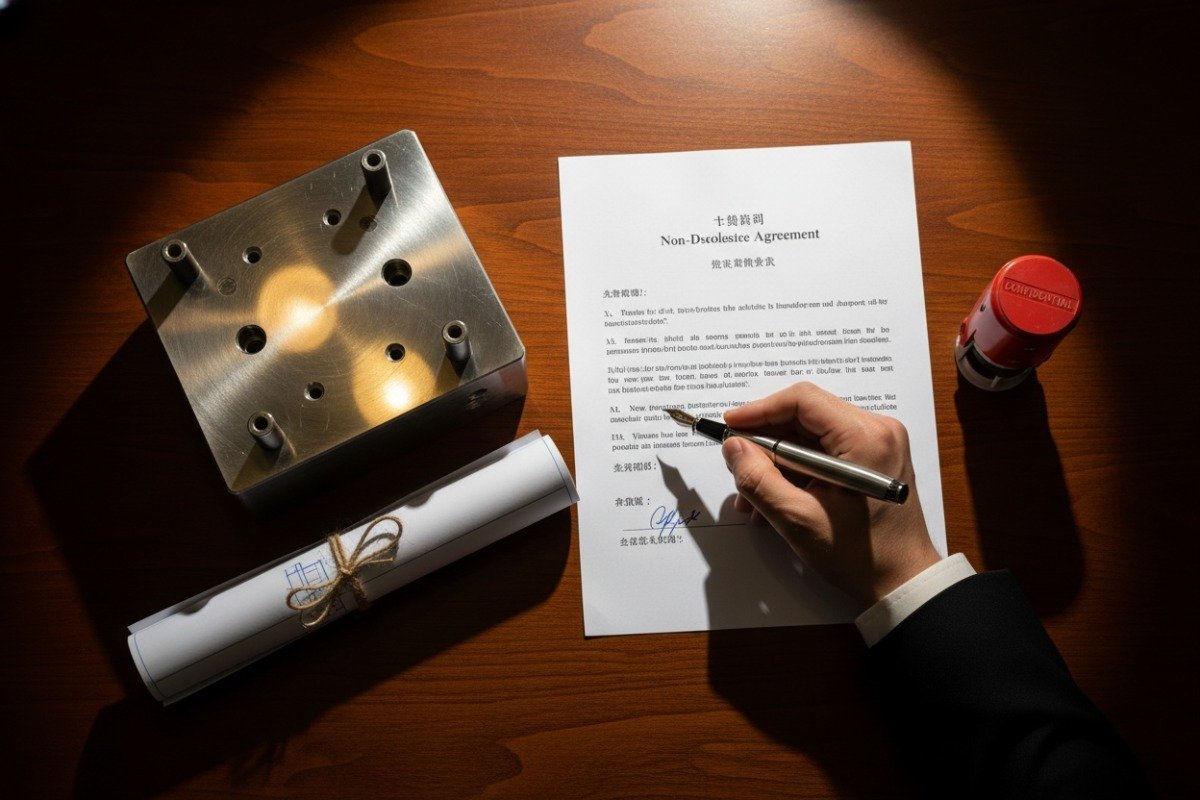
Protect your intellectual property by signing enforceable NDAs under Chinese law, filing design patents in China before sharing drawings, specifying mold ownership in contracts, and releasing technical details in stages. Use customer-owned tooling clauses so you retain physical control of your molds.
Sign an NDA Under Chinese Jurisdiction
A U.S.-based NDA is nearly impossible to enforce in China. Instead, use a bilingual NDA (English and Chinese) that specifies Chinese courts as the jurisdiction. This gives you legal standing if a dispute arises.
Work with a lawyer experienced in Chinese IP law. The cost is modest—typically $1,000–$3,000—but the protection is significant. Many factories will sign without pushback if the terms are reasonable.
File Design Patents in China
If your product has a unique shape or appearance, file a design patent 8 with China's National Intellectual Property Administration (CNIPA) 9 before sharing drawings. Chinese design patents are relatively fast (6–12 months) and inexpensive ($500–$1,500). They give you legal grounds to stop copycats within China.
Control Tooling Ownership
This is critical. Your contract must state clearly:
| Clause | What It Means | Why It Matters |
|---|---|---|
| Mold ownership | Buyer owns the mold | Factory cannot use your mold for other clients |
| Mold storage | Factory stores mold at no charge for 2 years | Prevents "lost mold" claims |
| Mold release | Factory must ship mold to buyer on request | You can move production if needed |
| Mold marking | Buyer's name engraved on mold | Physical proof of ownership |
Without these clauses, some factories treat your mold as their asset. They may refuse to release it or use it to produce parts for your competitors.
Release Information in Stages
Don't send your full design package on the first email. Share general specs during the quoting phase. Release detailed drawings only after the NDA is signed and the factory is shortlisted. Share final production files only after the contract is executed.
This staged approach limits exposure. If a factory turns out to be unreliable, they only have partial information.
Use Digital Watermarks and Version Control
Stamp your drawings with the factory's name and date. If a drawing leaks, you can trace the source. Use a document management platform with access logs so you know exactly who viewed what and when.
IP theft is a real risk, but it's often overstated. Most reputable factories understand that stealing designs destroys their reputation and future business. The key is working with verified, reference-backed suppliers—not anonymous contacts from a directory.
What Red Flags Should I Look for When Vetting a Potential Injection Molding Partner?
Over the years, our team has helped clients recover from bad supplier relationships. The warning signs were almost always there from the beginning. Knowing what to look for saves you months of frustration and thousands of dollars.
Red flags when vetting injection molding partners include vague or evasive answers to technical questions, refusal to provide client references, no verifiable factory address, prices significantly below market average, and claiming capabilities across too many unrelated industries. Broker behavior—where the "factory" is actually a reseller—is the most common trap.
The Broker Problem
This is the single biggest risk in Chinese sourcing. Industry estimates suggest that many "manufacturers" listed on directories are actually trading companies or brokers. They take your order, mark it up 20–50%, and subcontract to a tool shop you've never heard of. You lose visibility, control, and margin.
How to spot a broker:
- Their website shows products across wildly different industries (automotive, toys, medical, furniture)
- They can't answer detailed technical questions about machining or mold design
- They avoid video calls showing the factory floor
- Their business address is an office building, not an industrial zone
- They don't appear in shipment databases like Panjiva
Price Red Flags
If a quote is 40–60% below other quotes, something is wrong. Here's what low prices usually mean:
| Suspiciously Low Area | Likely Compromise |
|---|---|
| Mold price | Soft steel (P20 pre-hardened), fewer cavities |
| Unit price | Recycled or off-spec resin instead of virgin material |
| Lead time | Skipping mold flow analysis or T1 sample approval |
| No tooling fee | Tooling cost hidden in inflated unit price; factory owns the mold |
We've seen clients "save" $10,000 on a mold only to spend $30,000 on rework, air freight, and lost production time. The cheapest quote is almost never the best value.
Communication Red Flags
Pay close attention to how a factory communicates during the quoting phase. This is their best behavior. If they're slow, vague, or dismissive now, it will only get worse after they have your money.
Warning signs include:
- Takes more than 48 hours to respond to emails without explanation
- Gives generic answers that don't address your specific questions
- Cannot provide a DFM (Design for Manufacturability) report
- Avoids discussing tolerances, gate locations, or material certifications
- Pushes you to place an order before reviewing samples
Lack of Transparency
A trustworthy factory welcomes scrutiny. They'll share machine lists, QC procedures, organizational charts, and client case studies. If a factory is secretive about basic operational details, that's a problem.
Ask for a factory profile document. It should include:
- Year established
- Number of employees (production vs. office)
- Machine list with brands and tonnage
- Monthly mold and production capacity
- Key export markets and client industries
- Certifications with certificate numbers you can verify
If they can't produce this document, they're either too small to have organized systems or they're hiding something. Either way, move on.
Trust Your Instincts
After 20+ years in this industry, we've learned that gut feelings matter. If something feels off during early conversations—if the factory seems too eager, too cheap, or too good to be true—it usually is. Take your time. Shortlist 5–10 candidates. Run a proper evaluation. The effort you invest upfront pays for itself many times over.
Conclusion
Finding a reliable injection molding manufacturer in China comes down to preparation, verification, and structured quality control. Define your specs clearly, vet thoroughly, protect your IP, and watch for red flags. The right partner is out there—you just need a disciplined process to find them.
Footnotes
1. Official standard for quality management systems. ↩︎
2. Official standard for automotive quality management systems. ↩︎
3. Official standard for medical device quality management. ↩︎
4. Official standard for environmental management systems. ↩︎
5. Authoritative source for global trade and supply chain data. ↩︎
6. Wikipedia provides a comprehensive and accessible overview of First Article Inspection (FAI). ↩︎
7. Official standard for production part approval in automotive industry. ↩︎
8. Wikipedia provides a clear, well-referenced definition of design patents. ↩︎
9. Official government body for intellectual property in China. ↩︎
 English
  Español de México
  Deutsch
  Français
  Русский
  العربية