
When our engineering team first started sourcing blow molded fuel tanks for a Tier-One automotive client, we quickly learned that not all supp 1liers are created equal. The wrong choice meant costly recalls, production delays, and damaged relationships.
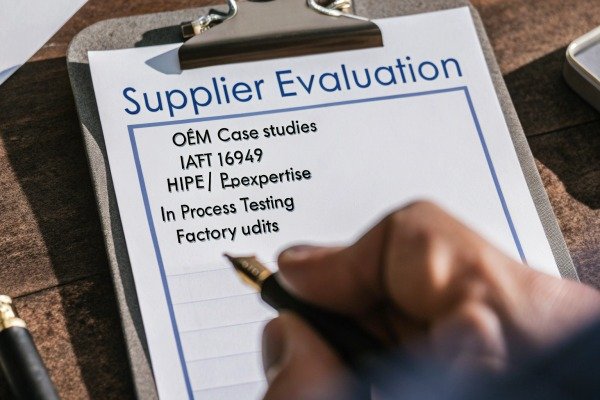
To evaluate a plastic blow molding supplier for automotive air ducts or fuel tanks, verify their automotive-specific track record with OEM case studies, confirm IATF 16949 certification 2, assess material expertise in HDPE and PP, examine in-process testing protocols, and conduct thorough factory audits focusing on equipment modernity and quality control rigor.
This guide walks you through the exact evaluation process we use when qualifying suppliers for our U.S. and European automotive clients. Let’s break down each critical step.
How can I verify a supplier's past track record with automotive air ducts and fuel tanks?
Our sourcing team in Vietnam and China has audited over 200 blow molding facilities CMM equipment 3. We've seen suppliers exaggerate their automotive experience more times than we can count.
Verify a supplier's automotive track record by requesting specific OEM customer references, reviewing documented case studies with production volumes, checking for Tier-One or Tier-Two supplier status, examining their automotive certification history, and asking for sample parts from similar projects to physically inspect quality standards.
Why Generic Blow Molding Experience Falls Short
A supplier with 20 years of blow molding bottles is not the same as one with 5 years making fuel tanks. Automotive parts face extreme conditions. Fuel tanks must resist gasoline, diesel, and bio-fuels. Air ducts must handle heat up to 120°C and constant vibration. Generic experience does not prepare suppliers for these challenges.
When we evaluate suppliers, we separate automotive experience from general blow molding years. Our engineers ask pointed questions about specific vehicle programs they have supported.
Key Questions to Ask About Track Record
Start with these direct questions:
- Which OEMs have you supplied directly or through Tier-One integrators?
- Can you provide contact references from automotive customers?
- What annual volume of automotive parts do you produce?
- How long have you held automotive-specific certifications?
Track Record Verification Checklist
| Verification Method | What to Look For | Red Flags |
|---|---|---|
| Customer References | Named OEM contacts willing to discuss supplier performance | Vague references or refusal to provide contacts |
| Case Study Documents | Specific part numbers, volumes, and timelines | Generic claims without details |
| Sample Parts | Consistent surface finish, uniform wall thickness | Visible defects, rough parting lines |
| Certification History | IATF 16949 held for 3+ years | Recent certification or expired status |
| Production Records | Evidence of 100k+ automotive units produced | No documented automotive production |
Evaluating Tier-One vs. Tier-Two Experience
Suppliers who serve Tier-One automotive integrators have passed rigorous qualification processes. This matters because Tier-One companies like Magna, Bosch, and Continental enforce strict standards. If a supplier meets their requirements, they likely meet yours.
However, direct OEM experience is even more valuable. Suppliers working directly with Ford, Toyota, or Tesla face the highest scrutiny. When our team audits suppliers, we weight direct OEM relationships more heavily than Tier-Two experience.
Ask suppliers to specify their position in the supply chain. Request documentation showing their customer's position. A letter from a Tier-One customer confirming the relationship provides solid evidence.
What specific quality control processes should I look for to ensure defect-free blow molded parts?
In our experience managing supply chains for U.S. automotive clients, quality failures in blow molded parts cause the most expensive problems. A single batch of defective fuel tanks can trigger million-dollar recalls.
Look for in-process testing including pressure decay leak detection, wall thickness measurement with ±0.1mm tolerance, weld strength testing exceeding 20 MPa, dimensional inspection using CMM equipment, and material verification through tensile testing. Suppliers should maintain rejection rates below 1% with full traceability documentation.

Critical Testing Methods for Fuel Tanks
Fuel tanks require the most rigorous testing of any blow molded automotive part. They hold flammable liquids under varying pressures. They must not leak for 15+ years of vehicle service.
Pressure decay testing 4 is non-negotiable. This test pressurizes the tank and monitors pressure loss over time. Any drop indicates a leak. Our quality engineers require suppliers to test 100% of fuel tanks using this method.
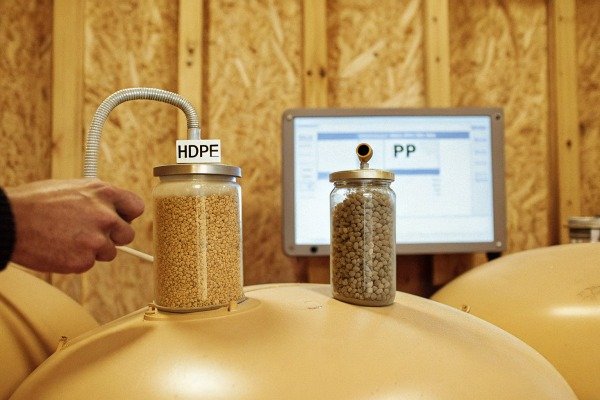
Permeation testing measures how much fuel vapor escapes through the plastic walls. Modern HDPE 5 multi-layer tanks include EVOH barrier layers to minimize permeation. Suppliers must demonstrate their tanks meet EPA and CARB evaporative emission standards.
Testing Methods for Air Ducts
Air ducts face different challenges. They must maintain airflow without restriction. They must resist cracking from vibration. Weld integrity is critical where ducts join or include integrated features.
Weld strength testing pulls apart welded sections to measure bond strength. For HDPE air ducts, weld strength should exceed 80% of base material strength. Suppliers should provide test reports showing consistent weld performance.
Quality Control Metrics Comparison
| Test Type | Fuel Tanks | Air Ducts | Acceptable Range |
|---|---|---|---|
| Pressure Decay | Required 100% | Required 100% | Zero detectable leaks |
| Wall Thickness | ±0.1mm variation | ±0.15mm variation | Per drawing specification |
| Weld Strength | >20 MPa | >16 MPa | HDPE material dependent |
| Tensile Strength | >22 MPa | >20 MPa | Material grade specific |
| Dimensional Check | CMM 100% | CMM sampling | Per GD&T callouts |
In-Process vs. Final Inspection
Smart suppliers catch problems during production, not after. In-process inspection costs less than final inspection rework. When our auditors visit factories, we evaluate the ratio of in-process to final inspection activities.
Look for statistical process control (SPC) charts displayed at each work station. Operators should record measurements in real-time. Control limits should be visible. Out-of-spec readings should trigger immediate corrective action.
Ask to see their response to the last quality escape. How did they find the root cause? What permanent corrective action did they implement? Suppliers who cannot answer these questions lack mature quality systems.
How do I assess the engineering team's ability to handle complex mold design and co-development?
When our engineers collaborate with suppliers on new automotive programs, we need partners who contribute technical value. A supplier who simply follows drawings without input provides minimal benefit.
Assess engineering capability by reviewing their mold design portfolio, examining simulation software capabilities like mold flow analysis, evaluating their DFM feedback quality, checking engineer-to-production ratios, and testing their response time on technical questions. Strong suppliers employ dedicated automotive engineers with 5+ years of blow molding experience.
Simulation and Digital Prototyping Tools
Modern blow molding engineering relies heavily on simulation. Before cutting steel for a mold, engineers should simulate the process digitally. This prevents expensive trial-and-error during physical prototyping.
Mold flow analysis 6 predicts how plastic will fill the mold cavity. It identifies potential thin spots, weld lines, and air traps. Suppliers with this capability reduce prototype iterations by 50% or more.
Structural analysis using finite element methods (FEA) 7 predicts how parts will perform under load. For fuel tanks, this means simulating crash impacts. For air ducts, this means vibration analysis. Ask suppliers to show examples of their simulation work.
Engineering Team Structure
| Role | Responsibility | Minimum Ratio |
|---|---|---|
| Mold Design Engineer | Creates tool designs, addresses DFM issues | 1 per 3 active programs |
| Process Engineer | Optimizes blow molding parameters | 1 per 2 production lines |
| Quality Engineer | Develops inspection methods, analyzes failures | 1 per major customer |
| Project Manager | Coordinates timelines, customer communication | 1 per 5 active programs |
| Simulation Specialist | Runs mold flow and structural analysis | 1 per facility minimum |
Evaluating Design for Manufacturing Feedback
Give potential suppliers a drawing and ask for DFM feedback within 48 hours. This test reveals their engineering depth. Suppliers who return drawings with no comments either lack expertise or lack engagement.
Strong DFM feedback includes specific suggestions. They might recommend draft angle changes for easier demolding. They might suggest wall thickness modifications for better material distribution. They might identify features that require secondary operations.
Our engineering team rates DFM feedback on a 10-point scale. We consider quantity of suggestions, technical accuracy, and clarity of communication. Suppliers scoring below 7 typically struggle during production.
Co-Development Partnership Indicators
True co-development partners invest in your success. They assign dedicated resources to your programs. They participate in design reviews. They share lessons learned from similar projects.
Ask about their prototyping timeline. Can they produce prototype parts within 4 weeks of design freeze? Do they offer rapid tooling options for faster iteration? How many prototype rounds do they include in their standard quotation?
Equipment capability matters for complex geometries. Multi-parison machines allow complex shapes. Suction blow molding enables undercuts. 3D blow molding handles curved tubes. Match their equipment to your part complexity.
What critical questions should I ask during a factory audit to validate their blow molding expertise?
Our audit teams visit supplier facilities before we recommend them to clients. We've developed a systematic approach based on hundreds of audits across Asia. The right questions reveal the truth behind sales presentations.
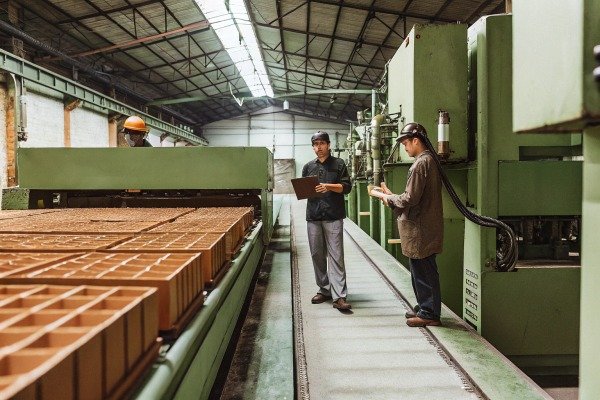
During factory audits, ask about machine uptime percentages targeting above 95%, maintenance schedules and repair frequency, material handling procedures preventing contamination, operator training programs and certification, tooling maintenance intervals, and specific examples of how they resolved recent quality issues. Observe the shop floor organization and cleanliness as indicators of management discipline.
Equipment Assessment Questions
Equipment condition directly impacts part quality. Old machines produce inconsistent results. Poorly maintained machines break down unpredictably. Both scenarios threaten your production schedule.
Ask when each machine was purchased and last rebuilt. Machines older than 15 years may lack modern control systems. Ask about their capital expenditure plan. Suppliers investing in new equipment demonstrate long-term commitment.
Request maintenance logs for the machines that would produce your parts. Look for preventive maintenance schedules, not just reactive repairs. Check that critical components like extruder screws and hydraulic systems receive regular attention.
Factory Audit Question Framework
| Category | Key Questions | What Good Looks Like |
|---|---|---|
| Equipment | Machine age, maintenance frequency, uptime rate | <10 years average age, weekly PM, >95% uptime |
| Personnel | Training programs, certification requirements, turnover rate | Documented training, annual certification, <15% turnover |
| Materials | Storage conditions, FIFO enforcement, incoming inspection | Climate controlled, clear labeling, 100% inspection |
| Tooling | Maintenance intervals, spare availability, repair capability | 50k shot intervals, critical spares on-site, in-house repair |
| Environment | Cleanliness standards, contamination controls | 5S implementation, positive pressure, clear aisles |
Production Capacity Verification
Sales teams often overstate capacity. Our auditors verify capacity claims through observation and documentation review. We calculate theoretical capacity based on machine count, cycle times, and shift patterns. Then we compare to actual output records.
Ask for production reports from the past 12 months. Look for consistent output near claimed capacity. Large gaps suggest either overclaimed capacity or unstable operations.
Understand their current utilization rate. A supplier running at 90% capacity cannot easily absorb your volume. They will either decline orders or compromise quality through overtime and rushed production.
Observational Assessment Points
What you see matters as much as what they say. Walk the entire facility. Check that reality matches the presentation.
Observe operator behavior when management is not watching. Do they follow work instructions? Do they record measurements accurately? Do they handle materials properly?
Check storage areas for organization. Raw materials should have clear identification. Work-in-progress should move through logical staging areas. Finished goods should receive protection from damage.
Look at their scrap bins. Excessive scrap indicates process problems. Ask about scrap rates and what they do with rejected parts. Responsible suppliers analyze scrap for root causes and implement countermeasures.
Documentation and Traceability Systems
Automotive supply chains require full traceability. If a defect appears in the field, you must identify all potentially affected parts. This requires robust documentation systems.
Ask to see their lot traceability system. Can they show you all parts produced from a specific material lot? Can they identify all parts produced during a specific time period? Can they link parts to specific machines and operators?
Review their document control system. Are procedures current? Do operators have access to the latest revisions? How do they manage engineering changes? Weak document control leads to quality escapes.
Conclusion
Evaluating blow molding suppliers for automotive parts demands systematic assessment of experience, quality systems, engineering capability, and operational discipline. Use this guide to qualify suppliers who deliver right the first time.
For more guidance on supplier evaluation or to discuss your specific automotive sourcing needs, contact our team at sa***@*******ch.com. We help U.S. companies source quality blow molded parts from qualified Asian suppliers outside China.
Footnotes
1. Replaced with the Wikipedia page for Polypropylene, an authoritative source. ↩︎
2. Official site explaining the automotive quality management system standard. ↩︎
3. Explains what Coordinate Measuring Machines are and their function. ↩︎
4. Details the method of pressure decay for leak detection in parts. ↩︎
5. Replaced with the Wikipedia page for High-density polyethylene, an authoritative source. ↩︎
6. Describes the simulation technique used to analyze plastic flow in molds. ↩︎
7. Authoritative explanation of Finite Element Analysis from a leading software provider. ↩︎

 English
 Español de México
 Deutsch
 Français
 Русский
 العربية