When we coordinate shipments from our facilities in Vietnam 1 to the United States, we frequently see purchasing managers struggle with the "sticker shock" of freight quotes for blow-molded parts. These components—often hollow bottles, tanks, or ducts—are deceptively light but occupy massive amounts of space. In our experience managing supply chains for custom parts, simply looking at the price per kilogram on a quote sheet is a recipe for budget overruns. We have found that a successful logistics strategy requires looking beyond the basic freight rate to understand how volume, not weight, dictates the final invoice.
To evaluate cost-effectiveness, calculate the Total Landed Cost (TLC) by comparing the volumetric weight impact on air freight against the flat-rate advantage of sea freight containers. For hollow blow-molded parts, sea freight is typically 12-16 times cheaper per kilogram, making it the primary choice unless urgent deadlines necessitate the premium of air transport.
Understanding the nuances of logistics from Southeast Asia is critical for maintaining your margins. Let’s explore the specific mechanics of shipping these unique parts.
How does the dimensional weight of bulky blow-molded parts impact my choice between air and sea freight?
At our warehouse in Ho Chi Minh City 2, we often pack boxes that are incredibly light—sometimes just a few kilograms—but take up an entire pallet space. When we hand these over to logistics providers, the conversation immediately shifts from actual weight to "chargeable" weight. If you are not careful with your calculations here, the freight bill can easily exceed the manufacturing cost of the parts themselves.
Dimensional weight impacts your choice because air carriers charge based on volume (using a 1:6000 divisor) rather than actual weight for lightweight blow-molded parts. This "air tax" often doubles or triples the billable weight, making sea freight essential for preserving profit margins on bulky, low-density shipments.
The "Air Tax" on Hollow Parts
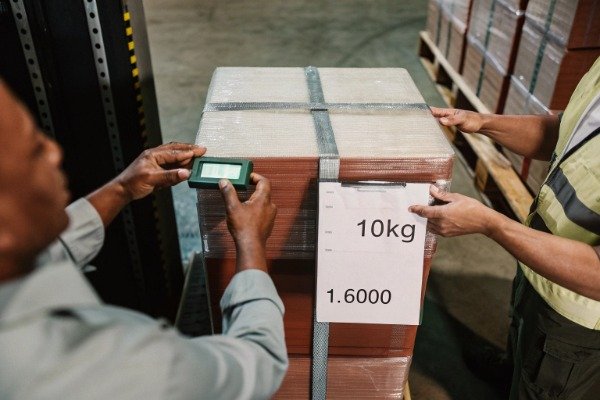
The fundamental issue with blow-molded parts 3 is their density. Because they are hollow, you are effectively shipping "dead air" inside every bottle or container. Air freight carriers use a dimensional factor (usually 1:6000 or 167 kg/cbm) to convert volume into weight.
For example, if we ship a carton of custom plastic tanks that weighs 10kg physically but occupies 0.5 cubic meters of space, the air carrier will not bill you for 10kg. They will bill you for approximately 83.5kg (0.5 cbm * 167). This is a massive discrepancy that destroys the economics of air freight for production runs.
Sea Freight: The Volume Advantage
Sea freight operates differently. While Less than Container Load 4 (LCL) is also billed by volume (per cubic meter), the rate per unit is significantly lower. However, for blow-molded parts, Full Container Load (FCL) is almost always the target. When you book a 40ft container, you pay a flat rate for the box regardless of how much "air" is inside your parts.
This means the cost per unit drops dramatically as you maximize the container fill rate. We always advise our clients to optimize their order quantities to fill a 20ft or 40ft container completely. Shipping a half-empty container of hollow parts is financially inefficient.
Stacking and Nesting: The Hidden Variable
A critical factor we evaluate during the design phase is "nestability." If your blow-molded parts are designed to stack inside one another (like red solo cups), you can increase the density of the shipment. If they cannot nest (like a standard jerry can), you are shipping maximum volume.
We often work with engineering teams to modify designs slightly—adding a taper to the walls, for instance—to allow for nesting. This simple design change can reduce shipping volume by 50% or more, effectively halving your freight cost per unit.
Comparison of Chargeable Weight
The table below illustrates how a hypothetical shipment of 1000 blow-molded tanks is treated differently by air and sea carriers.
Table 1: Air vs. Sea Chargeable Weight Scenarios
| Metric | Air Freight Calculation | Sea Freight (LCL) Calculation | Sea Freight (FCL) Calculation |
|---|---|---|---|
| Actual Weight | 500 kg | 500 kg | 500 kg |
| Volume | 10 Cubic Meters (CBM) | 10 Cubic Meters (CBM) | 10 Cubic Meters (CBM) |
| Billing Formula | Volumetric (1:6000) | Per CBM | Flat Rate (20ft Container) |
| Chargeable Weight/Unit | 1,667 kg | 10 CBM | 1 Container (Flat Fee) |
| Cost Impact | Extremely High (Pay for ~3x actual weight) | Moderate (Pay for space used) | Lowest (Best for bulk) |
When we prepare a pro forma invoice, we usually quote Ex Works 5 (EXW) or Free on Board (FOB). However, we always remind our US clients that the number at the bottom of our invoice is not what the product costs them to put on their shelf. There is a complex layer of fees that accumulates between our loading dock and your warehouse. Ignoring these leads to unpleasant surprises when the customs broker sends their bill.
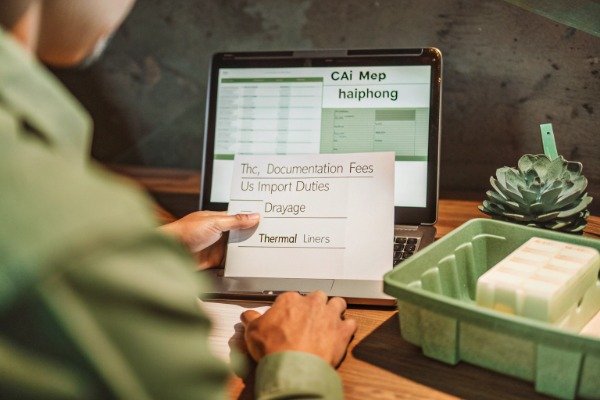
Beyond freight rates, you must include Vietnam-specific terminal handling charges (THC), documentation fees, US import duties, and inland trucking costs to find the true total landed cost. Additionally, factor in potential "nursery" costs like mold modifications for nesting or thermal protection packaging to prevent warping during transit.
Origin Charges in Vietnam
Shipping from Vietnam involves specific local charges. Whether we ship from Cat Lai port in the South or Haiphong in the North, there are fixed costs. These include Terminal Handling Charges (THC), Bill of Lading (B/L) fees, and export customs clearance fees. While these are often included in an FOB price, if you are buying Ex Works, you are responsible for them.
For LCL shipments, these fees can be disproportionately high. We have seen cases where the "local charges" in Vietnam for a small LCL shipment exceeded the ocean freight cost itself. This is another reason why consolidating orders into FCL is vital for blow-molded parts.
Destination Charges and Duties
Upon arrival in the US, you face another set of costs. The Harbor Maintenance Fee 6 (HMF) and Merchandise Processing Fee (MPF) are standard. However, the biggest variable is the import duty. Plastic articles often carry specific tariff codes. You must verify the HTS code for your specific blow-molded part to know the duty rate.
Furthermore, drayage (trucking from the port to your warehouse) has become expensive. If your warehouse is far from the port (e.g., shipping to the Midwest via Los Angeles), the inland trucking cost can rival the ocean freight cost.
The Cost of Quality Risks
There is a "hidden" cost specific to blow-molded parts: thermal deformation. Standard shipping containers can get incredibly hot—upwards of 60°C (140°F)—when crossing the equator or sitting in a port. Thin-walled blow-molded parts can warp under this heat.
To mitigate this, we sometimes have to recommend Reefer (refrigerated) containers 7 or thermal liners. While this ensures quality, it adds a significant premium to the freight cost. This is a cost of "risk avoidance" that must be calculated into your total landed cost.
Table 2: Breakdown of Hidden Logistics Costs
| Cost Category | Specific Item | Description | Impact on Blow-Molded Parts |
|---|---|---|---|
| Origin (Vietnam) | THC & Doc Fees | Port handling and paperwork. | High for LCL; fixed for FCL. |
| Freight | Bunker Adjustment Factor (BAF) | Fuel surcharges. | Fluctuates with oil prices. |
| Destination (US) | Drayage & Chassis Split | Trucking from port to warehouse. | High for bulky volume (requires more trucks). |
| Customs | HTS Duty & Tariffs | Import taxes. | Based on value, not volume. |
| Risk Mitigation | Thermal Liners / Reefer | Protection against heat warping. | Optional but critical for thin-wall parts. |
When does it make financial sense for me to choose air freight over sea freight for urgent samples or small batches?
We understand the pressure of a product launch. Sometimes, waiting 35 days for a ship to cross the ocean is simply not an option. When our engineering team finishes a T1 sample or a pilot run, we often advise clients to bite the bullet on air freight costs. The decision comes down to a trade-off: are you buying transportation, or are you buying time?
Choosing air freight makes financial sense only for initial prototypes, T1 samples, or "line-down" emergencies where the cost of a stockout exceeds the high freight premium. For shipments under 100kg or deadlines under two weeks, air freight offers speed and reliability that justifies the 12-16x higher cost per kilogram.
The "Opportunity Cost" Calculation
The math for air freight is simple: it is expensive. However, the math for not having your product can be worse. If you are launching a new product and missing the launch date costs you $50,000 in lost sales, spending $2,000 on air freight instead of $200 on sea freight is a smart investment.
We recommend air freight primarily for:
- First Articles (Samples): You need to verify the mold quality immediately. Waiting a month for samples delays the entire project.
- Pilot Runs: Getting a small batch into the market to test consumer reaction.
- Emergency Restock: If your inventory count was wrong and a production line is about to stop.
The Break-Even Point
There is a weight/volume threshold where air freight becomes astronomically expensive. For blow-molded parts, this threshold is low due to the volume. Generally, if a shipment is under 100kg (chargeable weight), air freight is manageable. Once you exceed 200-300kg chargeable weight, the cost curve spikes vertically.
For example, shipping 500 hollow bottles by air might cost $1,500. Shipping them by sea (LCL) might cost $300 (including minimums). But the sea shipment takes 40 days. Is that 35-day difference worth $1,200? If those bottles are samples needed to close a deal with a retailer, the answer is yes. If they are just standard inventory, the answer is no.
Hybrid Solutions
For clients caught in the middle—too expensive for air, too slow for sea—we sometimes explore Sea-Air options. This involves shipping by sea to a hub like Dubai or Singapore, and then flying the goods to the US. This can cut transit time by 40-50% compared to pure sea freight, at a cost that is lower than pure air freight.
Table 3: Decision Matrix – Air vs. Sea
| Scenario | Shipment Size | Urgency | Recommended Mode | Rationale |
|---|---|---|---|---|
| T1 Samples | < 50 kg | High (ASAP) | Air Courier | Speed is critical for engineering validation. |
| Pilot Run | 100 – 300 kg | Medium (< 2 weeks) | Air Freight | Market entry speed justifies the premium. |
| Regular Stock | > 1000 kg | Low (> 4 weeks) | Sea Freight (FCL) | Volume makes air freight cost-prohibitive. |
| Emergency | Any | Critical (Line Down) | Air Freight | Cost of stockout > Cost of freight. |
How do transit times from Vietnam affect my inventory holding costs and overall logistics budget?
In our production planning meetings, we constantly align our manufacturing completion dates with vessel sailing schedules. Shipping from Vietnam to the US is not a quick hop; it is a long journey. We have seen clients optimize their freight rates down to the penny, only to lose thousands of dollars because they failed to account for the capital tied up during the long transit time.
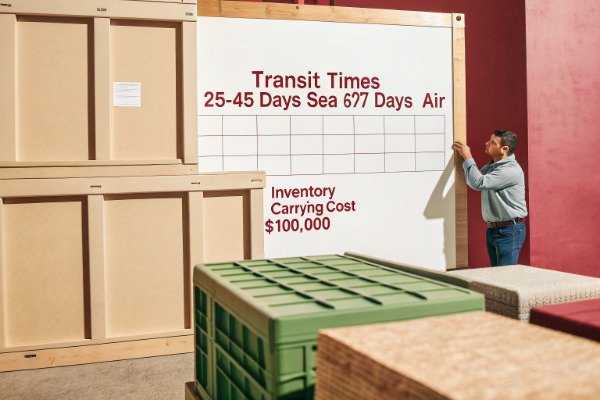
Transit times from Vietnam (25-45 days via sea) directly increase inventory holding costs by tying up capital in floating stock that cannot be sold. To optimize your budget, balance the savings of sea freight against the financial cost of carrying 4-6 weeks of extra safety stock to buffer against delays.
The Cost of "Floating" Inventory
When your goods are on a boat for 35 days, that is cash that is inaccessible. You have likely paid us (the manufacturer) a deposit or the full balance, but you cannot sell the product yet. This is your "inventory carrying cost."
If you import $100,000 worth of parts and your cost of capital is 10% annually, having that inventory sit on the ocean for a month costs you roughly $833 in interest alone. While this seems small per shipment, it adds up over a year. More importantly, long transit times force you to hold more safety stock in your US warehouse to cover the lead time, which increases your warehousing costs.
Regional Differences in Vietnam
Transit time depends heavily on where your supplier is located.
- North Vietnam (Haiphong): Often requires a feeder vessel to a major hub (like Hong Kong or Singapore) before connecting to the mother vessel crossing the Pacific. This can add 5-7 days to the transit time.
- South Vietnam (Cat Lai / Cai Mep): There are more direct calls to the US West Coast from the deep-water ports in Cai Mep. This is generally faster.
We utilize our presence in both regions to advise clients. If speed is the priority, sourcing from a factory near Ho Chi Minh City might save a week of transit time compared to one in Hanoi.
The Seasonality Factor: Tet Holiday
The most critical disruption in Vietnam is the Lunar New Year (Tet). Factories close for 2-3 weeks, and ports become congested before and after the holiday.
HTS code 8
During this period, transit times become unpredictable. A shipment that normally takes 30 days might take 45 due to "rolled" bookings (where cargo is bumped to the next ship). We advise clients to increase their safety stock by at least 4 weeks leading up to Tet to avoid running out of product while the supply chain is paused.
customs broker 9
Table 4: Inventory Cost Impact Analysis
| Factor | Air Freight Scenario | Sea Freight Scenario |
|---|---|---|
| Transit Time | 5 – 7 Days | 30 – 45 Days |
| Capital Tied Up | Low (Cash converts to goods quickly) | High (Cash sits on water for weeks) |
| Safety Stock Req. | Low (Can replenish quickly) | High (Need buffer for delays) |
| Risk of Delay | Low | Moderate (Port congestion, weather) |
| Total Logistics Cost | High Freight / Low Holding Cost | Low Freight / High Holding Cost |
Conclusion
Evaluating the cost-effectiveness of shipping blow-molded parts from Vietnam is not a simple comparison of rate sheets. It requires a holistic view that balances the low density of the parts against the high volume of the shipping containers. While sea freight is the undisputed king for production volumes due to the sheer cost difference, air freight remains a strategic tool for urgency. As you plan your sourcing strategy, remember to calculate the Total Landed Cost—including hidden fees, duty, and the cost of capital—to ensure your Vietnam sourcing project delivers the savings you expect.
dimensional factor 10
Footnotes
1. Replaced with stable Wikipedia country profile. ↩︎
2. Geographical context for the warehouse location mentioned in the logistics process. ↩︎
3. Definition of the specific manufacturing process and product type discussed. ↩︎
4. Definition of the shipping term LCL used for smaller sea freight shipments. ↩︎
5. Explanation of the Incoterm defining responsibility for shipping costs. ↩︎
6. Official source for the specific US import fee mentioned. ↩︎
7. Details on the specialized equipment used to prevent thermal deformation. ↩︎
8. Replaced with stable Wikipedia article for classification system. ↩︎
9. Replaced with stable Wikipedia definition. ↩︎
10. Explanation of the volumetric calculation method used by air freight carriers. ↩︎

 English
 Español de México
 Deutsch
 Français
 Русский
 العربية