When we review new project inquiries at our Singapore headquarters, we often see complex 3D models that are not ready for production. You might feel frustrated by high tooling quotes or feasible concerns because the geometry does not fit the manufacturing method.
Determining suitability involves confirming the part is a hollow, thin-walled shell designed for inflation. You must evaluate geometry for uniform wall distribution, ensure draft angles of 1 to 3 degrees, and select high-melt-strength thermoplastics like HDPE. Additionally, the design must adhere to blow ratio limits to prevent excessive thinning during production.
Before you invest in expensive molds, let us guide you through the critical checkpoints that define a successful blow-molded part.
Does my part feature the hollow geometry required for the blow molding process?
We frequently receive solid part designs from clients that simply cannot be formed using this method. This mismatch leads to immediate redesign delays and wasted engineering hours.
The primary geometric prerequisite is that the component must be a hollow, thin-walled shell with an exit opening generally smaller than the body. The design must allow a parison to inflate fully without obstruction, avoiding internal undercuts that would prevent the two mold halves from separating cleanly.

To understand if your part fits this process, you must visualize the physics of Extrusion Blow Molding (EBM) Extrusion Blow Molding (EBM) 1. In our Vietnam facility, we describe this to clients as inflating a balloon inside a rigid box. The plastic starts as a tube, called a parison. Air pressure forces this tube against the cold mold walls. If your design is solid, or if it requires complex internal structures like honeycombs, it is likely incompatible.
The Parison Constraint
The starting point of every blow-molded part is a vertical tube of hot plastic. This tube hangs down due to gravity. Your design must accommodate this vertical drop. We look for a clear path where the tube can be captured by the mold without snagging before inflation begins. If your part has wild protrusions or horizontal extensions far from the center line, the parison may not capture them effectively.
Opening vs. Body Size
A classic sign that a part is suitable for blow molding is the relationship between the neck (or opening) and the body. Consider a standard fuel tank or a detergent bottle standard fuel tank 2. The body is significantly larger than the opening. If we were to use injection molding for such a shape, we would need expensive collapsible cores or rotary slides. Blow molding handles this "undercut" naturally because the mold opens externally, leaving the hollow space behind.
Internal Geometry Limitations
You must also evaluate the inside of the part. Since the internal shape is defined only by air pressure, you cannot specify tight tolerances for internal dimensions tight tolerances for internal dimensions 3. The wall thickness will vary based on how far the plastic stretches. If your design requires a precise internal slot or a threaded hole on the inside surface, blow molding is likely the wrong choice unless you plan to machine it later.
Here is a quick reference guide we use during our initial DFM (Design for Manufacturing) audits:
| Geometric Feature | Suitability for Blow Molding | Reason |
|---|---|---|
| Hollow Shell | Excellent | The core principle of the process. |
| Solid Cross-sections | Impossible | Air cannot form solid mass; requires injection molding. |
| Internal Undercuts | Poor | The mold cannot shape internal features, only external ones. |
| Variable Wall Thickness | Natural Outcome | Corners will naturally be thinner; flat areas thicker. |
| Uniform External Shape | Good | Allows for even cooling and consistent material distribution. |
How do I decide between blow molding and injection molding for my custom component?
Clients often struggle to choose the right process, fearing they will overpay for tooling or sacrifice part quality. This indecision stalls project launches and creates budget uncertainty.
You should choose blow molding for hollow, volumetric parts like bottles or tanks where tooling costs must remain lower. Conversely, select injection molding for solid structural components requiring high precision, tight tolerances, and complex internal details, despite the significantly higher initial investment in steel molds.

When we assist US clients in sourcing custom parts, the decision between these two processes usually comes down to three factors: geometry, cost, and tolerance.
Comparing Tooling Investment
One of the most significant differences we explain to our purchasing managers is the cost of the mold. Blow molding typically uses lower pressure (around 25 to 150 psi). This allows us to use aluminum molds or softer steel alloys aluminum molds 4. These molds are faster to machine and easier to cool.
In contrast, injection molding operates at massive pressures (often exceeding 10,000 psi). This requires hardened tool steel molds that are expensive and time-consuming to build. If your budget is tight and your part is a large hollow container, blow molding offers a clear financial advantage.
Precision and Tolerance Requirements
If your drawing demands tolerances of ±0.005 inches on every feature, blow molding will be a challenge. In our experience, blow molding is less precise regarding wall thickness and weight. The process relies on the elastic behavior of the plastic. We can control the outside mold lines perfectly, but the inside surface is free-formed by air.
Injection molding, however, packs plastic into a defined cavity. This guarantees that the wall thickness is exactly what the steel tool dictates. If your part mates with other complex components and requires high-precision snaps or threads, injection molding is superior.
Production Volume and Cycle Time
For high-volume production of hollow parts, blow molding is efficient. However, the cooling time can be longer because the plastic acts as an insulator plastic acts as an insulator 5. Heat must travel through the wall to the mold. Injection molding cycles can be faster for thin parts, but for thick parts, they slow down.
We use the following matrix to help our clients make a quick decision:
| Feature | Blow Molding (EBM) | Injection Molding |
|---|---|---|
| Primary Shape | Hollow containers, ducts, double-walled parts | Solid shapes, intricate brackets, housings |
| Tooling Cost | Moderate (Aluminum/Soft Steel) | High (Hardened Steel) |
| Tolerances | Looser (±0.015" to ±0.030") | Tight (±0.002" to ±0.005") |
| Surface Finish | Good, but internal surface is rough | Excellent on both sides |
| Strength Features | Tack-offs / Kiss-offs used for rigidity | Ribs and bosses easily integrated |
What critical design guidelines for wall thickness and draft angles must I adhere to?
Ignoring specific draft and thickness rules often results in parts that stick in the mold or rupture during inflation. This leads to high scrap rates and inconsistent product quality.
Vertical walls must incorporate sufficient draft angles, typically ranging from 1 to 3 degrees, to ensure the part ejects cleanly without vacuum lock. Furthermore, the design must adhere to blow ratios where the cavity depth does not exceed half the width to prevent excessive wall thinning.
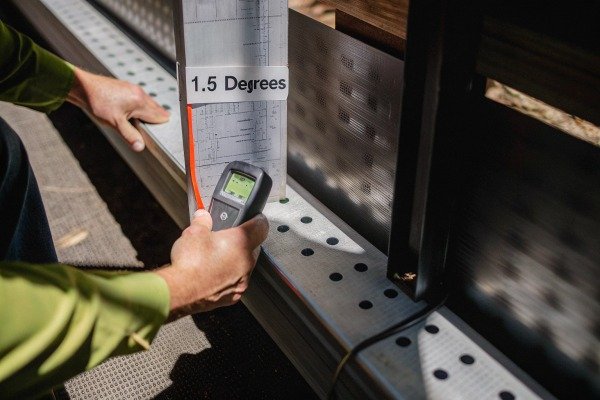
Designing for blow molding requires a different mindset than machining or injection molding. Our engineers focus heavily on "The Blow Ratio" and "Draft" to ensure the part can actually be made.
The Blow Ratio Rule
The most critical failure point we see in designs is deep, narrow pockets. In blow molding, the plastic stretches like bubble gum. If you stretch Stretch Blow Molding 6 it too far, it becomes paper-thin and tears. We use a general rule: the width of the cavity (W) should be at least twice the depth (D). This implies a 2:1 ratio.
If your design requires a very deep draw, we must program the parison to be thicker in that area. However, there are limits. If you violate the Blow Ratio, the corners will be the first to fail. We often suggest adding generous radii to these corners. Sharp corners stress the material and cause it to thin out rapidly.
Draft Angles for Ejection
Draft is the slope of the vertical walls. If a wall is perfectly vertical (0 degrees), the part will create a vacuum against the mold metal as it cools and shrinks. It will stick. In our factories, we insist on a minimum of 1 degree per side. For textured surfaces, we require even more—usually 1 degree for every 0.001 inch of texture depth.
Without proper draft, the ejection system might damage the part, or the cycle time will increase because we have to wait longer for the part to cool enough to force it out.
Structural Integrity with Kiss-Offs
Since you cannot use solid ribs (like in injection molding) to stiffen a flat surface, we use "kiss-offs" or "tack-offs." This is a design feature where the mold pushes the two sides of the parison together until they touch (kiss) and weld. This creates a through-hole or a depression that adds immense structural rigidity to flat panels, like those found on carrying cases or tabletops.
Corner Radii
Sharp corners are the enemy of blow molding. They trap air and cause the material to bridge, leading to thin spots. We recommend a minimum corner radius of 0.030 inches, but 0.125 inches is much safer. Larger radii allow the plastic to flow smoothly into the corner, ensuring a uniform wall thickness.
| Design Parameter | Recommended Value | Consequence of Ignoring |
|---|---|---|
| Draft Angle | 1° to 3° | Part sticks in mold; surface drag marks. |
| Corner Radius | Min 0.5mm (0.020") | Thinning at corners; stress cracking. |
| Blow Ratio | W > 2 x D | Ruptures; inconsistent wall thickness. |
| Rib Design | Use Kiss-offs/Tack-offs | Warping; lack of structural stiffness. |
Is my selected plastic material actually feasible for the blow molding technique?
Choosing the wrong resin causes parison sagging or poor weld lines, rendering the product unmanufacturable. This results in wasted material trials and the need to restart material sourcing.
Material selection is strictly limited to thermoplastics with high melt strength and elasticity, such as HDPE, PP, and PVC. You must avoid thermosets and low-viscosity resins, as the material must be able to support its own weight while hanging as a hot parison before the mold closes.

When we source materials for our clients in Asia, we do not just look at the data sheet's final properties (like impact strength Melt Strength 7). We must look at the processing properties, specifically "Melt Strength."
The Importance of Melt Strength
In injection molding, the plastic is injected quickly into a closed mold. It can be very runny. In blow molding, the plastic hangs in the air as a hot tube for several seconds. If the material has low melt strength (like standard nylon or polycarbonate without additives), gravity will pull it down like honey. The top of the parison will become thin, and the bottom will be thick.
We primarily recommend High-Density Polyethylene (HDPE) because it has High-Density Polyethylene (HDPE) 8 excellent melt strength. It holds its shape well while hanging. Polypropylene (PP) is also common but requires more careful Polypropylene (PP) 9 temperature control.
Shrinkage and Cooling Factors
Different materials shrink at different rates. HDPE has a high shrinkage rate (around 2-3%). Your mold design must account for this. If you design the mold to the exact final dimensions, the part will be too small.
Furthermore, semicrystalline materials like PE and PP result in opaque or milky parts. If you need glass-like clarity, you must look at materials like PET or PVC. However, PET is typically processed using "Stretch Blow Molding" (like water bottles) rather than standard Extrusion Blow Molding.
Material Compatibility with Mold Texture
We also consider how the material replicates the mold surface. PE works best with a sandblasted or matte finish. This texture provides microscopic channels for air to escape as the balloon inflates against the wall. If you use a highly polished mold with PE, air gets trapped, causing ugly surface pits known as "orange peel."
If your application requires a glossy finish, we might suggest using PP or PVC, but we must optimize the mold venting to prevent air entrapment.
Sustainability Trends
We are seeing a massive shift toward using Recycled HDPE (rHDPE) in blow molding Recycled HDPE (rHDPE) 10. Since the core of the wall is hidden, we can sometimes use a "co-extrusion" process. This puts a layer of virgin material on the outside for looks and a layer of recycled material in the middle for cost and sustainability. This requires compatible materials that will bond together chemically.
Conclusion
Determining if your design is right for blow molding requires a holistic look at geometry, precision needs, and material behavior. By ensuring your part is a hollow shell, adhering to the 2:1 blow ratio, and allowing for sufficient draft, you can leverage this efficient process. If you follow these guidelines, you will avoid costly tooling errors and ensure a smooth production run.
Footnotes
1. General overview of the specific manufacturing process discussed. ↩︎
2. Official government safety regulations for automotive fuel containers. ↩︎
3. International standards body defining tolerances for molded plastic parts. ↩︎
4. Industry association providing standards for aluminum tooling materials. ↩︎
5. Educational resource explaining thermal conductivity properties of polymers. ↩︎
6. Explanation of the distinct process variant used for PET bottles. ↩︎
7. Technical definition of rheological properties critical for processing. ↩︎
8. Major manufacturer specifications for blow molding grade HDPE. ↩︎
9. Technical data for polypropylene resins from a leading supplier. ↩︎
10. Government data and definitions regarding plastic recycling rates. ↩︎

 English
 Español de México
 Deutsch
 Français
 Русский
 العربية