
Every week, our engineering team reviews dozens of automotive part drawings from U.S. clients. Many ask the same question: “Can this be blow molded?” The answer depends on several factors that can make or break your project budget and timeline.
Automotive components are suitable for plastic blow molding when they feature hollow construction, require lightweight design, need chemical resistance, and demand cost-effective high-volume production. Ideal candidates include air ducts, fuel tanks, fluid reservoirs, and bellows with wall thicknesses between 0.5mm and 5mm.
This guide walks you through the key decision points. We cover design characteristics, material selection, production volume considerations, and how blow molding compares to injection molding. Let’s dive in.
What design characteristics make my automotive parts ideal candidates for blow molding?
Our production engineers in Vietnam evaluate hundreds of part designs each year. The most common mistake we see? Clients trying to blow mold parts that simply don't fit the process. Understanding the right geometry saves time and money.
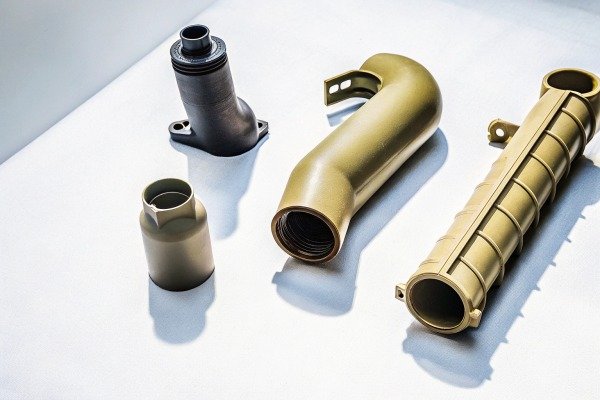
Ideal blow molding candidates are hollow, rotationally symmetric parts with draw ratios below 3:1, minimum corner radii of 3mm, and uniform wall thickness targets of 2-4mm. Parts should avoid sharp corners, complex undercuts, and extreme wall thickness variations that cause thinning during the blow-up process.
Understanding Hollow Part Geometry
Blow molding works best for hollow parts. Think of it like inflating a balloon inside a mold. The plastic parison (a tube of molten plastic) expands to fill the mold cavity. This process naturally creates hollow structures.
Parts with internal volumes greater than 1 liter typically favor blow molding. Smaller parts may work better with injection molding. Our team uses this as a quick first filter when reviewing new projects.
The shape matters too. Rotationally rotationally symmetric parts 1 symmetric designs distribute material evenly. Asymmetric shapes can cause thin spots. These thin areas become weak points that fail during crash crash requirements 2 testing or vibration cycles.
Critical Design Parameters
| Design Parameter | Ideal Range | Why It Matters |
|---|---|---|
| Draw Ratio | Below 3:1 | Prevents excessive thinning |
| Corner Radius | Minimum 3mm | Avoids stress concentration stress concentration 3 |
| Wall Thickness | 2-4mm uniform | Ensures consistent strength |
| Part Volume | Greater than 1L | Cost-effective vs. injection |
| Pinch-Off Area | Minimum 6mm width | Proper sealing during molding |
Wall Thickness Control Challenges
Wall thickness uniformity is the biggest challenge in blow molding. Unlike injection molding, you cannot precisely control every millimeter. The parison stretches more in some areas than others.
Extrusion blow molding (EBM) achieves wall thickness between 0.5mm and 5mm. Injection stretch blow molding (ISBM) offers tighter control at 0.2mm to 3mm. Choose your process based on tolerance requirements.
When we prototype parts for automotive clients, we use CT scanning to verify internal wall distribution. This catches problems before production tooling investment. A 3D-printed prototype mold costs a fraction of production tooling and speeds development by 50%.
Features That Complicate Blow Molding
Some features require require lightweight design 4 special consideration. Threads and precise openings work better with IBM or ISBM processes. EBM parts often need secondary trimming operations.
Undercuts are limited in blow molding. You can use collapsible cores or split molds for simple features like mounting brackets. Complex undercuts may require post-molding assembly or a different process entirely.
Size limits also apply. EBM handles parts up to 200 liters, like large fuel tanks. IBM works best for reservoirs under 5 liters. Match your part size to the right process variant.
How do I determine if I should use blow molding instead of injection molding for my project?
When our clients in the U.S. send us new automotive projects, the blow molding versus injection molding question comes up constantly. Both processes have their place. The key is matching the process to your specific requirements.
Choose blow molding over injection molding when your part is hollow, requires lower tooling investment, needs large size capability, and runs at high volumes exceeding 50,000 units annually. Injection molding wins for solid parts, tight tolerances below ±0.1mm, complex geometries, and precision components like engine covers.

Cost Comparison Framework
Tooling cost is often the deciding factor. Blow molding uses aluminum molds that cost 30-50% less than steel injection molds. For a typical automotive reservoir, blow molding tooling runs $15,000-$40,000. Comparable injection tooling costs $50,000-$100,000.
Per-unit costs favor blow molding at high volumes. Parts drop below $1 each when volumes exceed 100,000 units. The simpler tooling and faster cycles drive this advantage.
However, injection molding offers better economics for solid parts. The material usage is more efficient. You pay only for what you need, not for creating hollow space.
Process Comparison Table
| Factor | Blow Molding | Injection Molding |
|---|---|---|
| Part Type | Hollow only | Solid or hollow |
| Tooling Cost | $15K-$40K | $50K-$100K |
| Wall Tolerance | ±0.5mm typical | ±0.1mm achievable |
| Cycle Time | 20-60 seconds | 15-45 seconds |
| Part Size | Up to 200L | Limited by clamp force |
| Surface Finish | Good | Excellent |
| Minimum Volume | 10,000+ units | 1,000+ units |
When Injection Molding Wins
Precision requirements often push projects toward injection molding. Engine covers, sensor housings, and structural brackets need tight tight tolerances 5 tolerances. Blow molding struggles to hold ±0.5mm wall thickness consistently.
Surface finish matters for visible components. Injection molding produces Class A surfaces directly from the mold. Class A surfaces 6 Blow molded parts may need secondary finishing for aesthetic applications.
Complex internal features also favor injection molding. Ribs, bosses, and snap fits integrate easily. Blow molding cannot create these internal structures.
When Blow Molding Wins
Large hollow parts are blow molding territory. A 50-liter fuel tank would require massive injection molding equipment. Blow molding handles it routinely.
Weight reduction drives many automotive decisions. Blow molded air intake manifolds weigh 20-30% less than metal equivalents. This matters for EV range and fuel economy. fuel economy 7
Chemical resistance requirements often point to blow molding. HDPE fuel tanks resist gasoline, diesel, and biofuels. The seamless construction eliminates leak paths at joints.
The Hybrid Approach
Some projects benefit from both processes. We've helped clients design assemblies where blow molded bodies connect to injection molded fittings. This captures the best of both worlds.
Multi-component designs require careful interface planning. Weld cones, snap fits, and adhesive joints all work. The key is designing for the assembly method from the start.
Which plastic materials will meet the performance requirements for my vehicle components?
Our quality control team in China tests material samples every week. Material selection can make or break an automotive blow molding project. The wrong choice leads to field failures, warranty claims, and damaged relationships.
HDPE dominates automotive blow molding at 60% usage for fuel tanks and reservoirs due to excellent impact resistance down to -40°C and permeation rates below 1g/day. PP suits air ducts and bellows requiring flexibility and heat tolerance up to 120°C. Material selection must match FMVSS 301 crash requirements and SAE vibration standards.
HDPE: The Workhorse Material
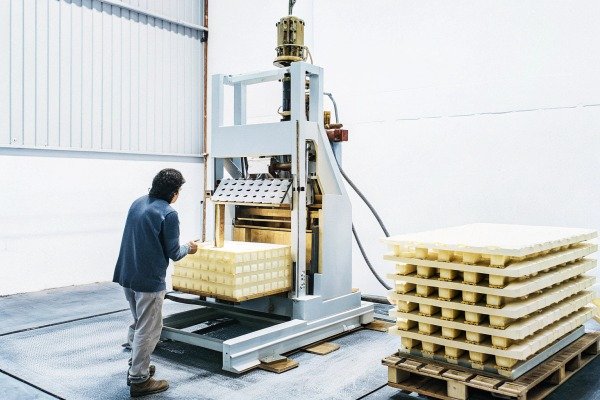
High-density polyethylene handles most automotive blow molding applications. Its combination of properties fits fuel system requirements perfectly.
Impact resistance remains strong at -40°C. This matters for vehicles in cold climates. Fuel tanks must survive impacts without cracking or leaking.
Chemical resistance covers the full range of automotive fluids. Gasoline, diesel, E85, and biodiesel blends all work. The material won't degrade or swell over the vehicle's lifetime.
Permeation control meets emissions standards. Single-layer HDPE allows some fuel vapor escape. Multi-layer constructions with EVOH barriers reduce permeation below 1g/day.
Material Properties Comparison
| Property | HDPE | PP | PA (Nylon) |
|---|---|---|---|
| Tensile Strength | 20-30 MPa | 25-35 MPa | 40-80 MPa |
| Operating Temp | -40°C to 80°C | -40°C to 120°C | -40°C to 150°C |
| Chemical Resistance | Excellent | Good | Moderate |
| Impact Strength | Excellent | Good | Good |
| Cost | Low | Low | High |
| Recyclability | Excellent | Excellent | Limited |
Polypropylene for High-Temperature Applications
PP works well for under-hood components exposed to engine heat. Air ducts, resonators, and expansion tanks often use PP.
The operating range extends to 120°C. This handles normal engine compartment temperatures. For locations near exhaust systems, consider heat shields or alternative materials.
Flexibility makes PP ideal for bellows and accordion-style ducts. The material bends without cracking. It returns to shape after compression.
Advanced Materials and Multi-Layer Constructions
Stricter emissions standards drive multi-layer tank designs. A typical fuel tank might include six layers: HDPE outer, regrind, adhesive, EVOH barrier, adhesive, and HDPE inner.
The EVOH layer blocks hydrocarbon permeation. This meets EPA and CARB requirements. The adhesive layers bond dissimilar materials together.
Multi-layer construction complicates recycling. Single-layer HDPE recycles easily. Multi-layer tanks require specialized processing. This creates tension between emissions performance and end-of-life sustainability.
Material Testing Requirements
Automotive materials face rigorous qualification. FMVSS 301 governs fuel system crash performance. SAE J2557 covers vibration endurance testing.
Our incoming inspection checks melt flow index (MFI) on every material lot. The target range is 0.5-5 g/10min for good parison formation. Out-of-spec material causes processing problems and part defects.
Chemical immersion testing per SAE J1681 validates fluid compatibility. Parts soak in fuel, coolant, and washer fluid for extended periods. Weight change, dimensional change, and property retention all matter.
Sustainable Material Trends
Recycled HDPE usage is growing rapidly. The EU end-of-life vehicle directive pushes manufacturers toward circular materials. end-of-life 8 Some fuel tanks now contain 25% post-consumer recycled content.
Bio-based polymers are emerging for non-fuel applications. Coolant reservoirs and washer tanks can use bio-PE without performance compromise. This reduces carbon footprint while maintaining properties.
Does my production volume justify the investment in custom blow molding tooling?
When we quote new blow molding projects, tooling investment is always a concern. Our clients need to understand the break-even math before committing. The numbers work differently than injection molding.
Custom blow molding tooling investment typically pays off at production volumes exceeding 50,000 units annually, with tooling costs of $15,000-$40,000 amortizing to under $0.50 per part at 100,000+ volumes. Lead times run 8-12 weeks versus 20+ weeks for metal alternatives, and multi-cavity molds can produce 10,000 parts daily.
Understanding Tooling Economics
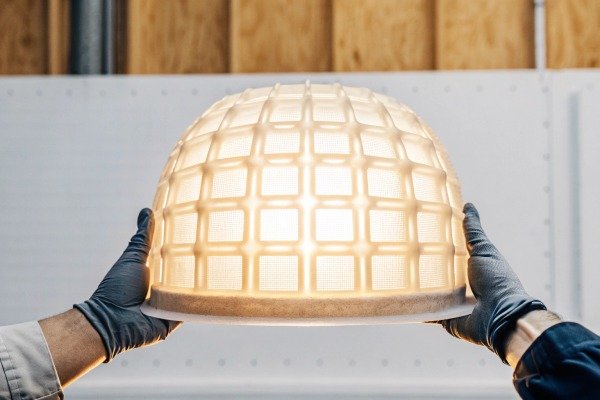
Blow molding tooling uses aluminum rather than hardened steel. This reduces cost and lead time significantly. A typical automotive reservoir mold costs $20,000-$35,000.
The aluminum construction limits tool life compared to steel injection molds. Expect 500,000-1,000,000 shots before major refurbishment. For most automotive programs, this covers the vehicle platform lifecycle.
Prototype tooling offers a lower-cost entry point. 3D-printed molds work for 50-500 parts. This validates design before production investment.
Volume Break-Even Analysis
| Annual Volume | Tooling Amortization | Per-Part Cost | Total Part Cost |
|---|---|---|---|
| 10,000 | $2.50 | $1.50 | $4.00 |
| 25,000 | $1.00 | $1.25 | $2.25 |
| 50,000 | $0.50 | $1.00 | $1.50 |
| 100,000 | $0.25 | $0.85 | $1.10 |
| 250,000 | $0.10 | $0.75 | $0.85 |
Production Capacity Planning
Cycle times drive capacity calculations. Continuous extrusion blow molding runs 20-60 seconds per part. Injection blow molding cycles faster at 10-30 seconds for smaller parts.
Multi-cavity molds multiply output. A four-cavity tool produces four parts per cycle. This approach works well for smaller components like reservoirs and bottles.
Automation increases throughput further. Modern blow molding lines include robotic part removal, inline leak testing, and automated packaging. Defect rates drop below 1% with proper controls.
Lead Time Considerations
Blow molding tooling arrives in 8-12 weeks typically. This compares favorably to 16-24 weeks for complex injection molds. The faster timeline helps meet aggressive launch schedules.
Design changes cost less during development. Aluminum machines easier than steel. Minor modifications can happen in days rather than weeks.
Production ramp-up moves quickly once tooling arrives. First article inspection and PPAP documentation take 2-4 weeks. Full production follows immediately after approval.
Quality Control Investment
Leak testing is mandatory for fluid-containing parts. Inline pressure decay testing catches 2-5% of production as rejects. This prevents field failures and warranty claims.
Closed-loop recycling captures 90-95% of scrap material. Trimmed flash and rejected parts grind back into the process. This improves material economics and sustainability metrics.
Statistical process control monitors critical dimensions. Wall thickness, weight, and key features track against control limits. Out-of-control conditions trigger immediate investigation.
Supplier Qualification Requirements
Automotive blow molding suppliers need proper certifications. IATF 16949 (formerly ISO/TS 16949) is the baseline requirement. This ensures quality management systems meet automotive standards.
PPAP documentation validates production readiness. Dimensional reports, material certifications, process flow diagrams, and control plans all require approval. Our team manages this process for clients sourcing from Asia.
Ongoing supplier audits verify continued compliance. Annual visits check process controls, equipment maintenance, and quality records. This protects against quality drift over time.
Conclusion
Determining blow molding suitability requires evaluating design geometry, material requirements, production volumes, and process alternatives. The right choice saves money and ensures reliable parts. Contact our team at sa***@*******ch.com for a free suitability assessment of your automotive components.
Footnotes
1. Rotationally symmetric shapes distribute material evenly in blow molding, avoiding weak spots. ↩︎
2. Links to eCFR section on FMVSS No. 301; Fuel system integrity. ↩︎
3. Sharp corners cause stress concentration, which can lead to part failure. ↩︎
4. Links to DOE page on lightweight materials for vehicles. ↩︎
5. ISO standards address tolerances in manufacturing, relevant to injection molding’s precision. ↩︎
6. Injection molding produces Class A surfaces directly from the mold, important for aesthetics. ↩︎
7. Links to EPA’s fuel economy information page. ↩︎
8. The EU end-of-life vehicle directive pushes manufacturers toward circular materials. ↩︎

 English
 Español de México
 Deutsch
 Français
 Русский
 العربية