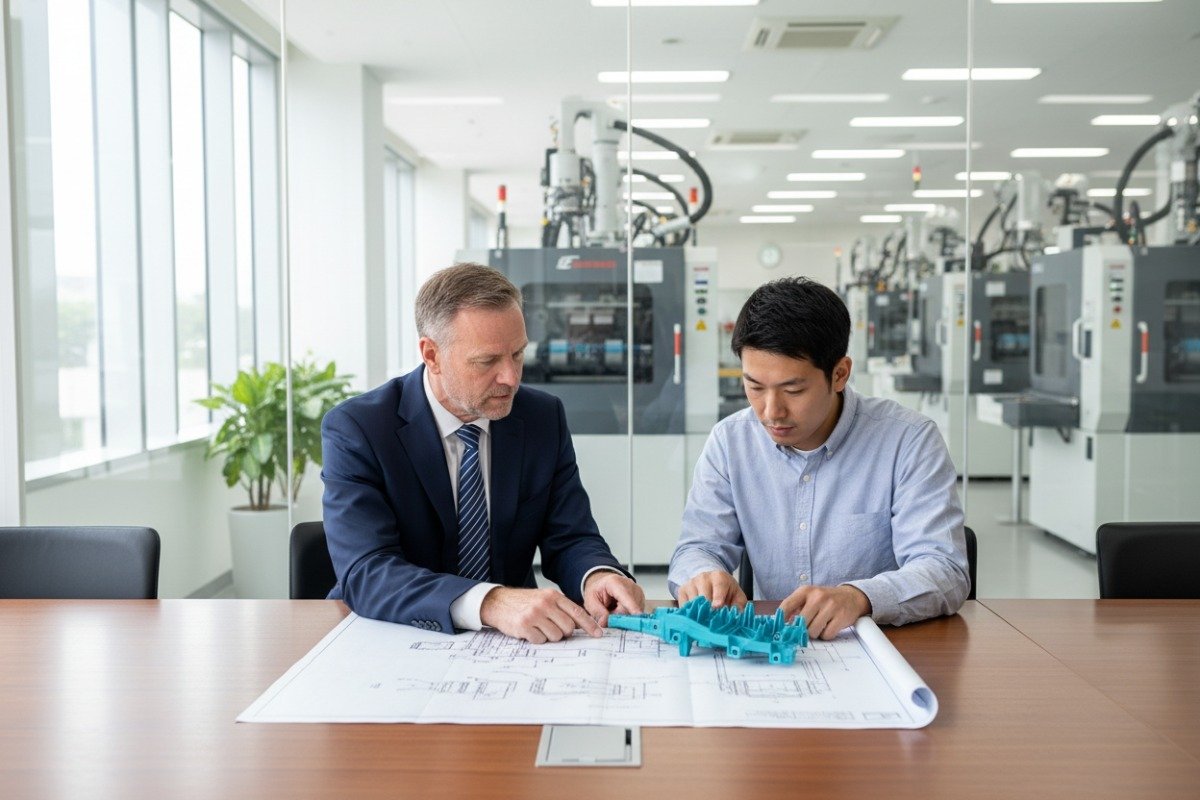
Every year, our team vets dozens of injection molding 1 suppliers across Asia for U.S. clients. The wrong choice leads to defective parts, missed deadlines, and costly rework.
Choosing a reliable injection molding manufacturer requires evaluating production capacity, quality certifications like ISO 9001, technical expertise in your specific materials and applications, engineering support including DFM feedback, and the ability to scale production. Prioritize suppliers with proven on-time delivery records and transparent communication protocols.
The injection molding market is worth over $100 billion globally and growing at 4–5% annually IATF 16949 2. With nearly 600 molders in North America alone and thousands more across Asia, the options can feel overwhelming. But not all suppliers are equal. Surveys show that 70% of sourcing failures come from mismatched capacities, and 40% of projects overrun timelines by 20% or more because of unvetted suppliers ISO 13485 3. This guide breaks down the exact criteria, red flags, and scaling strategies you need. Let's dig in.
What Criteria Should I Use to Evaluate the Quality and Reliability of an Injection Molding Supplier?
When our quality engineers walk into a supplier's facility for the first time, they follow a strict audit checklist AS9100 4. Without clear evaluation criteria, you are gambling with your production budget.
Evaluate injection molding suppliers based on quality certifications (ISO 9001, IATF 16949, ISO 13485), defect rates, on-time delivery history, equipment condition, and process control documentation. Reliable suppliers maintain less than 1% scrap rates and exceed 95% on-time delivery through routine inspections and preventive maintenance programs.

Quality is not just about the final part. It is about every step from raw material intake to shipping Design for Manufacturability 5. Here is how to break it down.
Certifications Matter — But They Are Not Everything
Certifications like ISO 9001 6, AS9100, IATF 16949, and ISO 14001 tell you a supplier has documented processes. They show a commitment to consistency and continuous improvement. But a certificate on the wall does not guarantee good parts on your dock.
Ask to see their internal audit records. Ask how they handle non-conformances. A certified supplier with strong corrective action processes will outperform an uncertified one almost every time. Data backs this up: certified molders report less than 1% scrap rates, while uncertified shops can hit 5–10% defect rates.
Key Quality Metrics to Request
Do not just ask "Do you have good quality?" Ask for specific numbers.
| Quality Metric | Top-Tier Supplier | Average Supplier | Red Flag Level |
|---|---|---|---|
| On-Time Delivery Rate | >95% | 85–95% | <80% |
| Scrap / Defect Rate | <1% | 1–5% | >5% |
| First Pass Yield | >98% | 90–98% | <90% |
| Customer Complaint Rate | <0.5% | 0.5–2% | >2% |
| Corrective Action Closure Time | <30 days | 30–60 days | >60 days |
These numbers give you a clear picture. If a supplier cannot provide them, that itself is a red flag.
Inspection Processes: Before, During, and After
Elite manufacturers run checks at three stages. Before molding, they verify raw materials and mold condition. During production, they use statistical process control 7 (SPC) to catch drift early. After molding, they perform final inspections using CMMs 8, laser scanners, or visual checks depending on part complexity.
Our inspection teams in Vietnam and China follow this exact three-stage approach. We have seen firsthand how skipping even one stage leads to batches of non-conforming parts reaching the shipping dock. One client came to us after their previous supplier shipped 10,000 parts with a dimensional issue that was only caught at the end customer's assembly line. That single failure cost them over $50,000 in rework and air freight.
Machine Maintenance and Operator Training
A well-maintained press produces consistent parts. Ask about their preventive maintenance schedule. Ask how they train operators. Shops that invest in regular machine calibration and employee skill development deliver more reliable results over time.
How Can I Verify If a Manufacturer Has the Right Technical Expertise for My Specific Product Needs?
Our engineering team once reviewed a supplier who claimed they could mold medical-grade PEEK components. When we audited their facility, they had never processed PEEK before. Claims without evidence can derail your project.
Verify technical expertise by requesting case studies of similar projects, reviewing their material processing history, confirming DFM and mold flow analysis capabilities, and auditing their equipment specifications. Suppliers with genuine expertise will demonstrate hands-on experience with your specific resins, tolerances, and industry requirements.

Technical expertise goes far beyond owning injection molding machines. It means understanding your specific application, your materials, and your industry's regulatory landscape.
Match Their Experience to Your Application
Not every molder can handle every job. A supplier excellent at making automotive interior clips may struggle with micro-molded medical connectors. Ask pointed questions:
- What industries do you serve most?
- Can you share examples of parts similar to mine?
- What resins have you processed in the last 12 months?
If your product requires insert molding, overmolding, or tight tolerances under ±0.05mm, confirm they have done it before. Ask for sample parts or photos. Better yet, ask for references you can call.
Engineering Support Is a Differentiator
The best manufacturers do not just follow your drawings. They improve them. Look for suppliers who offer:
- Design for Manufacturability (DFM) feedback — catching issues before tooling starts
- Mold flow analysis — predicting fill patterns, weld lines, and sink marks
- Design for Assembly (DFA) — simplifying how parts fit together
- Material selection guidance — recommending the right resin for your end-use conditions
When we co-develop products with our clients, our engineers review every drawing detail before it goes to the mold shop. We have caught critical issues — like insufficient draft angles or unrealistic wall thickness transitions — that would have caused expensive mold revisions later.
Equipment and Technology Checklist
| Capability | What to Look For | Why It Matters |
|---|---|---|
| Press Range | Multiple tonnages (50T–1,500T+) | Handles diverse part sizes |
| Prototyping | 3D printing, soft tooling | Catches design flaws early |
| Inspection Equipment | CMM, laser scanner, optical comparator | Validates dimensional accuracy |
| Mold Making | In-house tool room | Faster revisions, better control |
| Secondary Operations | Assembly, pad printing, ultrasonic welding | Reduces your supply chain complexity |
| Material Drying & Handling | Centralized drying systems, auto-loaders | Prevents moisture-related defects |
A supplier with modern equipment and in-house tooling capability can respond faster to design changes. This is especially important during the development phase when iterations are frequent.
Mold Sampling and Validation
Ask how they validate new molds. A reliable manufacturer will run samples at full production cycle times and cooling stages — not just shoot a few parts quickly to show you something. Molds validated under shortcuts often become what the industry calls "boat anchor" molds. They look fine in sampling but fail in mass production.
Request to see sampling reports, including dimensional data, material certificates, and process parameter sheets. If they use a PPAP (Production Part Approval Process 9) approach, even better. Our team manages PPAP documentation for every new project because it creates a traceable quality baseline from day one.
What Red Flags Should I Look Out for When I Am Vetting Potential Manufacturing Partners?
During supplier audits across Vietnam and China, our team has walked away from factories that looked great on paper. The warning signs are often subtle but costly if ignored.
Red flags include unusually low quotes, reluctance to share certifications or references, poor communication responsiveness, lack of documented quality processes, unwillingness to allow facility audits, and vague answers about equipment, capacity, or defect handling. These signals often predict delivery delays, quality failures, and hidden costs.
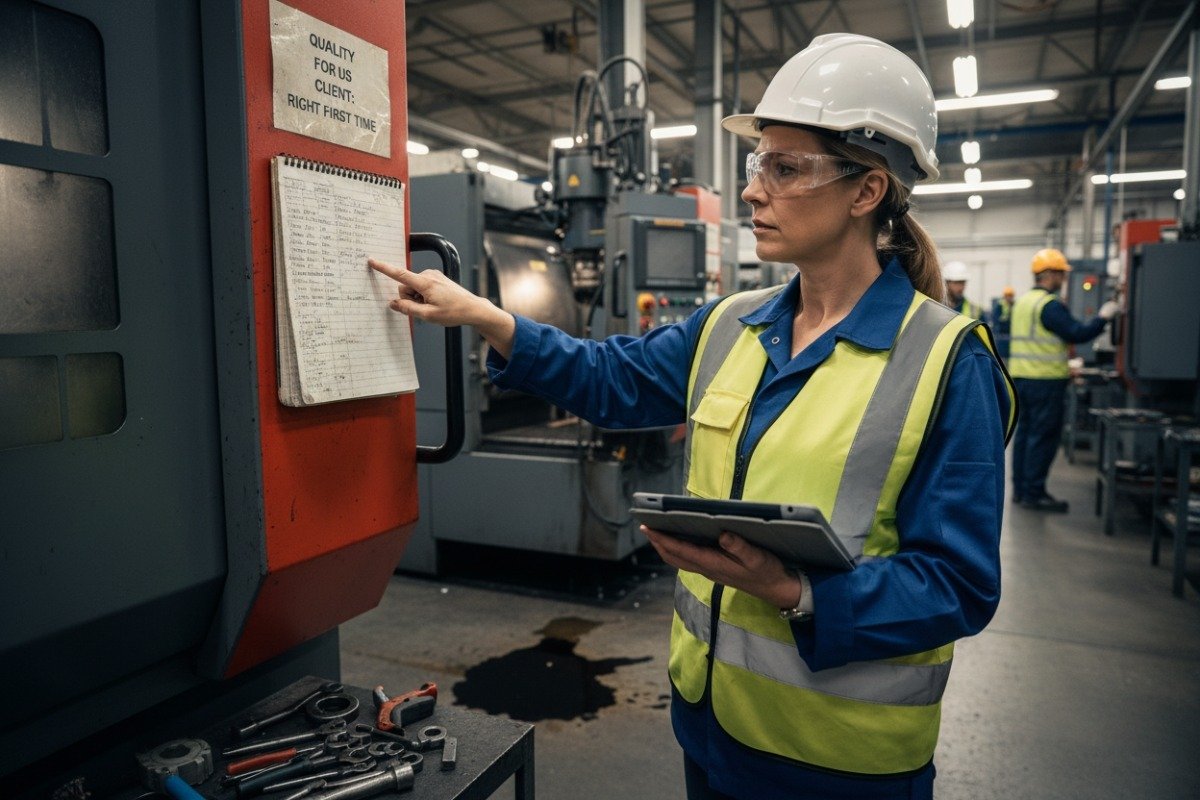
Spotting red flags early saves you months of frustration and thousands of dollars. Here are the most common warning signs we encounter.
The Low-Ball Quote Trap
If a quote is 30–40% below everyone else, something is wrong. Low-ball quotes usually mean the supplier is cutting corners on materials, tooling steel quality, or inspection processes. The initial savings evaporate when you face rework, returns, or production stoppages.
We had a client who chose the cheapest supplier for a consumer electronics housing. The mold was built with inferior steel. After 50,000 shots, the mold started flashing and dimensions drifted out of spec. They ended up paying for a completely new mold — plus the cost of scrapped parts and delayed shipments. The "savings" turned into a 40% cost overrun.
Communication and Responsiveness
Pay attention to how a supplier communicates during the quoting phase. If they take a week to respond to a simple email now, imagine what happens when you have an urgent quality issue during production.
| Communication Behavior | What It Signals |
|---|---|
| Responds within 24 hours with clear answers | Professional, organized team |
| Delays responses, gives vague answers | Overstretched or disorganized |
| Avoids technical questions, redirects to sales | Lacks in-house engineering depth |
| Proactively flags potential issues in your design | Strong technical capability and honesty |
| Never asks clarifying questions about your drawings | May not fully understand your requirements |
Good communication is not a "nice to have." It is the foundation of getting parts right the first time. Our project managers maintain daily or weekly touchpoints with every active supplier specifically because gaps in communication are the number one cause of non-conforming shipments.
Reluctance to Share Information
A trustworthy supplier will openly share:
- Quality certifications and audit reports
- Equipment lists with press tonnages and ages
- References from existing customers
- Sample inspection reports
- Corrective action examples
If a supplier dodges these requests or says "trust us," walk away. Transparency builds trust. Secrecy hides problems.
Intellectual Property Risks
For proprietary designs, ask about their IP protection protocols. Do they sign NDAs? Do they restrict access to your mold designs within their facility? Are your molds clearly marked as customer property? In some regions, IP theft remains a real concern. We manage this risk by maintaining clear mold ownership agreements and conducting periodic checks to ensure client tooling is stored and used properly.
No Documented Processes
If a supplier cannot show you their process control plans, work instructions, or inspection checklists, they are likely relying on tribal knowledge. That works until a key operator leaves or a machine is swapped. Documented processes ensure consistency regardless of who is running the press on any given day.
How Do I Ensure That My Chosen Supplier Can Scale Their Production to Meet My Business Growth?
When we onboard a new supplier for a client, one of the first things our team evaluates is not just whether they can handle today's order — but whether they can handle next year's volume without missing a beat.
Ensure scalability by confirming the supplier operates multiple press sizes, has available capacity beyond your current needs, demonstrates experience ramping production volumes, and offers flexible tooling strategies like multi-cavity molds. Suppliers who can scale up or down without requalification save you significant time and cost as demand shifts.
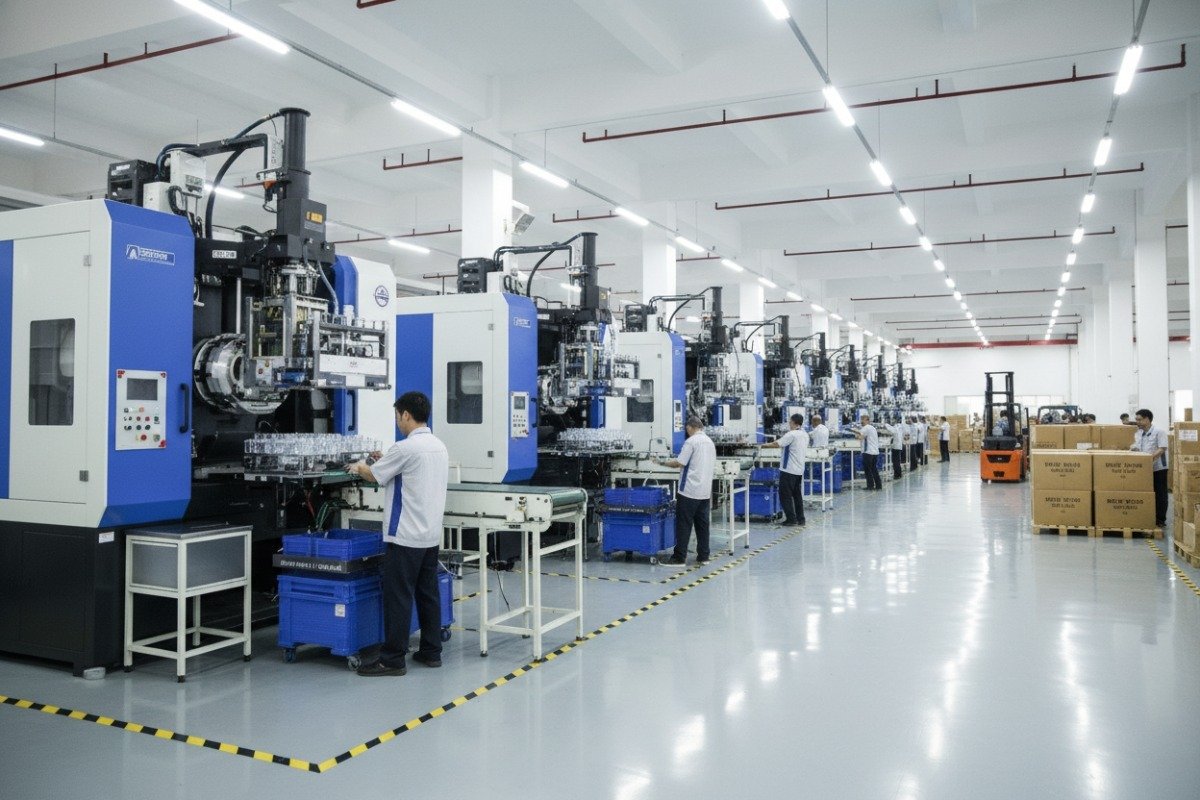
Scalability is one of the most overlooked factors in supplier selection. Your business will grow. Your volumes will change. Choosing a supplier who cannot keep up forces you to requalify a new partner mid-stream — a process that can take months and introduce fresh quality risks.
Assess Current Capacity vs. Your Growth Projections
Start with a simple question: what percentage of their total capacity does your order represent? If your job fills 80% of their shop floor, there is no room to grow. Ideally, your initial order should represent no more than 30–50% of their available capacity for your product type.
Ask about their shift structure. A supplier running one shift has room to add a second or third. A supplier already running three shifts and weekends is maxed out.
Press Diversity and Tooling Flexibility
Scalability often depends on equipment versatility. A supplier with presses ranging from 50 tons to 1,500 tons can handle small precision parts and large structural components under one roof. This matters when your product line expands.
Multi-cavity molds are another key strategy. A single-cavity mold used for prototyping can be replaced or supplemented with a 4-cavity, 8-cavity, or even 16-cavity mold as volumes increase. This multiplies output without adding presses.
Planning for Volume Transitions
| Growth Phase | Typical Volume | Tooling Strategy | Supplier Requirement |
|---|---|---|---|
| Prototype / Pilot | 100–5,000 parts | Single-cavity, soft tool or aluminum mold | Rapid prototyping capability |
| Low Volume Production | 5,000–50,000 parts | Single or dual-cavity, hardened steel mold | Consistent quality at moderate speed |
| Mid Volume Production | 50,000–500,000 parts | Multi-cavity (4–8), automated part removal | Multiple presses, SPC monitoring |
| High Volume Production | 500,000+ parts | High-cavity (8–16+), fully automated cell | Dedicated press, 24/7 operation, robust QC |
A good supplier will discuss this roadmap with you upfront. They will recommend tooling investments that align with your projected volumes so you are not over-spending on a 16-cavity mold for a product that may only need 10,000 parts per year.
Supply Chain Resilience
Scalability is not just about the molder. It is about their entire supply chain. Can their resin suppliers deliver larger quantities on short notice? Do they have backup material sources? What happens if a key sub-component becomes unavailable?
We help our clients build supply chain resilience by qualifying secondary sources for critical materials and maintaining safety stock agreements. Post-pandemic supply chain volatility taught everyone a hard lesson: single-source dependency is a risk you cannot afford.
Geographic Diversification
Some of our clients are actively diversifying their manufacturing base beyond China into Vietnam, India, and other Southeast Asian countries. This is not about abandoning existing suppliers. It is about reducing geopolitical risk and tariff exposure while maintaining quality standards.
Our local team in Vietnam gives us a direct advantage here. We can audit facilities, manage quality on the ground, and ensure that a new supplier in Vietnam meets the same standards as an established one in China. This kind of geographic flexibility is increasingly important for U.S. buyers navigating trade policy uncertainty.
The Cost of Switching Suppliers
Requalifying a new injection molding supplier is expensive and time-consuming. It involves new mold trials, first article inspections, PPAP submissions, and often months of production validation. By choosing a scalable partner from the start, you avoid this disruption entirely.
Think of it as an investment. Spending a little more time vetting scalability upfront saves you the massive cost and risk of switching suppliers when your volumes double.
Conclusion
Choosing the right injection molding manufacturer is a decision that impacts your quality, costs, and growth for years. Evaluate certifications, verify technical expertise, watch for red flags, and plan for scalability from day one.
Footnotes
1. Explains the fundamental manufacturing process of injection molding. ↩︎
2. Explains the automotive quality management system standard and its purpose. ↩︎
3. Details the international quality management system standard for medical devices. ↩︎
4. Describes the quality management system standard specifically for the aerospace industry. ↩︎
5. Explains the engineering practice of optimizing product design for easier and cheaper manufacturing. ↩︎
6. Replaced HTTP 403 link with an authoritative overview from IAF CertSearch, a global accreditation forum. ↩︎
7. Replaced HTTP 403 link with a comprehensive and neutral overview from Wikipedia. ↩︎
8. Provides a definition and overview of devices used to measure object geometry. ↩︎
9. Replaced HTTP 400 link with a comprehensive and neutral overview from Wikipedia. ↩︎
10. Describes the software simulation used to predict resin flow in injection molds. ↩︎



 English
  Español de México
  Deutsch
  Français
  Русский
  العربية