
Every year, our team reviews dozens of prototype injection molding 1 projects that went sideways — not because the design was bad, but because the supplier was wrong.
Choosing the best prototype injection molding supplier means evaluating production capacity, industry certifications, DFM feedback quality, material expertise, lead time reliability, and scalability. Prioritize suppliers who specialize in low-volume quick-turn molding with strong quality controls and transparent communication.
The following sections break down the most critical factors you need to assess before committing to a supplier Aluminum tooling 2. Each one can make or break your prototype project. Let's walk through them step by step.
What Key Factors Should I Consider When Evaluating a Prototype Injection Molding Supplier?
When our engineering team kicks off a new prototype sourcing project, the first thing we do is build a structured evaluation framework — because gut feeling alone has cost clients millions 3D-printed tooling 3.
Key factors include the supplier's volume flexibility, industry certifications (ISO 9001, ISO 13485, IATF 16949), DFM capabilities, material expertise, quality track record, geographic proximity, and value-added services like assembly and finishing. These collectively determine project success and long-term partnership viability.
Volume and Capacity Fit
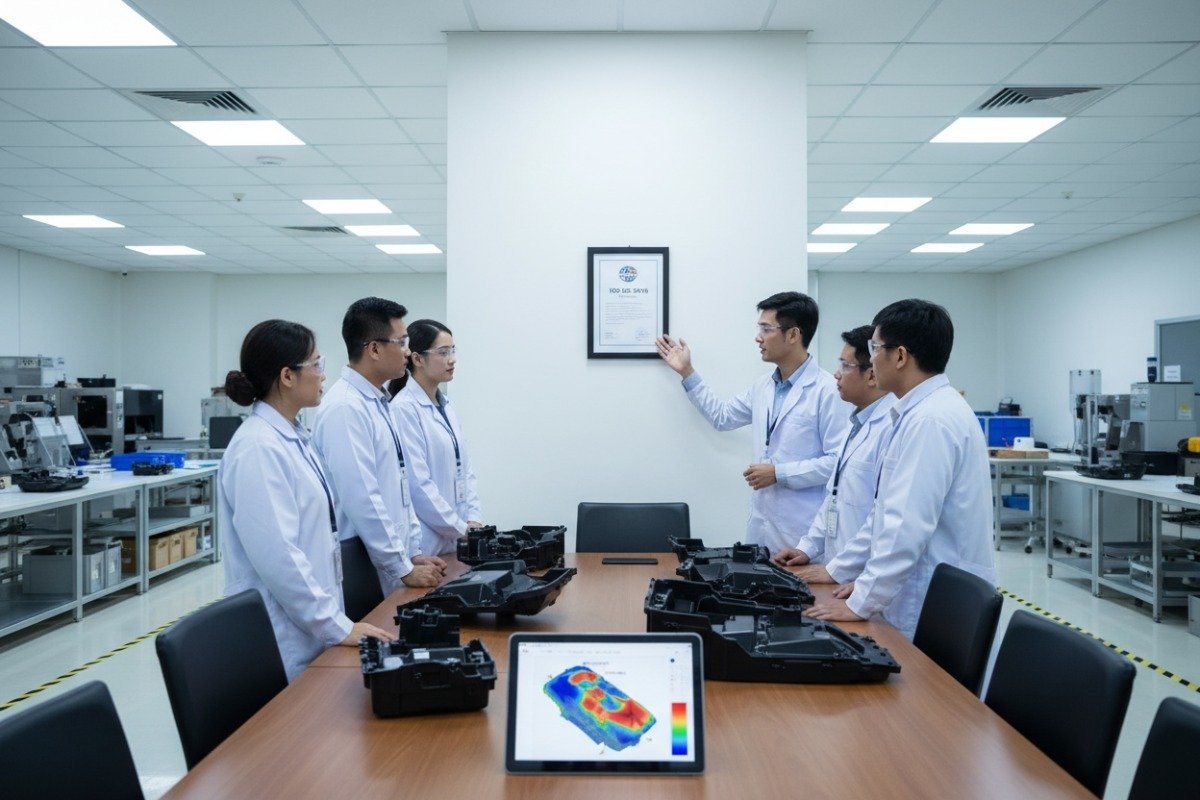
Not every injection molder is built for prototypes. Some shops are optimized for runs of 100,000+ parts. They don't want your 50-piece order. Others thrive on high-mix, low-volume work. You need to find the second type.
Ask upfront: What is your minimum order quantity? Can you scale from 50 units to 50,000 units? The best prototype suppliers handle small initial runs quickly and ramp up when you're ready for production. This flexibility saves you from switching suppliers mid-project — a painful and expensive process.
Certifications That Matter
Certifications are not just wall decorations. They prove a supplier follows documented processes. Here's a quick reference:
| Certification | Industry | What It Proves |
|---|---|---|
| ISO 9001 4 | General | Basic quality management system in place |
| ISO 13485 5 | Medical | Compliance with medical device quality standards |
| IATF 16949 6 | Automotive | Meets automotive-specific quality requirements |
| MedAccred | Medical | Accredited for critical medical manufacturing processes |
| FDA Registration | Medical | Facility registered with the U.S. Food and Drug Administration |
If your parts go into medical devices, a supplier without ISO 13485 is a non-starter. Period. For automotive applications, IATF 16949 is the baseline. Don't compromise here.
DFM Feedback Quality
Design for Manufacturability feedback 7 is where good suppliers separate themselves from average ones. A top-tier supplier doesn't just quote your part. They review your CAD file and come back with suggestions. They might say: "This wall thickness will cause sink marks. Let's adjust it." Or: "This undercut adds $3,000 to your tool cost. Here's an alternative design."
Our team has seen DFM reviews save clients 15–30% on tooling costs. Upload your CAD files early. If a supplier skips the DFM step and jumps straight to quoting, that's a red flag.
Industry Experience and References
A supplier who has made similar parts before will anticipate problems you haven't thought of yet. Ask for case studies. Ask for references from your industry. If they've done automotive housings, medical enclosures, or consumer electronics shells similar to yours, they'll know the pitfalls.
We always request at least three references from comparable projects. If a supplier hesitates to provide them, move on.
Geographic Considerations
For prototype work, proximity matters more than you might think. Prototyping is iterative. You'll need design reviews, quick adjustments, and sometimes same-week turnarounds. A domestic supplier — or one in a nearby time zone — makes real-time collaboration possible.
That said, offshore suppliers can work for prototypes if they have strong project management and communication systems. In our experience coordinating between U.S. clients and Asian manufacturing partners, the key is having a local team that bridges the time zone and language gap.
Intellectual Property Protection
This one gets overlooked too often. Your prototype design is your competitive advantage. Ask the supplier about their IP protection protocols. Intellectual Property Protection 8 Do they have NDAs ready? Do they restrict access to your files internally? Are your molds stored securely?
A supplier who can't clearly explain their IP safeguards is a risk you don't need to take.
How Can I Balance Cost and Quality for My Low-Volume Production Needs?
One lesson we've learned from managing hundreds of custom part projects is this: the cheapest quote almost never delivers the lowest total cost.
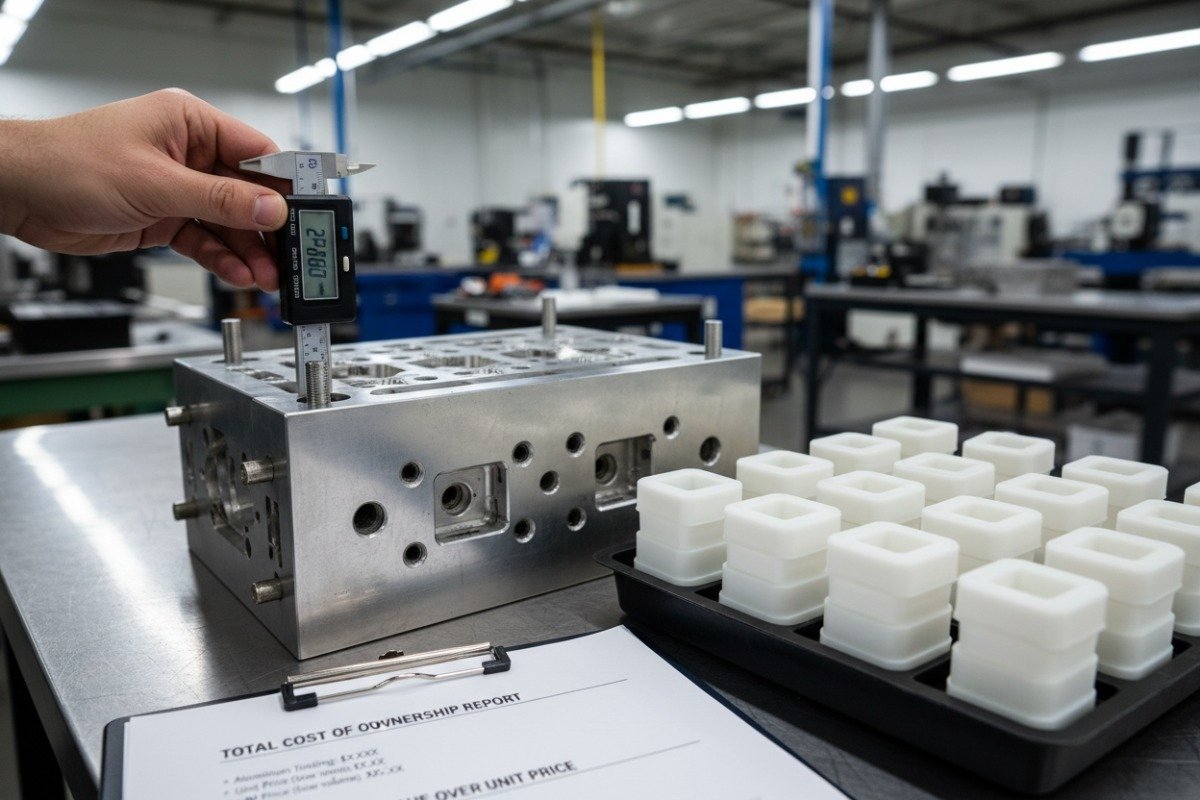
Balancing cost and quality in low-volume prototype molding requires focusing on total cost of ownership — including tooling, DFM optimization, rework avoidance, and material selection — rather than unit price alone. Investing in experienced suppliers with strong quality controls reduces iterations and saves money long-term.
The Total Cost of Ownership Trap
Many buyers compare quotes side by side and pick the lowest number. This approach ignores hidden costs. A cheap supplier who skips DFM review might produce parts that don't fit. Now you're paying for a tool revision. That revision costs $5,000–$15,000 and adds 3–4 weeks to your timeline.
Here's a real-world comparison we've seen play out repeatedly:
| Cost Factor | Low-Price Supplier | Quality-Focused Supplier |
|---|---|---|
| Initial tooling quote | $8,000 | $11,000 |
| DFM review included | No | Yes |
| Tool revisions needed | 2 ($12,000 total) | 0 |
| Scrap rate | 8–12% | 1–2% |
| Rework/return costs | $4,000 | $0 |
| Total project cost | $24,000+ | $11,000 |
| Timeline | 14 weeks | 6 weeks |
The "expensive" supplier saved the client $13,000 and eight weeks. This pattern repeats across industries.
Smart Tooling Strategies for Prototypes
Prototype tooling doesn't need to last 500,000 shots. It needs to last 500–5,000 shots. This opens up cost-saving options:
- Aluminum tooling instead of hardened steel. Aluminum molds cost 30–50% less and can be machined faster. They're perfect for prototype volumes.
- MUD frame inserts (Master Unit Die). These use a universal base with interchangeable inserts. You only pay for the insert, not the entire mold base.
- 3D-printed tooling for very low volumes (under 100 parts). This is newer technology, but it works for simple geometries.
Ask your supplier which tooling approach they recommend for your volume. If they only offer production-grade steel tooling for a 200-piece prototype run, they're not a prototype specialist.
Material Selection and Cost
Material choice directly impacts both cost and part performance. For prototypes, you often don't need the final production-grade resin. A general-purpose material can validate your design at lower cost.
However, if your prototype needs to simulate real-world performance — thermal resistance, chemical exposure, mechanical loads — then you need the right resin from the start. A good supplier will guide this decision based on your part's functional requirements.
Also, avoid single-source resins. If your material only comes from one manufacturer, you're exposed to supply chain risk. Industry data suggests 20–30% of projects experience delays due to single-supplier material dependency. Choose resins available from multiple sources.
Don't Sacrifice Quality Controls
Even for prototypes, quality matters. A prototype that doesn't represent the final product is useless. Make sure your supplier performs:
- First Article Inspection (FAI)
- Dimensional verification against your drawing
- Material certification documentation
- Visual inspection per your acceptance criteria
These steps cost very little but prevent expensive surprises downstream.
What Specific Questions Should I Ask to Verify a Supplier's Technical Capabilities?
When our project managers audit a potential injection molding partner, they don't just tour the shop floor. They come armed with a list of pointed questions designed to expose gaps.
To verify technical capabilities, ask about their experience with your part geometry, available press tonnage range, tooling design approach, DFM process, inspection equipment, material handling procedures, and past project examples. Request sample inspection reports and tolerance studies to confirm their claims with evidence.
Questions About Tooling and Machinery
Start with the basics. What press sizes do they have? A shop with only large-tonnage presses won't efficiently run small prototype parts. You need a supplier whose equipment matches your part size and complexity.
Key questions to ask:
- What is your press tonnage range?
- Do you design and build tooling in-house or outsource it?
- What CAD/CAM software do you use for mold design?
- Can you show me a mold flow analysis for my part?
- What is your standard mold steel for prototype tooling?
In-house tooling is a significant advantage. It means faster iterations and better communication between the mold designer and the molding team. If they outsource tooling, ask where and how they manage quality.
Questions About Process Control
Process control separates professional operations from hobbyist shops. Ask these:
- Do you use scientific molding principles 10?
- How do you document and validate your process parameters?
- What is your standard procedure when a part goes out of tolerance?
- Do you perform capability studies (Cpk) on critical dimensions?
Scientific molding means the supplier uses data — cavity pressure, melt temperature, fill time — to optimize and lock in the process. This approach produces consistent parts. If a supplier can't explain their process validation method, that's a concern.
Questions About Quality and Inspection
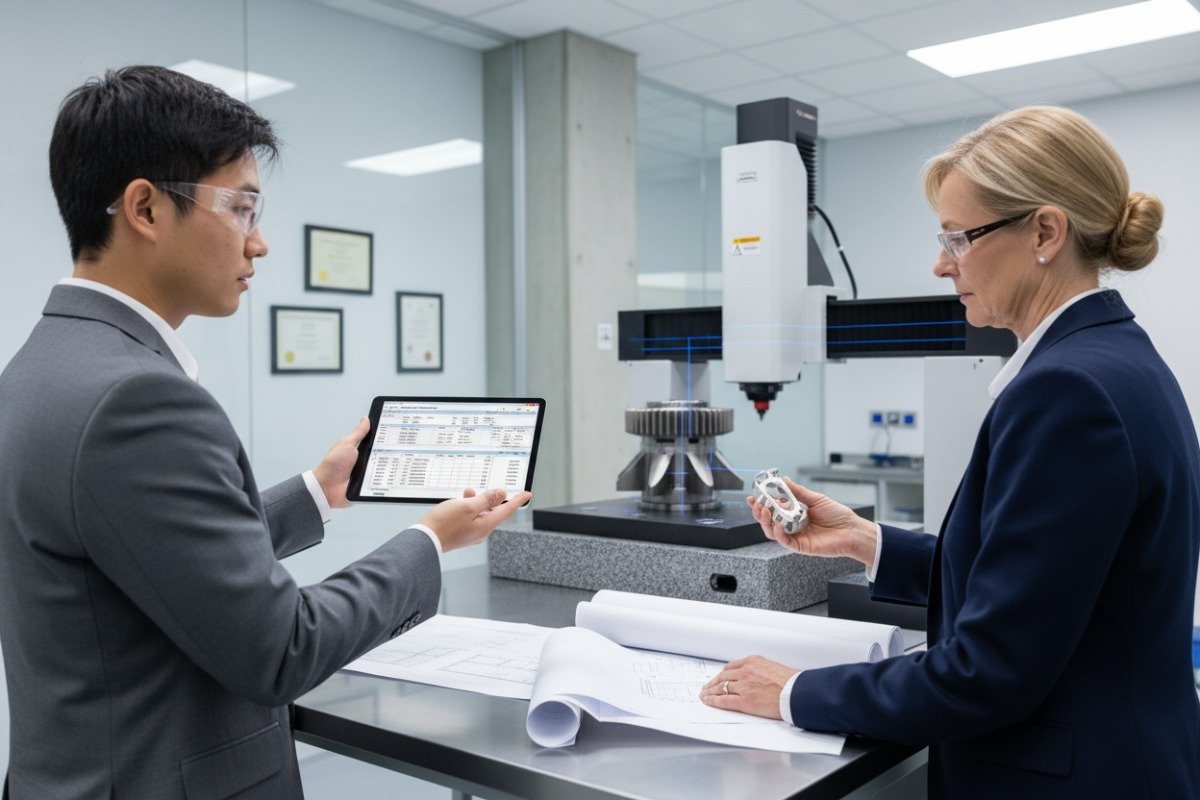
Quality isn't just about having a CMM (Coordinate Measuring Machine) in the corner. It's about how they use it.
| Question | Why It Matters |
|---|---|
| What inspection equipment do you have? | Confirms they can measure your tolerances |
| Do you provide FAI reports with every new tool? | Ensures first parts are verified against drawings |
| How do you handle non-conforming parts? | Reveals their corrective action process |
| Can you share a sample inspection report? | Lets you evaluate their documentation quality |
| Do you perform incoming material verification? | Confirms they check resin before molding |
A supplier who willingly shares sample reports is confident in their quality system. One who dodges this request probably has something to hide.
Questions About Communication and Project Management
Technical capability means nothing if the supplier can't communicate effectively. Ask:
- Who will be my primary point of contact?
- How often will I receive project updates?
- What is your standard response time for technical questions?
- Do you use any project management tools or portals?
In our experience coordinating between U.S. engineering teams and Asian manufacturing facilities, we've found that having a dedicated project manager — not a shared sales rep — dramatically improves outcomes. The best suppliers assign a single point of contact who understands both the technical and commercial sides of your project.
Red Flags to Watch For
Some warning signs should make you pause:
- Vague lead time estimates ("about 4–8 weeks")
- No DFM feedback after receiving your CAD file
- Reluctance to provide references or sample reports
- No documented quality procedures
- Pricing that seems too good to be true
Trust your instincts. If something feels off during the evaluation, it will only get worse during production.
How Do I Ensure My Chosen Supplier Can Meet My Project's Tight Lead Times?
Delivery delays are the number one complaint we hear from clients who come to us after a bad experience with a previous supplier. Tight lead times are the norm in prototyping, not the exception.
To ensure on-time delivery, confirm the supplier's typical prototype lead times, ask for a detailed project timeline with milestones, verify their capacity utilization, check their track record with references, and establish clear penalties or escalation procedures for delays in your contract.
Why Prototype Lead Times Are Different
Production molding has predictable timelines. Prototype molding doesn't. Prototypes involve more unknowns — design changes, material trials, tolerance adjustments. A good prototype supplier builds buffer into their schedule and communicates proactively when timelines shift.
Typical lead times for prototype injection molding look like this:
| Project Phase | Typical Timeline | What Can Cause Delays |
|---|---|---|
| DFM review and quoting | 2–5 business days | Incomplete drawings, complex geometry |
| Tooling design and approval | 1–2 weeks | Design revisions, approval bottlenecks |
| Tooling fabrication | 2–4 weeks (aluminum) | Material availability, shop capacity |
| First article samples | 3–5 business days after tool | Process optimization, material issues |
| Sample approval and adjustments | 1–2 weeks | Client review time, revision requests |
| Total (typical prototype) | 5–10 weeks | Multiple factors compound delays |
Some quick-turn specialists can deliver first samples in as few as 10–15 business days. But that speed comes at a premium. Know your true deadline and communicate it clearly.
Building a Realistic Timeline Together
The best approach is collaborative planning. Don't just ask "When can you deliver?" Instead, work with the supplier to build a milestone-based timeline. Each milestone should have a clear deliverable and a date.
For example:
- Day 1–3: DFM review complete, feedback provided
- Day 4–5: Client approves DFM changes
- Day 6–20: Tooling fabrication
- Day 21–23: First shots and FAI
- Day 24–28: Client reviews samples
- Day 29–35: Adjustments (if needed) and final delivery
This approach creates accountability on both sides. Delays often happen because the client takes two weeks to approve a DFM change. A shared timeline makes that visible.
Capacity and Workload Transparency
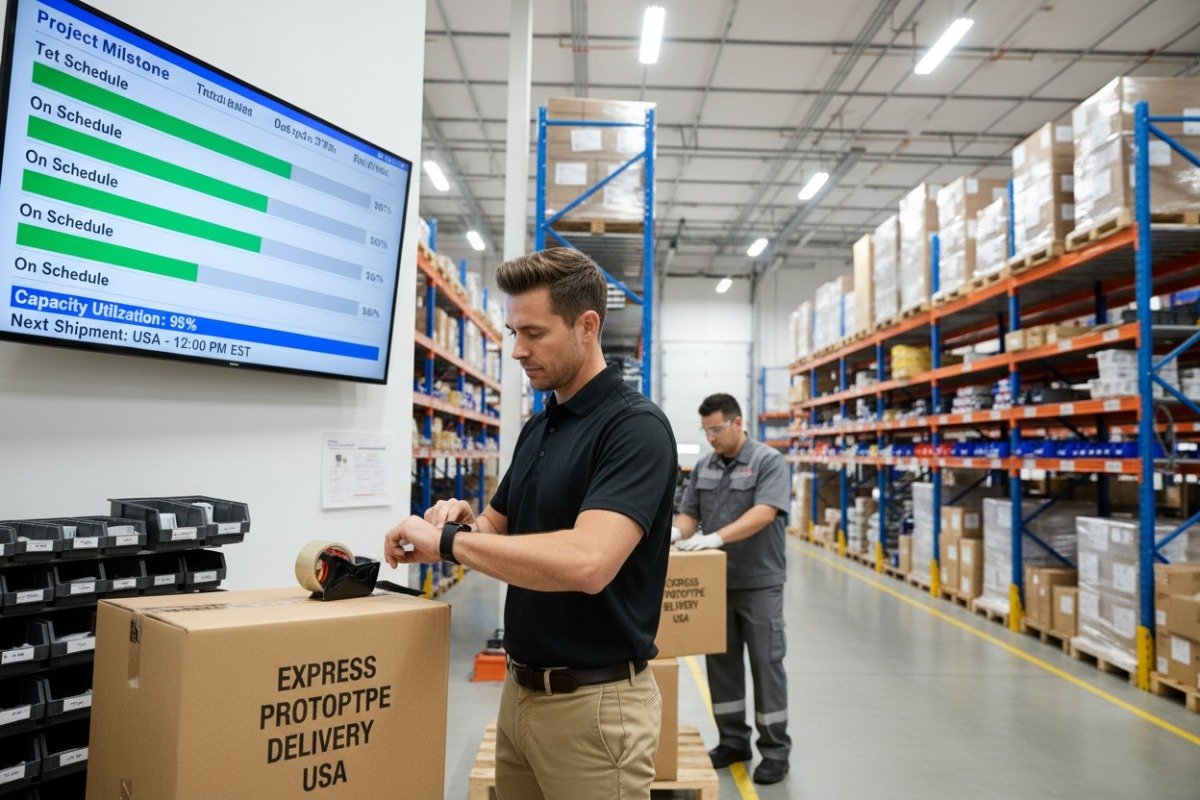
Ask the supplier about their current capacity utilization. A shop running at 95% capacity will struggle to prioritize your prototype. A shop at 60–70% has room to accommodate rush jobs.
Also ask: How many active prototype projects are you running right now? Do you have dedicated prototype presses, or do prototypes share time with production runs? Dedicated prototype capacity is a strong indicator that the supplier takes low-volume work seriously.
Track Record Verification
Past performance is the best predictor of future performance. Ask for their on-time delivery rate. Good suppliers track this metric and share it openly. An on-time rate above 95% is excellent. Below 85% is a warning sign.
When checking references, ask the reference specifically about delivery. Did the supplier hit their dates? How did they handle unexpected delays? Were they proactive in communicating timeline changes?
Contractual Safeguards
For critical prototype timelines, put teeth in your agreement. Options include:
- Milestone-based payments tied to delivery dates
- Expedite fees pre-agreed for rush situations
- Escalation procedures when a milestone is missed
- Penalty clauses for significant delays (use carefully — they can damage the relationship)
At our company, we prefer milestone-based payments because they align incentives without creating adversarial dynamics. The supplier gets paid when they deliver. Simple.
Communication During the Project
Once the project starts, establish a communication cadence. Weekly status updates are the minimum. For rush projects, daily check-ins may be necessary.
Ask the supplier to flag risks early. A good partner will tell you on Day 10 that tooling steel is backordered, not on Day 25 when you're expecting samples. Proactive communication is the hallmark of a reliable supplier.
In our years of managing supply chains across Vietnam and China for U.S. clients, we've found that the suppliers who communicate bad news early are the ones who deliver the best overall results. Silence is never a good sign.
Conclusion
Choosing the right prototype injection molding supplier comes down to structured evaluation, honest communication, and focusing on total value over lowest price. Use the criteria and questions above to make a confident, informed decision.
Footnotes
1. Explains the process, benefits, and applications of creating prototypes using injection molding. ↩︎
2. Describes the benefits and applications of using aluminum for injection molding molds. ↩︎
3. Introduces additive manufacturing methods for creating injection molding tools for prototypes. ↩︎
4. Provides a comprehensive overview of the international standard for quality management systems. ↩︎
5. Details the specific quality management system requirements for medical device manufacturers. ↩︎
6. Explains the quality management system standard specifically for the automotive industry. ↩︎
7. Defines DFM and its importance in optimizing product development and manufacturing processes. ↩︎
8. Discusses the importance and various types of safeguarding designs and inventions. ↩︎
9. Explains a comprehensive approach to evaluating costs beyond the initial purchase price. ↩︎
10. Explains the data-driven approach to optimize injection molding processes for consistent parts. ↩︎

 English
 Español de México
 Deutsch
 Français
 Русский
 العربية