
Every week, our project team reviews supplier qualification files from clients who got burned by the wrong molding partner Coordinate Measuring Machines 1. The stories are painfully similar — late deliveries, parts that don't match drawings, and quality issues that snowball into costly recalls. Choosing a plastic molding company feels straightforward until you realize one bad decision can stall your entire production schedule.
The best plastic molding company for your business is one that aligns with your project's volume, complexity, and timeline. Evaluate certifications, technical expertise, production capacity, quality systems, and value-added services before committing. A holistic approach beats choosing on price alone.
With nearly 600 injection molders operating in North America alone, the options can feel overwhelming. This guide breaks down the critical factors you need to assess — from certifications and technical capabilities to lead times and pricing — so you can make a confident, informed decision. Let's walk through each one.
What Key Certifications and Quality Standards Should I Look for in a Plastic Molding Partner?
When we audit potential molding suppliers on behalf of our clients, certifications are the very first filter we apply. A supplier without the right quality credentials is a risk no purchasing manager should take. Yet many buyers skip this step or accept vague claims at face value.
Look for ISO 9001 as a baseline, then industry-specific certifications like IATF 16949 for automotive, ISO 13485 for medical devices, and ISO 14001 for environmental management. These certifications indicate disciplined quality systems, not just paperwork, and correlate with roughly 25% lower defect rates.
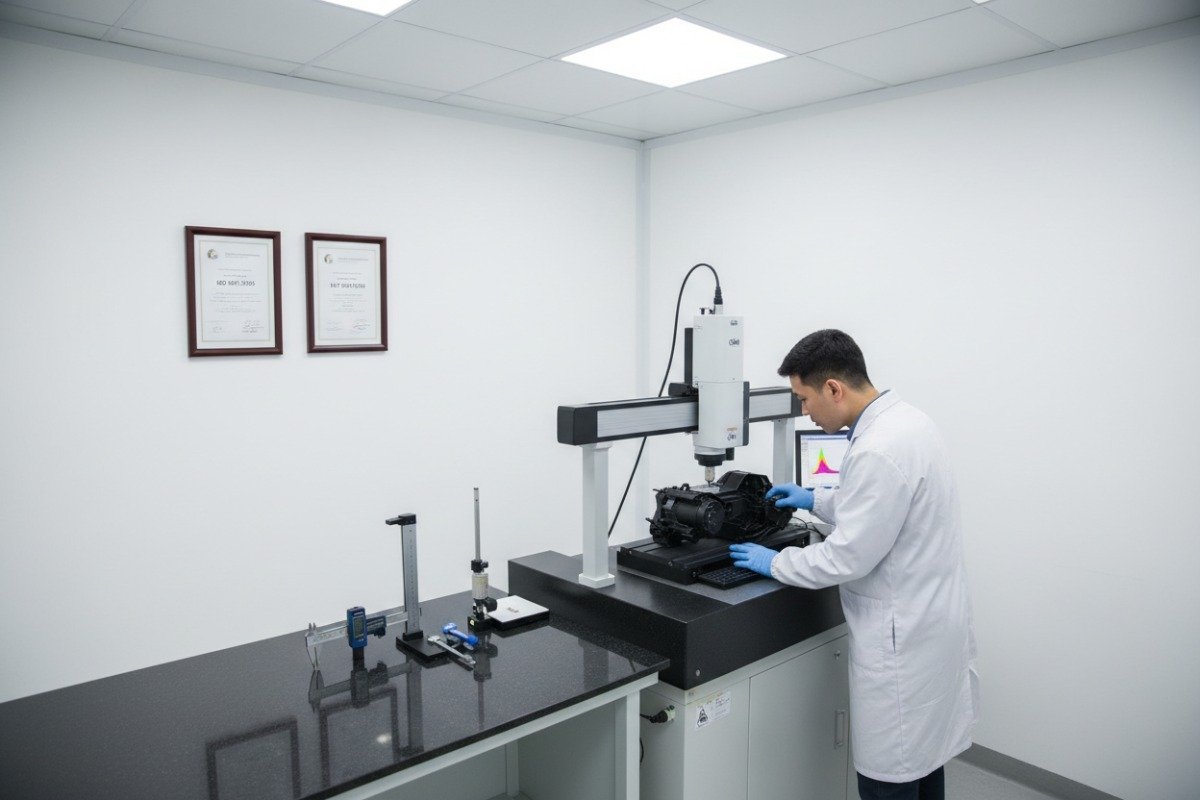
Certifications tell you a lot about how a company operates day to day. They are not just plaques on the wall. A certified company has documented processes, regular internal audits, and a culture of continuous improvement. Here is what to look for and why each matters.
The Core Certifications Explained
ISO 9001 2 is the universal quality management standard. It means the company has a system for controlling processes, tracking defects, and improving over time. If a molding company does not have ISO 9001, that is a red flag.
Beyond ISO 9001, your industry dictates what else you need. Medical device buyers must insist on ISO 13485 3. Automotive buyers need IATF 16949 4. If your products touch food or beverages, look for FDA compliance 5 and food-grade material handling procedures.
| Certification | Industry Focus | What It Covers |
|---|---|---|
| ISO 9001 | General manufacturing | Quality management systems, process control, continuous improvement |
| IATF 16949 | Automotive | Defect prevention, variation reduction, supply chain quality |
| ISO 13485 | Medical devices | Design controls, risk management, traceability |
| ISO 14001 | All industries | Environmental management, waste reduction, sustainability |
| UL Certification | Electrical/electronics | Material flammability, safety compliance |
Go Beyond the Certificate
A certificate alone does not guarantee good parts. Our team always asks suppliers to show their actual quality records — rejection rates, corrective action reports, and on-time delivery metrics. A strong partner will share these openly.
Ask how they handle variability during production runs. Do they use Statistical Process Control 6 (SPC)? How often do they calibrate their Coordinate Measuring Machines (CMMs)? What happens when a defect is found mid-run? These questions reveal whether the quality system is alive or just on paper.
Watch for These Red Flags
Be cautious if a supplier claims certifications but cannot provide a valid certificate number or a copy from the registrar. Some companies let certifications lapse. Others hold a certificate for one facility but operate your project out of an uncertified location. Always verify directly with the certification body.
Companies with robust quality systems also invest in employee training. Ask about their training programs. A well-trained workforce catches problems early, which means fewer surprises for you. Data shows that routine QA processes prevent recalls that can cost 5 to 10 times the original production expense.
How Can I Verify If a Molding Company Has the Technical Expertise to Handle My Complex Part Designs?
Our engineers have reviewed thousands of part drawings over the years, and one thing is clear — not every molder can handle every part. A company that excels at simple containers may struggle with tight-tolerance medical components. Matching technical capability to part complexity is essential.
Verify technical expertise by requesting case studies of similar projects, confirming proficiency with your specific resins and processes, and checking for advanced equipment like multi-cavity molds, CMMs, and CAD tools such as Autodesk Moldflow. Industry-specific experience reduces risk significantly.
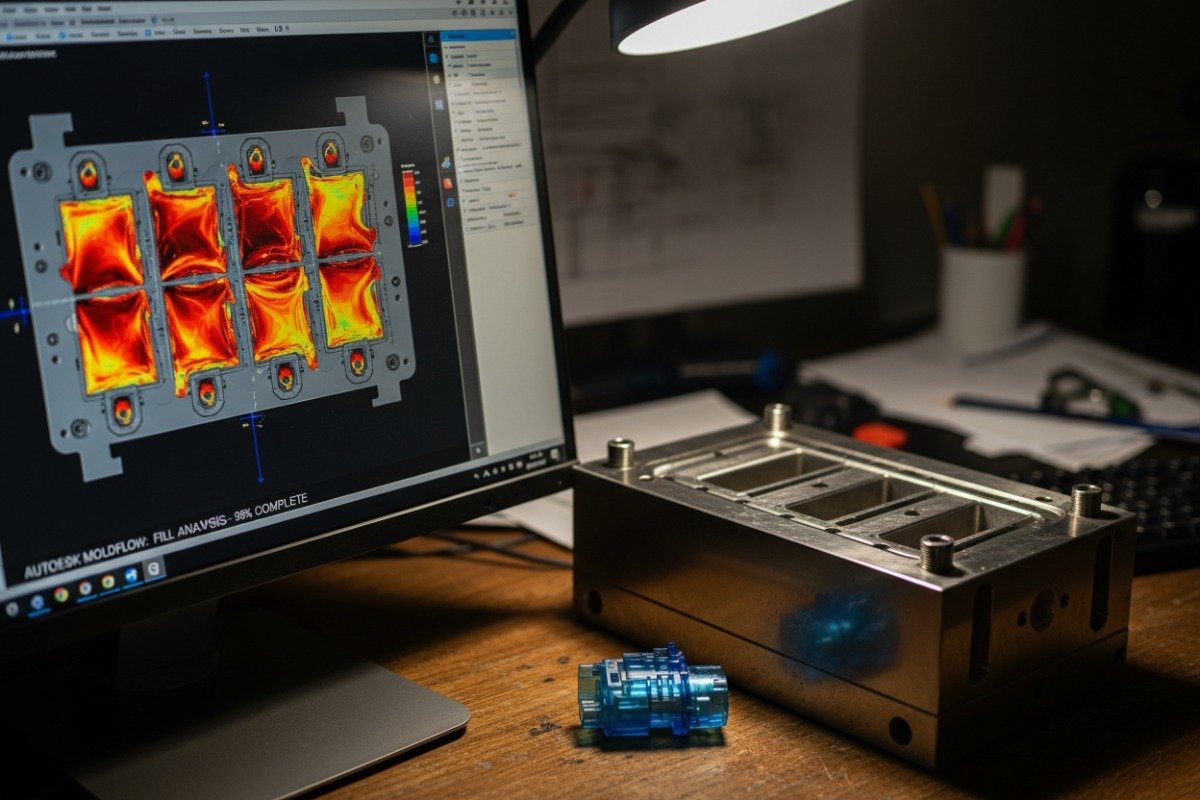
Technical expertise is not just about having machines. It is about knowing how to use them for your specific application. Here is how to dig deeper.
Ask the Right Questions About Capabilities
Start with the basics. What types of molding do they offer? Standard injection molding is common, but complex parts may require insert molding, overmolding, multi-material injection 7, or gas-assist molding. If your design needs any of these, confirm the supplier has done it before — not just that they own the equipment.
Ask about their engineering team. Do they have in-house mold designers? Can they provide Design for Manufacturability 8 (DFM) feedback before tooling begins? A good partner will catch potential problems in your design early, saving you weeks of rework later.
Evaluate Their Equipment and Software
Modern molding requires modern tools. Ask about their press tonnage range, shot size capabilities, and the age of their machines. Older machines can still work, but newer equipment typically offers better repeatability and energy efficiency.
On the software side, look for companies that use mold flow analysis tools 9 like Autodesk Moldflow or Moldex3D. These simulate how resin fills the mold, predicting issues like warping, sink marks, and air traps before cutting steel.
| Technical Capability | Why It Matters | How to Verify |
|---|---|---|
| Mold flow analysis (Moldflow, Moldex3D) | Predicts fill issues, reduces trial-and-error | Ask for a sample analysis report |
| In-house tool room | Faster mold repairs, less downtime | Request a virtual or in-person facility tour |
| CMM inspection | Ensures dimensional accuracy on complex parts | Ask for sample inspection reports with GD&T data |
| Multi-material molding | Enables overmolding and insert molding | Review case studies of similar multi-material projects |
| 3D printing / prototyping | Validates designs before committing to steel tooling | Ask about prototype lead times and materials used |
Request Case Studies and References
Nothing beats proof. Ask the supplier for case studies that match your part's complexity, material, and industry. If you are sourcing rigid packaging components, a case study about automotive connectors is not very relevant.
Go a step further and ask for client references. A confident supplier will connect you with existing customers who can speak to their technical performance. When we help clients evaluate molders, we always conduct reference checks. The feedback often reveals details that no brochure will tell you — like how the supplier handles unexpected tooling issues or engineering changes mid-project.
Industry Experience Is Non-Negotiable
Every industry has unique regulations, material requirements, and design challenges. A molder experienced in medical devices understands biocompatibility requirements and cleanroom protocols. An automotive-focused molder knows PPAP documentation inside and out. Choosing a partner without relevant industry experience means you are paying for their learning curve.
Custom capabilities can boost project success by up to 40% in high-volume scaling scenarios. That is because experienced molders anticipate problems before they happen. They know which resins behave unpredictably at certain wall thicknesses. They know which gate locations minimize cosmetic defects. This kind of knowledge only comes from years of hands-on work.
What Steps Should I Take to Evaluate a Supplier's Lead Times and Production Capacity for My Project?
When we onboard a new molding supplier into our network, production capacity and lead time reliability are among the hardest things to verify — and among the most important. A supplier who quotes four weeks but delivers in eight can derail your entire product launch.
Evaluate lead times by requesting detailed production schedules, asking about current machine utilization rates, and reviewing on-time delivery records from existing clients. Confirm capacity by checking the number of presses, shift patterns, and whether they have backup tooling and automation to maintain consistency at scale.
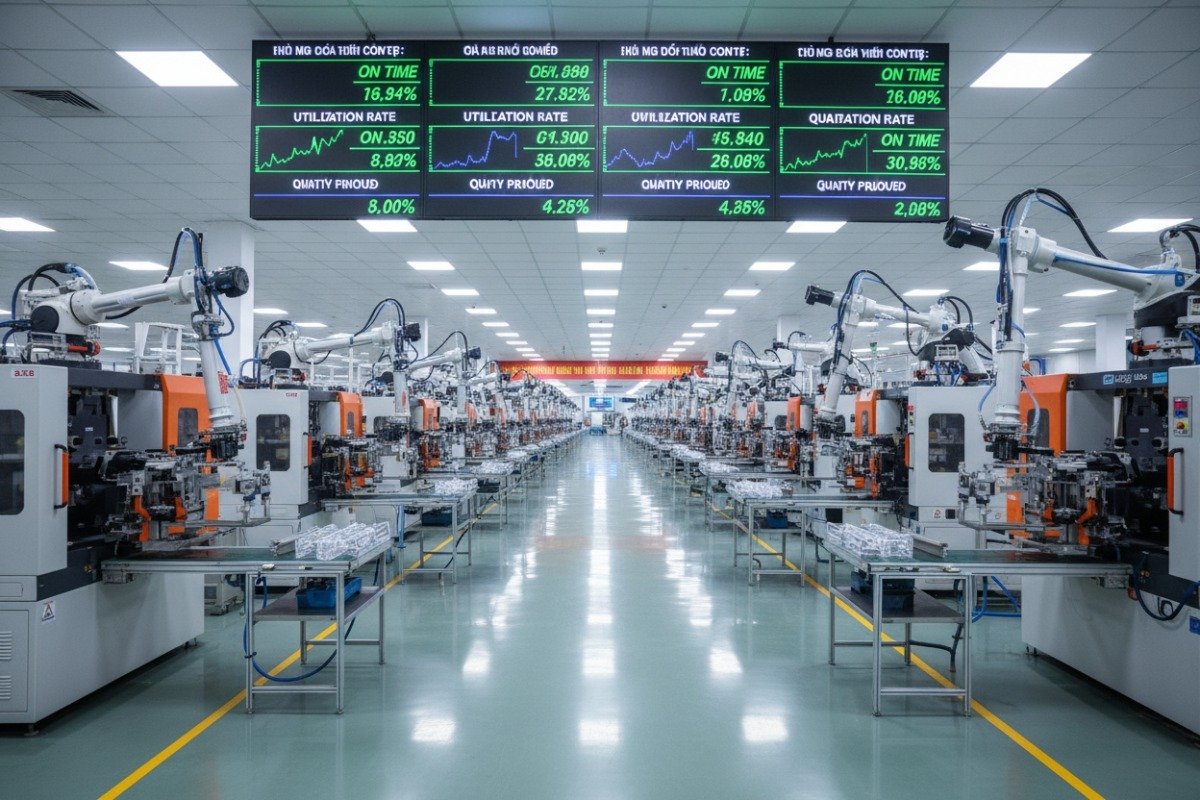
Lead time and capacity are where promises meet reality. Here is a structured approach to separate reliable suppliers from those who overpromise.
Break Down the Total Lead Time
Most buyers focus on production time, but total lead time includes much more. You need to account for tooling design, tooling fabrication, first article inspection, sample approval, and then production. Each phase has its own timeline, and delays in any one phase push everything back.
Ask the supplier to break down each phase with specific durations. A transparent supplier will give you a Gantt chart or at least a phase-by-phase estimate. If they only give you one number for the whole project, push back and ask for details.
| Lead Time Phase | Typical Duration | Key Variables |
|---|---|---|
| Mold design and DFM review | 1–2 weeks | Part complexity, number of revisions |
| Mold fabrication | 4–10 weeks | Mold size, number of cavities, steel type |
| First article / T1 samples | 1–2 weeks | Inspection scope, customer approval speed |
| Sample revisions (if needed) | 1–4 weeks | Number of issues found, tooling modifications |
| Production run | 2–6 weeks | Order quantity, cycle time, press availability |
| Shipping and logistics | 1–4 weeks | Origin country, shipping method, customs |
Assess Real Production Capacity
A supplier may have 50 presses, but if 48 of them are already running other jobs, your project will wait. Ask about current utilization rates. A healthy utilization rate is typically 70–85%. Above that, the supplier may struggle to accommodate new orders or handle urgent changes.
Also ask about shift patterns. A supplier running three shifts has more capacity than one running a single shift. And check whether they have redundancy — if a press breaks down, can they move your mold to another compatible machine without significant delay?
Automation and Scalability
For high-volume projects, automation is critical. Robotic part removal, automated packaging, and in-line inspection systems all reduce cycle times and improve consistency. About 70% of manufacturers now prioritize partners with robotics, especially amid ongoing labor shortages.
Ask whether the supplier has an in-house tool room. If a mold needs repair during a production run, an in-house tool room can fix it in hours. Sending the mold to an outside shop can add days or even weeks of downtime.
Verify With Data, Not Promises
Request the supplier's on-time delivery rate for the past 12 months. Top-tier molders achieve 99% or higher. If they cannot provide this data, that is a warning sign. Also ask for references from clients with similar volume requirements. A supplier that delivers 10,000 parts per month reliably may not be equipped to handle 500,000.
When we manage projects for our clients, we track every milestone against the original schedule. We have found that suppliers who provide proactive status updates — before you have to ask — are almost always the ones who deliver on time. Communication discipline and delivery discipline go hand in hand.
How Do I Ensure I Am Getting a Fair Price Without Compromising the Quality of My Plastic Components?
Our sourcing team compares quotes from multiple suppliers on nearly every project, and we see a wide range of pricing for the same part. The cheapest quote is rarely the best value. But overpaying is not smart either. The goal is to understand what drives cost and make sure every dollar is justified.
Ensure fair pricing by requesting detailed cost breakdowns covering material, tooling, labor, overhead, and logistics. Compare quotes from at least three qualified suppliers. Evaluate total cost of ownership — including scrap rates, rework, and delivery reliability — rather than unit price alone to avoid hidden expenses.
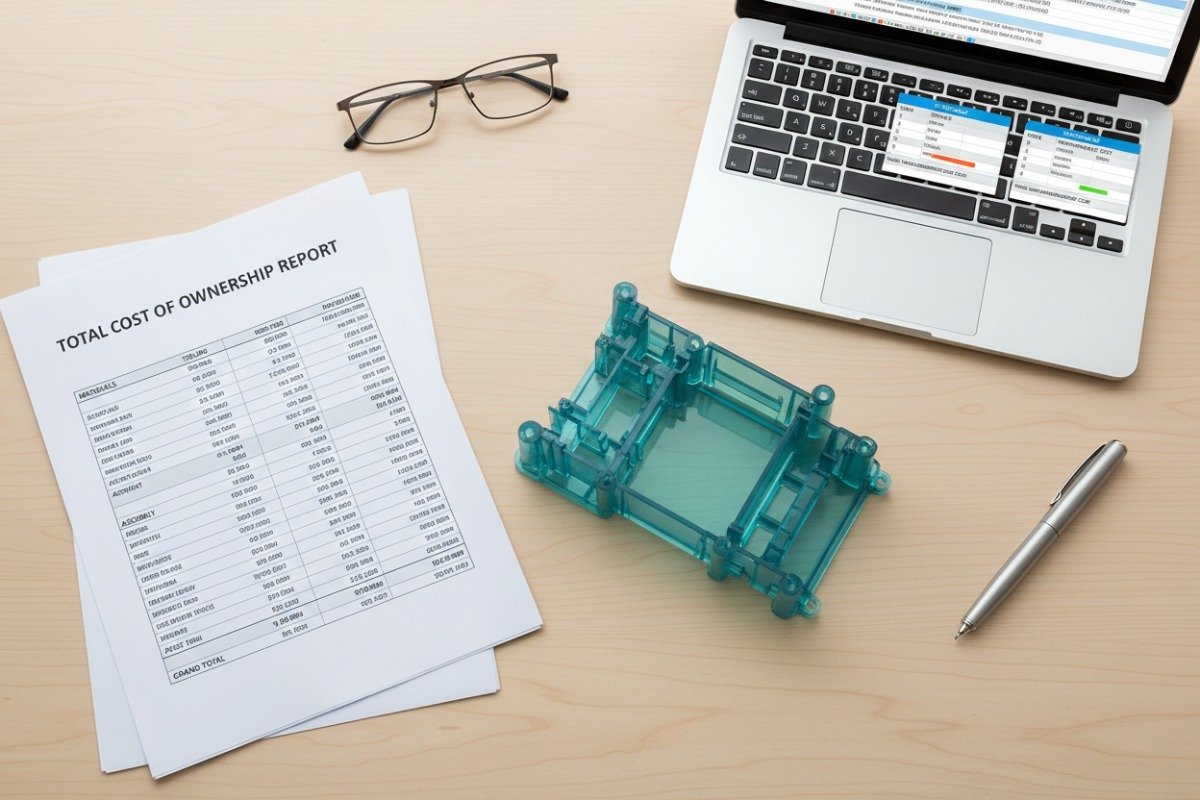
Price is important. But price without context is meaningless. Here is how to evaluate cost intelligently.
Understand What Drives Molding Costs
Injection molding costs break down into a few major categories. Material cost is often the largest variable. Tooling is a significant upfront investment. Labor, machine time, and overhead make up the rest. Understanding these components helps you spot where a quote is padded — or dangerously lean.
Material costs vary widely depending on the resin. Commodity plastics like polypropylene and polyethylene are the cheapest options, but they may not meet your performance requirements. Engineering plastics cost significantly more but offer superior strength, heat resistance, and dimensional stability.
| Material | Approximate Cost (per lb) | Key Properties | Common Applications |
|---|---|---|---|
| Polypropylene (PP) | $1–2 | Lightweight, chemical resistant, flexible | Packaging, containers, automotive trim |
| Polyethylene (PE) | $1–2 | Impact resistant, moisture barrier, low cost | Bottles, bags, industrial liners |
| ABS | $2–4 | Tough, good surface finish, easy to mold | Consumer electronics, housings, toys |
| Polycarbonate (PC) | $3–6 | Transparent, high impact, heat resistant | Medical devices, lenses, safety equipment |
| Nylon (PA) | $4–8 | High strength, wear resistant, heat tolerant | Gears, bearings, automotive components |
| PEEK | $40–80 | Extreme heat and chemical resistance | Aerospace, medical implants, semiconductors |
Material costs can represent 30–50% of total molding expenses. Choosing the right material is not just a technical decision — it is a financial one. A structured material selection process that balances performance, moldability, shrinkage, and compliance will prevent costly mismatches.
Compare Quotes Properly
When you receive quotes from multiple suppliers, make sure you are comparing apples to apples. One supplier may include tooling in the unit price. Another may quote tooling separately. One may include secondary operations like pad printing or assembly. Another may not.
Ask every supplier to provide a line-item cost breakdown. This makes comparison straightforward and reveals where each supplier is more or less competitive.
Total Cost of Ownership Matters More Than Unit Price
A low unit price means nothing if the supplier delivers late, ships defective parts, or requires constant rework. These hidden costs add up fast. A single batch of non-conforming parts can cost you 5 to 10 times the production expense when you factor in sorting, rework, expedited shipping, and lost customer trust.
We have seen clients save 15% on unit price by choosing the cheapest supplier, only to spend 30% more overall due to quality failures and delivery delays. Budget-focused selection without capability assessment is a false economy.
Value-Added Services Reduce Total Cost
Look for suppliers that offer value-added services like in-mold labeling (IML), sonic welding, silk screening, pad printing, and engineering support for design optimization. These services reduce supply chain steps, eliminate the need for secondary suppliers, and speed time-to-market.
A supplier who can handle assembly, packaging, and labeling in-house saves you coordination time and logistics cost. When we structure supply chains for our clients, we always look for these consolidation opportunities. They reduce risk and improve efficiency.
Negotiate Smart, Not Hard
Fair pricing comes from transparency, not pressure. Share your volume forecasts honestly. Commit to longer-term agreements if possible — suppliers offer better pricing when they have volume certainty. Ask about payment terms. Some suppliers offer 60–90 day terms, which can significantly ease your cash flow.
But never negotiate quality out of the deal. If a supplier cuts price by eliminating inspection steps or using off-spec material, you will pay for it later. The best negotiations result in a price that is fair for both sides, with clear quality expectations documented in the contract.
Conclusion
Choosing the right plastic molding company comes down to certifications, technical fit, proven capacity, and total value — not just price. Evaluate holistically, verify with data, and build a partnership that delivers quality parts on time, every time.
Footnotes
1. Explains how these machines measure physical dimensions with high precision. ↩︎
2. Explains the foundational quality management standard for various industries. ↩︎
3. Replaced with BSI’s overview of ISO 13485, an authoritative source for ISO standards. ↩︎
4. Details the automotive industry’s specific quality management system standard. ↩︎
5. Replaced with an official FDA page providing information for consumers on food packaging and food contact substances, ensuring an authoritative .gov source. ↩︎
6. Defines the use of statistical techniques to monitor and control processes. ↩︎
7. Replaced with a comprehensive guide to multi-material manufacturing, specifically two-shot injection molding, which aligns with the original anchor text. ↩︎
8. Replaced with the Wikipedia page for a broad and authoritative overview of Design for Manufacturability. ↩︎
9. Introduces software used to simulate plastic injection molding for defect prevention. ↩︎
10. Replaced with an authoritative explanation of Total Cost of Ownership from IBM. ↩︎



 English
  Español de México
  Deutsch
  Français
  Русский
  العربية