
Every year, our supply chain team reviews dozens of progressive stamping suppliers across Asia. The difference between a great partner and a bad one can mean thousands of dollars lost in rework, delays, and scrapped tooling.
Choosing the best progressive stamping manufacturer requires evaluating their engineering expertise, press capacity, quality certifications like ISO 9001 or IATF 16949, in-house tooling capabilities, material knowledge, and proven track record in your specific industry to ensure precision, cost-effectiveness, and reliable delivery.
In this guide, we break down the exact criteria you should use to evaluate a progressive stamping partner. Each section covers a specific angle — from technical capabilities to quality verification, scalability, and tooling expertise. Let's get into it.
What Key Technical Capabilities Should I Look for in a Progressive Stamping Partner?
When we audit stamping factories in Vietnam and across Southeast Asia, technical capability is the first thing we assess. A supplier with the wrong equipment or outdated processes will cost you more in the long run.
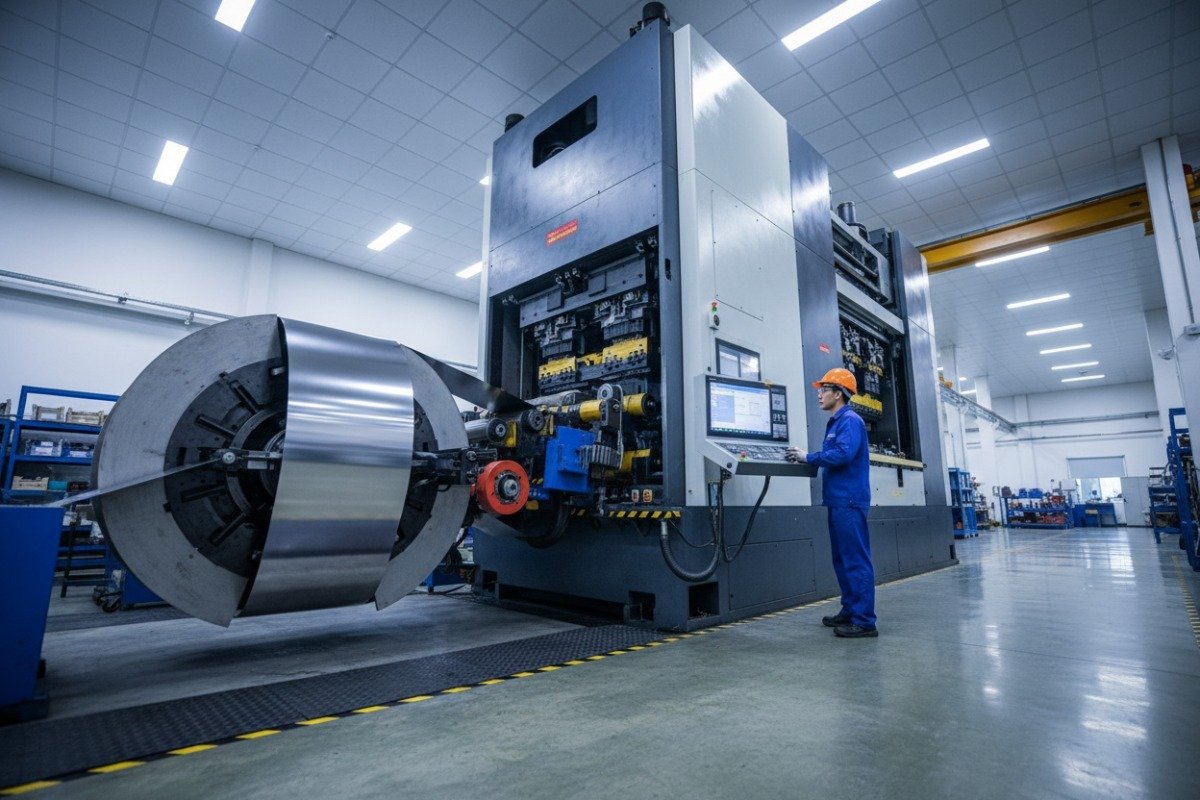
Look for in-house die design, high-speed press capacity ranging from 15 to 300+ tons, multi-station progressive tooling experience, and the ability to handle your specific materials and tolerances — these technical capabilities directly determine part quality, cycle time, and unit cost.
Press Tonnage and Speed Matter
The stamping press is the heart of the operation. You need to match press tonnage to your part's size, material thickness, and complexity. A manufacturer running 15-ton presses cannot handle thick steel brackets. One running 300-ton presses may be overkill for thin copper contacts.
High-speed presses are essential for high-volume runs. They reduce cycle time and lower your per-part cost. But speed without precision is useless. Ask about strokes per minute and how they maintain accuracy at full speed.
In-House Die Design and Development
This is non-negotiable. A manufacturer that outsources die design loses control over quality and turnaround time. When our engineers work with stamping partners, we always confirm they have their own die design team using CAD/CAM software 1. In-house capability means faster iterations, quicker problem resolution, and better communication.
The Complete Equipment Ecosystem
A stamping press alone does not make a capable manufacturer. You need to evaluate the entire system:
| Equipment Component | What It Does | Why It Matters |
|---|---|---|
| Stamping Press | Forms the metal strip through dies | Core forming capability |
| Coil Feeder | Feeds metal strip at precise increments | Ensures consistent part dimensions |
| Leveling System | Flattens coil material before stamping | Prevents warping and dimensional errors |
| In-Die Sensors | Monitors force, position, and feed | Catches defects in real time |
| Secondary Equipment | Tapping, welding, plating, assembly | Reduces need for outside vendors |
Material Handling Expertise
Progressive stamping works with brass, aluminum, copper, steel, stainless steel, and various alloys. But each material behaves differently under pressure. Aluminum is soft and prone to galling. Stainless steel work-hardens quickly. Brass is forgiving but expensive.
A capable partner will guide you on optimal material selection based on your part's function, volume, and budget. They should also handle coil stock in various thicknesses — from as thin as 0.002 inches for electronics contacts up to 0.080 inches or more for structural brackets.
Data-Driven Process Optimization
Top manufacturers now use IoT sensors, real-time analytics, and predictive maintenance. These tools catch problems before they become scrap. They also give you transparency into production status. When we manage projects for our US clients, we value partners who can share real-time data on press performance and defect rates.
A manufacturer that still relies on manual inspection alone is behind the curve. Ask about their use of statistical process control (SPC) 2 and whether they track Cpk values for critical dimensions.
How Can I Verify That a Manufacturer Can Meet My Strict Quality and Tolerance Standards?
Our quality team in China has rejected entire shipments from stamping suppliers who claimed tight tolerances but could not back it up with data. Verification is everything. Words on a website mean nothing without proof.
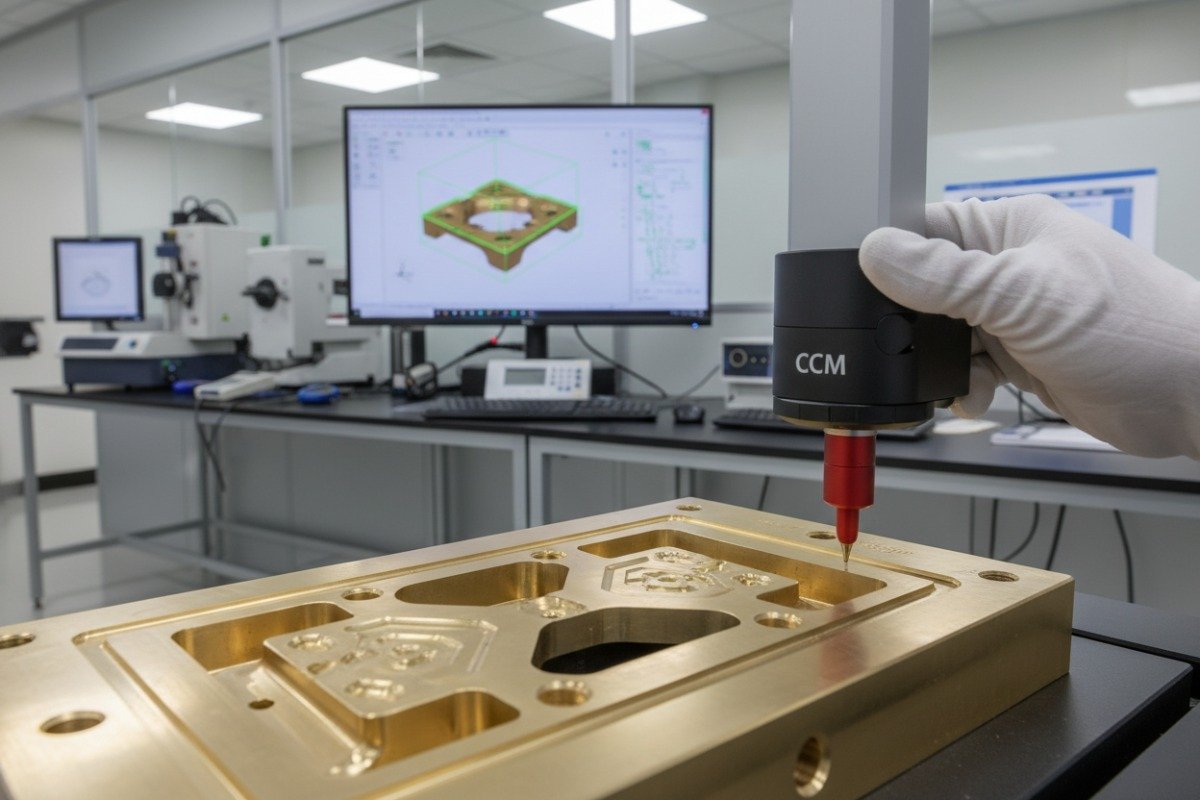
Verify quality by requesting ISO 9001 or IATF 16949 certifications, reviewing their PPAP documentation, auditing their inspection equipment such as CMMs and optical comparators, and demanding sample runs with full dimensional reports before committing to production orders.
Certifications Are Your Starting Point
Certifications tell you a manufacturer has a documented quality management system. But not all certifications carry equal weight.
| Certification | What It Covers | Best For |
|---|---|---|
| ISO 9001 3 | General quality management system | All industries |
| IATF 16949 4 | Automotive-specific quality standard | Automotive parts |
| ISO 14001 | Environmental management | Sustainability-focused buyers |
| AS9100 5 | Aerospace quality management | Aerospace components |
| NADCAP | Special process accreditation | Heat treat, plating, NDT |
If your parts go into automotive applications, IATF 16949 is a must. For aerospace, AS9100 is the baseline. Do not accept vague claims. Ask for certificate copies and verify them with the issuing body.
PPAP and First Article Inspection
Production Part Approval Process (PPAP) 6 is the gold standard for verifying a new supplier. It includes control plans, process flow diagrams, measurement system analysis, and first article inspection reports. When we onboard a new stamping partner for a US client, we require a full PPAP submission before any production order ships.
First article inspection (FAI) should cover every critical dimension on your drawing. Ask the supplier to measure a sample of parts using calibrated equipment and provide a detailed report. If they cannot do this, walk away.
Inspection Equipment and Methods
A manufacturer's inspection room tells you a lot. Look for:
- Coordinate Measuring Machines (CMMs) 7 for 3D dimensional verification
- Optical comparators for profile checks
- Pin gauges, micrometers, and calipers for basic measurements
- Surface roughness testers if finish matters
- Hardness testers for heat-treated parts
Beyond equipment, ask about their inspection frequency. Do they check every 100th part? Every 500th? What triggers a re-inspection? A good manufacturer has clear sampling plans tied to AQL levels 8.
Tolerance Reality Check
Progressive stamping can hold tight tolerances — typically ±0.001 inches to ±0.005 inches depending on material and part geometry. But there is a cost curve. Tighter tolerances require better tooling steel, slower press speeds, and more frequent inspection. Make sure your tolerances are truly necessary. Over-specifying tolerances drives up cost without adding value.
When we review drawings with our clients, we often find dimensions toleranced tightly that do not affect function. A good stamping partner will flag these and suggest practical alternatives. That kind of proactive communication is a quality indicator in itself.
Track Record and References
Ask for references from customers in your industry. Call them. Ask about on-time delivery rates, defect rates, and how the manufacturer handles problems. A supplier that hides behind NDAs and refuses any references is a red flag.
Surveys show that roughly 70% of progressive stamping failures trace back to inadequate die material selection or poor process control. Vetting quality upfront prevents costly surprises later.
What Factors Should I Consider to Ensure My Supplier Can Scale with My Production Volume?
We have seen it happen too many times: a supplier delivers great samples, nails the first small order, then falls apart when volumes ramp up. Scalability is not just about having more presses. It is about systems, planning, and capacity management.
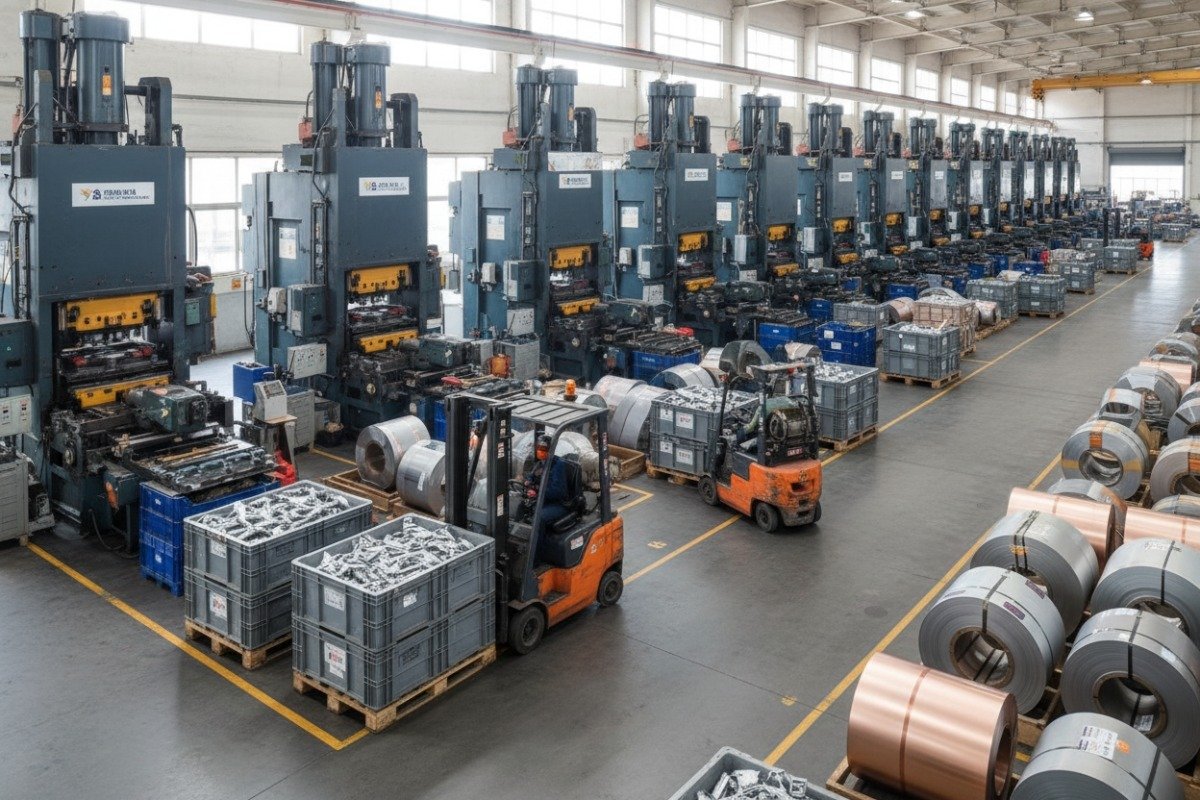
Ensure scalability by evaluating the manufacturer's total press capacity, number of production lines, workforce depth, raw material sourcing stability, and their track record handling annual volumes from 25,000 to over one million parts — plus their willingness to invest in dedicated tooling for your program.
Capacity Assessment
Start with hard numbers. How many presses do they operate? What is the tonnage range? How many shifts do they run? A manufacturer running three shifts on all presses has no room to absorb your volume increase. One running two shifts with spare presses has headroom.
Progressive stamping is a high-volume process by nature. It cuts production time by up to 50% compared to traditional methods for complex parts. But that efficiency only works if the manufacturer has the infrastructure to support it.
Volume Flexibility
Your volumes may fluctuate. Seasonal demand, new product launches, or market shifts can push orders up or down. A good partner handles both scenarios without drama.
| Volume Scenario | What to Ask | Red Flag |
|---|---|---|
| Ramp-up (2x–5x volume) | Can you add shifts or presses within 4 weeks? | "We need 3 months to prepare" |
| Steady state | What is your on-time delivery rate at full capacity? | Below 95% OTD |
| Ramp-down | Do you require minimum order quantities? | Rigid MOQs with no flexibility |
| New part introduction | Can you run prototypes while maintaining current production? | Prototype work disrupts existing orders |
Raw Material Sourcing Stability
A manufacturer is only as reliable as their material supply. Ask where they source coil stock. Do they have multiple approved suppliers? Do they hold safety stock? During the supply chain disruptions of recent years, manufacturers with single-source material strategies suffered the most.
When we manage supply chains for our clients, we require our partners to maintain at least two qualified material sources. We also ask for material certificates (mill certs) with every shipment to verify grade, temper, and thickness.
Workforce and Training
Scaling production means more operators, more setup technicians, and more inspectors. A manufacturer with high turnover or no training program will struggle to maintain quality at higher volumes. Ask about their workforce retention rate and how they train new press operators.
Contingency and Risk Planning
What happens when a press breaks down? When a die cracks? When a key operator quits? A scalable manufacturer has contingency plans. They have backup tooling. They cross-train operators. They schedule preventive maintenance to minimize unplanned downtime.
Progressive stamping dies are durable — they withstand long runs without degradation when properly maintained. But "properly maintained" is the key phrase. Ask about their die maintenance schedule and whether they track die life in terms of stroke count.
Geographic Considerations
Location affects scalability too. Asian manufacturers — in China, Vietnam, Taiwan — offer scale and cost advantages. The global progressive stamping market 9 is valued at over $30 billion in 2025, with Asia dominating production capacity. But distance means longer lead times and higher logistics complexity.
Our model bridges this gap. With local teams in Vietnam and China, we provide on-the-ground oversight while our US clients get the cost benefits of Asian manufacturing. This hybrid approach — Asian efficiency with Western quality control — is becoming the industry standard.
How Do I Evaluate If a Manufacturer's Tooling Expertise Matches My Specific Project Needs?
Tooling is where progressive stamping projects succeed or fail. When our project engineers review a new stamping supplier, the tooling conversation takes longer than any other topic. Poor tooling design leads to 20–30% higher costs from redesigns and wasted production time.
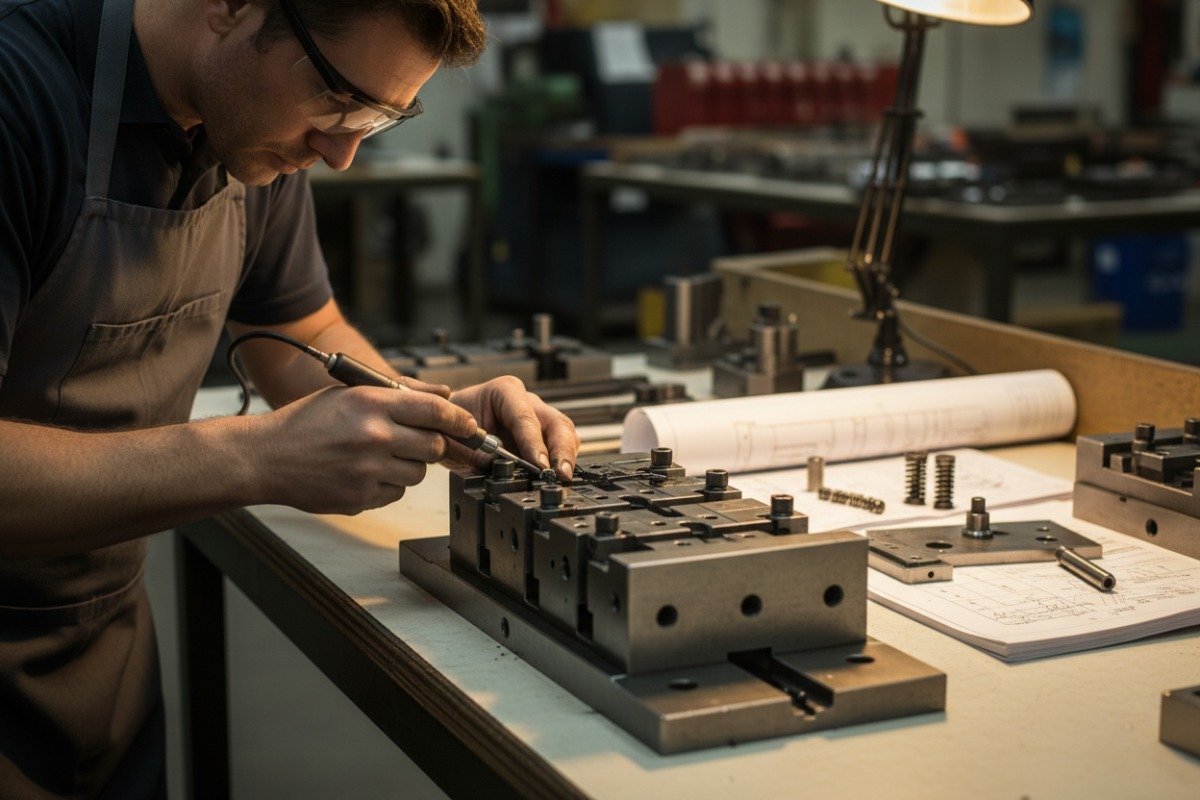
Evaluate tooling expertise by reviewing the manufacturer's die design portfolio, their selection of die steels, whether they offer lifetime tool maintenance, their experience with your part's complexity level, and their ability to optimize die stations for minimal waste and maximum part accuracy.
Die Design Portfolio Review
Ask to see examples of progressive dies they have built. Look for complexity that matches or exceeds your part. A manufacturer experienced only in simple blanking dies will struggle with a 12-station progressive die that includes forming, coining, and in-die tapping.
Good die designers think about the entire strip layout. They optimize material utilization to keep waste under 5%. They plan station sequencing to balance forces across the press. They design for maintainability so worn punches can be replaced without disassembling the entire die.
Die Steel Selection
The choice of die steel directly affects tool life, part quality, and total cost. This is where 70% of tooling failures originate — from choosing the wrong steel for the application.
| Die Steel Type | Hardness (HRC) | Best For | Trade-Off |
|---|---|---|---|
| D2 | 58–62 | General purpose, medium runs | Good balance of cost and durability |
| M2 (HSS) | 60–65 | High-speed stamping, abrasive materials | Higher cost, excellent wear resistance |
| A2 | 57–62 | Impact-prone applications | Tougher but less wear-resistant than D2 |
| Carbide | 70+ | Ultra-high volume, tight tolerances | Expensive, brittle if misapplied |
| S7 | 54–58 | Heavy forming, shock loads | High toughness, lower hardness |
A knowledgeable manufacturer will recommend die steel based on your material, volume, and tolerance requirements — not just default to the cheapest option.
Lifetime Tool Maintenance
Progressive dies wear over time. Punches dull. Forming stations lose dimension. A responsible manufacturer offers lifetime tool maintenance as part of the program. This means scheduled sharpening, component replacement, and periodic die audits.
Ask who owns the tooling. In most B2B arrangements, the customer pays for tooling and owns it. But the manufacturer maintains it. Make sure maintenance responsibilities and costs are clearly defined in your contract.
Prototype and Pilot Runs
Before committing to a full production die, consider a prototype phase. Some manufacturers offer soft tooling or short-run dies for validation. This lets you test form, fit, and function before investing in hardened production tooling.
Our approach with clients is to always push for a pilot run of 500–1,000 parts before full production approval. This catches design issues early when changes are cheap. A manufacturer that resists prototyping or rushes to production tooling may be prioritizing their revenue over your success.
Secondary Operations and Integration
Many progressive stamped parts need secondary operations — heat treating, plating, deburring, assembly. A manufacturer that offers these in-house or through tightly managed subcontractors simplifies your supply chain. Fewer handoffs mean fewer quality risks and shorter lead times.
Ask about their secondary capabilities. Can they tap holes in-die? Can they add insert molding? Do they offer sub-assembly? The more they can do under one roof, the less coordination you need to manage.
Red Flags to Watch For
- No in-house die design team
- Cannot show examples of similar tooling complexity
- No die maintenance program
- Unwilling to run prototypes
- Vague answers about die steel selection 10
- No tracking of die stroke count or tool life data
These are signs of a manufacturer that will cost you more in the long run, even if their initial quote looks attractive.
Conclusion
Choosing the right progressive stamping manufacturer comes down to technical capability, verified quality systems, scalable capacity, and deep tooling expertise. Do your homework, audit thoroughly, and partner with a supplier who communicates proactively and delivers consistently.
Footnotes
1. Explains CAD/CAM software and its integration in design and manufacturing. ↩︎
2. ASQ provides a comprehensive definition and explanation of SPC tools and methods. ↩︎
3. Official ISO page explaining the ISO 9001 quality management system standard. ↩︎
4. Official IATF page detailing the automotive quality management system standard. ↩︎
5. SAE International is the developer of the AS9100 aerospace quality management standard. ↩︎
6. Replaced with a comprehensive and authoritative Wikipedia page, as a direct, general informational page on AIAG was not readily available in search results. ↩︎
7. Replaced with a comprehensive and authoritative Wikipedia page, as the original NIST publication was removed and no other direct .gov or .edu page was found. ↩︎
8. Explains Acceptance Quality Limit (AQL) as a sampling standard for quality control. ↩︎
9. Grand View Research provides market analysis and size for the progressive stamping industry. ↩︎
10. Uddeholm, a leading steel producer, offers information on various die steels. ↩︎

 English
 Español de México
 Deutsch
 Français
 Русский