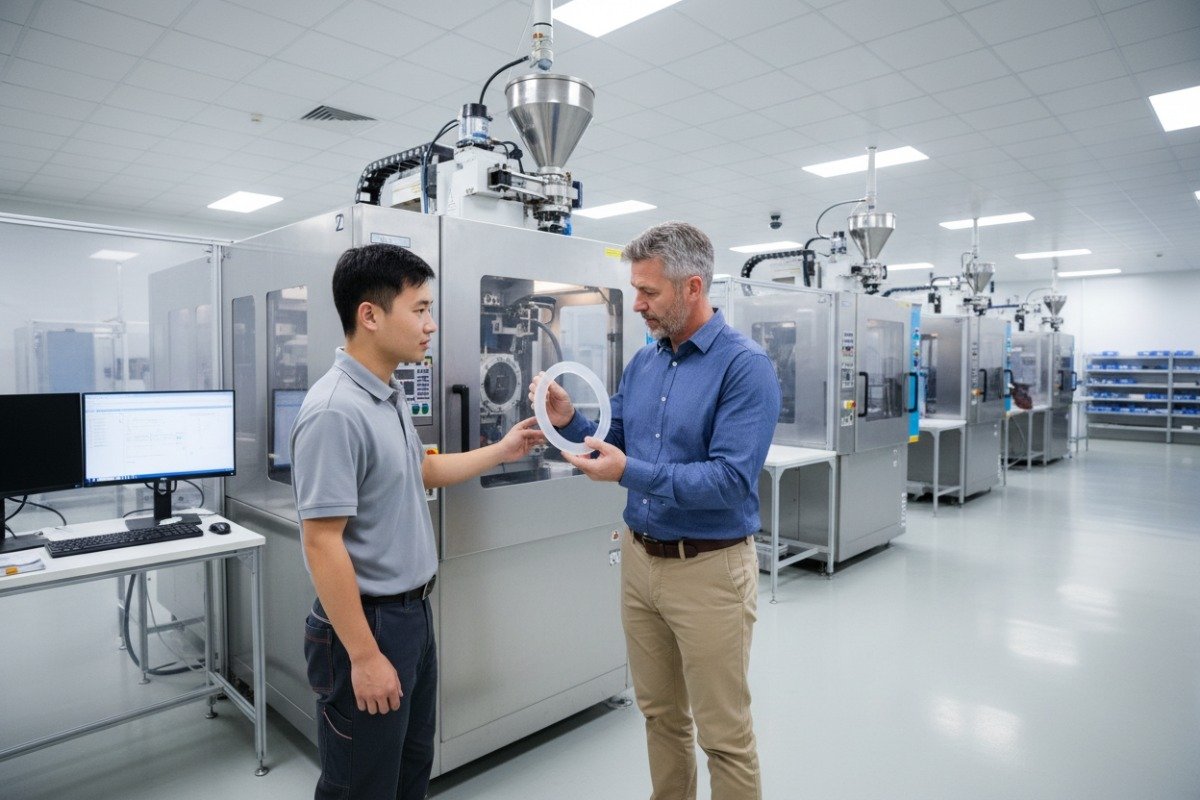
Every week, our project team reviews sourcing requests from U.S. buyers who have been burned by inconsistent silicone parts. They got short cycles, flash defects, or wrong shore hardness. The frustration is real.
To source high-quality liquid silicone molding, evaluate manufacturers on their ISO certifications, mold design capabilities, LSR injection equipment, and quality control processes. Prioritize suppliers with industry-specific experience, in-house tooling, and proven track records in medical, automotive, or consumer goods applications.
Liquid silicone rubber molding is not a commodity buy. It demands precision at every step. Below, we break down the key questions you should ask before choosing a supplier. Let's walk through each one.
How Do I Choose the Right Liquid Silicone Molding Manufacturer for My Specific Industry Needs?
When we help clients source LSR parts from factories across Vietnam and other Asian countries, the first thing we check is whether the manufacturer truly understands the end application. A medical seal and an automotive gasket require very different expertise.
Choose an LSR manufacturer with direct experience in your industry, relevant ISO certifications (ISO 13485 for medical, IATF 16949 for automotive), in-house mold design teams, and proven production capacity for your volume requirements. Ask for case studies and reference parts before committing.
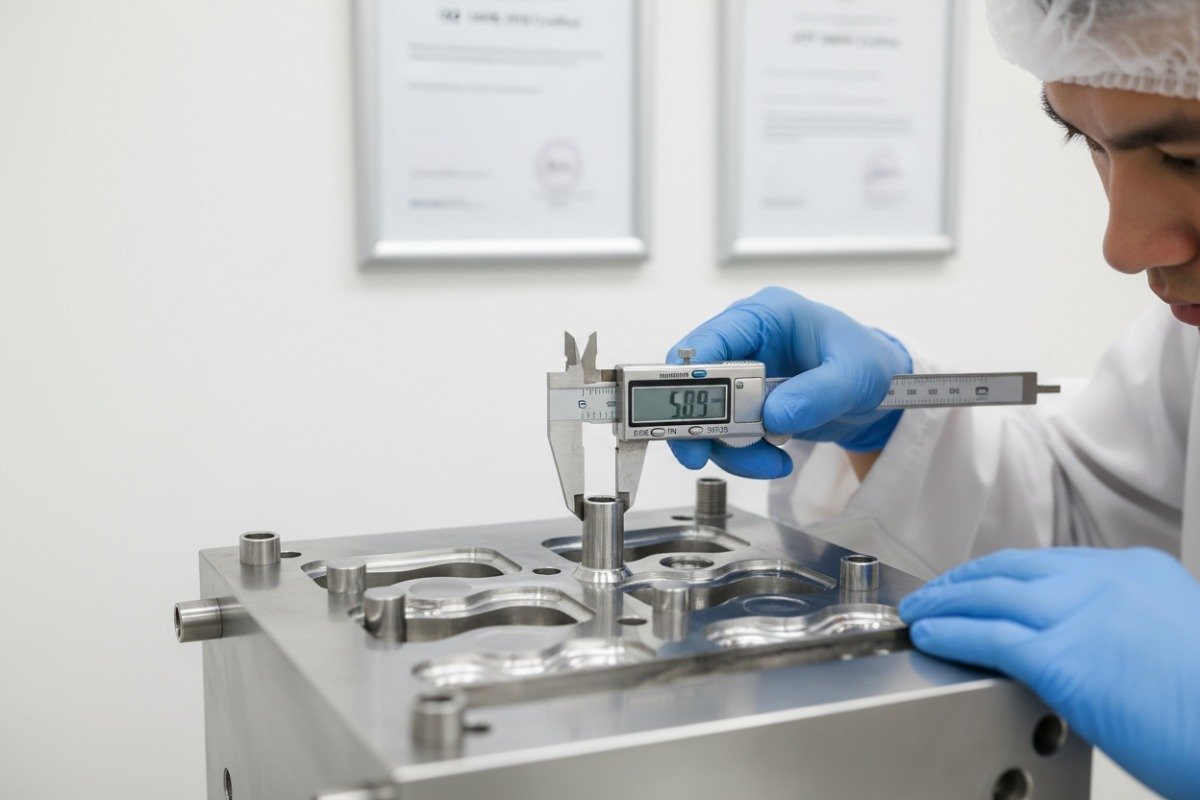
Why Industry Experience Matters More Than You Think
Not all LSR molding is the same. A factory that makes silicone kitchen tools may not have the cleanroom environment needed for medical-grade seals. A factory that makes automotive grommets may not understand the biocompatibility testing required for implantable devices.
When you vet a supplier, start with these questions:
- What industries do you serve?
- Can you share sample parts from my industry?
- What certifications do you hold?
- Do you have an in-house mold design team?
These questions filter out 80% of unqualified suppliers right away.
Key Certifications by Industry
| Industry | Required Certification | Why It Matters |
|---|---|---|
| Medical Devices | ISO 13485 1 | Ensures quality management for medical products, required by FDA |
| Automotive | IATF 16949 2 | Covers defect prevention and waste reduction in auto supply chains |
| General Industrial | ISO 9001 3 | Baseline quality management system for consistent output |
| Consumer Goods | ISO 9001 + RoHS/REACH 4 | Ensures safety compliance for end-consumer products |
Evaluate Mold Design Capability
Mold quality determines part quality. Period. Look for manufacturers with CNC milling 5, EDM machining, and high-precision testing labs. The mold is where your tolerances live. If the mold is off by 0.05mm, every single part will be off.
In our experience coordinating between U.S. engineering teams and Asian factories, we have seen projects fail because the supplier outsourced their mold making to a third party with no LSR experience. The result was flash on every part and a six-week delay for rework.
Ask your supplier: Do you build molds in-house or outsource them? If they outsource, who is the mold maker, and what is their track record?
Production Volume and Scalability
LSR injection molding has higher upfront tooling costs than compression molding 6. Production molds typically cost between $10,000 and $50,000. But unit prices drop fast at scale. At 100,000+ parts, you can expect $0.50 to $2.00 per part. For prototypes, expect $5 or more per piece.
This means LSR molding is best for high-volume, scalable applications. If you only need 500 parts, compression molding or even 3D-printed prototypes might be more cost-effective for initial testing. But once you commit to production, LSR pays for itself within 6 to 12 months.
Don't Skip the Factory Audit
We always recommend an on-site or virtual factory audit before placing a production order. Check the shop floor. Look at the injection machines. Ask about their maintenance schedule. A well-run factory has clean floors, organized workstations, and documented procedures on the wall. A messy factory produces messy parts.
What Quality Control Processes Should I Look for in My Silicone Molding Partner?
Our quality engineers spend more time reviewing a supplier's QC system than their price list. Why? Because a cheap part that fails inspection costs you three times more than a properly made part that passes the first time.
Look for LSR molding partners with documented quality control processes including incoming material inspection, in-process monitoring of temperature and pressure, statistical process control (SPC), final dimensional inspection, and PPAP documentation. These ensure consistent parts and reduce costly rework.
The Cost of Getting It Wrong
One of the biggest pain points we hear from U.S. purchasing managers is this: "My supplier doesn't catch defects until I do." That means bad parts ship across the ocean, sit in a warehouse for weeks, and then get rejected. The cost is not just the parts. It is the freight, the downtime, and the lost trust with your own customers.
A strong QC system catches problems at the source. Here is what to look for.
Critical QC Checkpoints for LSR Molding
| QC Stage | What to Check | Tools Used |
|---|---|---|
| Incoming Material | LSR Part A and Part B ratio, shelf life, material certificates | Viscometer, material datasheets |
| In-Process | Mold temperature (180–215°C), injection pressure, cure time | Thermocouples, pressure sensors, SPC software |
| Post-Molding | Dimensional accuracy, flash, voids, surface finish | CMM, optical comparators, go/no-go gauges |
| Final Inspection | AQL sampling, visual inspection, functional testing | Calipers, durometers, tensile testers |
Material Mixing Controls
LSR is a two-part system. Part A is the base polymer. Part B is the catalyst. They must be mixed at a precise 1:1 ratio. Even a small deviation changes the cure behavior and mechanical properties of the finished part.
Automated mixing and metering systems are standard in professional LSR molding facilities. If your supplier is still mixing by hand or using outdated equipment, walk away. Inconsistent mixing leads to inconsistent parts.
Process Monitoring and SPC
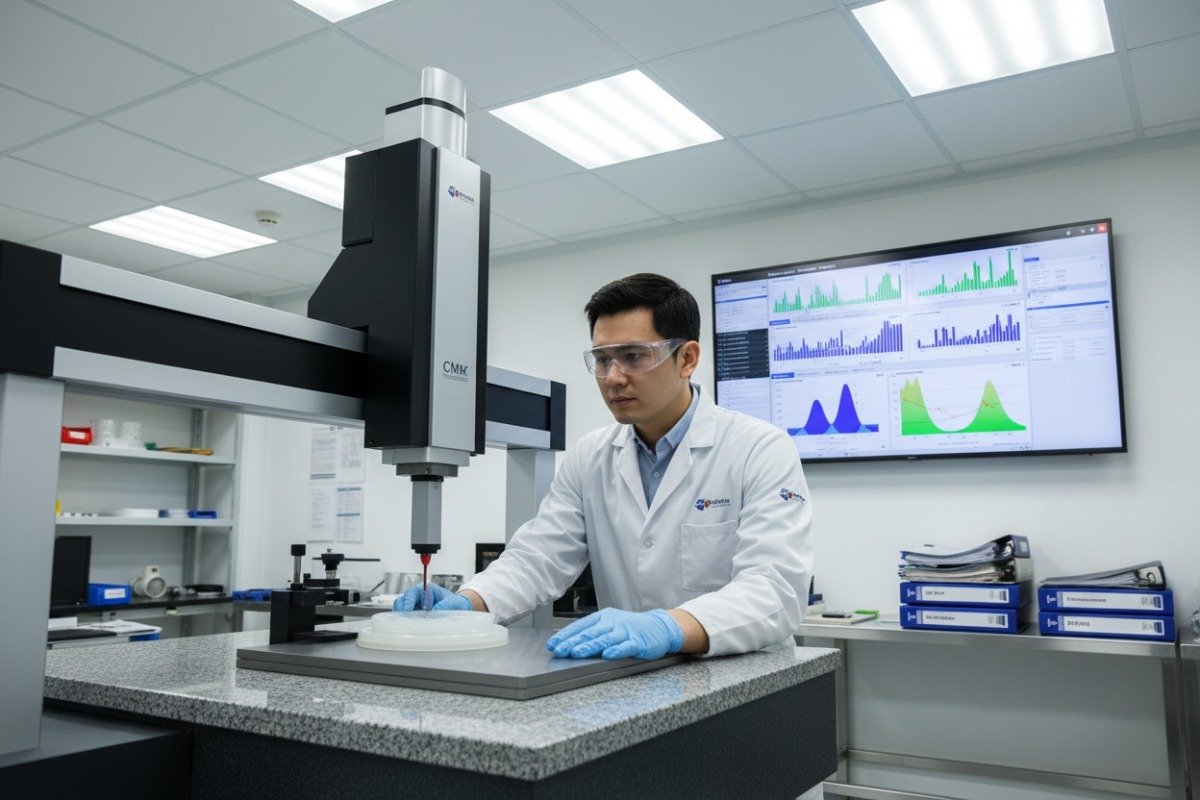
Statistical process control 7 is not just a buzzword. It means the factory tracks key parameters—temperature, pressure, cycle time—on every shot. When a parameter drifts outside the control limit, the machine alerts the operator before defective parts are made.
Ask your supplier: Do you use SPC? Can you show me control charts from a recent production run? If they cannot, their process is not under control.
PPAP and First Article Inspection
For any serious production program, you need a Production Part Approval Process 8 (PPAP). This includes dimensional reports, material certifications, process flow diagrams, control plans, and first article inspection results. PPAP gives you documented proof that the supplier can consistently produce parts to your specification.
When we manage projects for our clients, we require PPAP Level 3 as a minimum. It is the standard expectation in automotive and increasingly in medical and industrial sectors.
How Can I Reduce My Production Costs Without Sacrificing the Quality of My Molded Parts?
When we sit down with clients to review their LSR project budgets, the conversation always comes back to one thing: how do we get the unit cost down without cutting corners? It is the right question, and the answer starts long before production begins.
Reduce LSR molding costs by investing in Design for Manufacturability (DFM) early, optimizing mold cavitation for your volume, selecting the right LSR grade for your application, and choosing suppliers with automated production lines that minimize scrap and cycle times.
Start With Design for Manufacturability
DFM is the single biggest lever you have for cost reduction. Design for Manufacturability 9 Work with your mold supplier during the design phase—not after. Small changes to wall thickness, draft angles, and parting line placement can eliminate defects, reduce cycle time, and extend mold life.
For LSR parts, keep these design guidelines in mind:
- Maximum part size: approximately 12 in. × 8 in. × 4 in. (304.88mm × 203.2mm × 101.6mm)
- Maximum volume: up to 26 cubic inches
- Depth from parting line: no greater than 2 inches
- Uniform wall thickness to prevent uneven curing
Violating these guidelines does not just cause quality problems. It increases cycle time, mold wear, and scrap rate—all of which drive up your cost per part.
Tooling Cost vs. Unit Cost Tradeoff
Many buyers focus only on the mold price. But the real cost driver is the unit price over the life of the program. A more expensive mold with more cavities produces more parts per cycle, which lowers your unit cost dramatically.
| Mold Type | Approximate Cost | Cavities | Unit Cost at 100K Parts | Best For |
|---|---|---|---|---|
| Prototype Mold | $3,000–$8,000 | 1–2 | $5.00+ | Design validation, small batches |
| Bridge Mold | $8,000–$20,000 | 2–4 | $1.50–$3.00 | Mid-volume production |
| Production Mold | $20,000–$50,000 | 4–16+ | $0.50–$2.00 | High-volume, long-term programs |
If your annual volume is above 50,000 parts, a production mold pays for itself quickly. We help clients run ROI calculations before they commit, so there are no surprises.
Material Selection Matters
Not every application needs the most expensive LSR grade. Medical-grade LSR with full biocompatibility testing costs more than a general-purpose industrial grade. If your part is a non-contact automotive seal, you do not need to pay for medical certification.
Work with your supplier to match the LSR grade to your actual performance requirements. Consider shore hardness, temperature range, chemical exposure, and regulatory needs. Over-specifying material is one of the most common hidden cost drivers we see.
Automation Reduces Waste
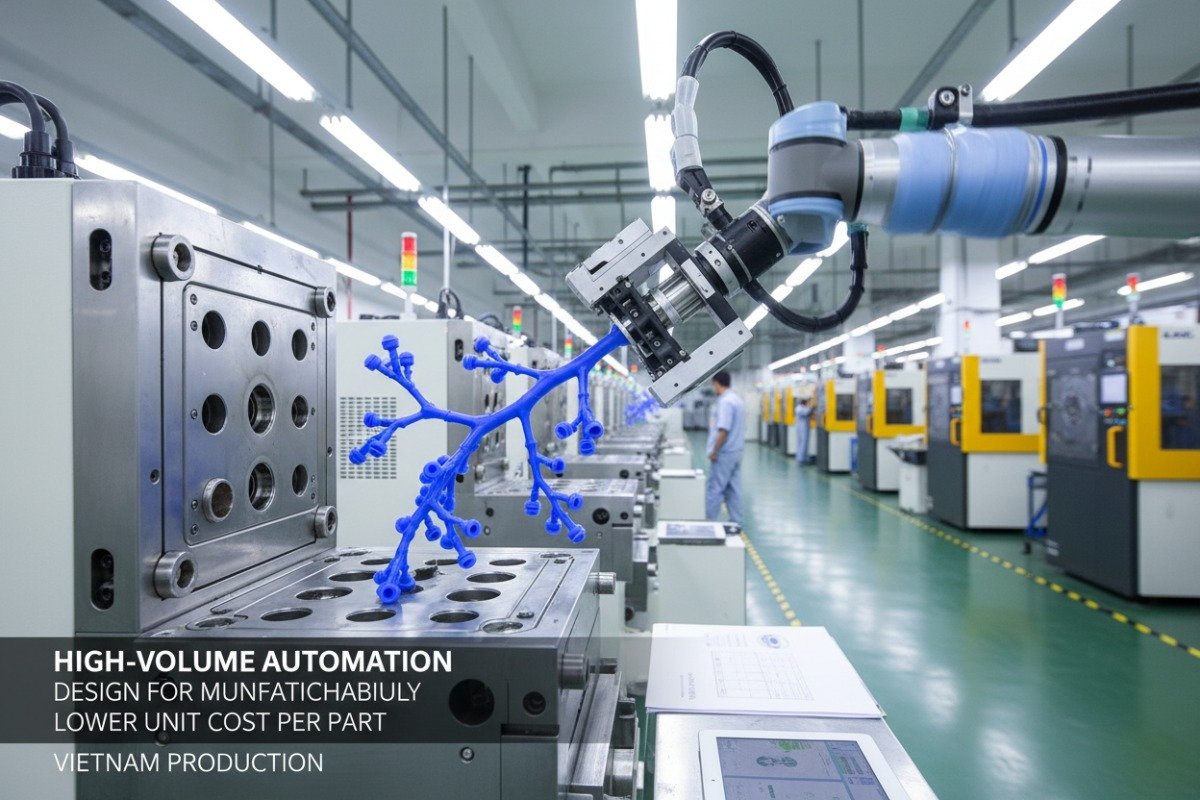
Modern LSR injection molding is highly automated. Machines mix, inject, cure, and demold parts with minimal human intervention. Automated systems produce less flash, fewer voids, and shorter cycle times—often under 60 seconds per shot. Compare that to compression molding, which can take minutes to hours per cycle.
Automation also enables 24/7 production. A factory running three shifts on automated LSR machines can produce hundreds of thousands of parts per month with consistent quality. This volume efficiency is where the real savings come from.
Multi-Shot and Over-Molding
Emerging techniques like multi-shot molding and over-molding combine LSR with thermoplastics in a single cycle. This eliminates secondary assembly steps, reduces labor, and creates stronger bonded parts. If your design requires a rigid substrate with a soft-touch silicone seal, over-molding can save you 20–30% compared to separate molding and manual assembly.
What Steps Should I Take to Verify the Technical Capabilities of My LSR Supplier?
Our team has audited dozens of silicone molding factories across Asia. Some look great on paper but fall apart on the shop floor. Others are modest in their marketing but deliver flawless parts. The only way to know is to verify.
Verify your LSR supplier's technical capabilities by requesting equipment lists, reviewing their mold design process, asking for sample parts with inspection reports, conducting factory audits, and confirming they use advanced simulation software or digital twin technology to predict and prevent molding defects.

Request a Detailed Equipment List
The machines a factory uses tell you a lot about their capability. Look for well-known LSR injection molding machine brands. Check the tonnage range—it should match your part size. Ask about their mixing and metering systems, mold temperature controllers, and cleanroom classifications.
For medical-grade LSR parts, you need at minimum a Class 7 or Class 8 cleanroom. If the factory does not have one, they cannot produce parts that meet FDA or ISO 13485 requirements for cleanliness.
Review Their Mold Design Process
A capable LSR supplier does not just build molds. They design them with your part performance in mind. Ask to see their mold design workflow. Do they use CAD/CAM software? Do they perform mold flow analysis 10 before cutting steel? Do they have EDM and CNC capabilities in-house?
Mold flow simulation is especially important for LSR. It predicts how the liquid silicone will fill the cavity, where air traps might form, and where flash is likely. Suppliers who skip this step are guessing—and guessing leads to expensive mold revisions.
Ask for Sample Parts and Inspection Data
Never commit to a production order without first receiving sample parts. Inspect them yourself or have a third party measure them. Compare the dimensions to your drawing. Check for flash, voids, short shots, and surface defects.
Ask the supplier to provide a First Article Inspection Report (FAIR) with the samples. This report should include measured dimensions, material certifications, and photos. If the supplier cannot produce a clean FAIR, they are not ready for production.
Conduct a Factory Audit
Whether you visit in person or send a representative, a factory audit is non-negotiable for critical parts. During the audit, check:
- Machine condition and maintenance logs
- Operator training records
- Raw material storage and traceability
- Cleanroom environment (if applicable)
- Calibration records for inspection equipment
- Corrective action history
We conduct these audits for our clients as part of our supply chain management service. A two-day audit can save you months of headaches down the road.
Evaluate Digital Capabilities
Leading LSR suppliers now use digital twin technology and advanced simulation software to model the entire molding process before production starts. This allows them to predict part performance, optimize gate locations, and identify potential defects virtually.
If your supplier uses these tools, it means they are investing in prevention rather than detection. That is a sign of a mature, capable operation.
Assess Supply Chain Resilience
The last few years have taught every buyer the importance of supply chain resilience. Ask your supplier about their contingency plans. Do they have backup material sources? Can they shift production to another facility if needed? Are they diversified across regions?
We help our clients build resilient supply chains by sourcing from multiple Asian countries outside of China, including Vietnam, where our local team of seven employees provides on-the-ground oversight. Diversification is not just a buzzword. It is a business necessity.
Conclusion
Sourcing high-quality liquid silicone molding is a strategic decision. Vet your supplier's certifications, QC processes, tooling capabilities, and technical depth. Start with DFM, demand PPAP, and never skip the factory audit.
Footnotes
1. Official ISO standard for medical device quality management systems. ↩︎
2. Official IATF standard for automotive quality management systems. ↩︎
3. Official ISO standard for general quality management systems. ↩︎
4. European Chemicals Agency (ECHA) page explaining REACH regulation. ↩︎
5. Wikipedia page explaining Computer Numerical Control milling. ↩︎
6. Wikipedia page explaining the compression molding process. ↩︎
7. Authoritative and comprehensive overview of Statistical Process Control. ↩︎
8. AIAG official page for the Production Part Approval Process. ↩︎
9. Wikipedia page explaining Design for Manufacturability (DFM). ↩︎
10. Autodesk page explaining mold flow analysis simulation software. ↩︎

 English
 Español de México
 Deutsch
 Français
 Русский
 العربية