Every week, our engineering team reviews projects where clients struggle with multi-material parts 1 that fall apart at the seams. Bonded assemblies fail. Glued components delaminate. Secondary operations 2 eat into margins and delay shipments. If you have ever dealt with a returned batch of parts because the soft-touch grip separated from the rigid housing, you know the frustration.
Two shot injection molding is an advanced process that combines two different materials, colors, or textures into one integrated component during a single continuous molding cycle. It eliminates secondary assembly, creates strong molecular bonds between materials, and reduces production costs by 20–40% compared to traditional multi-step methods.
In this article, we break down exactly how two shot molding works, where it saves you money, what design doors it opens, how it improves durability, and when it makes more sense than traditional overmolding TPE gasket seal 3. Let's get into it.
How Can Two Shot Injection Molding Reduce My Overall Production Costs?
Our production planners track every dollar that goes into a custom part, and the biggest cost leaks almost always come from secondary operations — manual assembly, adhesive bonding, and rework after failed joins.
Two shot injection molding reduces overall production costs by eliminating secondary assembly steps, cutting labor by up to 50%, and improving cycle times by 15–30%. Parts come out of the mold ready to use, which removes bonding, fastening, and alignment operations that drive up per-unit expenses in high-volume runs.
Where the Savings Actually Come From
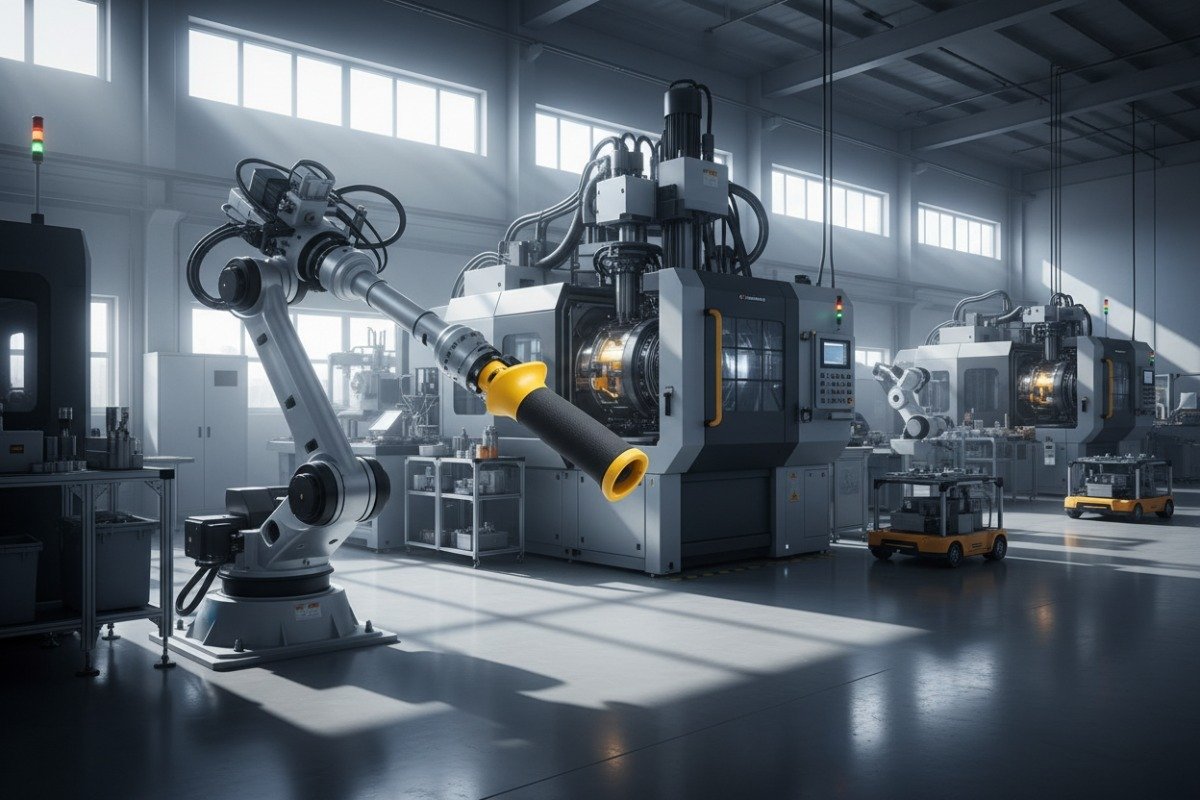
The cost advantage of two shot molding is not just about speed. It is about removing entire process steps from your production flow. When you mold two materials in one cycle, you skip the queue for a second molding machine, you skip the assembly station, and you skip the quality inspection that catches misaligned bonds.
Here is a practical example. A client needed a rigid PC housing 4 with a TPE gasket seal. The traditional route required molding the housing, molding the gasket separately, applying adhesive, pressing them together, curing, and then inspecting. Six steps. With two shot molding, the machine produces the finished part in one cycle. Two steps: mold and inspect.
Cost Comparison: Two Shot vs. Traditional Assembly
| Cost Factor | Two Shot Molding | Traditional Assembly |
|---|---|---|
| Tooling investment | Higher upfront (specialized mold) | Lower upfront (two simple molds) |
| Labor per part | Low (automated, single cycle) | High (manual assembly, bonding) |
| Cycle time | 15–30% faster | Baseline |
| Scrap rate | 10–20% lower | Baseline |
| Assembly defect rate | Near zero (molecular bond) | 3–8% (adhesive/mechanical failure) |
| ROI payback period | 6–12 months at volume | Immediate but higher per-unit cost |
The Hidden Cost of Rework
When we audit supplier quality issues for our clients, rework from failed secondary bonding is one of the top three problems. A misaligned gasket or a delaminated grip does not just cost you the part. It costs you the labor to disassemble, the replacement material, the re-inspection, and sometimes the air freight to meet a deadline you already missed.
Two shot molding eliminates this category of failure almost entirely. The bond forms at a molecular level 5 while the substrate is still warm. There is no adhesive to cure incorrectly. There is no manual alignment to go wrong.
When Does the Math Work?
Two shot molding demands higher tooling costs. A specialized mold with rotary platen or indexing system can cost 30–60% more than a standard single-cavity mold. So the question is always: at what volume does the per-unit savings overtake the tooling premium?
For most custom parts we handle, the breakeven point sits between 10,000 and 50,000 units, depending on part complexity and the number of secondary operations eliminated. Above that volume, the savings compound quickly. Below it, traditional overmolding or manual assembly may still be more economical.
The energy efficiency gain is worth noting too. Consolidated cycles use roughly 15% less energy than running two separate molding operations plus an assembly line. That adds up over a year of production.
What Design Possibilities Does Two Shot Molding Open Up for My Complex Parts?
When our engineers sit down with a client's design team to review a new custom part, the conversation often stalls at the same point — "We want two materials in one part, but we cannot figure out how to assemble them reliably."
Two shot molding unlocks design possibilities that single-material processes cannot achieve. It allows engineers to combine rigid and flexible materials, integrate multiple colors or textures, and build functional features like seals, grips, and insulators directly into the part — all without secondary assembly or adhesive bonding.
Combining Material Properties in One Part
The real power of two shot molding is material integration. You can mold a rigid polycarbonate frame and a soft TPE grip zone in one part. You can combine a structural nylon core with a chemical-resistant overmold. You can even pair a standard thermoplastic with liquid silicone rubber 7 (LSR) for medical or food-contact applications.
This is not just about aesthetics. It is about function. A rigid housing with an integrated elastomeric seal performs better than a housing with a glued-in gasket. The seal cannot shift, compress unevenly, or fall out during use.
Common Material Combinations
| Substrate (First Shot) | Overmold (Second Shot) | Typical Application |
|---|---|---|
| Polycarbonate (PC) | Thermoplastic Elastomer (TPE) | Consumer electronics housings with soft-touch grips |
| Nylon (PA66) | Thermoplastic Polyurethane (TPU) | Power tool handles, automotive switches |
| Polypropylene (PP) | Thermoplastic Rubber (TPR) | Kitchen appliance grips, toothbrush handles |
| ABS | Liquid Silicone Rubber (LSR) | Medical device components, wearable tech |
| PBT | TPE | Automotive connector housings with integrated seals |
Multi-Color and Multi-Texture Parts
Two shot molding also enables sharp, clean transitions between colors without painting or pad printing. A dashboard button with a black body and a white legend molded in contrasting material will never fade or wear off the way a printed marking does. The color goes all the way through the material.
Texture variation works the same way. You can have a polished surface on one zone and a textured grip on another, molded in a single cycle. This is especially valuable in consumer electronics and automotive interiors where tactile feel matters to end users.
Functional Integration
Beyond aesthetics, two shot molding lets you build functional features directly into the part geometry. Seals, gaskets, vibration dampeners, electrical insulators, and over-travel stops can all be integrated during molding. This reduces your bill of materials, simplifies your supply chain, and removes potential failure points.
For example, an automotive connector housing traditionally requires a separate rubber seal pressed into a groove. With two shot molding, the seal is molded in place. It cannot be installed incorrectly. It cannot be forgotten on the assembly line. It is part of the component.
Design Constraints to Keep in Mind
Two shot molding is not without design rules. The substrate must be designed to receive the second shot — this means undercuts, through-holes, or textured surfaces that give the second material something to grip. Material compatibility is critical. Not all polymer pairs bond well. Mismatched shrinkage rates cause warping or weak interfaces.
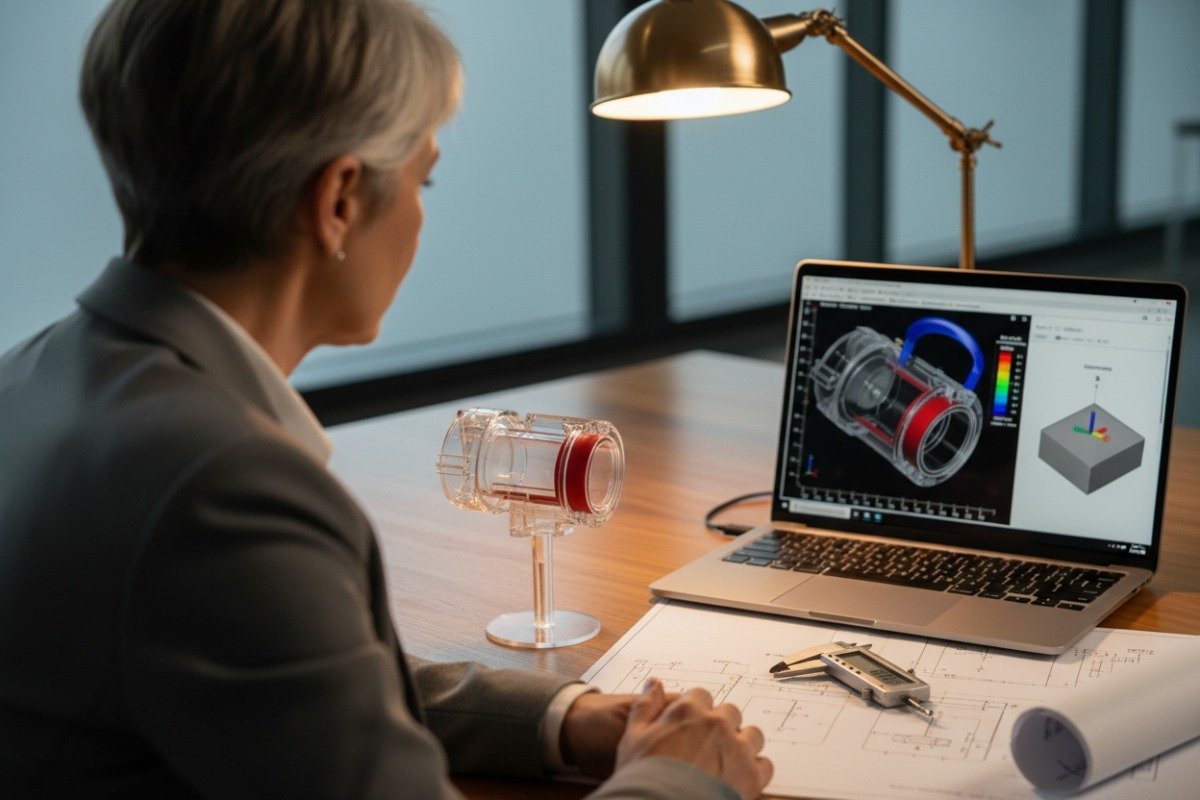
Our design team always runs mold flow analysis 8 before committing to tooling. Simulation software predicts fill patterns, weld lines, and potential air traps. This step catches problems before they become expensive mold revisions.
How Will This Process Improve the Durability and Quality of My Finished Products?
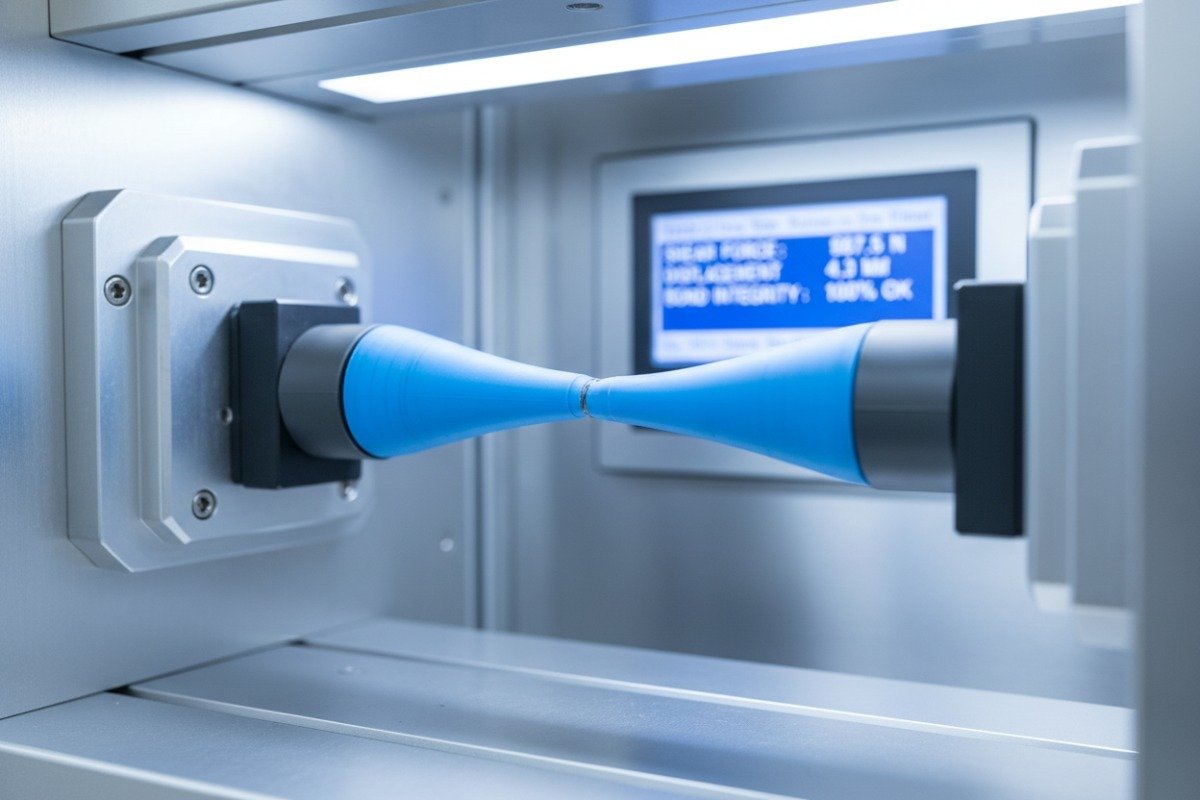
In our quality control lab, we regularly test bond strength between multi-material interfaces. The difference between a two shot molded bond and an adhesively joined bond is not subtle — it is measurable and significant.
Two shot injection molding improves durability and quality by creating molecular-level bonds between materials that withstand 25–50% higher shear forces than adhesive or mechanical joints. The single-cycle process also ensures tighter dimensional tolerances, eliminates misalignment risks, and produces consistent parts with lower defect rates across production runs.
Why Molecular Bonds Outperform Adhesive Bonds
When the second material is injected over a substrate that has not fully cooled, the polymer chains at the interface entangle. This creates a chemical bond, not just a mechanical grip. The two materials become one continuous structure at the boundary.
Adhesive bonds, by contrast, rely on surface chemistry and cure conditions. They are sensitive to contamination, humidity, cure time, and application thickness. A tiny oil film from a worker's glove can cause a bond failure that does not show up until the part is in the field.
Bond Strength Comparison
| Joining Method | Typical Shear Strength | Failure Mode | Consistency |
|---|---|---|---|
| Two shot molecular bond | High (25–50% above adhesive) | Cohesive (material fails before bond) | Very consistent |
| Adhesive bonding | Moderate | Adhesive failure at interface | Variable (process-sensitive) |
| Mechanical snap-fit | Low to moderate | Fatigue at stress concentrators | Consistent but limited load |
| Ultrasonic welding | Moderate to high | Interface failure under vibration | Consistent for compatible materials |
Tighter Tolerances, Fewer Defects
Because both materials are molded in the same tool with controlled cooling, dimensional accuracy is inherently better than assembling two separately molded parts. There is no stack-up of tolerances from two different molds, two different shrinkage profiles, and a manual alignment step.
Our inspection data consistently shows that two shot parts hold tighter tolerances on critical interface dimensions. This matters for sealing surfaces, mating features, and any geometry where the two materials must meet precisely.
Eliminating Human Error in Assembly
Every manual assembly step introduces variability. A worker might apply too much adhesive, or too little. They might misalign a gasket by half a millimeter. They might skip a part during a long shift. These are not hypothetical problems — they are the root causes we see in corrective action reports every month.
Two shot molding removes the human variable from the bonding process. The machine controls material volume, injection pressure, temperature, and timing with repeatability that no manual process can match. The result is a consistent part, every cycle, every shift.
Long-Term Durability in the Field
Parts that survive the factory floor still need to survive the real world. Two shot molded interfaces resist vibration fatigue, thermal cycling 9, chemical exposure, and UV degradation better than adhesive joints. The bond does not creep, soften, or embrittle the way many adhesives do over time.
For automotive and medical applications, this long-term reliability is not optional. It is a specification requirement. Two shot molding meets those requirements by design, not by hoping the adhesive holds up for ten years.
When Should I Choose Two Shot Molding Instead of Traditional Overmolding for My Project?
Our project managers field this question at least twice a week. A client has a multi-material part and wants to know: do we go with two shot molding or traditional overmolding? The answer depends on volume, complexity, bond requirements, and budget.
Choose two shot molding over traditional overmolding when your project demands high production volumes, superior bond strength, tight dimensional tolerances, or complex multi-material geometries. Traditional overmolding is better suited for low-volume runs, simpler designs, frequent material changes, or projects where tooling budget is limited and speed to market is the priority.
Understanding the Difference
Traditional overmolding is a two-step process. You mold the substrate in one machine, remove it, and then place it into a second mold on a second machine for the overmold shot. There is a time gap between the two shots. The substrate cools completely before the second material is applied.
Two shot molding happens in one machine, one cycle. The substrate is molded, rotated or transferred within the same tool, and the second shot is applied while the substrate still retains heat. This is the fundamental difference, and it drives all the downstream advantages and limitations.
Decision Matrix: Two Shot vs. Traditional Overmolding
| Decision Factor | Two Shot Molding | Traditional Overmolding |
|---|---|---|
| Production volume | Best above 10,000–50,000 units | Suitable for any volume |
| Bond strength | Molecular bond (superior) | Mechanical/partial chemical bond |
| Dimensional accuracy | Tighter (single-tool process) | Tolerance stack-up from two tools |
| Tooling cost | Higher (complex mold, rotary platen) | Lower (two simpler molds) |
| Cycle time per part | Faster (single cycle) | Slower (two separate cycles + handling) |
| Design change flexibility | Low (retooling is expensive) | Higher (can swap one mold independently) |
| Material compatibility range | Requires compatible pairs | More forgiving (mechanical interlock possible) |
| Automation level | Fully automated | Semi-automated or manual transfer |
| Best for | High-volume, high-precision, critical bonds | Prototyping, low volume, simple overmolds |
When Two Shot Molding Wins
If your annual volume exceeds 50,000 parts and the bond between materials is structurally critical, two shot molding is almost always the right call. The per-unit cost advantage compounds with volume, and the bond quality eliminates a failure mode that would otherwise require extensive incoming inspection or field warranty claims.
Two shot also wins when your part geometry requires precise material placement. If the overmold must be exactly 0.5 mm thick in a specific zone, doing it in a controlled second cavity is far more reliable than placing a cooled substrate into a second mold and hoping the flow fills correctly.
When Traditional Overmolding Makes More Sense
If you are in the prototyping phase and expect design changes, traditional overmolding gives you flexibility. You can modify one mold without scrapping the other. You can test different overmold materials without retooling.
For low-volume specialty parts — say, 500 to 5,000 units per year — the tooling investment for two shot molding rarely pays back. Traditional overmolding with simpler molds and manual transfer is more economical.
The Hybrid Approach
Some of our clients start with traditional overmolding during the development and low-volume launch phase, then transition to two shot molding once the design is frozen and volumes ramp up. This staged approach manages risk and capital outlay while still capturing the long-term cost and quality benefits of two shot processing.
The key is planning for this transition early. If your substrate design already includes features that support two shot bonding — undercuts, through-holes, compatible material selection — the switch to two shot tooling later is straightforward. If you design only for overmolding, retrofitting for two shot can require a part redesign.
Industry Trends Driving Two Shot Adoption
The market for multi-shot molding equipment is growing at 6–8% CAGR through 2030. Automotive accounts for about 35% of demand, electronics about 25%. LSR-based two shot variants are growing at 12% annually in medical applications.
The push toward miniaturization in electronics and medical devices is accelerating adoption. Micro-molding with two shot capability allows precise integration of multiple materials in components smaller than a fingernail. Traditional overmolding simply cannot achieve the tolerances required at that scale.
Industry 4.0 integration is also changing the equation. Real-time monitoring of injection parameters, AI-optimized material pairings, and predictive maintenance reduce the skill barrier that once made two shot molding accessible only to large manufacturers. Smaller shops with modern equipment can now run two shot processes reliably.
Conclusion
Two shot injection molding is a powerful process for manufacturers who need multi-material parts with strong bonds, tight tolerances, and lower per-unit costs at volume. Choosing the right process starts with understanding your volume, design complexity, and quality requirements.
Footnotes
1. Found a relevant article defining multi-material molding and its benefits in manufacturing. ↩︎
2. Defines post-molding processes that enhance functionality, appearance, or assembly readiness. ↩︎
3. Found a direct and relevant article specifically discussing TPE seals and their applications. ↩︎
4. Illustrates a common application for polycarbonate due to its strength and clarity. ↩︎
5. Explains the fundamental forces that hold atoms together in materials. ↩︎
6. Found a clear definition of two-shot injection molding and its comparison to overmolding, which is relevant to the article’s context. ↩︎
7. Introduces a versatile material used in specialized molding, especially for medical applications. ↩︎
8. Highlights a critical simulation step in injection molding design to prevent defects. ↩︎
9. Wikipedia offers an authoritative definition of temperature cycling, also known as thermal cycling. ↩︎
10. Wikipedia provides a clear and authoritative definition of shear forces in solid mechanics. ↩︎

 English
 Español de México
 Deutsch
 Français
 Русский
 العربية