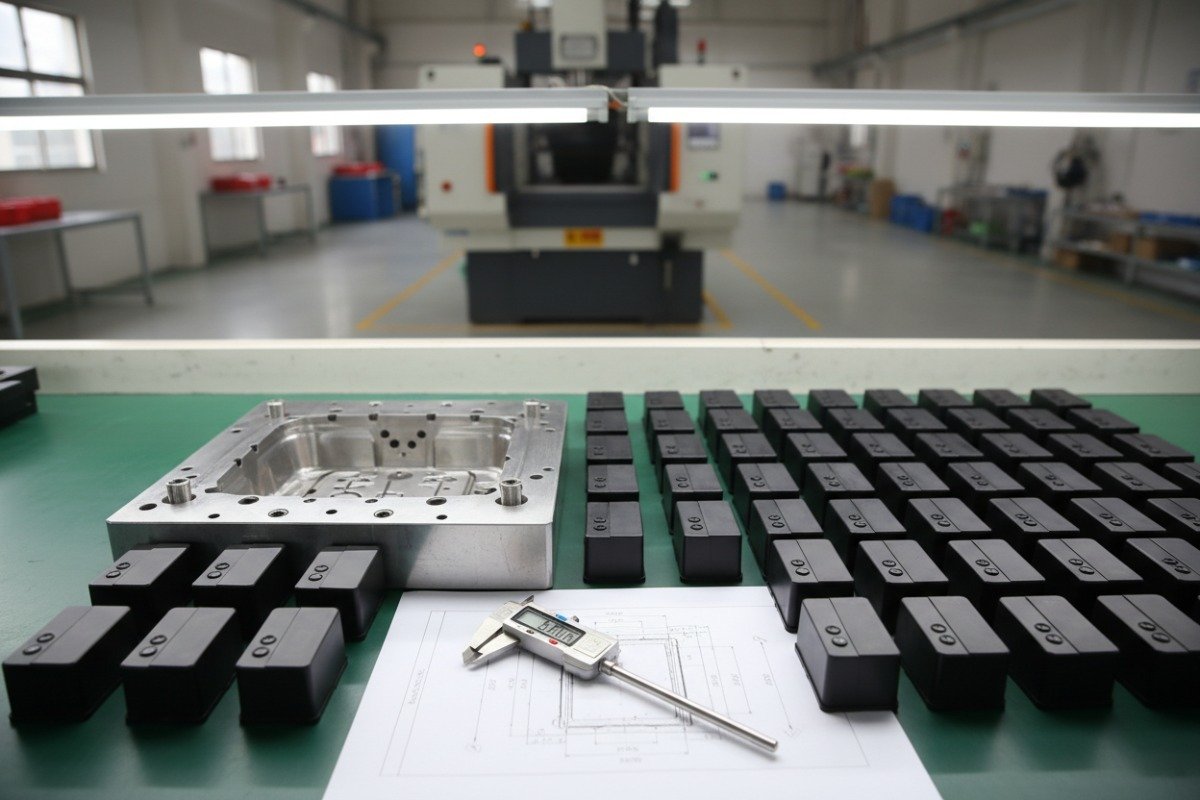
Every week, our team fields calls from U.S. buyers stuck in the same frustrating loop. They need 500 or 2,000 custom plastic parts 1, but every supplier they contact demands a minimum order of 100,000 pieces. The tooling quotes alone are enough to kill a project before it starts First Article Inspection 2.
Small batch injection molding becomes cost-effective when you combine aluminum tooling, simplified part design, smart material selection, and a reliable low-volume manufacturing partner. These strategies together can cut tooling costs by 50–90% and reduce lead times from weeks to days, making short runs financially viable.
The good news is that the landscape has shifted. More manufacturers now specialize in low-volume runs, and new tooling technologies have slashed the upfront investment. Below, we break down exactly how to find the right supplier, reduce your tooling spend, pick the best materials, and evaluate a molding partner. Let's get into it.
How Can I Find a Reliable Supplier for Low-Volume Injection Molding?
Our sourcing team in Vietnam and Singapore has vetted dozens of injection molding shops over the past five years. The single biggest mistake buyers make is assuming that any molder can handle small batches well. Most cannot. Their equipment, pricing models, and workflows are built for high-volume runs.
A reliable low-volume injection molding supplier should offer aluminum tooling options, have no minimum order quantity or a very low one, provide transparent pricing with itemized quotes, and demonstrate proven experience with short-run production and strict quality control.
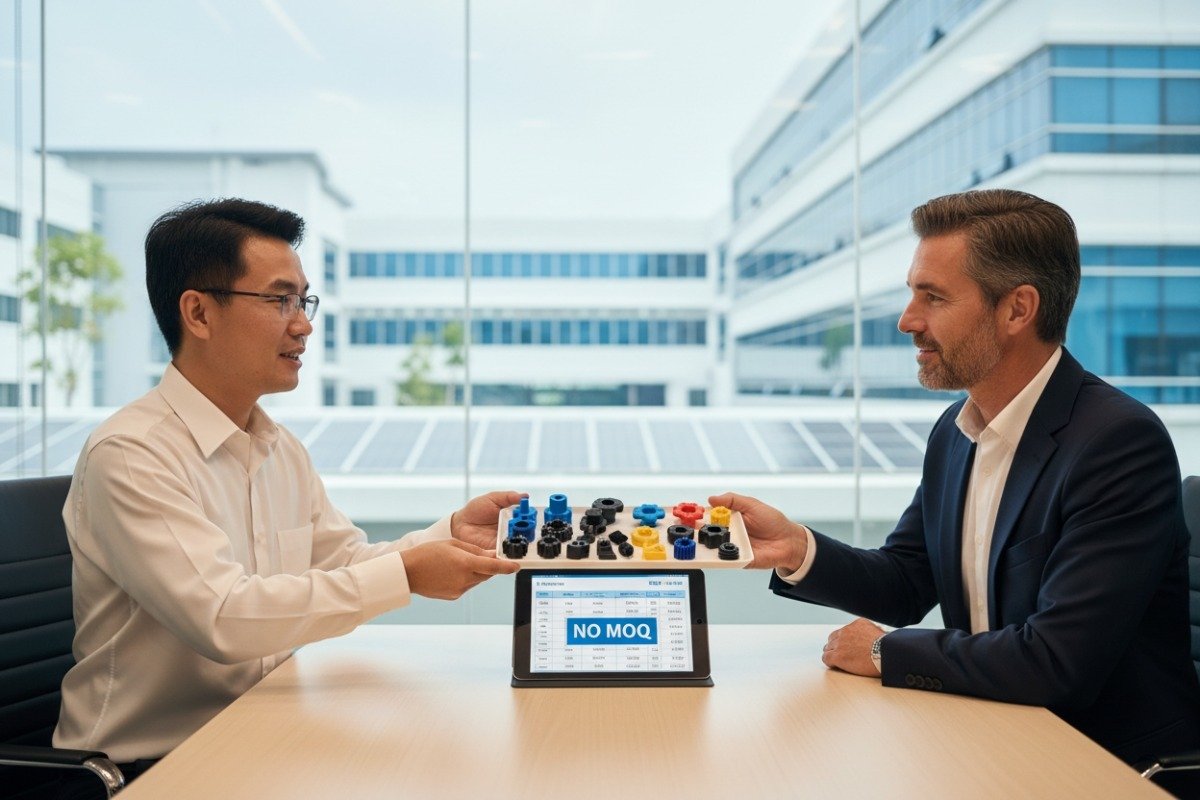
Finding the right supplier is the foundation of cost-effective small batch molding. Here is how to approach it systematically.
Start With the Right Search Channels
Google and Alibaba are the two most common starting points for U.S. buyers. But the search terms matter. Use phrases like "low-volume injection molding 3," "short-run plastic parts," or "small batch injection molding no MOQ." These terms filter out the high-volume-only shops.
Trade directories like ThomasNet can also surface domestic and near-shore options. But if cost is a primary driver, offshore partners in countries like Taiwan, Vietnam, and India often deliver better pricing for equivalent quality.
Ask the Right Questions Early
Before you send drawings, ask these screening questions:
- What is your minimum order quantity?
- Do you offer aluminum tooling?
- Can you provide an itemized quote (mold cost, material cost, labor, shipping)?
- What is your typical lead time for a 500-piece run?
- Do you have experience with PPAP 4 or similar quality documentation?
If a supplier cannot answer these clearly, move on.
Red Flags vs. Green Flags
| Indicator | Green Flag | Red Flag |
|---|---|---|
| MOQ | No MOQ or under 100 pieces | MOQ of 10,000+ pieces |
| Tooling options | Offers aluminum and steel molds | Only offers steel molds |
| Quote transparency | Itemized breakdown provided | Lump-sum quote with no detail |
| Communication speed | Responds within 24 hours | Takes a week to reply |
| Quality process | Has documented QC procedures | No mention of inspection or QC |
| Sample availability | Willing to produce T1 samples | Refuses samples before full order |
Verify Before You Commit
Always request samples before placing a production order. A good supplier will produce T1 samples from the actual mold and send you a dimensional inspection report. If they push back on this, it is a warning sign.
We also recommend a virtual or in-person factory audit. Our team conducts these regularly for clients. You want to see the actual machines, the mold shop, and the QC station. Photos on a website are not enough.
Consider a Sourcing Partner
If you do not have the bandwidth to vet suppliers yourself, a sourcing partner with local presence in Asia can save you months of trial and error. We operate offices in both Vietnam and China, which means we can walk into a factory, review their capabilities, and negotiate on your behalf. This is especially valuable when you are sourcing from a country where you do not speak the language or understand local business practices.
The key takeaway: do not settle for the first quote you receive. Cast a wide net, ask tough questions, and verify everything with samples and audits.
What Are the Best Ways to Reduce My Tooling Costs for Small Batches?
When we quote projects for clients, tooling is almost always the line item that causes sticker shock. A single steel mold can cost $10,000 to $100,000. For a 500-piece run, that math simply does not work. But there are proven ways to bring that number down dramatically.
The best ways to reduce tooling costs for small batches include using aluminum molds instead of steel, simplifying part geometry to reduce mold complexity, choosing single-cavity molds, exploring 3D printed molds for ultra-low volumes, and working with offshore mold makers who offer lower labor costs.
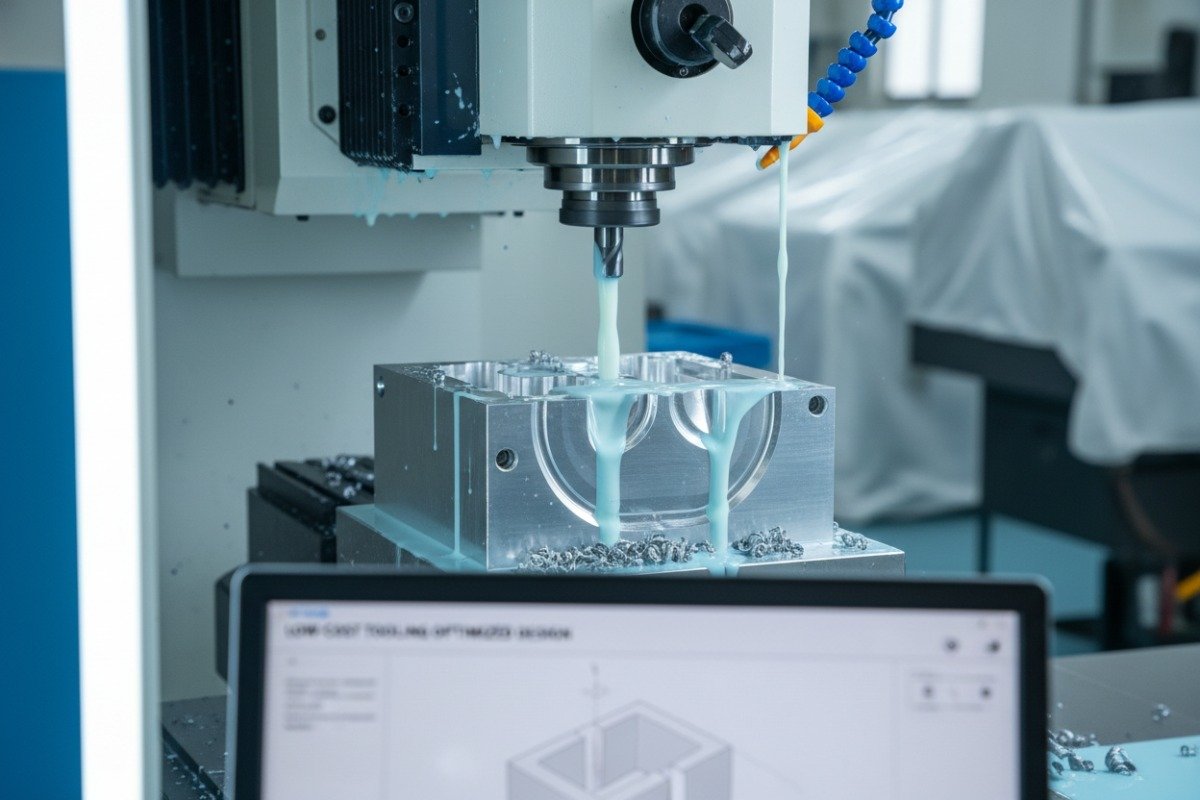
Tooling is the single largest upfront cost in injection molding. Here is how to minimize it without sacrificing part quality.
Aluminum vs. Steel vs. 3D Printed Molds
The mold material you choose has the biggest impact on your tooling budget. Here is a direct comparison:
| Mold Type | Typical Cost | Expected Life (Shots) | Lead Time | Best For |
|---|---|---|---|---|
| Hardened steel | $10,000–$100,000 | 500,000–1,000,000+ | 4–8 weeks | High-volume production |
| Aluminum | $2,000–$5,000 | 2,000–10,000 | 1–3 weeks | Low-to-mid volume runs |
| 3D printed polymer | Under $100 | 50–500 | 1–3 days | Prototyping, ultra-low volume |
For most small batch projects, aluminum molds 5 hit the sweet spot. They cost 50–90% less than steel, they can be machined much faster because aluminum is a softer metal, and they last long enough for runs up to 10,000 pieces. Some of our supplier partners offer aluminum molds with a 2,000-shot warranty, which is more than enough for a typical small batch order.
3D printed molds 6 are a newer option. They are incredibly cheap and fast, but they wear out quickly and cannot handle high-pressure or high-temperature resins. Use them for initial prototypes or design validation, not for production parts you plan to ship to customers.
Simplify Your Part Design
Complex part geometry drives up mold cost. Every undercut, side action, or tight tolerance adds machining time and complexity to the mold. Here are specific design changes that reduce tooling cost:
- Eliminate undercuts. Undercuts require side actions or lifters in the mold, which add thousands of dollars.
- Use uniform wall thickness. Varying wall thickness causes sink marks and warping, requiring more mold adjustments.
- Avoid sharp internal corners. Rounded corners are easier to machine and reduce stress concentrations in the mold.
- Reduce the number of features. Every hole, boss, rib, and snap fit adds to the mold's complexity.
Single-Cavity vs. Multi-Cavity Molds
For small batches, a single-cavity mold is almost always the right choice. Multi-cavity molds produce more parts per cycle, but they cost significantly more to build. The math only favors multi-cavity when your volume is high enough to amortize the extra tooling cost.
Work With Offshore Mold Makers
Mold making is labor-intensive. In countries like Vietnam and Taiwan, skilled mold makers charge significantly less per hour than their counterparts in the U.S. or Europe. We have seen clients save 40–60% on mold costs by sourcing tooling from Asia while maintaining the same quality standards. The key is to work with a partner who can audit the mold shop and verify the mold's quality before production begins.
Implement DFM Reviews Early
Design for Manufacturability 7 reviews should happen before you finalize your CAD files. A good molder will review your design and suggest changes that reduce mold complexity. This collaborative step can save thousands of dollars. We always encourage our clients to share drawings early and invite feedback from the mold maker. It is far cheaper to change a CAD file than to modify a finished mold.
How Do I Choose the Right Materials to Keep My Production Costs Low?
Our engineering team spends a lot of time helping clients navigate material selection. It is one of those areas where a small decision can have a big impact on your total project cost. Picking the wrong resin can double your material spend or, worse, cause part failures that lead to costly rework.
To keep production costs low, choose widely available commodity resins like polypropylene or ABS that meet your functional requirements, avoid over-specifying engineering-grade materials, test materials in small quantities first, and explore recycled or regrind options where part performance allows.
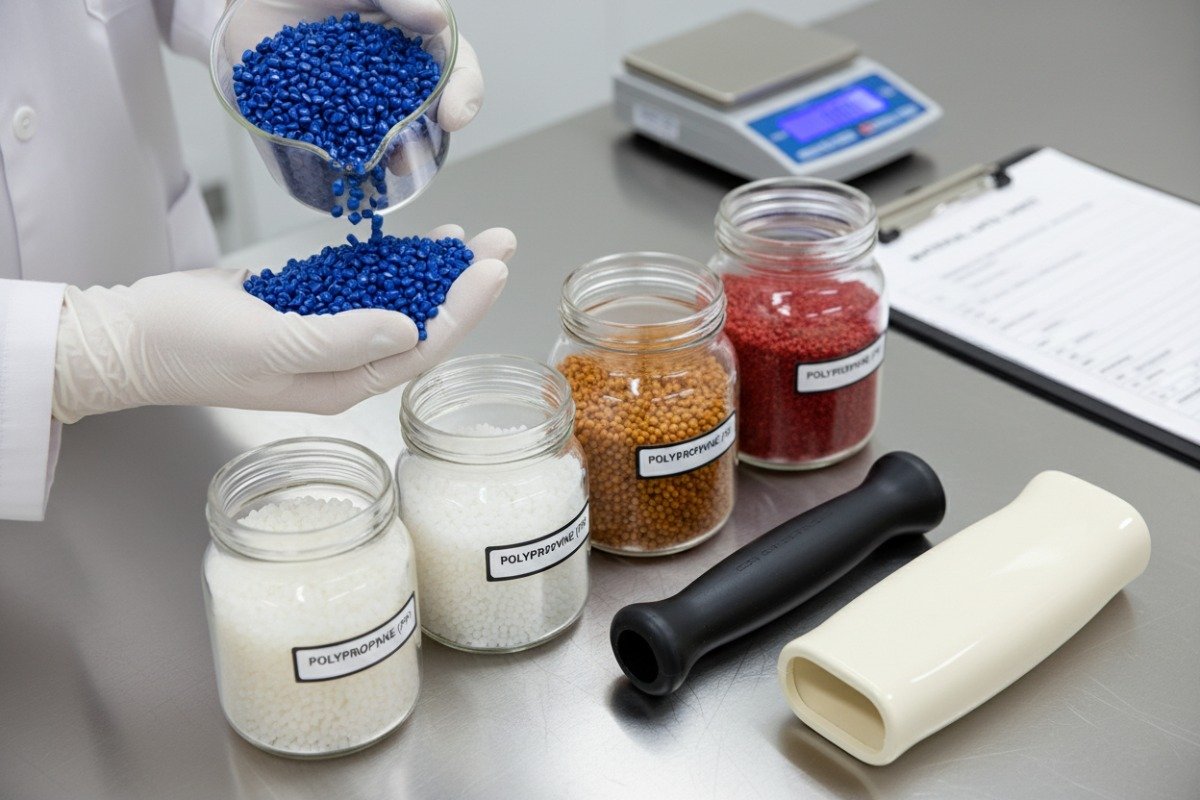
Material cost is the second largest variable in injection molding after tooling. Here is how to make smart choices.
Commodity Resins vs. Engineering Resins
Not every part needs a high-performance resin. Many buyers default to engineering-grade materials like polycarbonate or nylon when a commodity resin 8 would perform just as well. The price difference is significant.
| Resin Category | Examples | Approximate Cost per kg | Typical Applications |
|---|---|---|---|
| Commodity | PP, PE, ABS, PS | $1.50–$3.50 | Housings, covers, containers, non-structural parts |
| Engineering | PA (Nylon), PC, POM | $3.50–$8.00 | Gears, structural brackets, high-temp components |
| Specialty | PEEK, PEI, LCP | $50–$150+ | Aerospace, medical implants, extreme environments |
If your part does not face high temperatures, heavy mechanical loads, or chemical exposure, a commodity resin will likely do the job at a fraction of the cost.
Match Material to Function, Not Aspiration
We see this mistake often. A client specifies polycarbonate because they want a "premium" feel, when ABS would deliver the same appearance and mechanical performance for their application. Always start with the functional requirements:
- What temperature range will the part see?
- Will it bear structural loads?
- Does it need chemical resistance?
- What surface finish is required?
- Does it need to meet any regulatory standards (UL, FDA, etc.)?
Answer these questions first. Then pick the cheapest resin that checks every box.
Test in Small Quantities
One of the biggest advantages of small batch molding is the ability to test materials before committing. Run 50 or 100 parts in your chosen resin. Test them under real-world conditions. If they pass, you have confidence to scale. If they fail, you have lost very little money. This iterative approach is far smarter than ordering 10,000 parts in an untested material.
Use Regrind and Recycled Materials
Many resins can be reground and reused. Runners and sprues from the molding process can be granulated and mixed back into virgin material. This reduces raw material costs and minimizes waste. However, regrind does slightly alter material properties over multiple cycles, so it is important to establish a regrind ratio 9 with your molder. A common practice is to allow 20–30% regrind mixed with virgin resin.
Some suppliers also offer post-consumer recycled resins at lower prices. These work well for non-critical applications where cosmetic perfection and peak mechanical performance are not required.
Avoid Over-Specifying Tolerances
Tight tolerances often require more expensive materials or additional processing steps. If your part does not need ±0.05 mm precision, do not specify it. Looser tolerances allow the molder to use standard processing parameters and less expensive resins, both of which reduce cost.
What Should I Look for When Evaluating a Small Batch Molding Partner?
When we onboard a new supplier into our approved vendor list, we put them through a rigorous evaluation. We have learned the hard way that a cheap quote means nothing if the parts arrive late, out of spec, or with no documentation. The right partner saves you money in the long run. The wrong one costs you far more than the price difference.
When evaluating a small batch molding partner, look for proven low-volume experience, transparent and itemized pricing, documented quality control processes including PPAP capability, clear communication practices, flexible payment terms, and the ability to deliver on time consistently.
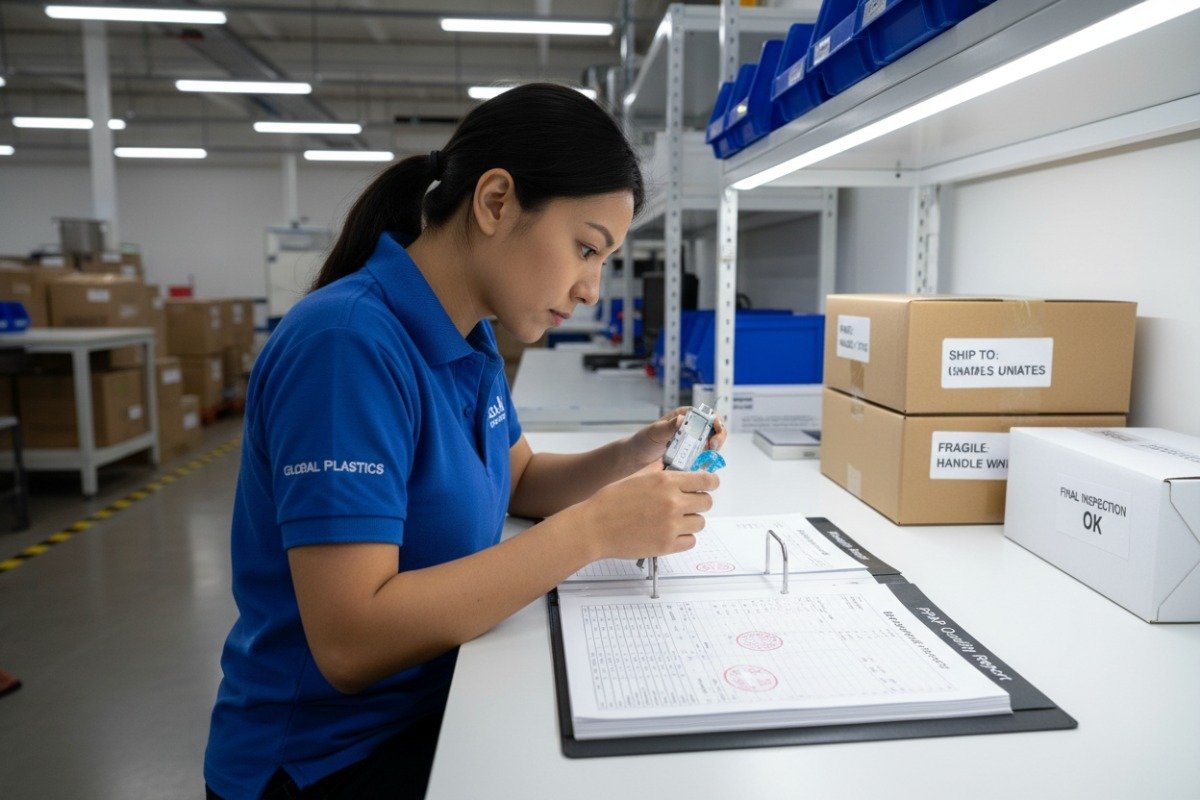
Choosing a molding partner is not just about price. Here is a framework for making the right decision.
Experience With Low-Volume Production
This is non-negotiable. A molder who primarily runs high-volume jobs will not have optimized workflows for small batches. Ask for case studies or references from other low-volume clients. Ask how many small batch projects they completed in the last 12 months. A specialist will have dozens. A generalist might have two or three.
Transparent Pricing
Hidden costs are the enemy of budgeting. A trustworthy partner provides an itemized quote that breaks down every cost element. Here is what a good quote should include:
| Cost Element | What to Look For |
|---|---|
| Mold fabrication | Material (aluminum vs. steel), number of cavities, lead time |
| Mold maintenance | Any ongoing fees or per-shot charges |
| Material cost | Resin type, price per kg, estimated material usage per part |
| Production labor | Setup fees, per-part processing cost |
| Quality control | Inspection method, documentation (FAI, PPAP, CoC) |
| Shipping | Packaging, freight mode, delivery timeline |
| Payment terms | Net 30, Net 60, or other credit terms |
If a supplier gives you a single number with no breakdown, push back. You need visibility into where your money is going.
Quality Control Processes
Quality failures in small batch runs are proportionally more damaging than in large runs. If 10% of a 500-piece order is defective, that is 50 parts you cannot ship. A good partner should have:
- Incoming material inspection to verify resin specifications.
- In-process monitoring using statistical process control 10 (SPC).
- First Article Inspection (FAI) with dimensional reports.
- Final inspection before packaging and shipment.
- PPAP capability if your end customer requires it.
We build these checkpoints into every project we manage. Getting it right the first time is not just a preference. It is a requirement. Rework and returns destroy margins and timelines.
Communication and Responsiveness
This is where many offshore suppliers fall short. Delayed responses, vague answers, and missed details on drawings are the top complaints we hear from U.S. buyers. A good partner responds within 24 hours, asks clarifying questions proactively, and flags potential issues before they become problems.
Look for a partner who assigns a dedicated project manager to your account. You should have one point of contact who knows your project inside and out.
On-Time Delivery Track Record
Ask for their on-time delivery rate. A strong supplier will track this metric and share it openly. Anything below 90% is a concern. Delivery delays cascade through your supply chain and can cost you customers.
Flexible Payment Terms
Cash flow matters, especially for small businesses and startups. Suppliers who offer Net 60 or Net 90 payment terms demonstrate confidence in their relationship with you and reduce your upfront financial burden. We offer open account terms to qualified clients specifically because we understand the cash flow pressures of importing custom parts.
The Audit Matters
Whether virtual or in-person, a factory audit reveals things that quotes and emails cannot. You see the condition of the machines, the organization of the shop floor, and the attitude of the workforce. We conduct supplier audits as a standard part of our service because we have seen too many cases where a polished website hid a disorganized factory.
Conclusion
Small batch injection molding is accessible and cost-effective when you make smart decisions on suppliers, tooling, materials, and partner evaluation. Take a strategic approach, verify everything with data, and prioritize partners who deliver quality on time.
Footnotes
1. Explains the process and advantages of manufacturing custom plastic parts. ↩︎
2. Provides a comprehensive guide to First Article Inspection (FAI) in manufacturing. ↩︎
3. Defines low-volume injection molding and its key characteristics. ↩︎
4. Provides a comprehensive overview of the Production Part Approval Process (PPAP). ↩︎
5. Discusses the benefits and suitable applications for aluminum injection molds. ↩︎
6. Highlights the cost-effectiveness and customizability of 3D printed injection molds. ↩︎
7. Found a working URL on the original domain discussing Design for Manufacturability principles. ↩︎
8. Found the Wikipedia page for ‘Plastic’ which includes a section on ‘Commodity plastics’, serving as an authoritative replacement for the original Wikipedia link. ↩︎
9. Details the recommended regrind ratios and considerations for blending with virgin resin. ↩︎
10. Found the Wikipedia page for ‘Statistical process control’, serving as an authoritative replacement. ↩︎

 English
 Español de México
 Deutsch
 Français
 Русский
 العربية