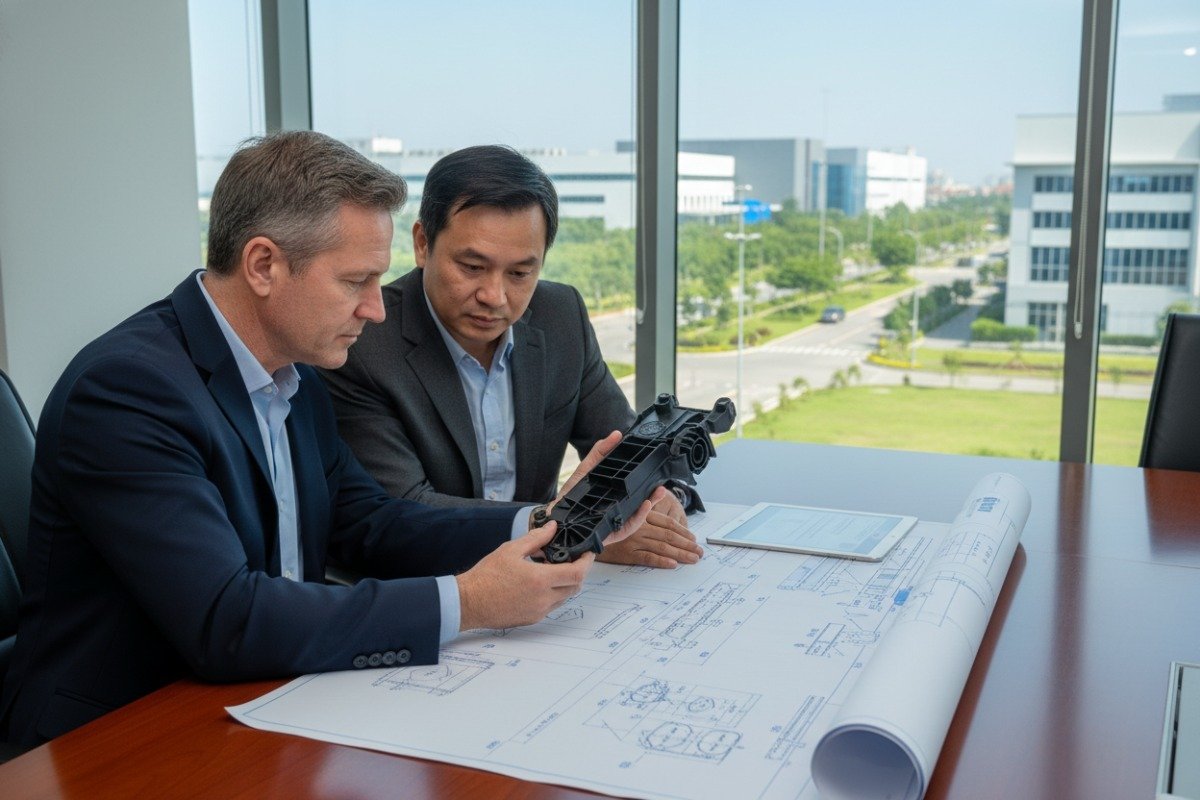
Finding the right injection molding partner overseas can feel like navigating a minefield of unknowns, broken promises, and costly mistakes quality management system 1.
To source quality injection molding from Vietnam, you need to vet suppliers through certifications like ISO 9001, evaluate their equipment and technical capabilities, establish clear quality control expectations, compare total landed costs rather than unit prices alone, and set up structured communication processes to manage lead times effectively.
Vietnam's injection molding industry has matured rapidly over the past two decades CNC and EDM equipment 2. Today, established manufacturers serve automotive, electronics, consumer goods, and industrial sectors across multiple continents. But not every supplier is created equal. Below, we break down the critical steps to help you find, evaluate, and manage the right Vietnamese injection molding partner for your custom plastic parts.
How Do I Identify and Vet the Most Reliable Injection Molding Suppliers in Vietnam?
Our team in Vietnam has visited hundreds of factories over the years, and the gap between the best and worst suppliers is enormous.
The most reliable injection molding suppliers in Vietnam hold internationally recognized certifications such as ISO 9001 or IATF 16949, operate modern CNC and EDM equipment, maintain transparent quality documentation, and have a proven track record of exporting to demanding markets like the U.S., Europe, and Japan.
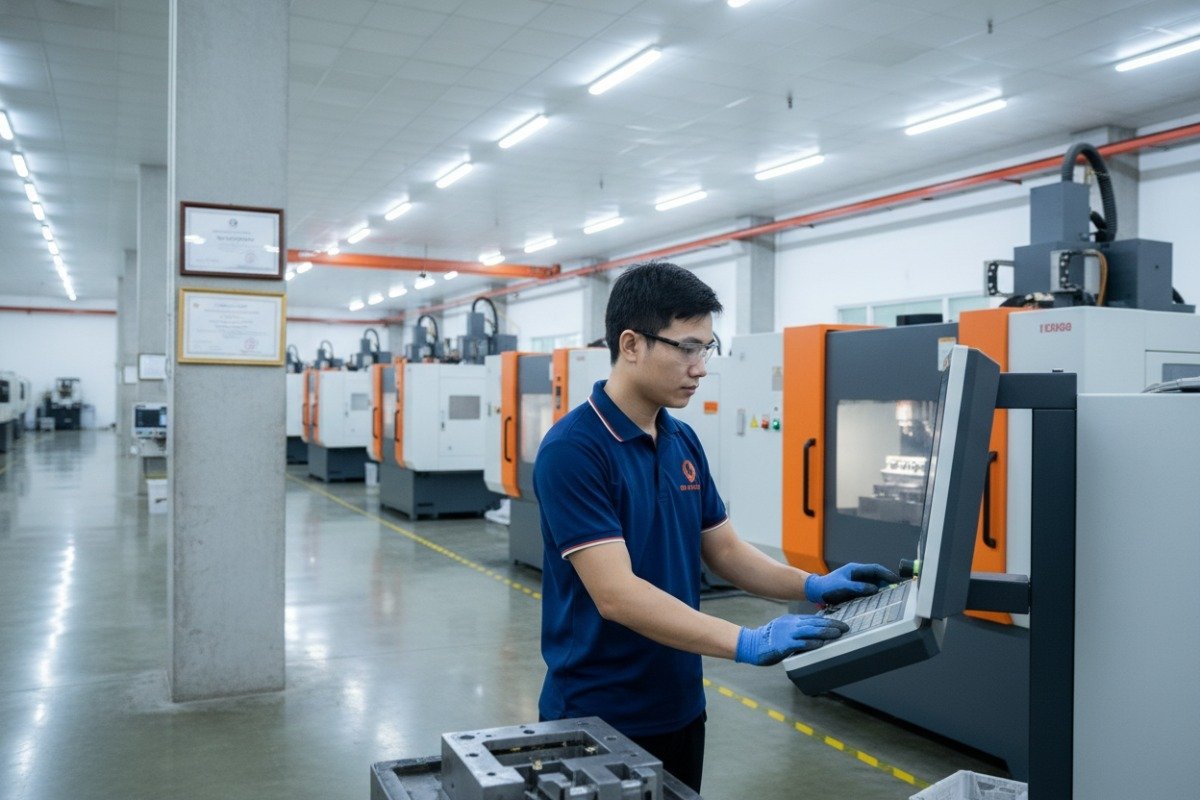
Start with Certifications — But Don't Stop There
Certifications are your first filter. ISO 9001 3 tells you a supplier has a quality management system in place. IATF 16949 4 is even more rigorous and is required for automotive supply chains. But a certificate on the wall does not guarantee good parts on your dock. We always recommend verifying certifications directly with the issuing body. Some suppliers display expired or fraudulent certificates.
Beyond certifications, look at the supplier's actual customer base. A factory that ships regularly to Japanese or German automotive OEMs has been through audits far more demanding than most. That track record matters more than any brochure.
Conduct On-Site Audits or Use a Local Partner
There is no substitute for walking a factory floor. When our Vietnam team conducts supplier audits, we look at machine condition, housekeeping, operator discipline, and how raw materials 5 are stored and traced. These details reveal more about a supplier's true capability than any sales presentation.
If you cannot visit in person, engage a local sourcing agent or partner with offices in Vietnam. They can perform factory audits, verify equipment lists, and interview key personnel on your behalf.
Evaluate Equipment and Capacity
Vietnamese injection molding manufacturers range from small shops with a handful of machines to large operations with 50+ injection molding machines and clamping forces from 50 to 1,300 tons. Understanding a supplier's equipment profile helps you match them to your project.
| Evaluation Criteria | What to Look For | Red Flags |
|---|---|---|
| Machine Range | 50–1,300 ton clamping force | Only small-tonnage machines for large parts |
| CNC Equipment | Modern CNC machining centers, EDM | Outdated or poorly maintained machines |
| Mold Design Software | Siemens NX, AutoCAD, SolidWorks | No in-house design capability |
| Workforce | Skilled technicians, dedicated QC team | No dedicated quality department |
| Export Experience | Regular shipments to US, EU, Japan | Domestic-only customer base |
| Certifications | ISO 9001, IATF 16949, ISO 14001 | Expired or unverifiable certificates |
Check References and Request Samples
Ask for references from existing international clients. A confident supplier will provide them. Request sample parts — ideally from a project similar to yours — and have them measured against specifications. This is the fastest way to assess real-world capability.
Intellectual Property Protection
IP protection is a legitimate concern when sourcing from any overseas market. Intellectual Property Protection 6 Ensure your contracts include clear NDA clauses, tooling ownership terms, and non-compete provisions. Some Vietnamese manufacturers have adopted Japanese management methodologies that include strict confidentiality protocols, which is a positive sign. Still, contractual protection is essential.
What Quality Control Standards Should I Expect for My Custom Plastic Parts?
When we co-develop custom plastic parts with our clients, the quality conversation starts long before the first shot is fired from the mold.
For custom plastic parts sourced from Vietnam, you should expect suppliers to follow PPAP (Production Part Approval Process), maintain dimensional inspection records, perform first article inspections, use statistical process control during production runs, and provide full traceability of raw materials and finished goods.

Define Your Quality Requirements Upfront
The biggest quality failures we see are not caused by bad factories. They are caused by unclear specifications. Before you send a drawing to any supplier, make sure it includes:
- Complete dimensional tolerances
- Material specifications (resin type, grade, color)
- Surface finish requirements
- Critical-to-quality (CTQ) dimensions clearly marked
- Functional requirements and assembly fit notes
If your drawing is ambiguous, the supplier will interpret it their own way. That interpretation may not match your intent.
PPAP: The Gold Standard for Custom Parts
Production Part Approval Process 7 (PPAP) is widely used in automotive but applies to any custom part where "right first time" matters. A proper PPAP submission includes:
| PPAP Element | Purpose |
|---|---|
| Design Records | Confirm the supplier is working from the correct revision |
| Process Flow Diagram | Shows every step from raw material to finished part |
| Control Plan | Documents how each process step is monitored and controlled |
| Dimensional Results | Full measurement report of sample parts against drawing |
| Material Certifications | Proof that the correct resin grade and lot were used |
| First Article Inspection | Detailed inspection of initial production samples |
| Capability Studies (Cpk) | Statistical evidence that the process can hold tolerances |
Not every Vietnamese supplier is familiar with PPAP. But the best ones are. When we manage projects, we guide suppliers through the PPAP process step by step. This upfront investment saves enormous time and cost downstream.
In-Process and Final Inspection
Quality control does not end with PPAP approval. During production, expect your supplier to perform in-process checks at defined intervals. These checks should cover key dimensions, visual defects, and weight consistency. At the end of each production run, a final inspection should verify that the lot meets your acceptance criteria before shipping.
Third-Party Inspection
For critical shipments, consider hiring a third-party inspection company to verify quality before goods leave the factory. This adds a small cost but provides an independent check that can catch issues before they become expensive problems at your receiving dock.
Common Defects in Injection Molding
Understanding common injection molding defects helps you set realistic expectations and communicate effectively with your supplier.
| Defect | Cause | Prevention |
|---|---|---|
| Short shots | Insufficient material or pressure | Optimize injection parameters |
| Flash | Excess material at parting line | Proper mold maintenance and clamping force |
| Sink marks | Uneven cooling or wall thickness | Design review and cooling optimization |
| Warping | Uneven shrinkage | Material selection and mold temperature control |
| Burn marks | Trapped air or excessive speed | Proper venting and speed adjustment |
| Weld lines | Flow fronts meeting | Gate placement optimization |
A good supplier will proactively discuss these risks during the mold design phase and propose solutions before production begins.
How Can I Evaluate the Cost-Effectiveness of Sourcing My Production from Vietnam?
Over the past several years, we have helped dozens of U.S. clients shift production from China to Vietnam, and the cost picture is more nuanced than most people expect.
Evaluating cost-effectiveness requires comparing total landed costs — including tooling, unit price, shipping, duties, inspection, and lead time carrying costs — rather than just per-piece pricing. Vietnam typically offers 15–30% savings over China for mid-volume injection molding projects, with additional tariff advantages for U.S. importers.
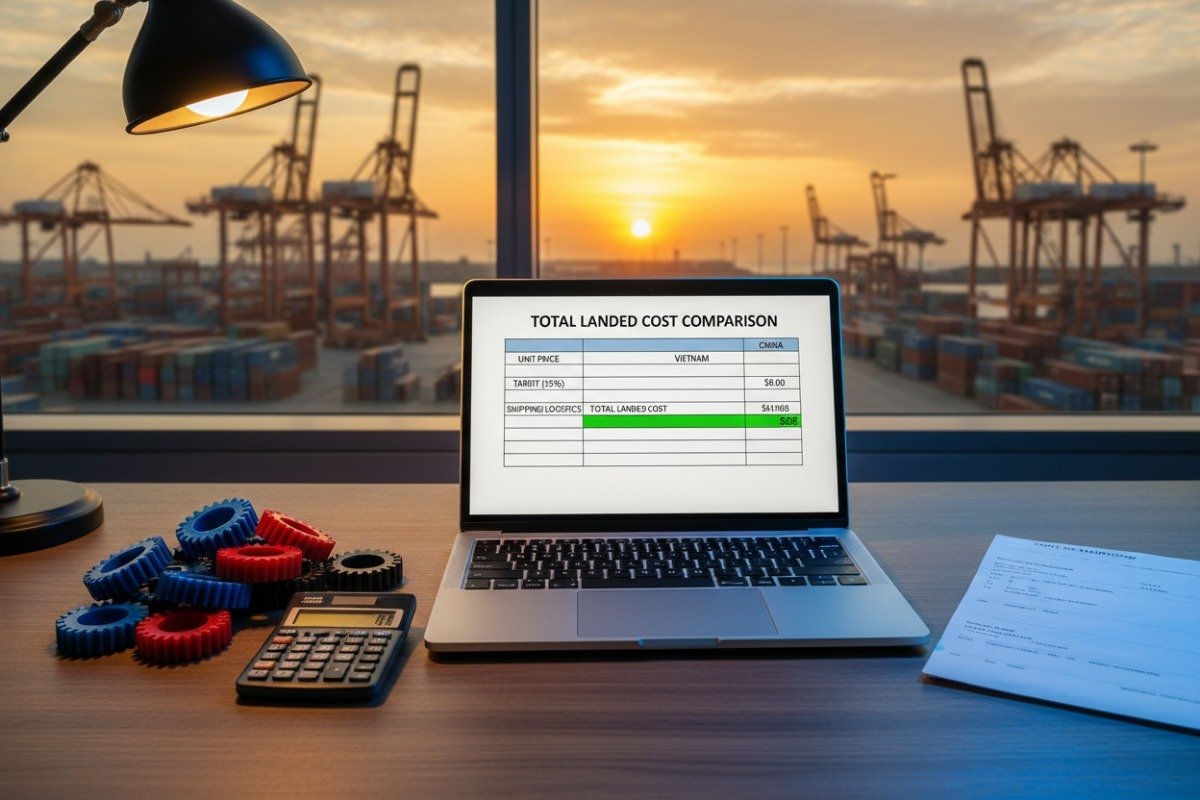
Look Beyond the Unit Price
The unit price on a quote is just one piece of the puzzle. Total landed cost includes:
- Tooling cost — Mold fabrication in Vietnam is generally cheaper than in the U.S. or Europe, though sometimes slightly higher than China for complex molds.
- Unit production cost — Lower labor rates in Vietnam directly reduce this.
- Shipping and logistics — Ocean freight 9 from Vietnam to the U.S. West Coast takes roughly 18–25 days. Factor in container costs and inland freight.
- Import duties and tariffs — This is where Vietnam shines for U.S. buyers. Products from Vietnam are not subject to the Section 301 tariffs 10 that apply to Chinese goods, which can add 7.5–25% to the cost of Chinese imports.
- Inspection and quality costs — Budget for third-party inspections or your own travel.
- Inventory carrying costs — Longer lead times mean you need more safety stock.
A Simple Cost Comparison Framework
| Cost Element | U.S. Domestic | China | Vietnam |
|---|---|---|---|
| Tooling (example) | $25,000 | $8,000 | $9,500 |
| Unit price (per 1,000 pcs) | $2.50 | $0.85 | $0.90 |
| Section 301 tariff | 0% | 25% | 0% |
| Ocean freight per unit | N/A | $0.05 | $0.05 |
| Total landed cost per unit | $2.50 | $1.11 | $0.95 |
These numbers are illustrative, but they reflect the general pattern we see across projects. Vietnam's tariff advantage alone can make it more cost-effective than China for U.S.-bound shipments, even when unit prices are similar.
Volume Matters
Vietnam is particularly cost-effective for mid-to-high volume production. The upfront mold investment is amortized across larger quantities, and per-unit costs drop significantly at scale. For very low volumes (under 500 pieces), the mold cost may dominate the total, making domestic or 3D-printed alternatives worth considering.
Hidden Costs to Watch
Do not overlook these potential hidden costs:
- Engineering changes — Modifying a mold after it is cut is expensive. Get the design right before tooling begins.
- Rework and scrap — A supplier with poor quality control will cost you more in rework than you save on unit price.
- Communication overhead — If you spend hours every week chasing updates, that has a real cost.
- Payment terms — Some Vietnamese suppliers require 50% upfront for tooling. Others, especially when working through established partners like us, can offer open account terms of 60–90 days, which significantly helps your cash flow.
Sustainability and Long-Term Value
Many Vietnamese manufacturers are investing in energy-efficient equipment, waste reduction, and eco-friendly materials. If your company has sustainability goals, ask potential suppliers about their environmental practices. This is increasingly important for companies selling into European markets with strict ESG requirements.
What Are the Key Steps I Need to Follow to Manage Communication and Lead Times Effectively?
When we onboard a new client, we always say the same thing: the number one reason offshore projects fail is not quality or cost — it is communication.
To manage communication and lead times effectively, establish a single point of contact on each side, use structured project timelines with milestone checkpoints, require weekly progress reports with photos, confirm all specifications in writing before tooling begins, and build buffer time into your schedule for initial orders.

Set Up a Clear Communication Structure
Ambiguity kills projects. Before any work begins, establish:
- A single point of contact at the supplier who speaks English and has technical knowledge.
- A defined communication channel — email for formal records, instant messaging (WeChat, Zalo, or WhatsApp) for quick questions.
- A weekly reporting cadence — Every week, the supplier sends a progress update with photos, measurements, and any issues flagged.
Many Vietnamese manufacturers now employ English-speaking engineers and sales staff. But language barriers can still cause misunderstandings, especially around technical specifications. This is where having a local partner with bilingual technical staff adds enormous value.
Build a Realistic Timeline
Injection molding projects from Vietnam follow a predictable sequence. Here is a typical timeline for a new mold and first production run:
| Phase | Duration | Key Activities |
|---|---|---|
| Quotation and design review | 1–2 weeks | Drawing review, DFM feedback, quote |
| Mold design approval | 1–2 weeks | 2D/3D mold design, client approval |
| Mold fabrication | 4–8 weeks | CNC machining, EDM, assembly, trial |
| First article samples (T1) | 1 week | Sample molding, dimensional inspection |
| Sample approval and adjustments | 1–3 weeks | Client review, mold modifications if needed |
| Mass production | 2–4 weeks | Depending on quantity |
| Shipping to U.S. | 3–4 weeks | Ocean freight, customs clearance |
| Total (new mold to delivery) | 13–24 weeks | — |
For repeat orders with existing molds, the timeline shrinks dramatically — typically 4–8 weeks from order to delivery.
Manage Expectations on Lead Times
Lead times from Vietnam are longer than domestic sourcing. That is a fact. But they are manageable with proper planning. The key is to:
- Start early. Do not wait until you need parts urgently to begin the sourcing process.
- Build buffer. Add 2–3 weeks of buffer to your initial timeline for unexpected delays.
- Overlap phases. While waiting for mold approval, finalize packaging specs and shipping arrangements.
- Plan for reorders. Once the mold is proven, set up a reorder schedule so you never run out of stock.
Use Milestone-Based Project Management
Break the project into clear milestones with defined deliverables at each stage. At each milestone, both sides confirm that the work meets expectations before moving forward. This prevents small misunderstandings from snowballing into major problems.
Common milestones include:
- Drawing and specification sign-off
- Mold design approval
- T1 sample approval
- PPAP submission and approval
- First production lot inspection and shipment
The Role of a Sourcing Partner
Managing an offshore injection molding project requires time, technical knowledge, and local presence. If your team does not have experience with Vietnamese suppliers, consider working with a sourcing partner who has boots on the ground. A good partner handles supplier selection, audit, project management, quality control, and logistics — so you can focus on your core business.
Our offices in Vietnam and China give us the ability to be at the factory within hours when issues arise. That responsiveness is something you cannot replicate from 10,000 miles away.
Conclusion
Sourcing injection molding from Vietnam is a proven strategy for reducing costs while maintaining quality — but success depends on rigorous supplier vetting, clear quality standards, honest cost analysis, and disciplined communication.
Footnotes
1. Dedicated informational website providing a comprehensive explanation of Quality Management Systems. ↩︎
2. Thomasnet provides a comprehensive guide to CNC machining, a key manufacturing process. ↩︎
3. Official ISO page for ISO 9001, providing a comprehensive overview. ↩︎
4. The official website for IATF 16949, detailing the automotive quality management system standard. ↩︎
5. Wikipedia provides a broad and authoritative definition and explanation of raw materials. ↩︎
6. The World Intellectual Property Organization (WIPO) defines and explains intellectual property. ↩︎
7. AIAG is a primary source for PPAP standards, crucial for automotive supply chains. ↩︎
8. ASQ provides a definition and tools for statistical process control in quality management. ↩︎
9. XPO Logistics provides a comprehensive explanation of sea freight and maritime transport. ↩︎
10. The official USTR website details Section 301 investigations and related tariffs. ↩︎

 English
 Español de México
 Deutsch
 Français
 Русский
 العربية