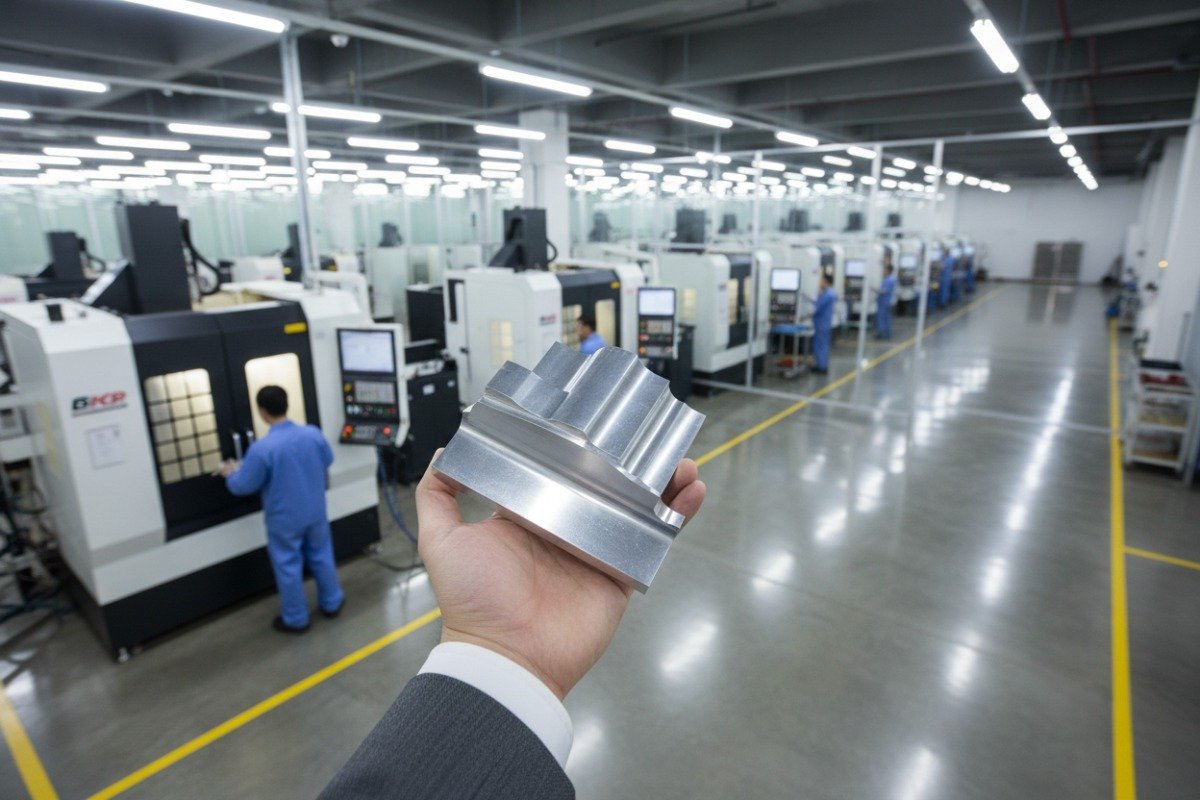
Every week, our project managers field calls from U.S. purchasing teams frustrated by missed deadlines, botched first articles, and suppliers who vanish mid-project Design for Manufacturability (DFM) 1.
Sourcing quick turn CNC machining from China can cut turnaround to 3–7 days and save 20–70% versus Western shops, but success depends on vetting suppliers, preparing complete drawings, choosing the right logistics mode, and negotiating smartly based on volume and material selection.
The four sections below walk you through each step. We will cover supplier selection, quality control, shipping strategy, and pricing optimization — with real data, tables, and checklists you can use today.
How Do I Identify a Reliable Quick Turn CNC Machining Supplier in China for My Project?
Our team in China has visited over 200 CNC shops across Shenzhen, Dongguan, and Shanghai in the past five years, and the gap between top-tier and bottom-tier factories is enormous.
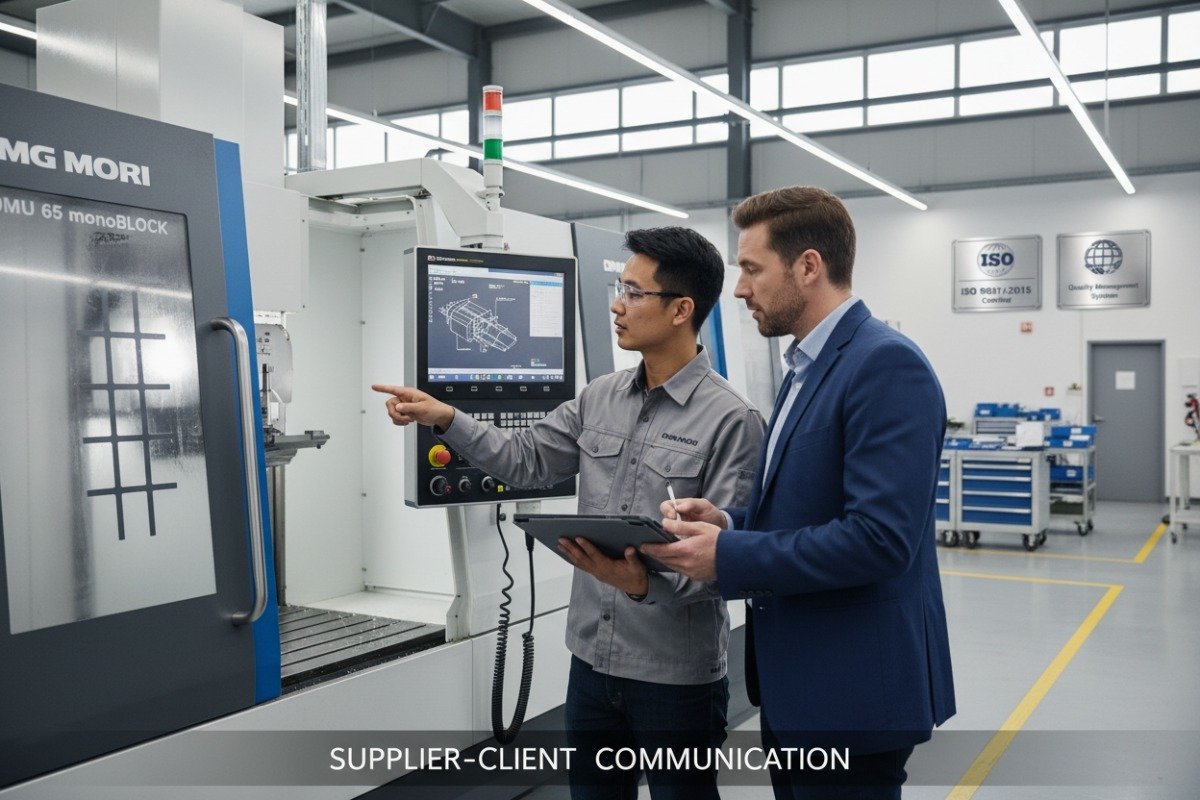
A reliable quick turn CNC supplier should hold ISO 9001 or higher certifications, respond to RFQs within 1–6 hours, operate late-model 5-axis machines, employ English-speaking engineers, and demonstrate traceable quality records through auditable processes.
Start with Certifications
Certifications are your first filter. ISO 9001 2 is the baseline. If your parts serve automotive, look for IATF 16949 3. Medical components need ISO 13485. Aerospace demands AS9100. A factory without relevant certification is a gamble you do not need to take.
We always ask for the certificate number and verify it on the issuing body's website. Fake certificates exist. A five-minute check saves months of headaches.
Evaluate Response Speed
Quote speed tells you a lot about a factory's internal systems. In our experience sourcing across Asia, the best Chinese CNC shops return quotes in under one hour for standard parts. Industry data from over 1,100 quotes shows 90% of competitive Chinese suppliers respond within six hours. Compare that to 2–5 business days from many local U.S. or European shops.
If a supplier takes three days to quote, imagine how long they take to flag a problem during production.
Check Equipment and Capabilities
Over 38% of verified Chinese CNC factories now offer 5-axis machining 4. That number keeps climbing. But you need to ask specific questions: What brand are the machines? When were they installed? Do they run 24/7 shifts?
Late-model machines from DMG Mori, Mazak, or Haas paired with round-the-clock operations are what enable true 3–7 day turnarounds.
Supplier Evaluation Scorecard
| Criteria | What to Look For | Red Flag |
|---|---|---|
| Certifications | ISO 9001, IATF 16949, ISO 13485 5 | No certificate or unverifiable number |
| Quote Response Time | Under 1 hour (simple), under 6 hours (complex) | Over 48 hours with no explanation |
| Equipment | 5-axis CNC, Swiss turning, late-model brands | Only 3-axis, machines older than 15 years |
| English Communication | Dedicated English-speaking engineer | Sales-only contact, no technical staff |
| Audit Readiness | Welcomes on-site or video audits | Refuses factory visits or third-party inspections |
| Track Record | References from U.S./EU clients | No export history |
Use a Sourcing Partner When Needed
Not every buyer has the bandwidth to fly to Dongguan. That is where sourcing specialists add value. When we manage a project, we assign it to a factory we have already vetted based on the part's complexity. A ±0.0005" tolerance job goes to a different shop than a simple bracket. This matching process is critical and often overlooked by first-time sourcers who pick the cheapest quote blindly.
Platforms like Alibaba can surface candidates, but platform presence alone does not equal reliability. Combine platform research with direct verification — request sample parts, ask for a process flow diagram, and insist on a video tour if you cannot visit in person.
What Steps Should I Take to Ensure My Prototype Quality Meets My Business Standards?
When we calibrate our inspection process for a new client, the first thing we review is not the factory — it is the drawing package the client sends us.
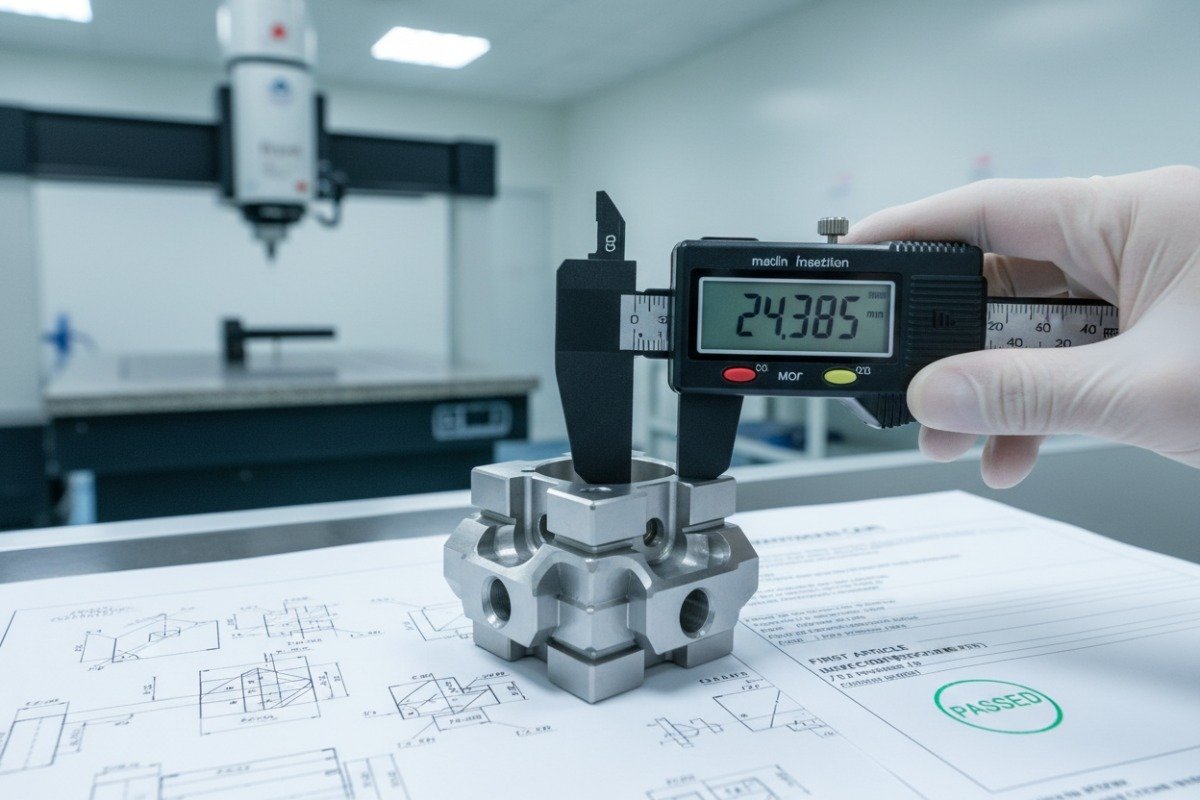
To ensure prototype quality, provide fully dimensioned drawings with GD&T callouts, specify materials and surface finishes explicitly, require a First Article Inspection Report (FAIR), and use third-party inspection before shipment to catch defects early.
Prepare Complete Technical Drawings
This is where most quality failures begin. Incomplete drawings force factories to "fill in the blanks." They guess. They guess wrong. Then you get parts that look right but fail functionally.
Your drawing package should include:
- All critical dimensions with tolerances
- GD&T callouts for form, orientation, and position
- Material grade (e.g., Aluminum 6061-T6, not just "aluminum")
- Surface finish requirements (Ra value, not vague terms like "smooth")
- Thread specifications and coating requirements
We have seen projects delayed by three weeks because a drawing said "anodize" without specifying Type II or Type III, color, or thickness. Details matter.
Implement a PPAP-Style Approval Process
Production Part Approval Process (PPAP) is not just for automotive. We apply a simplified version to every custom project. At minimum, request these documents before approving mass production:
| PPAP Element | Purpose | When to Request |
|---|---|---|
| First Article Inspection Report (FAIR) 6 | Verifies first parts match drawing | After first 1–5 samples produced |
| Material Certificate (Mill Cert) | Confirms raw material grade and properties | With first shipment |
| Process Flow Diagram | Shows each manufacturing step | During quoting or pre-production |
| Control Plan | Defines inspection points and frequency | Before production starts |
| Dimensional Report | Full measurement of all critical features | With every shipment |
Use Third-Party Inspection
Even with a great supplier, independent verification builds confidence. Our quality team performs in-process checks and final inspections at the factory before any shipment leaves. If you do not have boots on the ground, hire a third-party inspection firm.
A final inspection typically costs $200–$400 per man-day in China. Compare that to the cost of receiving 500 non-conforming parts in Texas and having to scrap or rework them. The math is simple.
Define Accept/Reject Criteria Upfront
Ambiguity kills quality. Before production, agree in writing on what constitutes a pass or fail. Specify AQL (Acceptable Quality Level) 7 for cosmetic and functional defects. For CNC prototypes, we typically recommend AQL 1.0 for critical dimensions and AQL 2.5 for minor cosmetic issues.
When both sides know the rules before the game starts, disputes drop dramatically. In our experience managing projects between Asian factories and U.S. buyers, 80% of quality arguments stem from undefined expectations — not from bad machining.
Tolerances: Tight vs. Functional
Not every feature needs ±0.002 mm. Over-tolerancing drives up cost and lead time. Work with your design engineer to identify which dimensions are truly critical. Use tight tolerances only where function demands it. Everywhere else, use standard machining tolerances.
This single step can cut your unit cost by 15–30% and shave days off production time.
How Can I Minimize Shipping Delays and Lead Times When Sourcing My CNC Parts from Overseas?
Our logistics coordinators in Vietnam and China track shipments daily, and we have learned that the shipping method you choose on day one determines whether you hit your launch date or miss it by a month.
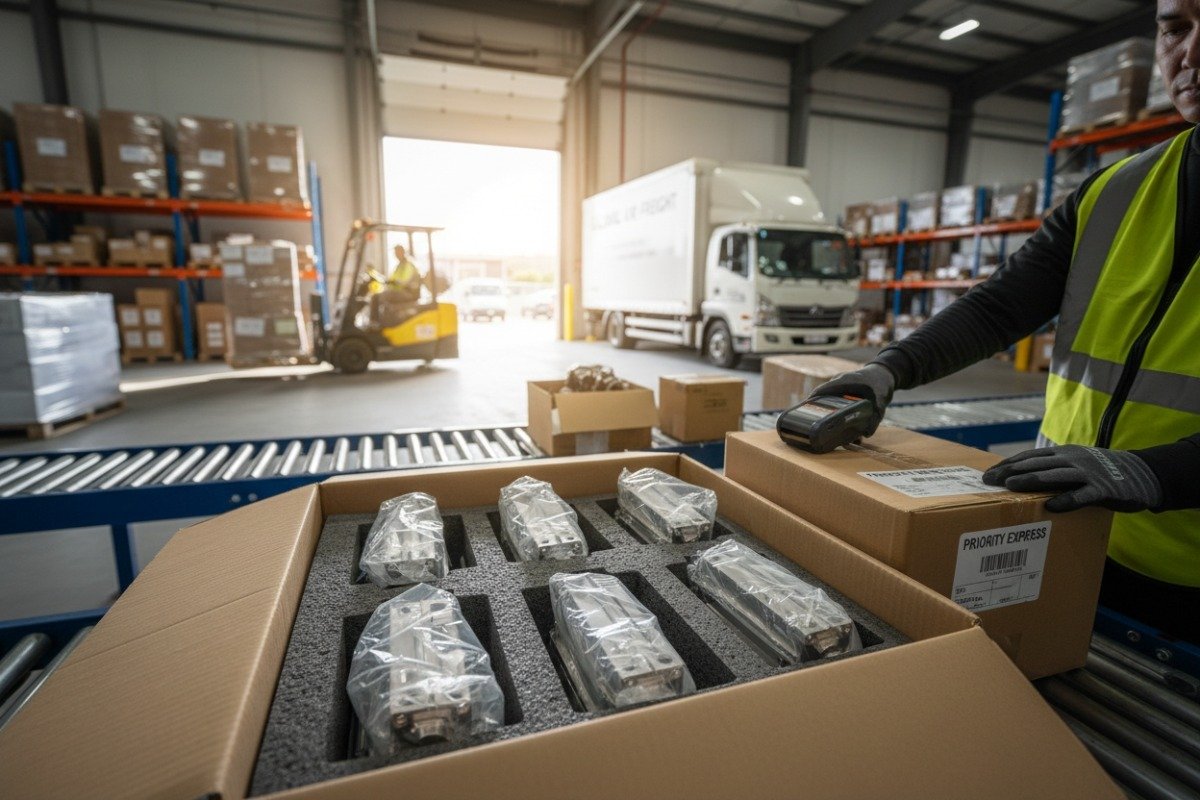
Minimize delays by matching your shipping mode to urgency — use express air (3–5 days) for prototypes under 50 kg, air freight (5–8 days) for mid-size batches, and sea freight (14–18 days to U.S. West Coast) for volume orders — while building buffer time into your project plan.
Choose the Right Shipping Mode
There is no single best shipping method. The right choice depends on weight, urgency, and budget. Here is how we break it down for our clients:
| Shipping Mode | Transit Time to U.S. | Best For | Cost Estimate (per kg) |
|---|---|---|---|
| Express Air 8 (DHL/FedEx/UPS) | 3–5 days | Prototypes < 50 kg, urgent samples | $6–$12 |
| Standard Air Freight | 5–8 days | Mid-size batches 50–500 kg | $3–$6 |
| Fast Sea (Express LCL) | 14–18 days | Production runs, West Coast delivery | $0.50–$1.50 |
| Standard Sea Freight | 30–45 days | High-volume, non-urgent orders | $0.20–$0.80 |
For quick turn prototyping, express air is almost always the right call. A $150 shipping bill on a $2,000 prototype order is negligible. But for a 2,000-piece production run of aluminum brackets, sea freight saves thousands.
Build Buffer Time Into Your Schedule
Global logistics still face disruptions. Port congestion, customs holds, and weather delays happen. We advise every client to add a buffer:
- Express air: add 1–2 days
- Air freight: add 2–3 days
- Sea freight: add 5–7 days
This buffer is not pessimism. It is project management. When parts arrive early, you look like a hero. When they arrive on the last buffer day, you still hit your deadline.
Consolidate Shipments
If you source multiple part numbers from different factories, consolidation saves money and reduces customs headaches. Our China office regularly consolidates orders from two or three factories into a single shipment. This cuts per-unit shipping cost and simplifies your receiving process.
Understand Tariffs and Customs
U.S. tariffs on Chinese goods vary by HTS code 9. Some CNC parts face 25% duties under Section 301. Factor this into your total cost of ownership (TCO) 10 calculation. Work with a customs broker who knows your product category. Misclassification can trigger delays, penalties, or both.
For clients where tariff exposure is a concern, we also source from Vietnam, where many CNC capabilities now match Chinese quality at lower or zero tariff rates for U.S. import. Diversifying your supply base across countries is not just about risk — it is about cost optimization.
Communicate Deadlines Clearly
Tell your supplier your actual need-by date, not just "ASAP." When our project managers share a specific deadline with the factory — including the shipping method and cutoff — the factory can plan production scheduling around it. Vague urgency creates confusion. Specific dates create accountability.
What Are the Key Factors I Need to Consider to Get the Best Pricing for My Custom CNC Components?
Our quoting team processes hundreds of RFQs every month, and we see the same pricing mistakes repeated by buyers who focus only on unit price while ignoring the levers that actually move total cost.
To get the best CNC pricing, optimize your design for manufacturability, choose cost-effective materials like Aluminum 6061, use functional tolerances instead of over-specifying, order in volumes above 50 units for volume breaks, and consolidate part numbers to maximize supplier efficiency.
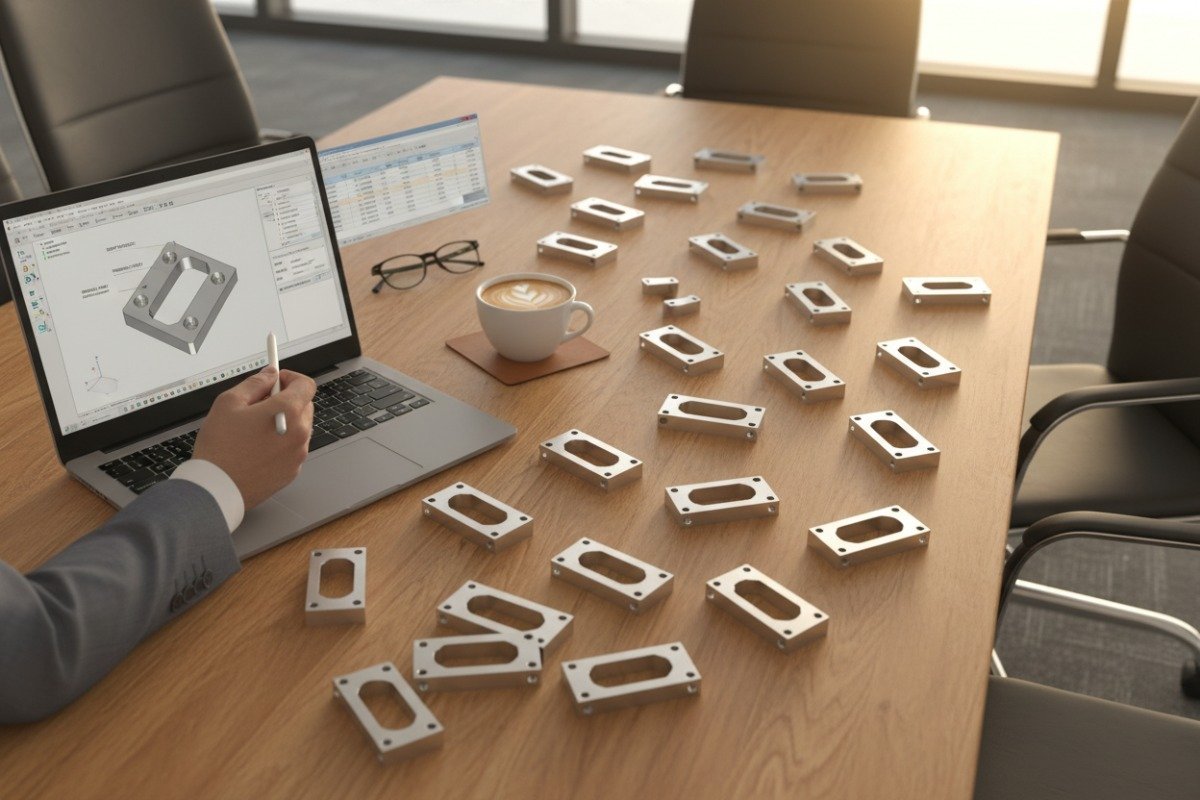
Understand What Drives CNC Pricing
CNC part cost is not one number. It is a stack of cost drivers. Understanding each one gives you negotiating power.
Material cost is straightforward — aluminum is cheaper than titanium. But the form matters too. Standard bar stock is cheaper than custom billets. If your design can use a common size, you save on raw material and setup.
Machine time is the biggest cost driver for most parts. Complex geometries, deep pockets, thin walls, and tight tolerances all increase cycle time. Every extra minute on the machine adds cost.
Setup cost is fixed per batch. A 5-axis job might require $200–$500 in setup. Spread that across 10 parts, and it is $20–$50 each. Spread it across 500 parts, and it is under $1 each. This is why volume matters.
Finishing and secondary operations — anodizing, plating, heat treatment, assembly — add cost. Specify only what your application truly needs.
Design for Manufacturability (DFM)
Small design changes yield big savings. Here are quick wins we recommend to clients regularly:
- Avoid internal sharp corners. Use radii that match standard end mill sizes.
- Minimize the number of setups. Parts machined in one or two setups cost far less than parts requiring four or five repositions.
- Use standard hole sizes. Custom reamer sizes add cost.
- Keep wall thickness above 1 mm for metals. Thin walls require slower feeds and risk scrap.
When our engineers review a client's drawing before quoting, we often suggest DFM changes that reduce cost by 10–25% without affecting function. This is the kind of co-development value that separates a strategic partner from a commodity vendor.
Volume and Material Impact on Pricing
| Scenario | Unit Price Range (Example: Aluminum 6061 bracket) | Notes |
|---|---|---|
| 1–10 prototypes | $45–$80 each | High setup cost per unit |
| 50–100 units | $18–$35 each | Volume discount kicks in |
| 500+ units | $8–$18 each | Optimized programming, bulk material pricing |
| Switching to Aluminum 7075 | +15–25% vs. 6061 | Harder material, slower machining |
| Switching to Stainless 316L | +40–60% vs. 6061 | Much slower feeds, more tool wear |
| Adding Type III anodize | +$2–$5 per part | Depends on part size and batch |
Negotiate Based on TCO, Not Unit Price
Total cost of ownership includes unit price, tooling, shipping, tariffs, inspection, and the cost of quality failures. A supplier quoting $2 less per part but delivering 5% defective product is more expensive than the supplier quoting higher with zero defects.
We encourage our clients to think in TCO terms. When you present this framework to your supplier, it also signals that you are a professional buyer — and professional buyers get better treatment and pricing.
Payment Terms as a Pricing Lever
Cash flow matters on both sides. Many Chinese factories offer better pricing for upfront payment. But if you need 60–90 day open account terms, that flexibility has value too. We offer credit terms to qualified clients because we understand that tying up cash in overseas inventory creates real financial strain. When evaluating suppliers, ask about payment flexibility. It is part of the total deal.
Consolidate and Plan Ahead
Placing one large order is almost always cheaper than three small ones. If you know you will need 1,000 parts over six months, negotiate a blanket order with scheduled releases. The supplier buys material in bulk, programs once, and runs efficiently. You get lower pricing and predictable delivery.
Conclusion
Sourcing quick turn CNC machining from China is a strategic advantage when done right — vet suppliers thoroughly, control quality with complete drawings, plan logistics smartly, and negotiate on total cost.
Footnotes
1. Explains DFM principles for optimizing product design and manufacturing. ↩︎
2. Official information on ISO 9001 quality management system standard. ↩︎
3. Official site for the automotive quality management system standard. ↩︎
4. Explains the concept and benefits of 5-axis CNC machining. ↩︎
5. Replaced with the official page for the ISO 13485 standard on the International Organization for Standardization (ISO) website, the most authoritative source. ↩︎
6. Replaced with an article from Quality Magazine, a reputable industry publication, explaining First Article Inspection Reports. ↩︎
7. Explains AQL and its role in quality control and product inspection. ↩︎
8. Authoritative source defining express shipping and its characteristics. ↩︎
9. Replaced with the official Harmonized Tariff Schedule (HTS) portal maintained by the U.S. International Trade Commission (USITC), a government agency. ↩︎
10. Comprehensive definition of TCO for evaluating long-term financial impact. ↩︎

 English
 Español de México
 Deutsch
 Français
 Русский
 العربية