
Every week, our project team reviews supplier performance data from dozens of CNC machining vendors across Asia. The pattern is clear. Businesses that skip proper vetting end up paying twice — once for bad parts, and again for replacements. Delivery delays pile up. Quality complaints drain your engineering team's time. And the worst part? Most of these problems are preventable with the right sourcing approach from day one.
Sourcing high-quality production CNC machining services requires a systematic evaluation of vendors based on technical capabilities, quality certifications, DFM expertise, cost transparency, and long-term scalability — starting with clearly defined specifications and ending with performance-driven partnerships that deliver consistent precision at competitive total landed costs.
Finding the right CNC machining partner is not just about getting the lowest quote. It is about building a supply chain that works reliably, month after month. In this guide, we walk through the exact steps and criteria that matter most — from evaluating equipment and certifications to balancing cost with precision and choosing a partner who grows with your business. Let's dig in.
How Do I Evaluate the Technical Capabilities and Quality Certifications of a CNC Machining Vendor?
Our engineers have reviewed hundreds of CNC machine shops over the past decade, and one lesson stands out. A vendor's equipment list alone tells you very little. The real question is whether they can consistently hold your tolerances, handle your materials, and prove it with data.
To evaluate a CNC vendor's technical capabilities, review their machine inventory (3-axis through 5-axis), CAD/CAM software compatibility, material experience, and tolerance track record. Then verify quality certifications like ISO 9001, AS9100, or ISO 13485, and request First Article Inspection reports and third-party audit results.
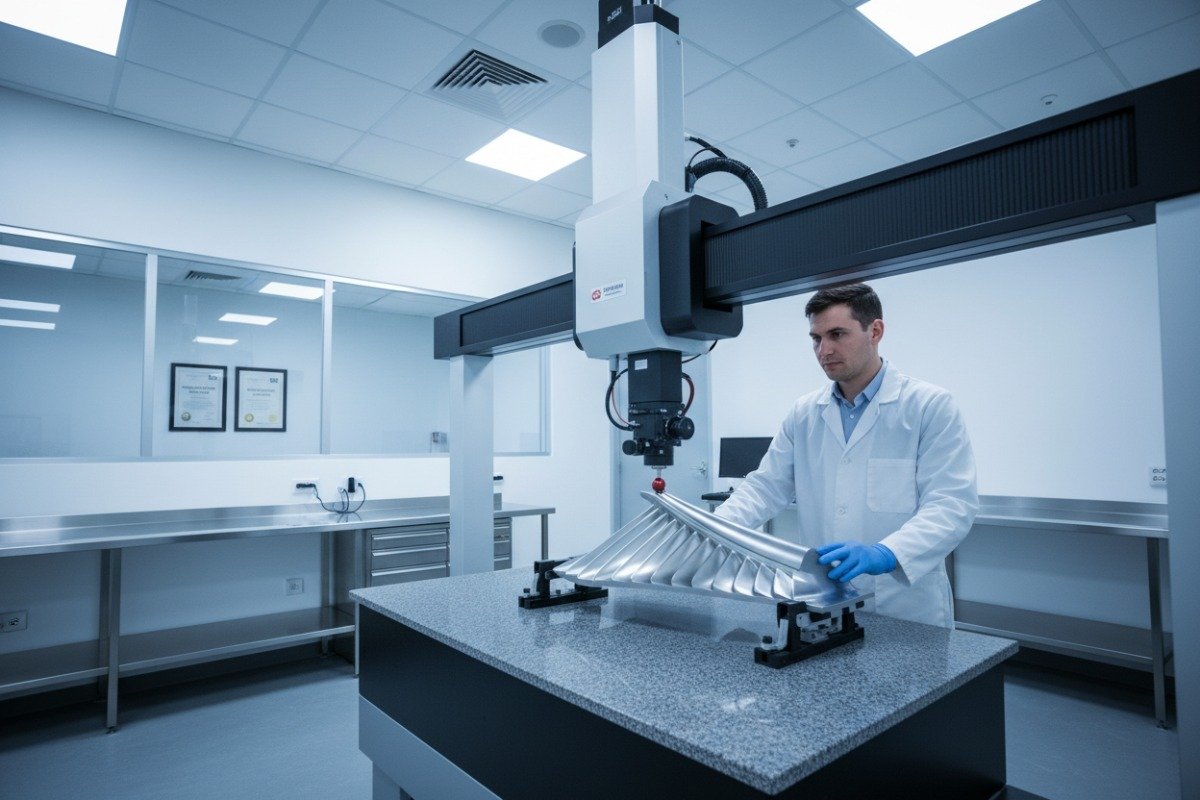
Start With the Machine Inventory
The type and age of a vendor's CNC machines directly affect what they can produce. A shop with only 3-axis mills cannot handle complex geometries that require simultaneous 5-axis movement. Ask for a full equipment list. Look for multi-axis machines, high-speed spindles, and wire EDM or grinding capabilities if your parts demand tight tolerances.
But machines are only part of the story. Ask about their CAD/CAM software. Can they import your STEP, IGES, or native SolidWorks files without conversion errors? Do they run simulation before cutting? These details prevent costly mistakes during production.
Verify Certifications — Don't Just Take Their Word
Certifications like ISO 9001 1 are table stakes. They show a vendor has a documented quality management system. But for specific industries, you need more. Aerospace parts 2 require AS9100. Medical devices need ISO 13485. Defense work may require ITAR compliance 3.
Here is a quick reference:
| Industry | Required Certification | What It Covers |
|---|---|---|
| General Manufacturing | ISO 9001 | Quality management system basics |
| Aerospace | AS9100 | Risk management, traceability, process control |
| Medical Devices | ISO 13485 4 | Design controls, biocompatibility documentation |
| Defense / Military | ITAR Compliance | Export control, data security, restricted access |
| Automotive | IATF 16949 5 | PPAP, APQP, defect prevention |
Ask for copies of current certificates. Check expiration dates. And if possible, request the most recent third-party audit summary. A vendor who hesitates to share this information is a red flag.
Demand Proof Through Inspection Data
Certifications tell you about systems. Inspection data tells you about results. Request sample First Article Inspection 6 (FAI) reports. Look at how they measure critical dimensions — are they using coordinate measuring machines (CMMs), laser scanners, or just calipers?
Certified suppliers typically maintain quality defect rates under 1%. Unvetted shops often run 5–10% defect rates. That gap translates directly into scrap costs, rework time, and delayed shipments.
Check Their Track Record
Ask for customer references in your industry. Look at their portfolio. A vendor who has machined turbine blades for aerospace clients handles complexity differently than one who only makes simple brackets. Review Google reviews, Clutch profiles, or industry forum mentions. Real feedback from real buyers is more valuable than any sales pitch.
When we audit potential suppliers for our clients, we always visit the shop floor. We check machine conditions, operator skill levels, and how they handle non-conformances. If you cannot visit in person, ask for a virtual tour or a detailed photo walkthrough of their facility.
What Steps Should I Take to Ensure My Design Specifications Are Met During Mass Production?
When we manage production runs for our clients, the most common failure point is not the machining itself. It is the gap between what the drawing says and what the shop floor understands. Miscommunication on tolerances, surface finishes, or material grades causes more rejected parts than worn-out tooling ever will.
To ensure design specifications are met during mass production, provide complete engineering drawings with GD&T callouts, request DFM feedback before tooling, establish a PPAP process with First Article Inspection approval, implement in-process quality checkpoints, and require final inspection reports with full dimensional data before shipment.
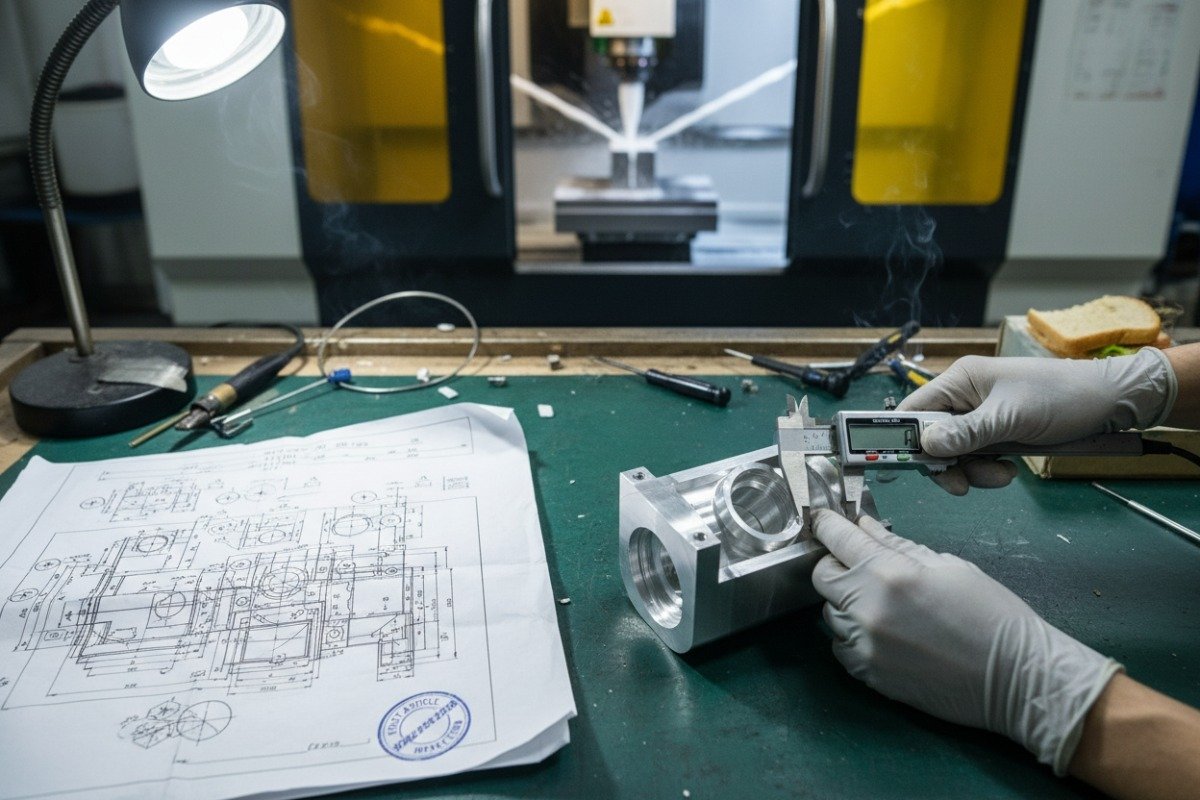
Define Your Specifications Clearly
Ambiguity kills quality. Your drawings must include complete GD&T (Geometric Dimensioning and Tolerancing) callouts 7, material specifications with grade and heat treatment requirements, surface finish standards (Ra values), and critical-to-quality (CTQ) dimensions clearly marked.
If your drawing says "general tolerance per ISO 2768-m 8" but your functional requirement actually needs ±0.01 mm on a bore diameter, you must call that out explicitly. Vendors will machine to the loosest acceptable tolerance unless told otherwise. That is not negligence — it is efficiency. So be specific.
Get DFM Feedback Before You Commit
Design for Manufacturability (DFM) feedback is one of the most valuable services a good CNC partner provides. Before cutting any metal, send your designs and ask: Can you make this? What would you change to reduce cost or improve quality?
A strong vendor will flag issues like:
- Wall thicknesses too thin for stable machining
- Internal corners that require special tooling
- Tolerances tighter than necessary for function
- Material choices that increase lead time or cost
This feedback loop saves money and prevents problems. In our experience, DFM reviews reduce engineering change orders by 30–40% during production ramp-up.
Implement a PPAP Process
Production Part Approval Process (PPAP) 9 is not just for automotive. It works for any production CNC program. The basic steps include:
| PPAP Step | Purpose | Deliverable |
|---|---|---|
| Design Review | Confirm drawing interpretation | Annotated drawing with vendor questions resolved |
| Process Flow Diagram | Map each manufacturing step | Visual flowchart of operations |
| Control Plan | Define inspection points and methods | Document listing CTQ checks per operation |
| First Article Inspection (FAI) | Verify first production parts meet spec | Full dimensional report with pass/fail status |
| Production Run Approval | Confirm process stability | Cpk data or SPC charts for critical dimensions |
Do not skip the FAI. It is your last chance to catch problems before hundreds or thousands of parts are machined. Require a balloon drawing with numbered dimensions and a corresponding measurement report.
Monitor In-Process and Final Quality
For ongoing production, insist on in-process quality control (IPQC) checkpoints. These are inspections performed during machining — not just at the end. IPQC catches drift early, before an entire batch goes out of tolerance.
At final inspection, require a Certificate of Conformance (CoC) and full inspection data for every shipment. If the vendor uses CMM equipment, ask for the CMM report files. If they rely on manual gauges, ask for photos of the measurement setup.
When we manage production for clients, we station our own QC inspectors at the factory for critical runs. This is not about distrust. It is about catching issues in real time, before parts ship across the ocean.
Use Real-Time Production Tracking
Top suppliers now offer real-time production tracking through digital dashboards. You can see order status, inspection results, and shipping updates without sending a single email. This transparency reduces surprises and builds trust over time.
How Can I Balance Cost-Efficiency With High Precision for My Production CNC Orders?
Our quoting team sees this tension every day. A client needs ±0.005 mm on a critical bore but wants the price of a ±0.05 mm part. The math does not work that way. Tighter tolerances mean slower feeds, more inspection, and sometimes different machines entirely. But that does not mean you have to overpay. Smart sourcing is about knowing where precision matters and where it does not.
Balance cost-efficiency with high precision by applying tight tolerances only to functionally critical dimensions, optimizing designs through DFM feedback, comparing total landed costs (not just unit prices), consolidating orders for volume discounts, and selecting vendors whose equipment naturally matches your precision requirements without excessive setup costs.
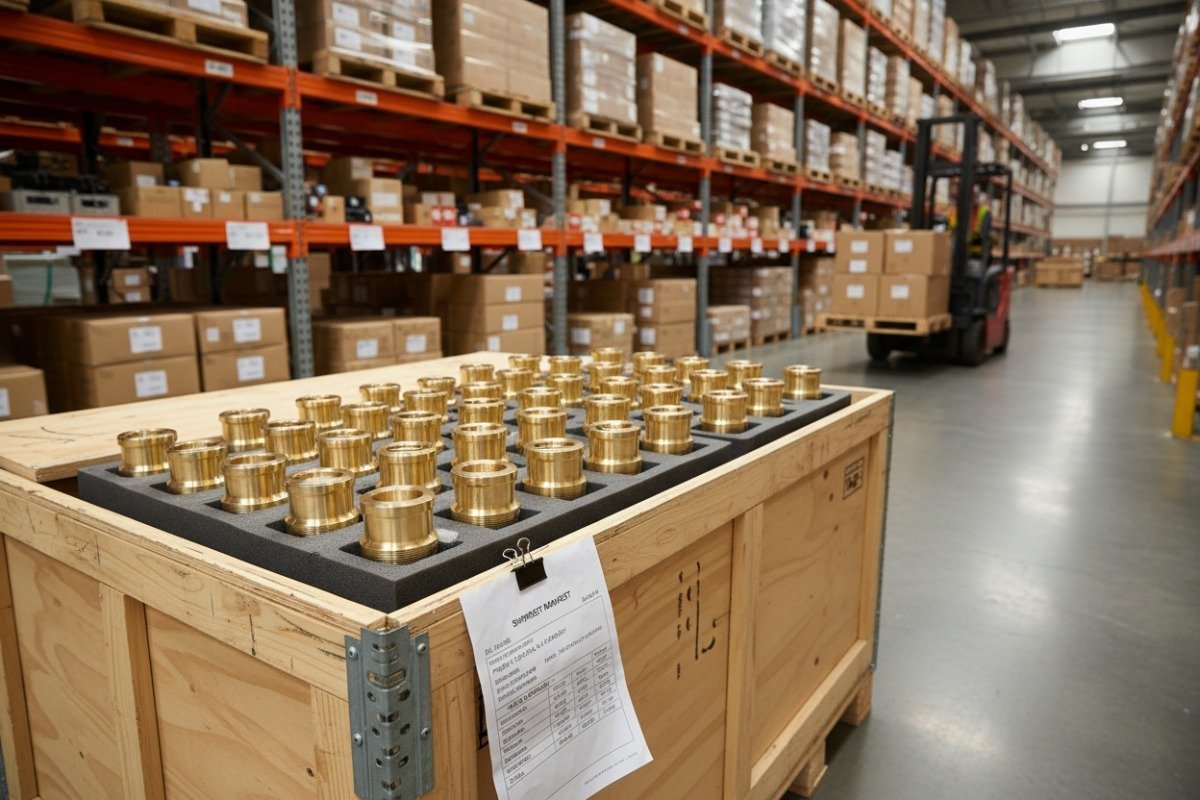
Understand What Drives CNC Machining Costs
Before you negotiate price, understand what you are paying for. CNC machining costs break down into several categories, and each one offers opportunities for savings — or hidden traps.
| Cost Driver | Impact on Price | How to Optimize |
|---|---|---|
| Material | 20–40% of part cost | Choose standard grades; avoid exotic alloys unless required |
| Machine Time | 30–50% of part cost | Simplify geometry; reduce unnecessary tight tolerances |
| Tooling & Fixtures | 5–15% of part cost | Design for standard tooling; minimize custom fixtures |
| Inspection | 5–10% of part cost | Limit CMM inspection to CTQ dimensions only |
| Shipping & Tariffs | Variable | Consolidate shipments; evaluate nearshoring options |
| Setup / Programming | Per-batch fixed cost | Increase batch sizes to amortize setup costs |
The biggest mistake buyers make is focusing only on the unit price. A quote that looks 15% cheaper may not include tooling amortization, inspection costs, or packaging. Always compare total landed cost — the price of the part at your receiving dock, including everything.
Apply Tolerances Strategically
Not every dimension on your part needs to be held to ±0.01 mm. Identify the functional surfaces — the ones that mate with other components, seal against pressure, or bear loads. Apply tight tolerances there. Let everything else float to standard machining tolerances.
This approach alone can reduce machining time by 20–30%. It also reduces scrap rates because the vendor is not fighting to hold unnecessary precision on non-critical features.
When we review client drawings, we often find 10–15 dimensions with tolerances tighter than function requires. A quick DFM conversation usually resolves this and drops the quote significantly.
Compare Quotes the Right Way
Get quotes from at least three vendors. But do not just compare the bottom line. Break each quote into line items:
- Raw material cost
- Machining cost per piece
- Tooling and fixture charges
- Inspection and quality documentation fees
- Packaging and shipping costs
- Payment terms and any early-payment discounts
Cheaper bids often hide quality risks. We have seen cases where a client chose the lowest bidder, only to face 20% budget overruns from scrap, rework, and air freight for replacement parts. The "expensive" vendor would have been cheaper in the end.
Consider Hybrid Sourcing Strategies
One approach that works well for many of our clients is a hybrid strategy. Use a local or nearshore vendor for prototyping and first articles — where speed and iteration matter most. Then shift to a cost-competitive Asian supplier for production volumes, where the process is locked in and repeatability is proven.
This gives you the best of both worlds. Fast turnaround during development. Lower cost during production. And reduced risk because the production vendor receives a proven, optimized design.
Digital platforms have made this easier. You can get instant quotes, run DFM checks online, and compare vendors across regions in hours instead of weeks. But do not rely solely on algorithms. Complex parts with tight tolerances still benefit from direct engineering conversations with the shop floor.
What Should I Look for in a Long-Term CNC Machining Partner to Support My Business Growth?
Over the years, our team has helped clients transition from one-off prototype orders to sustained production programs running thousands of parts per month. The vendors who succeed as long-term partners share a common set of traits. And surprisingly, it is not always about having the newest machines or the biggest factory.
A long-term CNC machining partner should offer scalable capacity, proactive engineering support, transparent communication, flexible payment terms, robust IP protection, and a track record of continuous improvement — demonstrated through consistent on-time delivery, low defect rates, and willingness to invest in your program's success over time.
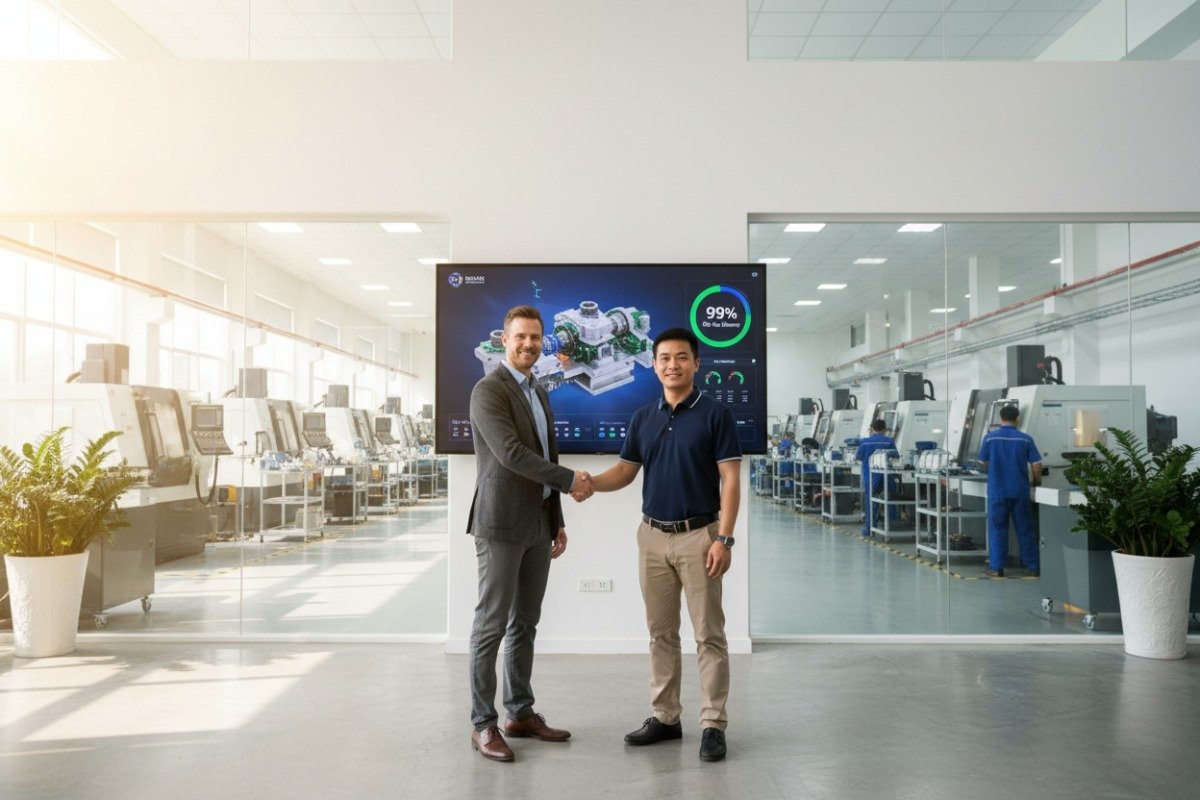
Scalability Is Non-Negotiable
Your business will grow. Your partner must grow with you. Ask about their capacity utilization. A shop running at 95% capacity today cannot absorb your volume increase next quarter without delays. Look for vendors who maintain excess capacity buffers or have clear expansion plans.
Also ask about their workforce. Skilled CNC operators are hard to find. A vendor who invests in training and retains experienced machinists will deliver more consistent quality than one with high turnover.
Prioritize Communication and Responsiveness
The best technical capabilities mean nothing if you cannot get a straight answer to a simple question. Evaluate how quickly a vendor responds during the quoting phase. That response time is the best preview of how they will communicate during production.
Look for vendors who assign a dedicated project manager or account engineer to your program. This person should understand your parts, your quality requirements, and your delivery schedule. They should flag problems before you discover them yourself.
In our Vietnam and China offices, we maintain dedicated teams for key accounts. When a client emails at 9 AM Eastern time, they get a response before lunch. That kind of responsiveness prevents small issues from becoming expensive problems.
Evaluate Their Quality Culture, Not Just Their Quality System
A certificate on the wall does not guarantee quality culture. Quality culture means every operator on the shop floor understands why a tolerance matters. It means the vendor invests in measurement equipment, calibration, and training — not just documentation.
Ask these questions:
- What happens when a non-conforming part is found during production?
- How do you track and reduce recurring defects?
- Can you show me your corrective action process?
- What is your on-time delivery rate for the past 12 months?
A vendor with a strong quality culture will answer these questions with data, not vague promises.
Protect Your Intellectual Property
For proprietary designs, IP protection 10 is critical. Ensure your vendor has clear confidentiality protocols. Use Non-Disclosure Agreements (NDAs) before sharing drawings. Ask how they control access to your files on their network. Do they restrict which operators can view your designs?
This is especially important when sourcing from overseas. A reputable vendor will have documented data security policies and will not hesitate to sign your NDA.
Look for Value-Added Services
The best long-term partners offer more than just machining. They provide:
- Surface finishing (anodizing, plating, powder coating)
- Heat treatment
- Sub-assembly
- Supply chain management and kitting
- Packaging design for safe transit
These services reduce your vendor count, simplify logistics, and lower total cost. A partner who can handle post-machining processes in-house or through vetted sub-suppliers saves you weeks of coordination.
Consider Payment Terms and Financial Stability
Cash flow matters. A vendor who offers 60–90 day payment terms (open account or net terms) demonstrates financial stability and confidence in the relationship. This is especially valuable for growing businesses that need to manage working capital carefully.
We offer open account payment terms to qualified clients precisely because we understand this pressure. It is one of the ways we build long-term partnerships rather than transactional relationships.
Sustainability and Future-Readiness
By 2026, sustainability reporting is becoming a procurement requirement for many U.S. and European companies. Ask your CNC partner about their environmental practices. Do they recycle chips and coolant? Do they track energy consumption per part? Can they provide sustainability data for your ESG reporting?
Vendors who invest in Industry 4.0 technologies — real-time monitoring, predictive maintenance, advanced analytics — are also better positioned for the future. These tools improve efficiency, reduce waste, and give you better visibility into production status.
Conclusion
Sourcing production CNC machining services is a process, not a transaction. Define your specs clearly, vet vendors with data, compare total costs, and invest in partners who communicate well and grow with you.
Footnotes
1. Official ISO page for ISO 9001, an authoritative source. ↩︎
2. Details the quality management system standard (AS9100) for the aerospace industry. ↩︎
3. Explains regulations for controlling defense-related articles and services in the U.S. ↩︎
4. Wikipedia provides a comprehensive overview of ISO 13485, a widely recognized and accessible authoritative source. ↩︎
5. Describes the official quality management system standard for the automotive industry. ↩︎
6. Defines the process of verifying that a production process can consistently meet specifications. ↩︎
7. Wikipedia offers a thorough and accessible explanation of Geometric Dimensioning and Tolerancing (GD&T). ↩︎
8. Discusses general tolerances for linear and angular dimensions in engineering drawings. ↩︎
9. Quality-One offers a comprehensive and well-structured guide to the Production Part Approval Process (PPAP). ↩︎
10. Explains intellectual property and its legal rights protecting creations of the mind. ↩︎

 English
 Español de México
 Deutsch
 Français
 Русский
 العربية