
Every week, our project team reviews quotes from machine shops across Asia AS9100 1. One pattern keeps showing up: buyers struggle to find reliable partners for small batch CNC work. The stakes are high. A wrong supplier choice means missed deadlines, scrapped parts, and wasted budgets IATF 16949 2.
Low volume CNC machining—typically 1 to 500 units—gives businesses a flexible, cost-effective way to produce precision parts for prototyping, custom orders, or bridge production. Sourcing the best provider requires evaluating their setup efficiency, quality systems, DFM expertise, and proven experience in high-mix low-volume environments.
The truth is, sourcing low volume CNC parts is very different from placing a bulk order. Setup costs, communication quality, and process control matter far more when every single piece counts. In this guide, we break down the four most important questions you need to answer before choosing a supplier. Let's get into it.
How Do I Choose the Right Supplier for My Low Volume CNC Machining Project?
Our team has vetted over 200 machine shops across Vietnam, China, and Taiwan in the past three years. The difference between a good and bad low volume supplier often comes down to how they handle changeovers and communication—not just their machine list.
To choose the right supplier, look for a shop specifically built for high-mix low-volume (HMLV) production. They should demonstrate fast setup times, transparent communication, strong DFM feedback, and relevant certifications like ISO 9001 or AS9100. Request case studies and references from similar projects before committing.

Choosing a supplier for low volume CNC machining is not the same as picking one for mass production. The economics are different. The risks are different. And the skills required are different. Here is how to break it down.
Why HMLV Expertise Matters
A shop that runs 10,000 identical parts per month operates very differently from one that handles 20 different jobs of 50 parts each. In low volume work, setup and changeover dominate the cost structure. A supplier experienced in HMLV production will have invested in quick-change tooling, efficient fixture systems, and streamlined programming workflows. They know how to switch between jobs fast without sacrificing accuracy.
If your supplier mostly does high volume runs, they may quote your small batch job with inflated setup fees. Or worse, they may deprioritize your order because it is not profitable enough for their model.
Key Criteria to Evaluate
Here is a practical checklist we use when qualifying suppliers for our clients:
| Criteria | What to Look For | Red Flag |
|---|---|---|
| Setup Efficiency | Quick-change fixtures, documented setup reduction programs | Long quoted lead times for simple parts |
| Communication | Dedicated project contact, proactive updates | Slow email responses, vague answers |
| Certifications | ISO 9001 3, AS9100 (aerospace), IATF 16949 (automotive) | No quality certifications at all |
| DFM Capability | Offers design feedback before production | Accepts drawings without any questions |
| ERP System 4 | Real-time order tracking, digital traceability | Manual tracking via spreadsheets |
| References | Case studies or client references for similar work | Refuses to share past project examples |
Ask the Right Questions Early
Before you send your RFQ, ask potential suppliers these questions:
- What percentage of your work is low volume versus high volume?
- What is your average setup time for a 3-axis milling job?
- Can you walk me through your process from quote to shipment?
- How do you handle engineering changes mid-production?
The answers will tell you a lot. A supplier who answers quickly and specifically is likely well-organized. A supplier who gives vague or delayed responses will probably cause problems during production too.
Regional Sourcing Considerations
We have seen supply chain disruptions 5 spike lead times by 3–4 weeks overnight. For low volume work, regional sourcing often makes more sense than chasing the lowest unit price. A supplier in Vietnam or Southeast Asia, for example, can offer competitive pricing with shorter shipping times to the US compared to some inland Chinese factories. Having a local team on the ground—like our office in Vietnam—helps catch issues before they become expensive problems.
What Are the Key Factors I Should Look for to Ensure Quality in My Small Batch Production?
When we run final inspections on low volume CNC parts at our partner factories, we often catch issues that would have gone unnoticed without rigorous in-process checks. In small batches, there is no room for statistical averaging—every single part must be right.
Quality in small batch CNC production depends on three pillars: in-process inspection using CMMs and calibrated gauges, a documented quality system with clear control plans, and skilled operators who understand tight tolerances. First-pass yield rates above 99% are achievable in top shops that combine all three elements.
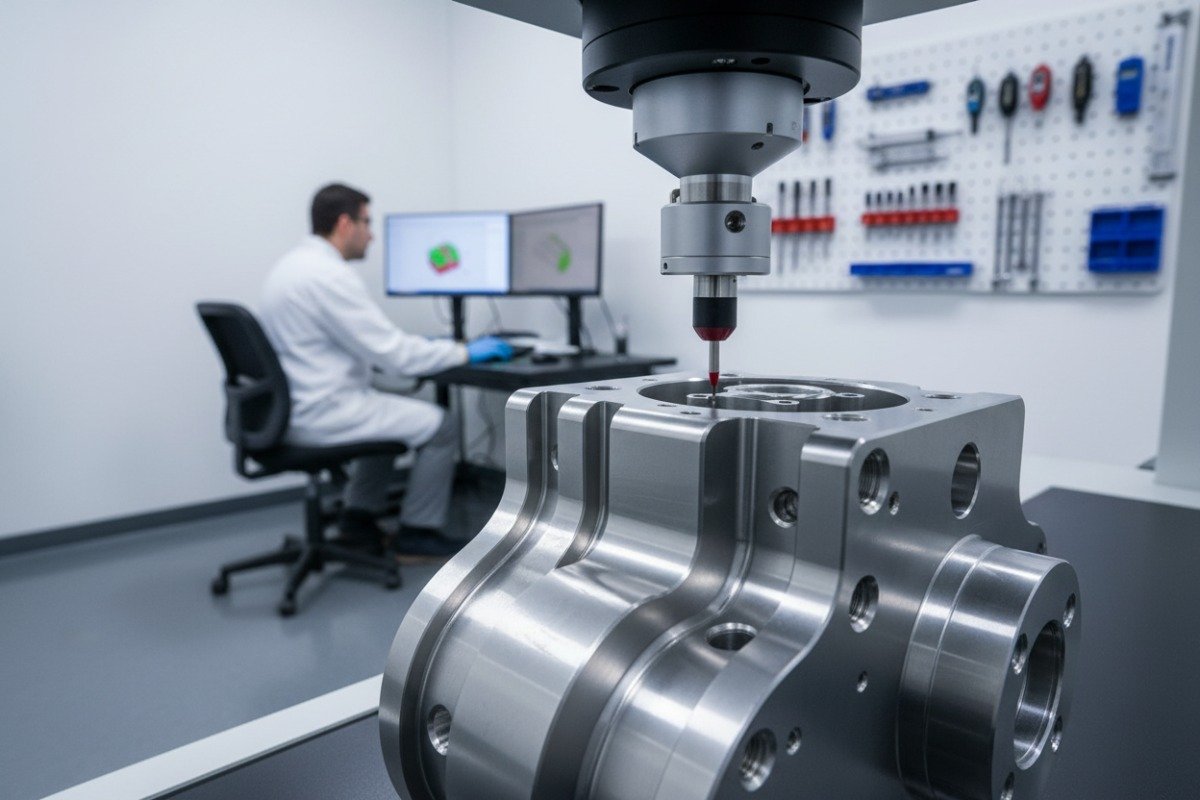
Quality control for low volume CNC machining requires a different mindset than mass production. In a run of 10,000 parts, you can sample inspect. In a run of 25 parts, you often need to check every single one. Here is what to focus on.
The Role of CMM Inspection
Coordinate Measuring Machines (CMMs) are the gold standard for verifying dimensional accuracy on CNC parts. A good low volume supplier will use CMM inspection at multiple stages 6—not just at the end. In-process checks catch drift early, before an entire batch is ruined.
We always ask suppliers to provide CMM reports with their shipments. If a shop cannot produce a detailed inspection report, that is a warning sign. For regulated industries like aerospace and medical, this is not optional—it is mandatory.
Quality System Components
A robust quality system for small batch work should include these elements:
| Quality Element | Purpose | Impact on Low Volume |
|---|---|---|
| PPAP (Production Part Approval Process) 7 | Validates the process before full production | Ensures first articles meet spec before running the batch |
| Control Plan | Documents critical dimensions and inspection frequency | Prevents missed checks on key features |
| First Article Inspection 8 (FAI) | Full dimensional verification of the first piece | Catches setup errors before they multiply |
| In-Process Gauging | Monitors dimensions during machining | Detects tool wear or thermal drift in real time |
| Final Inspection | 100% or sample check of finished parts | Last line of defense before shipment |
| Material Certification | Verifies raw material grade and properties | Prevents wrong-material issues that are invisible to the eye |
Operator Skill Is Critical
In low volume work, the operator's experience matters more than in automated high volume production. Skilled machinists know how to set tool offsets precisely, adjust for material behavior, and spot problems by sound or chip formation before a part goes out of tolerance. When we audit factories, we pay close attention to operator tenure and training programs. A shop with high turnover and inexperienced operators will struggle with the precision demands of small batch custom parts.
Tolerances: Tight Where It Matters
Not every dimension on your part needs to be held to ±0.01mm. Over-tolerancing is one of the most common mistakes buyers make. It drives up machining time, increases scrap rates, and inflates costs. Work with your supplier to identify critical mating surfaces that truly need tight tolerances. Everything else can often be held to ±0.05mm or even ±0.1mm without affecting function. A good supplier will flag this during DFM review and suggest where you can relax tolerances to save money and time.
How Can I Optimize My Costs When Sourcing Low Volume CNC Services for My Business?
Our engineers spend a lot of time reviewing client drawings before we send them to the shop floor. In many cases, small design adjustments save 20–40% on machining costs without changing the part's function at all. Cost optimization starts long before the spindle turns.
To optimize low volume CNC costs, apply Design for Manufacturability (DFM) principles: simplify geometries, use standard material stock sizes, limit tight tolerances to critical surfaces only, and reduce the number of setups by concentrating features on fewer faces. These steps can cut machining time by up to 40% and material waste by 15–25%.
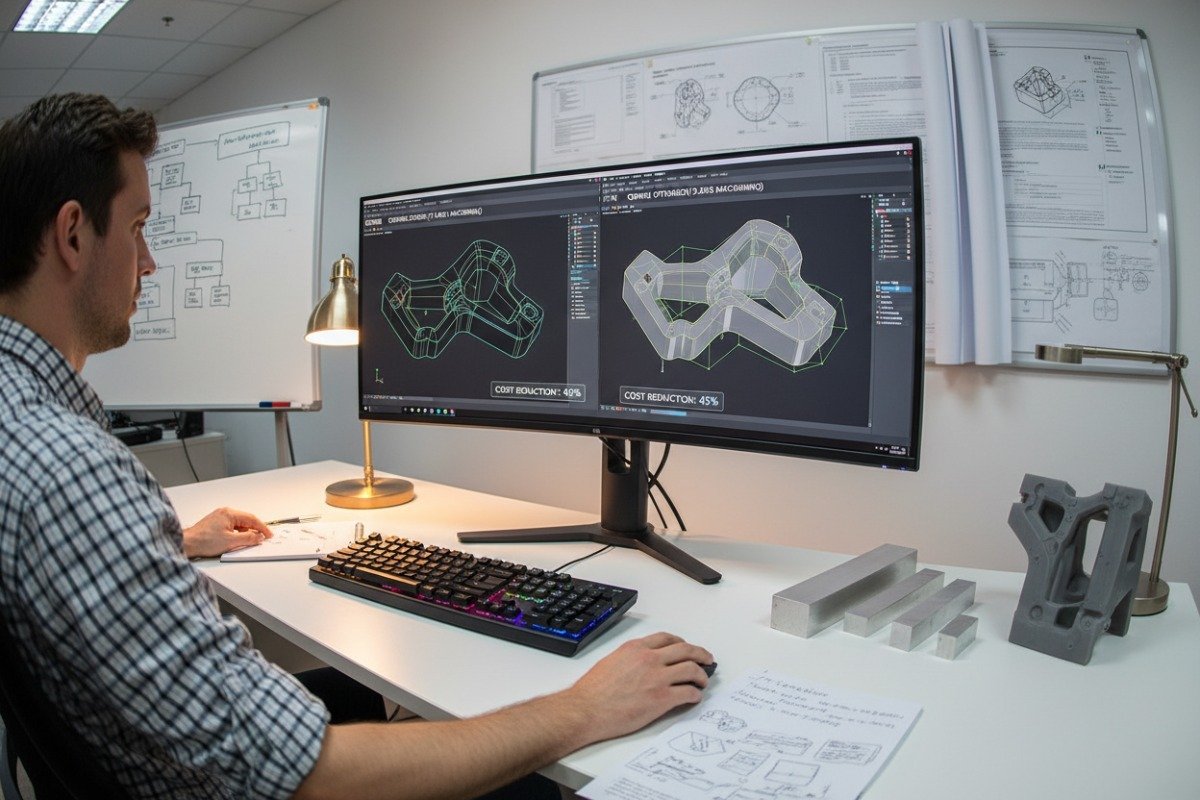
In low volume CNC machining, the biggest cost drivers are not material or machine time alone. Setup, programming, and fixturing often account for the majority of your per-unit cost. Here is how to attack each one.
DFM: Your Biggest Cost Lever
Design for Manufacturability 9 is not just a buzzword. It is the single most effective way to reduce CNC costs on small runs. Here are the most impactful DFM rules we apply:
- Internal corners: Use radii slightly larger than the tool diameter. For example, specify R3.2mm instead of R3mm for a 6mm end mill. This allows the tool to move smoothly without dwelling in corners, reducing cycle time and tool wear.
- Hole depths: Limit to 4–5x the diameter. Deeper holes require peck drilling cycles that dramatically increase machining time.
- Wall thickness: Avoid walls thinner than 1mm for metals. Thin walls vibrate during cutting, causing poor surface finish and potential deformation.
- Undercuts: Redesign features to eliminate undercuts where possible. Each undercut may require a special tool or additional setup.
- Thread depth: Keep threads to 1.5–3x the diameter. Deeper threads add time and risk tap breakage.
Material Selection and Stock Sizes
Choosing the right material stock size is an overlooked cost saver. If your part design calls for a 21mm thick section, the nearest standard stock is likely 20mm or 25mm. Adjusting your design to 19.5mm allows the shop to use 20mm stock with minimal facing, saving material and machining time. Conversely, sticking with 21mm forces the use of 25mm stock, wasting 4mm of material on every part.
| Design Dimension | Nearest Standard Stock | Material Waste | Recommended Action |
|---|---|---|---|
| 21mm thickness | 25mm plate | ~16% waste | Redesign to 19.5mm, use 20mm stock |
| 52mm diameter | 55mm round bar | ~5.5% waste | Acceptable, minor facing needed |
| 38mm width | 40mm flat bar | ~5% waste | Good fit, minimal waste |
| 63mm diameter | 65mm round bar | ~3% waste | Optimal stock selection |
Reduce Setups with Smart Feature Placement
Every time a part is flipped or re-fixtured, it adds time and introduces potential alignment errors. Concentrate your critical features on as few faces as possible. If you can machine a part in two setups instead of four, you may cut your cost by 30% or more.
5-axis CNC machines 10 can access multiple faces in a single setup. While the hourly rate for 5-axis is higher, the total cost is often lower because you eliminate multiple setups and achieve better accuracy. We recommend requesting 5-axis quotes alongside 3-axis quotes for complex parts to compare total costs.
Batch Pricing and Order Strategy
Even in low volume, there are ways to negotiate better pricing. Consolidating multiple part numbers into a single order gives the supplier more efficient scheduling. Committing to repeat orders—even quarterly—can unlock volume-like pricing because the supplier amortizes programming and fixture costs over more parts. We help our clients plan their orders strategically to maximize these savings.
What Steps Should I Take to Verify a Manufacturer's Capabilities for My Custom CNC Parts?
Before we onboard any new factory into our supply chain, our quality team conducts a structured audit that covers equipment, processes, people, and systems. We have learned the hard way that a factory's website and sales pitch rarely tell the full story.
To verify a CNC manufacturer's capabilities, conduct a systematic evaluation: request first article samples with full inspection reports, audit their equipment list and maintenance records, review their quality certifications and control plans, and check references from clients with similar project requirements. On-site or virtual factory audits provide the most reliable verification.
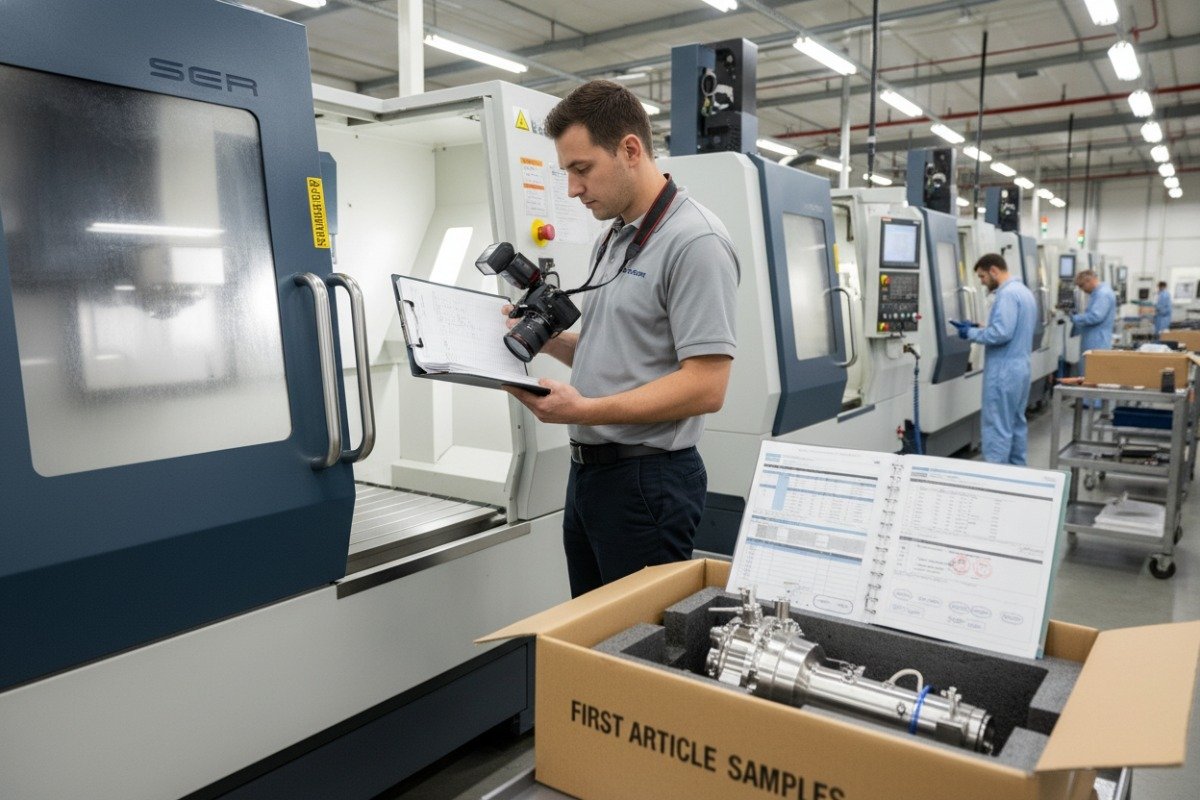
Verifying a manufacturer's capabilities is not just about checking boxes. It is about understanding whether their systems, people, and equipment can consistently deliver what your project demands. Here is a step-by-step approach.
Step 1: Define Your Requirements Clearly
Before you evaluate anyone, get your own requirements straight. Document your volume range, materials, critical tolerances, surface finish requirements, and delivery timeline. A vague RFQ gets vague responses. A detailed RFQ forces suppliers to give you specific answers—and reveals who actually reads your drawings carefully.
Step 2: Request and Evaluate First Articles
A first article is the single best test of a supplier's capability. Send them your most challenging part and ask for a full FAI report with CMM data. Pay attention to:
- Did they hit all critical dimensions?
- Did they flag any DFM concerns before production?
- How long did it take from order to delivery?
- Was the inspection report complete and professional?
If a supplier cannot get the first article right, they will not get the production run right either.
Step 3: Audit Equipment and Systems
Whether you visit in person or conduct a virtual audit, verify these items:
| Audit Area | What to Check | Why It Matters |
|---|---|---|
| Machine List | Brand, model, age, axis count, maintenance logs | Old or poorly maintained machines produce inconsistent results |
| Measuring Equipment | CMM brand/model, calibration certificates, gauge R&R studies | Uncalibrated equipment means unreliable inspection data |
| ERP/MES System | Order tracking, traceability, real-time production status | Manual systems lead to missed deadlines and lost information |
| Operator Training | Training records, certifications, average tenure | High turnover means inconsistent skill levels on the shop floor |
| Material Storage | Organized, labeled, climate-controlled where needed | Poor storage leads to material mix-ups and contamination |
| Tooling Management | Tool life tracking, preset systems, inventory control | Worn tools cause dimensional drift and poor surface finish |
Step 4: Check References and Track Record
Ask the supplier for two or three references from clients in your industry or with similar part complexity. Call those references. Ask specific questions: Did parts arrive on time? Were there quality issues? How did the supplier handle problems when they occurred? A supplier's response to problems tells you more about them than their response to easy orders.
Step 5: Start Small and Scale
Even after a thorough evaluation, start with a small trial order before committing to larger volumes. This real-world test validates everything you learned during the audit. Monitor communication quality, on-time delivery, and dimensional accuracy closely. If the trial goes well, you have a foundation for a long-term partnership. If it does not, you have limited your exposure.
Leveraging Technology for Ongoing Verification
Leading suppliers now integrate their manufacturing data into digital threads that give you real-time visibility from design to delivery. This is especially valuable for regulated industries like aerospace and medical, where traceability is not optional. Some shops are also adopting AI-driven predictive maintenance and process optimization, which reduces unplanned downtime and improves consistency. Ask your potential suppliers what digital tools they use—it is a strong indicator of how seriously they invest in quality and efficiency.
Conclusion
Sourcing low volume CNC machining well comes down to four things: choosing HMLV-specialized suppliers, demanding rigorous quality systems, optimizing designs for manufacturability, and verifying capabilities through real-world testing before scaling up.
Footnotes
1. Replaced with a Wikipedia page for a comprehensive and accessible overview of AS9100. ↩︎
2. Replaced with a Wikipedia page for a comprehensive and accessible overview of IATF 16949. ↩︎
3. Replaced with the official ISO 9001 page for authoritative information. ↩︎
4. Replaced with a Wikipedia page for a broad and authoritative definition of ERP systems. ↩︎
5. Discusses the types, causes, and strategies for managing supply chain disruptions. ↩︎
6. Explains Coordinate Measuring Machine inspection and its importance in precision engineering. ↩︎
7. Details the Production Part Approval Process for validating manufacturing capabilities. ↩︎
8. Replaced with a Wikipedia page for a clear and authoritative definition of First Article Inspection. ↩︎
9. Replaced with a detailed guide on Design for Manufacturability principles. ↩︎
10. Replaced with a comprehensive guide explaining 5-axis CNC machining. ↩︎

 English
 Español de México
 Deutsch
 Français
 Русский
 العربية