
Every week, our project team reviews quotes from fabrication shops across Asia. Some look great on paper but fall apart in execution. Poor communication, missed tolerances, and late deliveries cost buyers thousands of dollars and months of lost time.
Finding the right custom metal fabrication partner requires evaluating their engineering capabilities, quality certifications, material expertise, and communication responsiveness. Total cost depends on material choice, complexity, tolerances, and finishing. Ensuring quality means demanding strict QC processes, and reducing lead times starts with early design collaboration and digital tools.
In this guide, we break down the four biggest questions buyers ask about custom metal fabrication. Each section gives you practical steps you can use right away. Let's get into it.
How Do I Find the Right Custom Metal Fabrication Partner for My Specific Project?
Our engineers have reviewed hundreds of fabrication suppliers across Vietnam, China, Taiwan, and India over the past decade. The difference between a good partner and a bad one often comes down to things you cannot see in a catalog — their process discipline, their willingness to ask questions, and their ability to catch drawing errors before production starts.
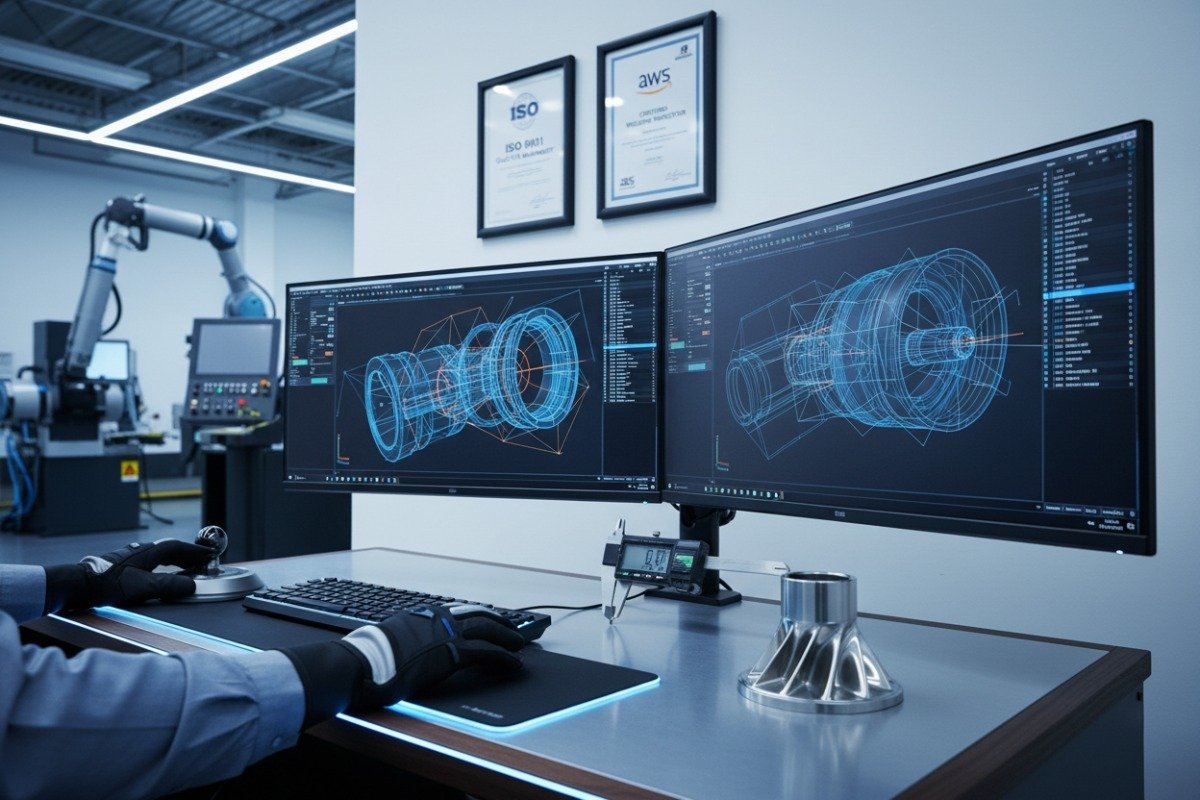
The right custom metal fabrication partner should demonstrate strong CAD/CAM proficiency, hold relevant certifications like AWS or ISO 9001, show experience in your specific industry, communicate proactively, and offer transparent quality control documentation throughout the project lifecycle.
Start with Certifications and Capabilities
Before you send a single drawing, check the basics. Does the shop hold AWS (American Welding Society) certifications? Do they operate under ISO 9001 1 or AS9100 for aerospace work? These certifications are not just badges. They represent documented processes, trained personnel, and auditable systems.
A shop without certifications can still do good work. But when something goes wrong — and it will eventually — there is no system to catch the problem early. You end up with rework, scrap, and delays.
Here is a quick reference for matching certifications to industries:
| Industry | Recommended Certification | Why It Matters |
|---|---|---|
| General manufacturing | ISO 9001 | Ensures consistent quality management systems |
| Aerospace | AS9100 2 / Nadcap | Meets strict tolerance and traceability requirements |
| Automotive | IATF 16949 3 | Covers PPAP, process control, and defect prevention |
| Pressure vessels / tanks | ASME | Ensures safety compliance for pressurized components |
| Welding-intensive work | AWS D1.1 4 / D1.2 | Validates welder qualifications and weld procedures |
Evaluate Communication Before You Evaluate Price
This is where most buyers make mistakes. They send drawings to five shops, pick the lowest quote, and hope for the best. But price tells you very little about capability.
Instead, pay attention to how the supplier responds. Do they ask clarifying questions about your drawings? Do they flag potential manufacturability issues? Do they suggest alternatives that could save cost without sacrificing quality?
In our experience working with U.S. purchasing managers, the suppliers who ask the most questions upfront deliver the fewest problems downstream. A fabricator who simply says "yes, we can do it" to everything is often the one who misses critical requirements.
Check Their Track Record in Your Application
A shop that excels at structural steel for construction may struggle with thin-gauge stainless steel medical enclosures. Fabrication is not one-size-fits-all. Ask for case studies, reference parts, or customer references in your specific sector.
Look for evidence of:
- Experience with your material type (e.g., aluminum vs. Inconel)
- Familiarity with your tolerance ranges
- Capacity to handle your volume — whether it is 10 prototypes or 10,000 production units
- Finishing capabilities that match your requirements (powder coating, electropolishing 5, anodizing)
Visit or Audit the Facility
If the order is significant, visit the shop. If you cannot visit, request a virtual tour or hire a third-party auditor. We conduct supplier audits regularly across Southeast Asia, and the gap between what a supplier claims and what their shop floor shows can be enormous.
Look at their equipment condition, housekeeping, raw material storage, and how they handle in-process inspection. These details reveal more than any sales presentation.
What Factors Will Impact the Total Cost of My Custom Metal Fabrication Order?
When we quote custom fabrication projects for our clients, we break costs into layers. Most buyers focus only on the per-piece price. But the real cost includes tooling, material waste, finishing, inspection, packaging, and freight. Missing any of these layers leads to budget surprises.
Total cost of custom metal fabrication depends on material type and grade, part complexity and tolerances, cutting and forming methods used, welding requirements, surface finishing specifications, order volume, inspection standards, and logistics. Tighter tolerances and specialty materials increase costs significantly.
Material Selection Drives the Baseline
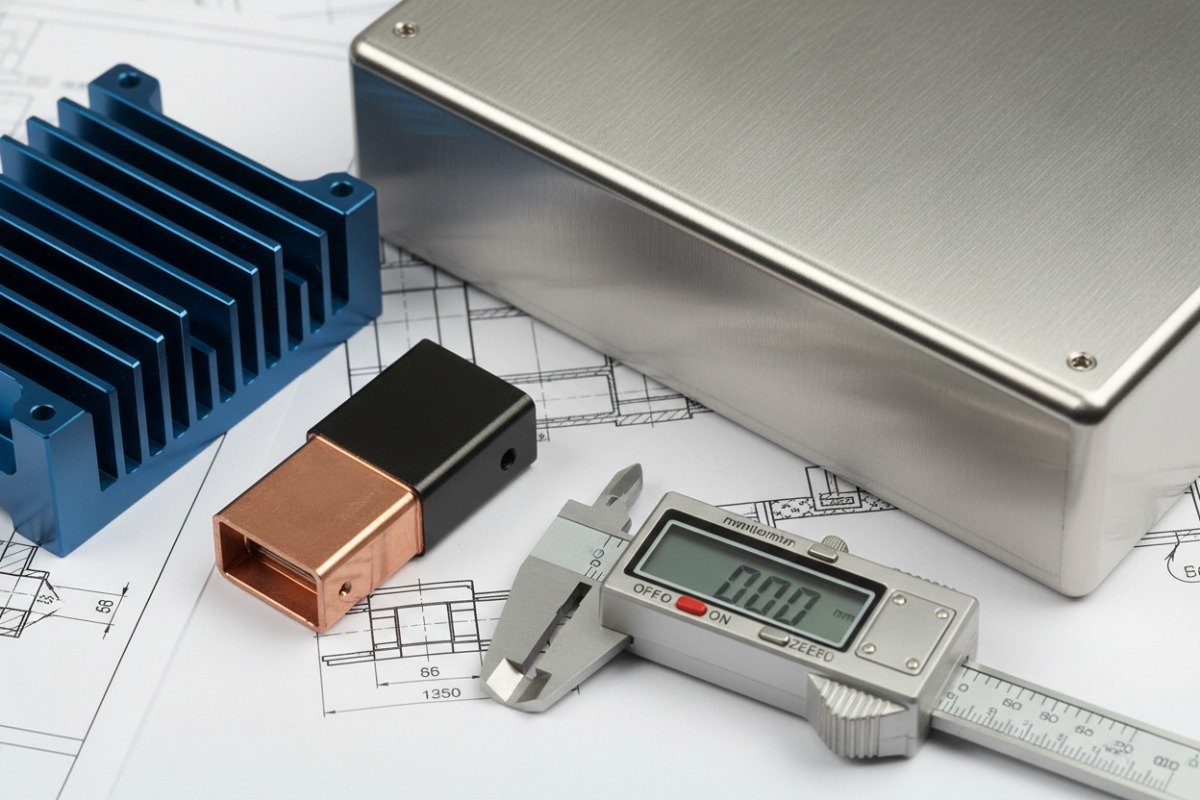
Material cost is the single largest variable. Carbon steel is the most affordable option for structural applications. Stainless steel costs two to three times more but offers corrosion resistance. Aluminum is lightweight but requires specialized welding. Exotic alloys like Inconel or titanium can cost ten times more than mild steel.
Here is a general cost comparison:
| Material | Relative Cost (vs. Carbon Steel) | Best For | Key Trade-Off |
|---|---|---|---|
| Carbon steel | 1x (baseline) | Structural, general purpose | Requires coating to prevent rust |
| Stainless steel 304 | 2.5–3x | Food, chemical, marine environments | Harder to machine, higher tool wear |
| Aluminum 6061 | 2–2.5x | Lightweight assemblies, enclosures | Lower strength, requires TIG welding |
| Copper / Brass | 3–4x | Electrical, decorative applications | Soft, scratches easily |
| Titanium | 8–12x | Aerospace, medical implants | Extremely difficult to fabricate |
Complexity and Tolerances Add Cost Layers
A simple flat bracket with ±0.5 mm tolerance is cheap to make. A multi-bend enclosure with ±0.1 mm tolerance and welded internal stiffeners is not. Every additional bend, hole, weld, and tight tolerance adds setup time, programming time, and inspection time.
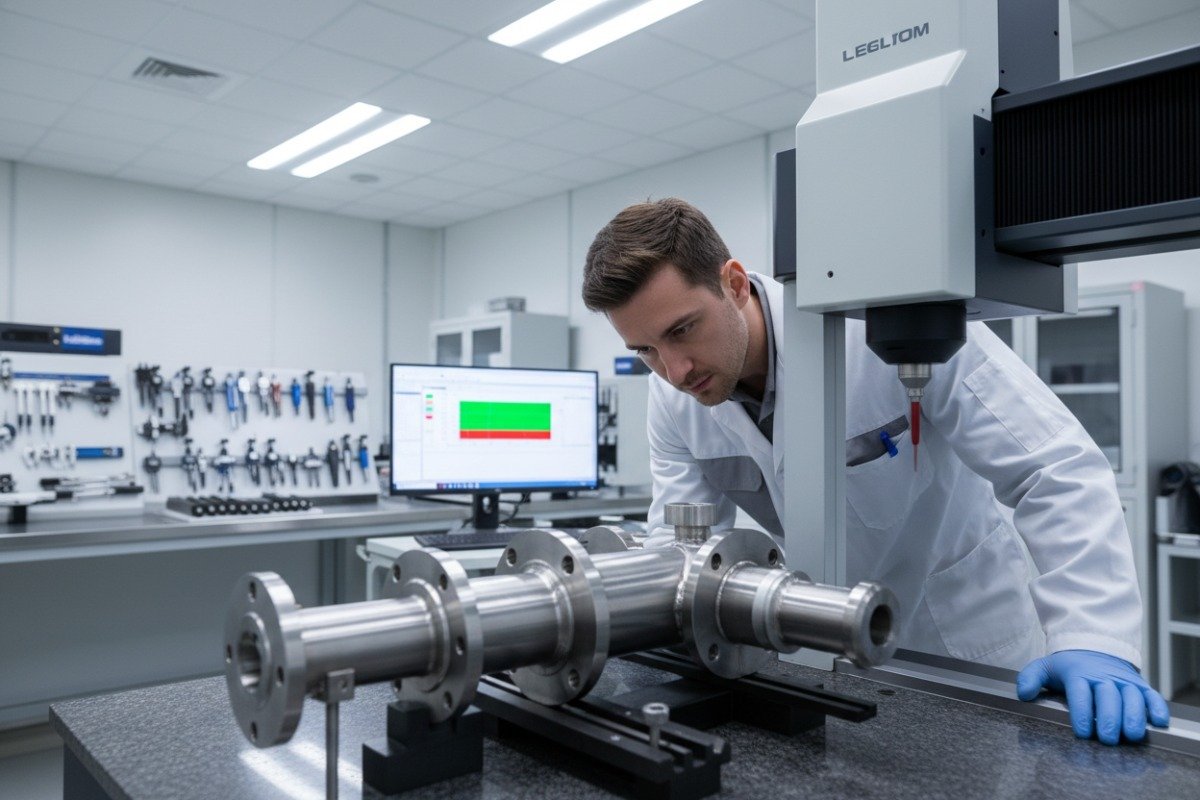
Aerospace parts often demand tolerances of ±0.025 mm (±0.001 inches). Achieving this requires CNC machining after fabrication, precision fixturing, and CMM (coordinate measuring machine) 6 inspection. These steps can double or triple the cost compared to commercial-grade tolerances.
Finishing and Post-Processing
Surface finishing is often underestimated in budgets. A raw fabricated part might cost $50. Adding grit blasting, priming, and powder coating could add $15–$25 per part. Electropolishing stainless steel for pharmaceutical applications can add even more.
Specify your finishing requirements clearly in your RFQ. Vague terms like "smooth finish" lead to disputes. Use Ra (surface roughness) values or reference standards like SSPC-SP5 7 for blast cleaning.
Volume and Tooling Amortization
Low-volume orders carry higher per-piece costs because setup and programming time get spread across fewer parts. If you need custom dies for stamping or custom jigs for welding, those tooling costs can range from $500 to $50,000 depending on complexity.
For orders above 1,000 pieces, tooling costs become negligible per unit. For prototype runs of 5–20 pieces, tooling can represent 30–50% of the total order cost. Plan your volumes carefully and discuss tooling ownership with your fabricator upfront.
How Can I Ensure My Custom Metal Parts Meet My Industry's Quality Standards?
On our production floor, we have seen what happens when quality control is treated as an afterthought. A batch of 500 welded brackets shipped to a U.S. client last year — from a different supplier — came back because 30% had porosity in the welds. The root cause was simple: no in-process weld inspection. The cost of that failure was six figures.
Ensuring custom metal parts meet industry quality standards requires implementing a structured quality plan that includes incoming material inspection, in-process checks at each fabrication stage, certified weld procedures, dimensional verification using calibrated instruments, and final inspection with documented reports before shipment.
Define Your Quality Requirements Before Production Starts
Quality problems almost always start with unclear specifications. If your drawing says "surface must be clean" but does not define what "clean" means, you will get different interpretations from every shop.
Be specific. Reference industry standards. Here are common standards by sector:
| Industry | Key Quality Standards | What They Cover |
|---|---|---|
| General manufacturing | ISO 9001, ISO 2768 | Quality management, general tolerances |
| Aerospace | AS9100, AMS specs | Traceability, material certs, process control |
| Automotive | IATF 16949, PPAP | Production part approval, SPC, FMEA |
| Welding | AWS D1.1, ISO 3834 | Weld procedure specs, welder qualifications |
| Medical devices | ISO 13485 8 | Biocompatibility, cleanroom fabrication |
| Food equipment | 3-A Sanitary Standards | Surface finish, material grade, cleanability |
Implement a Stage-Gate Inspection Process
Do not wait until the parts are finished to check quality. By then, it is too late. Effective quality control happens at every stage:
Incoming material inspection — Verify material certificates (mill certs) match your specifications. Check dimensions of raw stock. Reject anything that does not conform.
First article inspection (FAI) — Before running the full batch, produce one or a few parts. Measure every dimension. Compare to the drawing. Get buyer approval before proceeding.
In-process inspection — After cutting, check dimensions. After bending, verify angles. After welding, inspect for porosity, undercut, and distortion. Use go/no-go gauges for repetitive checks.
Final inspection — Measure all critical dimensions. Perform visual inspection under proper lighting. Run any required tests (hardness, pull tests, leak tests). Document everything.
Demand Documentation
A good fabricator provides inspection reports, material certificates, weld procedure specifications (WPS), and welder qualification records (WQR). If your supplier cannot provide these documents, that is a red flag.
For critical applications, consider third-party inspection. Companies like SGS, Bureau Veritas, or TÜV can perform independent verification at the factory before shipment. This adds cost but prevents far more expensive problems at your end.
Address the Skills Gap
One often-overlooked quality factor is the skill level of the people doing the work. Automated CNC cutting achieves 99%+ accuracy. But welding, grinding, and assembly still depend heavily on human skill. Ask your fabricator about their welder training programs, certification status, and employee retention rates. High turnover means inconsistent quality.
We invest heavily in training our team members. A welder who has been with us for five years produces fundamentally different work than a new hire, regardless of the equipment they use.
What Steps Can I Take to Reduce Lead Times for My Custom Metal Fabrication Needs?
When we manage fabrication projects for clients shipping into the U.S., lead time is often the number one concern — even more than price. A two-week delay on a custom bracket can shut down an entire assembly line. We have learned that reducing lead time is not about rushing. It is about removing waste from the process before it starts.
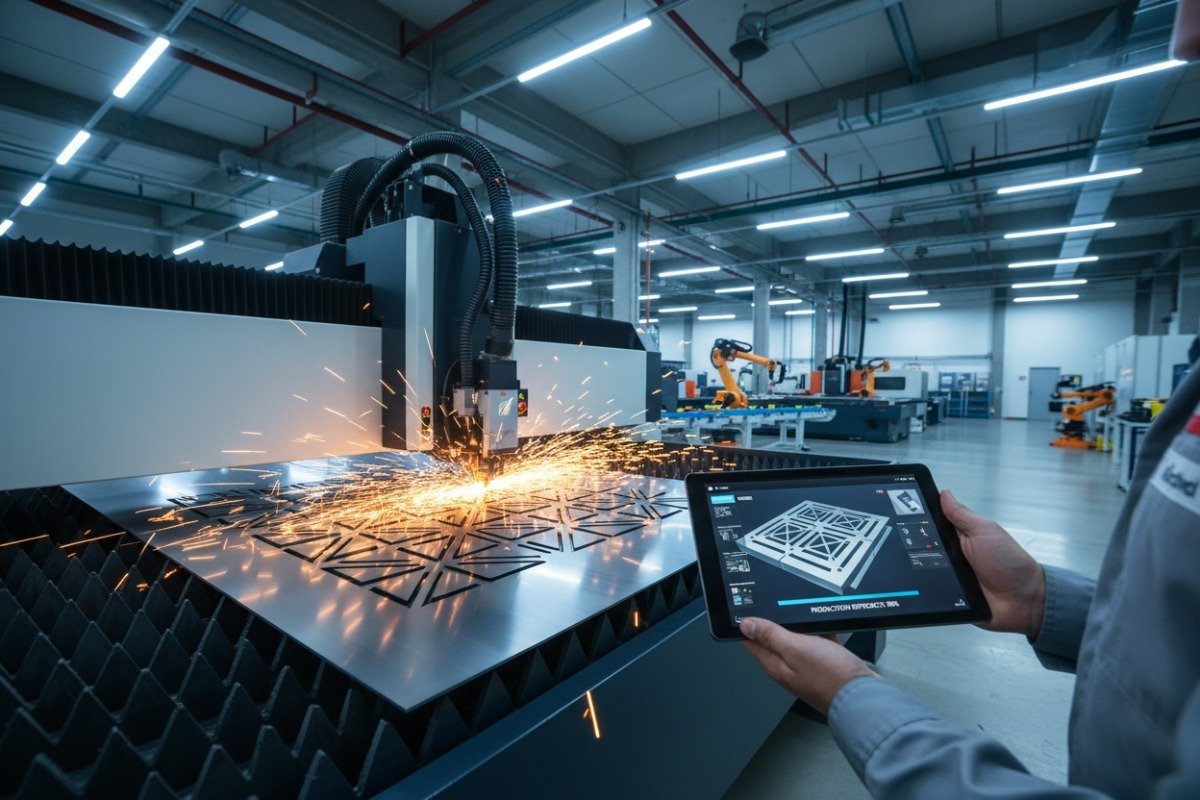
Reducing lead times for custom metal fabrication requires early design collaboration, providing complete and accurate drawings upfront, selecting readily available materials, simplifying tolerances where possible, leveraging digital tools like CAD/CAM and digital twins, and maintaining clear communication with your fabricator throughout the project.
Fix the Design Phase First
The biggest source of delay is not on the shop floor. It is in the design phase. Incomplete drawings, missing tolerances, unclear material callouts, and late revisions cause more schedule slippage than any machine breakdown.
Before you send your RFQ, make sure your drawing package includes:
- Complete dimensioning with GD&T (Geometric Dimensioning and Tolerancing) 10 where needed
- Material grade and specification (e.g., ASTM A36, not just "mild steel")
- Surface finish requirements with measurable values
- Weld symbols and weld quality class
- Coating or plating specifications with color and thickness
Every question your fabricator has to ask — and wait for your answer — adds days to the schedule.
Choose Materials Strategically
Exotic materials have long procurement lead times. Titanium plate might take 8–12 weeks to source. Standard carbon steel or 304 stainless steel is usually available from stock within days.
If your design allows flexibility, discuss material alternatives with your fabricator early. Sometimes switching from 316L stainless to 304 stainless — or from a specific alloy to a commercial equivalent — can cut material lead time from weeks to days without compromising performance.
Leverage Digital Tools
Modern fabrication shops use CAD/CAM software to go directly from your 3D model to CNC programming. This eliminates manual programming time and reduces errors. Shops that still rely on manual layout and hand programming are inherently slower.
Digital twin technology is also gaining traction. A digital twin lets you simulate the entire fabrication process virtually before cutting any metal. Our team uses this approach to identify potential issues — like weld distortion or forming springback — before they happen on the shop floor. Industry data suggests digital twins can reduce lead times by up to 20%.
Build a Relationship, Not Just a Transaction
One-time orders always take longer than repeat orders. When you build a long-term relationship with a fabricator, they learn your standards, stock your preferred materials, and prioritize your work. They also become better at anticipating your needs.
We keep safety stock of common materials for our repeat clients. When a new order comes in, we can start cutting the same week instead of waiting for material procurement. This alone can shave two to three weeks off a typical project timeline.
Parallel Processing
Traditional fabrication follows a linear sequence: design → material procurement → cutting → forming → welding → finishing → inspection → shipping. But many of these steps can overlap.
For example, while long-lead materials are being procured, your fabricator can begin programming CNC machines, building fixtures, and qualifying weld procedures. Finishing materials like powder coat or paint can be ordered in parallel with fabrication. Smart scheduling compresses the timeline without cutting corners.
Here is a comparison of linear versus parallel processing for a typical project:
| Phase | Linear Timeline | Parallel Timeline | Time Saved |
|---|---|---|---|
| Material procurement | Week 1–3 | Week 1–3 | — |
| CNC programming & fixture build | Week 4 | Week 1–2 (parallel) | 2 weeks |
| Cutting & forming | Week 5–6 | Week 3–4 | 1 week |
| Welding & assembly | Week 7–8 | Week 5–6 | 1 week |
| Finishing | Week 9 | Week 7 | 1 week |
| Final inspection & shipping | Week 10 | Week 8 | 2 weeks |
| Total | 10 weeks | 8 weeks | ~20% |
This is not theoretical. We use parallel processing on most of our projects. It requires more coordination, but the time savings are real and consistent.
Conclusion
Custom metal fabrication success comes down to four things: the right partner, cost transparency, disciplined quality control, and smart lead time management. Get these right, and your projects run smoothly. Get them wrong, and you pay the price in rework, delays, and frustration.
Footnotes
1. Explains the international standard for quality management systems. ↩︎
2. Details the quality management system standard for the aerospace industry. ↩︎
3. Explains the automotive industry’s quality management system standard. ↩︎
4. Provides details on the structural welding code for steel. ↩︎
5. Explains the electrochemical finishing process for metal surfaces. ↩︎
6. Describes the function and importance of coordinate measuring machines in quality control. ↩︎
7. Details the industry standard for white metal blast cleaning for surface preparation. ↩︎
8. Provides information on the quality management system for medical devices. ↩︎
9. Explains the process of verifying the first produced part against specifications. ↩︎
10. Explains the system for defining and communicating engineering tolerances. ↩︎

 English
 Español de México
 Deutsch
 Français
 Русский
 العربية