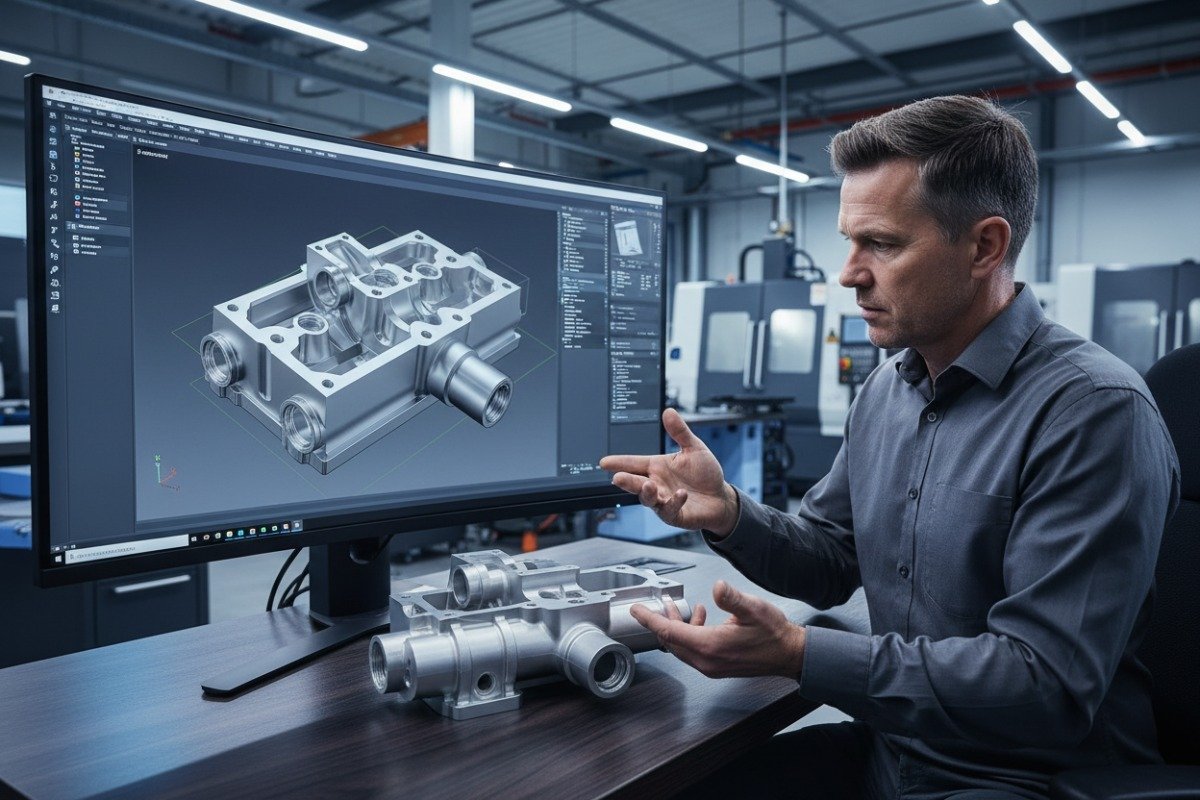
Every week, our project team reviews cases where clients lost months to suppliers who misread drawings or changed materials without asking intellectual property 1. It is frustrating and expensive.
Build to print manufacturing is a contract model where the client provides complete designs—CAD files, blueprints, BOMs, tolerances, and quality requirements—and the manufacturer produces parts exactly to those specifications without altering the design, keeping full IP control with the client.
This guide walks you through how to decide if build to print fits your project, how to vet the right partner, how to prepare your technical package, and what benefits you can expect. Let's get into it.
How Do I Determine If Build to Print Is the Right Manufacturing Model for My Project?
Our engineering team in Vietnam often gets requests from clients who are unsure whether they need build to print or build to spec. The confusion costs them time, money, and sometimes entire production runs.
Build to print is the right model when your design is mature and frozen, you need exact replication without modification, and you want to retain full control over intellectual property, materials, and tolerances throughout the manufacturing process.
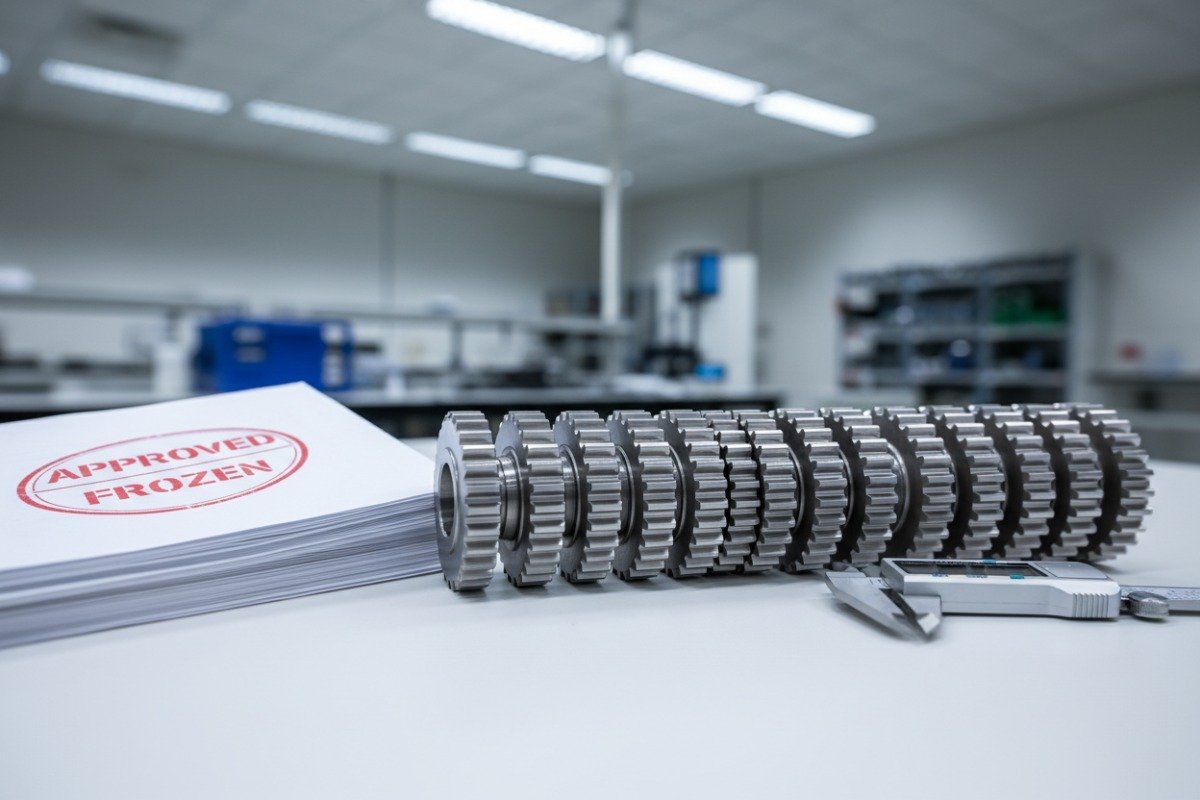
Understanding the Two Models
The first step is knowing the difference between build to print and build to spec. They sound similar but serve very different purposes.
In build to print, you hand over everything. Your CAD files, your blueprints, your bill of materials, your surface finish requirements, your testing protocols. The manufacturer follows your instructions to the letter. They do not suggest alternative materials. They do not redesign your part for easier machining. They build what you drew.
In build to spec, you give high-level parameters. You might say, "I need a bracket that holds 500 lbs, made from stainless steel, with a corrosion-resistant finish." The manufacturer then decides the thickness, the alloy grade, the machining approach, and the finishing method.
When Build to Print Makes Sense
Here are the situations where build to print is clearly the better choice:
- Your design has been validated and tested.
- You need identical parts across multiple production runs.
- You are in a regulated industry 2 (aerospace, defense, medical) where design changes require re-qualification.
- You want to scale production without sharing design authority.
- Your in-house capacity is maxed out and you need overflow support.
When Build to Spec Might Be Better
Build to spec works when your design is still evolving or when you want a manufacturer's input on material selection and process optimization. Early-stage projects benefit from this flexibility. But once your design is locked, switching to build to print eliminates interpretation risk.
Decision Matrix
| Factor | Build to Print | Build to Spec |
|---|---|---|
| Design maturity | Frozen / validated | Early stage / flexible |
| IP control | Full client control | Shared with manufacturer |
| Documentation required | Complete (CAD, BOM, tolerances) | High-level parameters only |
| Risk of misinterpretation | Low (if docs are thorough) | Moderate to high |
| Best for | Regulated industries, scaling | Prototyping, cost optimization |
| Typical cost savings vs in-house | 20–40% on overhead | 10–25% via process optimization |
Industry data shows that 65% of OEMs now use build to print for production parts, reporting 70% faster lead times compared to in-house builds. In regulated fields, design continuity through build to print accelerates approval timelines by roughly 25%.
A Common Mistake We See
From our experience managing projects across Vietnam and China, one of the biggest mistakes clients make is choosing build to spec when their design is already finalized. They assume the manufacturer will "figure it out." But that opens the door to material substitutions, process shortcuts, and dimensional deviations that create non-conforming parts. If your drawing is done, lock it down and go build to print.
The global contract manufacturing market 3—including build to print—is projected to reach $200 billion by 2028, growing at 7–10% CAGR. OEMs are outsourcing 30–50% of non-core production to reduce costs. Build to print is the backbone of that trend.
What Key Criteria Should I Use to Vet and Select a Reliable Build to Print Partner?
When we onboard a new client at DEWIN, the first thing we share is our quality system documentation, certifications, and reference projects. We believe transparency upfront saves everyone headaches later.
To select a reliable build to print partner, evaluate their certifications (ISO, AS9100), in-house manufacturing capabilities, quality management systems, engineering support for technical transfer, communication responsiveness, and track record with similar projects in your industry.
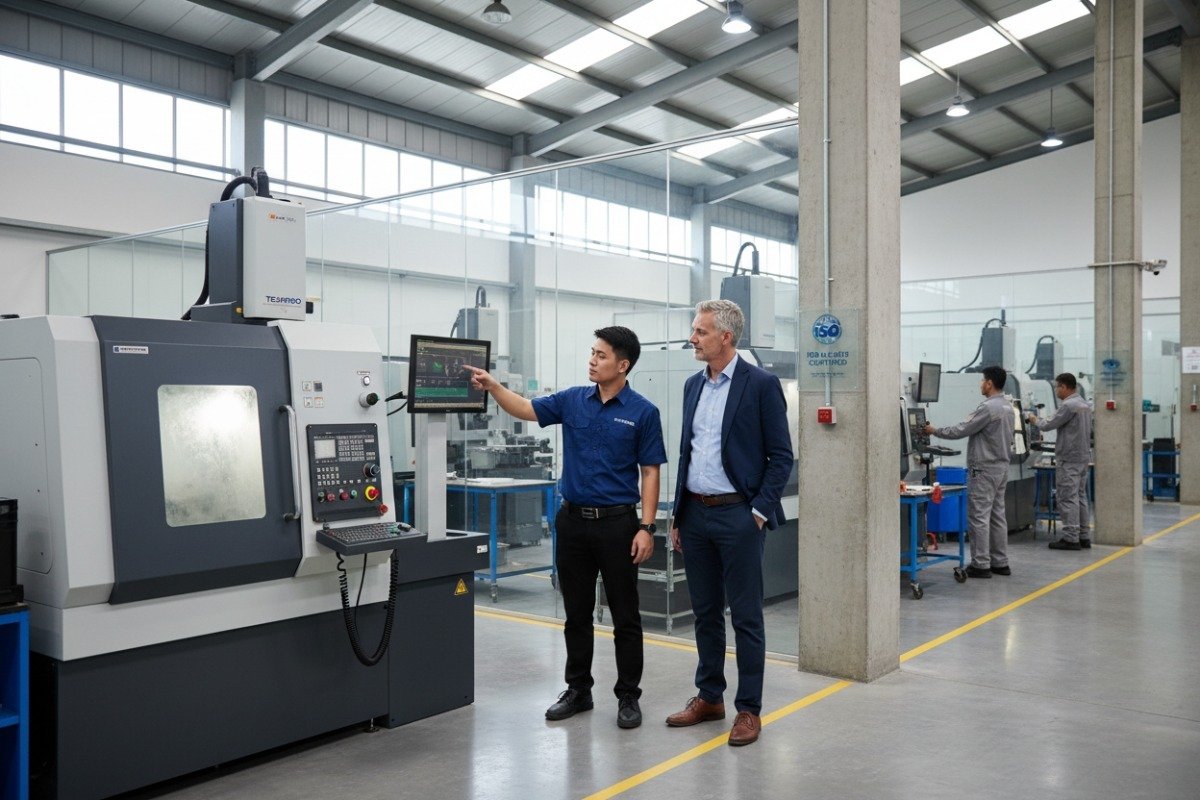
Certifications Matter—But They Are Not Everything
ISO 9001 4 is the baseline. If your partner does not have it, walk away. For aerospace, look for AS9100. For automotive, IATF 16949 5. For medical devices, ISO 13485. These certifications prove the manufacturer has documented processes and undergoes regular audits.
But certifications alone do not guarantee good results. We have seen ISO-certified factories deliver late, miss tolerances, and ignore drawing notes. You need to dig deeper.
Capability Matching
Your partner must have the right equipment and expertise for your specific parts. Ask these questions:
- Do they have in-house CNC machining, sheet metal fabrication, welding, or assembly—whatever your project requires?
- Can they handle your material specifications (exotic alloys, engineering plastics, specialty coatings)?
- Do they have inspection equipment matching your tolerance requirements (CMM, optical comparators, surface roughness testers)?
A vertically integrated partner is a major advantage. When one facility handles sourcing, fabrication, quality control, and fulfillment, you reduce handoffs. Fewer handoffs mean less variability, shorter lead times, and lower shipping risk.
Partner Evaluation Scorecard
| Evaluation Criteria | Weight | What to Look For |
|---|---|---|
| Certifications | 20% | ISO 9001, AS9100, IATF 16949, ISO 13485 |
| Manufacturing capabilities | 25% | Equipment matching your process needs |
| Quality management system 6 | 20% | Incoming inspection, in-process control, final inspection, FAI |
| Engineering support | 15% | DFM feedback, technical transfer capability, FMEA |
| Communication & responsiveness | 10% | Dedicated project manager, response within 24 hours |
| Track record & references | 10% | Case studies, client testimonials, similar industry experience |
The Supplier Audit
Never skip the supplier audit. Whether you visit in person or use a third-party auditor, you need to verify what you have been told. Check the shop floor. Look at how they store raw materials. Review their non-conformance logs. Ask to see their corrective action records. A factory that hides its problems will create problems for you.
Our team in Vietnam conducts supplier audits as a core service. We check everything from machine maintenance logs to operator training records. The factories that welcome scrutiny are the ones worth working with.
Communication Is Non-Negotiable
Build to print depends on precise execution of your documentation. If your partner cannot communicate clearly, they will miss details. Look for partners who assign a dedicated project manager, provide regular status updates, and escalate issues proactively rather than waiting for you to discover them.
One pattern we have noticed over years of exporting to the US: the best partners are the ones who ask the most questions during the quoting phase. If a manufacturer looks at a 15-page drawing package and comes back with zero questions, that is a red flag. It usually means they did not read it carefully.
Payment Terms and Financial Stability
For US-based purchasing managers, payment terms matter. Many Asian suppliers demand 100% upfront or T/T before shipment. A partner who offers open account terms (net 60 or net 90) shows financial stability and confidence in the relationship. It also eases your cash flow during ramp-up.
How Can I Ensure My Technical Drawings and Specifications Are Ready for a Build to Print Quote?
Our project engineers spend a surprising amount of time clarifying incomplete drawings. Vague tolerances and missing material callouts are the top two reasons quotes get delayed—or worse, parts come back wrong.
To ensure your technical package is quote-ready, provide complete CAD files, fully dimensioned drawings with GD&T, material and finish specifications, a detailed bill of materials, critical-to-function callouts, inspection criteria, and testing protocols for every part.
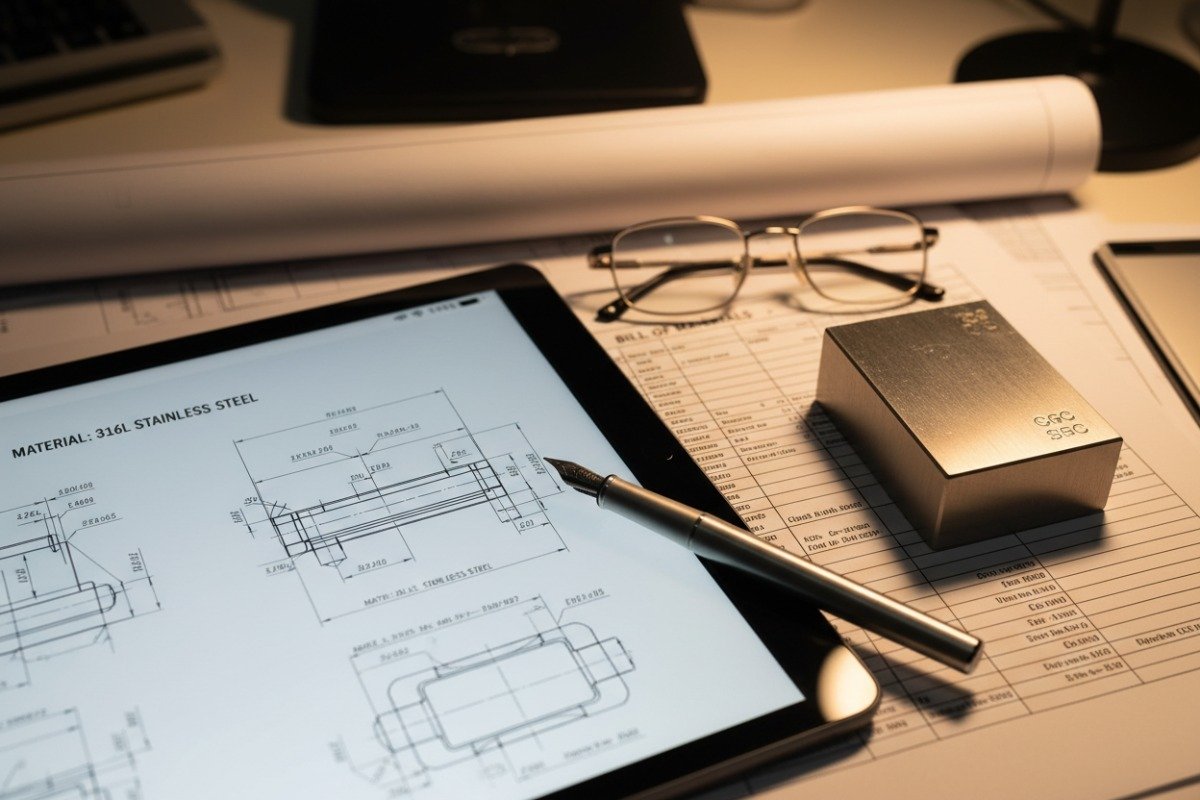
Why Documentation Quality Drives Everything
In build to print, your drawings are the contract. The manufacturer builds exactly what you document. If your drawing is ambiguous, the manufacturer will interpret it—and their interpretation may not match your intent. Industry data shows that vague tolerances cause 15–20% rework rates. That is money, time, and trust wasted.
The Complete Technical Package Checklist
Here is what a quote-ready technical package should include:
- 2D drawings with full dimensions, GD&T callouts, and revision control
- 3D CAD files (STEP, IGES, or native format)
- Bill of materials (BOM) listing every component, material grade, and quantity
- Material specifications including grade, temper, condition, and approved equivalents
- Surface finish requirements (Ra values, plating, painting, anodizing specs)
- Critical-to-function (CTF) characteristics clearly marked on drawings
- Inspection and testing protocols (what gets measured, how, and acceptance criteria)
- Packaging and shipping requirements if applicable
- Reference standards (ASTM, ASME, MIL-SPEC, or customer-specific standards)
Common Documentation Gaps
| Documentation Gap | Impact on Manufacturing | How to Fix |
|---|---|---|
| Missing tolerances on non-critical dimensions | Manufacturer applies shop standards; parts may not fit assembly | Apply general tolerance block per ISO 2768 or ASME Y14.5 |
| No material grade specified (e.g., "stainless steel" only) | Manufacturer picks cheapest option; corrosion or strength issues | Specify exact grade (e.g., 304L, 316, 17-4PH) |
| Ambiguous surface finish callouts | Parts look different across batches | Specify Ra value and method (e.g., Ra 1.6 µm, bead blast) |
| No revision number or date | Wrong version gets quoted or built | Add revision block with date, author, and change log |
| Missing assembly context | Manufacturer cannot flag interference or fit issues | Include assembly drawings or reference images |
The First Article Inspection (FAI) Connection
Your documentation directly determines the quality of your FAI. First Article Inspection (FAI) 7 A first article inspection checks whether the first production part matches every requirement on your drawing. If your drawing is incomplete, your FAI will have gaps. And if your FAI has gaps, you have no baseline for ongoing production control.
We always recommend clients prepare an FAI plan alongside their drawing package. Define which dimensions are critical. Specify which tests are required (hardness, tensile strength, salt spray). Identify pass/fail criteria before production starts—not after the first shipment arrives.
Structured Technical Transfer
The best build to print programs follow a phased approach to technical transfer. Here is a model we use:
- Phase 0 – Technical Transfer & FMEA: Review all drawings, identify risks, conduct a failure mode and effects analysis, and resolve questions before quoting.
- Phase 1 – Documentation Lock-In: Finalize revision-controlled drawings, BOMs, and work instructions. No changes allowed after this gate without formal engineering change notice.
- Phase 2 – Qualification Builds: Produce sample parts, conduct FAI, validate work instructions, and confirm process capability (Cpk) 8.
- Phase 3 – Production Ramp: Begin serial production with ERP-driven scheduling, in-process controls, and regular reporting.
This structured approach ensures repeatability from the first pilot part to the ten-thousandth production unit. Skipping phases is tempting when deadlines are tight, but it almost always leads to rework or delays down the road.
A Practical Tip
Before sending your package to a potential partner, do a self-review. Print the drawing. Pretend you are seeing it for the first time. Can you build the part from this drawing alone, without calling the designer? If the answer is no, the drawing is not ready.
What Are the Main Benefits I Can Expect When I Outsource My Production to a Build to Print Specialist?
Over the past decade, our team has helped dozens of US clients move production from overburdened in-house shops to dedicated build to print partners across Asia. The results speak for themselves.
Outsourcing to a build to print specialist delivers reduced overhead costs, faster time-to-market, access to specialized manufacturing expertise, consistent quality through client-defined inspection criteria, and scalable production capacity from prototypes to high-volume runs.
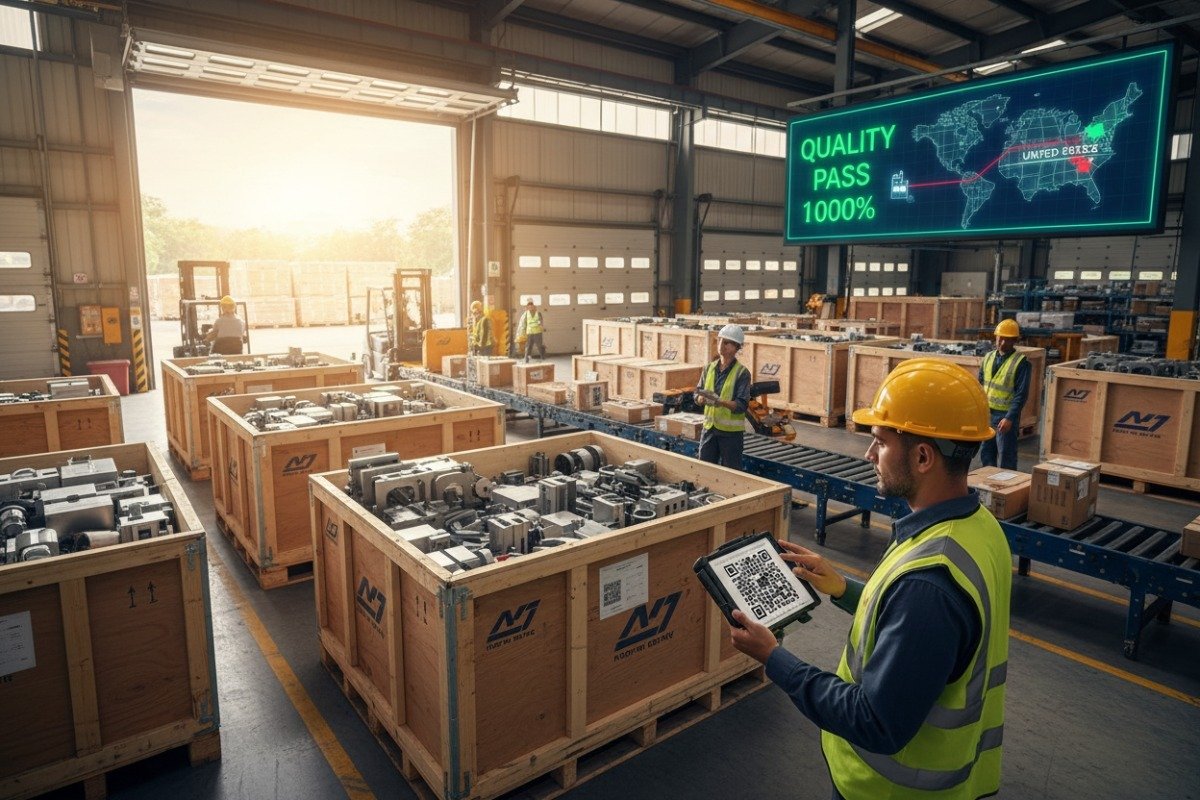
Cost Reduction Without Compromising Quality
The most immediate benefit is cost savings. You avoid capital investment in machinery, facility expansion, and specialized labor. Industry reports show OEMs save 20–40% on overhead by outsourcing non-core production. Your fixed costs become variable costs. You pay for what you need, when you need it.
But cost reduction only matters if quality holds. That is why the "build to print" model is so powerful. Your quality requirements are baked into the documentation. The manufacturer follows your inspection criteria, not theirs. You define what "good" looks like.
Faster Time-to-Market
When your in-house shop is backed up with existing orders, a new product launch stalls. A build to print partner gives you overflow capacity. They can start production while your team focuses on engineering and sales. In regulated industries, build to print is especially valuable because your proven design transfers without re-qualification. Data shows 25% faster approval timelines when design continuity is maintained.
Access to Specialized Expertise
Not every company can afford a five-axis CNC machine, an electron beam welder, or a Class 10000 cleanroom. Build to print partners invest in these capabilities because they serve multiple clients. You get access to world-class equipment and operators without owning any of it.
Scalability and Flexibility
Need 50 prototypes this quarter and 5,000 production units next quarter? A good build to print partner scales with you. They manage capacity planning, raw material procurement, and labor allocation. You focus on selling.
Summary of Key Benefits
| Benefit | What It Means for You | Typical Impact |
|---|---|---|
| Reduced overhead | No capital investment in equipment or facilities | 20–40% cost savings |
| Faster time-to-market | Parallel production while you focus on core activities | 70% faster lead times vs in-house |
| Specialized expertise | Access to advanced machining, welding, assembly, testing | Broader capability without ownership |
| Consistent quality | Client-defined inspection criteria and FAI baselines | 90% first-pass success rate with detailed specs |
| Scalability | Ramp from prototype to volume without capacity constraints | Flexible production scheduling |
| IP protection | Full design ownership stays with the client | Zero design authority given to manufacturer |
Risk Mitigation Through the Right Partner
Critics of outsourcing often point to risks like vendor dependency, IP exposure, and communication breakdowns. These are real concerns—but they are manageable. Diversify your supply base across at least two partners. Use NDAs and clear contractual protections. Choose partners who offer dedicated project managers and proactive communication.
From our work coordinating production between Vietnam and the US, we have found that the biggest risk is not outsourcing itself. The biggest risk is outsourcing to the wrong partner. When specs are detailed and the partner is vetted, success rates reach 90%.
The Trend Toward Vertical Integration and Digital Manufacturing
The industry is moving fast. Manufacturers are adopting digital twins for virtual verification before cutting metal. AI-enhanced quality prediction is reducing defect rates. ERP-driven scheduling is improving on-time delivery. Supply chain disruptions 10 since 2020 have accelerated the shift toward geographically diversified, resilient sourcing networks.
Companies sourcing from Asia are increasingly looking beyond China. Vietnam, Taiwan, and India are growing as build to print destinations. Our team on the ground in Vietnam sees this firsthand—new factories opening, certifications being earned, and quality standards rising every year.
The future of build to print is not just about following drawings. It is about integrating digital threads from PLM to MES, enabling real-time traceability, and building supply chains that can absorb shocks without missing delivery dates.
Conclusion
Build to print manufacturing gives you precision, control, and scalability—if you prepare your documentation, vet your partner rigorously, and maintain clear communication throughout the process.
Footnotes
1. Authoritative source from the World Intellectual Property Organization (WIPO) defining intellectual property. ↩︎
2. Corrected Wikipedia URL for regulated markets, which encompasses regulated industries. ↩︎
3. Offers data and trends about the contract manufacturing industry. ↩︎
4. Explains the international standard for quality management systems. ↩︎
5. Details the quality management system standard specific to the automotive industry. ↩︎
6. Describes the framework for maintaining consistent quality in production. ↩︎
7. Explains the process of verifying the first production part against specifications. ↩︎
8. Defines a statistical measure of a process’s ability to produce output within limits. ↩︎
9. Defines the core concept of build to print. ↩︎
10. Discusses challenges and strategies related to global supply chains. ↩︎

 English
 Español de México
 Deutsch
 Français
 Русский
 العربية