
Every week, our project managers review new custom part inquiries from U.S. buyers who’ve been burned by vague specs, missed deadlines, or parts that simply don’t match the drawing ISO 9001 certifications 1.
Sourcing high-quality made-to-print parts from China requires detailed technical drawings, thorough supplier vetting with factory audits, a structured quality control process including DFM reviews, prototyping, and First Article Inspection, plus clear IP protection agreements and proactive logistics planning to control lead times and costs.
Below, we break down the entire process into four practical steps Non-Disclosure Agreements 2. Each one draws on real production floor experience and addresses the exact pain points purchasing managers face when working with Asian suppliers.
How Do I Find and Vet a Reliable Chinese Manufacturer for My Custom-Designed Parts?
Our team in China screens dozens of potential suppliers every quarter, and we’ve learned that the ones who look great on paper can fall apart once production starts.
To find and vet a reliable Chinese manufacturer, start by sourcing candidates through platforms like Alibaba or industry referrals, then verify their business licenses, ISO 9001 certifications, and export history before conducting an on-site factory audit to assess equipment, capacity, workforce skill, and quality culture.
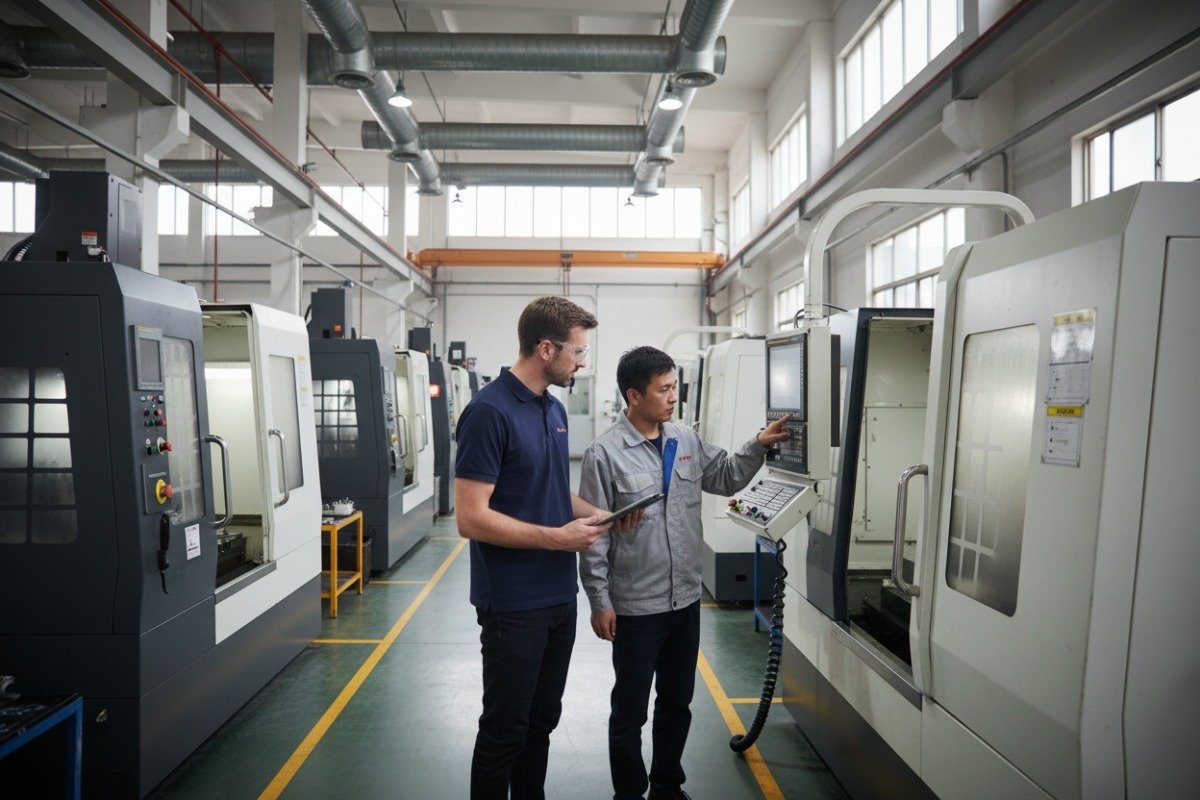
Finding the right supplier is the foundation of your entire sourcing project. Skip this step and everything downstream — quality, delivery, cost — suffers. Let’s walk through how to do it right.
Where to Start Your Supplier Search
Most U.S. purchasing managers begin on Alibaba, Global Sources, or Made-in-China. These platforms let you filter by product type, certification, and export region. But listings alone don’t tell you much. We always recommend sending a detailed RFQ (Request for Quotation) to at least 5–8 suppliers. Include your 2D/3D drawings, material specs, and target quantity. The quality of their response tells you a lot about their capability.
A supplier who asks smart technical questions is usually better than one who simply says “yes, we can do it.”
What to Check During Vetting
Once you narrow down to 2–3 candidates, dig deeper. Here’s what to verify:
| Vetting Criteria | What to Look For | Red Flag |
|---|---|---|
| Business License | Valid and matches factory name | Expired or mismatched entity |
| ISO 9001 Certification | Current, issued by accredited body | Self-declared or expired |
| Export Experience | Shipped to U.S./EU in last 2 years | No Western market experience |
| Equipment List | CNC machines, CMMs, testing tools | Outdated or insufficient capacity |
| References | Willing to share 2–3 client contacts | Refuses or deflects |
| Communication | Responds within 24 hours, asks questions | Slow, vague, or yes-to-everything |
The Factory Audit — Don’t Skip It
We conduct on-site audits for every new supplier we onboard. During an audit, our engineers walk the production floor, inspect equipment maintenance logs, review past quality records, and talk directly with machine operators. You can hire a third-party audit firm if you can’t visit yourself. Companies like SGS, Bureau Veritas, or Asia Inspection offer standardized factory audit services.
Pay special attention to the supplier’s quality culture. Do they have a dedicated QC team? How do they handle non-conformances? Do workers follow documented procedures or just wing it? One thing we’ve noticed over years of auditing: factories that invest in employee training and have clear corrective action processes deliver far more consistent results than those with shiny equipment but no discipline.
Build a Supplier Scorecard Early
We recommend setting up a simple scorecard from day one. Track metrics like quote accuracy, sample quality, on-time delivery, and communication responsiveness. After 2–3 orders, the data tells you clearly whether to deepen the relationship or move on.
What Quality Control Steps Should I Take to Ensure My Made-to-Print Components Meet My Exact Specifications?
When we calibrate our inspection processes for a new custom project, we always start by asking one question: what does “right first time” look like for this specific part?
Effective quality control for made-to-print parts requires a multi-stage approach: start with a Design for Manufacturability review, validate through prototyping and First Article Inspection, then enforce in-process checks and pre-shipment inspections using detailed CTQ criteria tied to your original drawings.
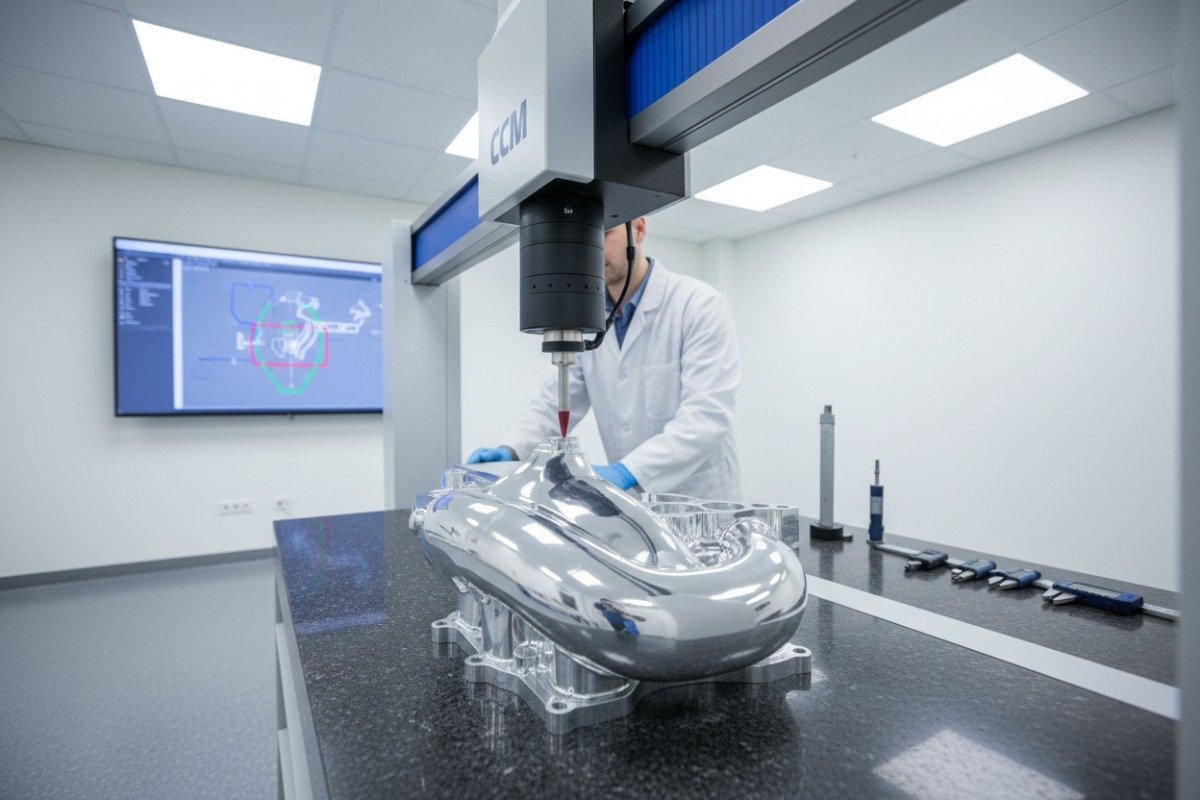
Quality failures on custom parts are expensive. They cause rework, production line shutdowns for your end customer, and damaged trust. Our experience shows that 70% of mass-production quality issues can be caught during the pre-production phase — if you have the right process in place.
Step 1: Design for Manufacturability (DFM) Review
Before any metal is cut or plastic is molded, have the supplier’s engineering team review your drawings for manufacturability. A good DFM review flags issues like: Design for Manufacturability review 3
- Tolerances that are tighter than the machine can reliably hold
- Wall thicknesses that risk warping in injection molding
- Features that require special tooling or add unnecessary cost
- Material selections that create problems during finishing
We run DFM reviews on every project. It typically saves 1–2 revision cycles and catches dimensional risks before they become expensive rejects.
Step 2: Prototyping and Sample Approval
Request physical samples — not just 3D renderings. For CNC machined parts, prototypes can be ready in 3–10 days. For injection molded parts, you may need a soft tool or 3D-printed prototype first. Check dimensions against your drawing using a CMM (Coordinate Measuring Machine) report 4. Verify material with a mill certificate. Test fit and function if possible.
Step 3: First Article Inspection (FAI) and PPAP
Once tooling is complete and the first production-intent parts come off the line, conduct a formal First Article Inspection 5. This is a detailed comparison of the actual part against every dimension, tolerance, and specification on your drawing.
| QC Stage | What It Covers | Who Does It | When |
|---|---|---|---|
| DFM Review | Manufacturability, tolerance feasibility | Supplier engineering + your team | Before tooling |
| Prototype Inspection | Dimensional accuracy, material verification | Your QC or third-party | After sample production |
| First Article Inspection (FAI) | Full dimensional layout, material certs, visual | Third-party or your QC team | First production parts |
| In-Process Inspection | SPC data, tool wear checks, visual sampling | Supplier QC + your oversight | During production |
| Pre-Shipment Inspection (PSI) | AQL sampling, packaging, labeling, quantity | Third-party inspector | Before container loading |
Data from our projects shows that implementing FAI and PPAP 6 reduces defect rates by 30–60%. It also confirms that the supplier can maintain consistency across the full batch, not just the first few pieces.
Step 4: In-Process and Pre-Shipment Checks
During production, insist on in-process inspection data. This includes SPC (Statistical Process Control) charts 7 for critical dimensions, tool wear monitoring, and regular visual checks. Before shipment, a final pre-shipment inspection using AQL (Acceptable Quality Level) sampling 8 gives you one last gate.
For high-value or high-risk parts, we station our own QC personnel at the factory during production runs. This catches dimensional drift from machine wear, material batch inconsistencies, and operator errors in real time — before hundreds or thousands of parts are affected.
Don’t Forget Traceability
Every batch should have traceability documents: material certificates, inspection reports, and packaging records. If your end customer requires compliance marks like CE or FCC, these records are essential. We keep all documentation in a shared drive accessible to our clients within 24 hours of shipment.
How Can I Protect My Intellectual Property When Sharing Technical Drawings with Chinese Suppliers?
Our legal team reviews NDA and IP protection clauses before we share any client drawings with a supplier — because once a file leaves your inbox, you lose direct control over it.
Protect your intellectual property by requiring enforceable Non-Disclosure Agreements under a neutral jurisdiction, registering your patents and trademarks in China, splitting production across multiple suppliers so no single factory holds your complete design, and controlling access to sensitive files through watermarked or restricted-format drawings.
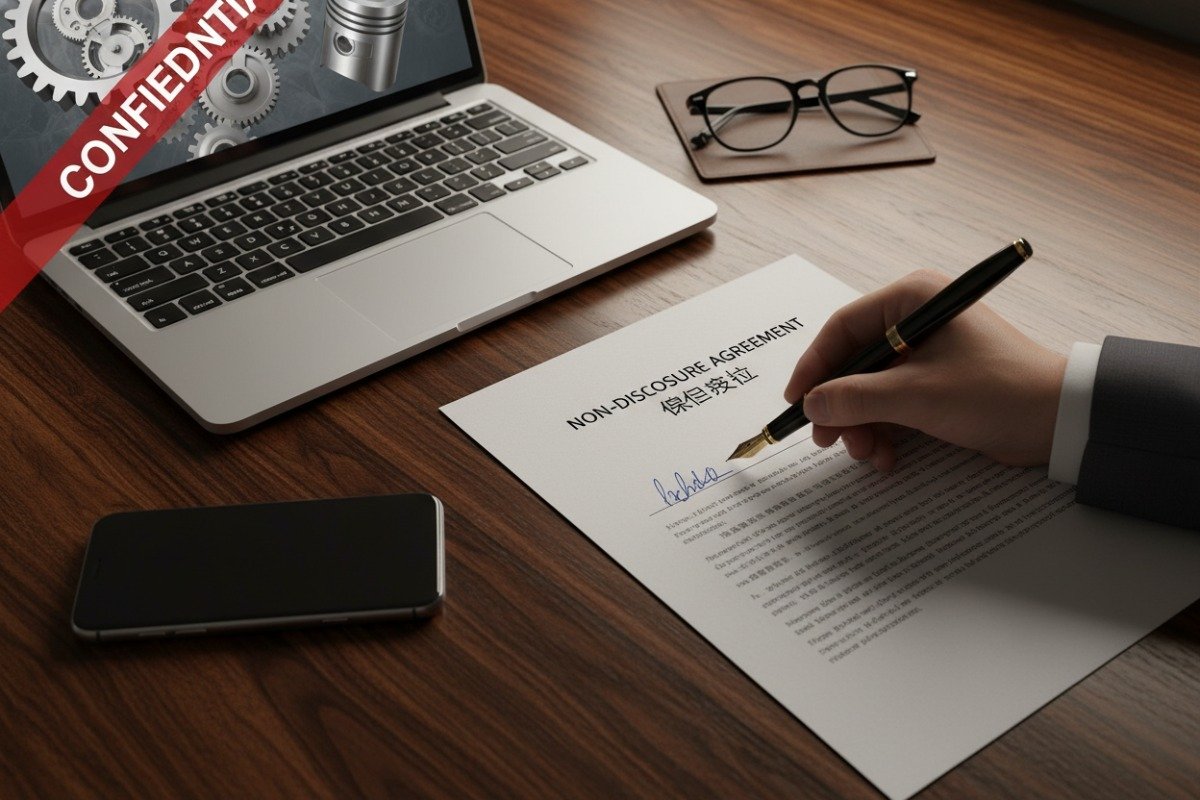
IP theft is a legitimate concern. But it’s also a manageable risk when you take the right precautions. Many U.S. companies successfully source complex, proprietary parts from China every day. The key is structure and legal preparation — not avoidance.
Start with an NDA — But Make It Enforceable
A standard NDA written under U.S. law has limited enforceability in China. Instead, work with a lawyer experienced in Chinese commercial law to draft an NDA that specifies:
- Chinese jurisdiction (Chinese courts enforce Chinese-law contracts more readily)
- Specific penalties for breach, including liquidated damages
- Clear definition of what constitutes confidential information
- Duration of confidentiality obligations (we recommend at least 3–5 years)
We sign bilateral NDAs with every supplier before sharing any drawings. The Chinese-language version, governed by Chinese law, is the one that matters if disputes arise.
Register Your IP in China
China operates on a “first to file” system for trademarks and patents. If you haven’t registered in China, someone else can — and they may legally block your own products. File your trademarks with the China National Intellectual Property Administration (CNIPA) 9 and register design patents for unique part geometries.
| IP Protection Strategy | What It Does | Cost Level | Effectiveness |
|---|---|---|---|
| NDA (Chinese jurisdiction) | Legal recourse against disclosure | Low | High if well-drafted |
| Chinese Trademark Registration | Prevents others from filing your mark | Medium | Very high |
| Design Patent Filing (CNIPA) | Protects unique part geometry | Medium | High for distinctive designs |
| Split Manufacturing | No single supplier has full design | Low–Medium | High |
| Watermarked/Restricted Drawings | Limits unauthorized sharing | Low | Moderate |
| Trusted Supplier Relationships | Reduces motivation to steal | Time investment | High over time |
Split Your Production Intelligently
One practical strategy we use for clients with sensitive designs is splitting production. Supplier A makes Component 1. Supplier B makes Component 2. Final assembly happens at a third location or at the client’s own facility. No single factory ever sees the complete product. This approach adds a bit of logistical complexity, but it dramatically reduces the risk of full design exposure.
Control What You Share
Not every supplier needs your full 3D model with all design intent. For quoting, a simplified STEP file is often sufficient. For production, share only the files needed for their specific process. Use watermarks with the supplier’s name on 2D drawings — this creates a clear trail if files are leaked. Some clients also use viewer-only platforms that prevent downloading or printing.
Build Long-Term Relationships
The best IP protection is a supplier who values your business too much to risk losing it. Factories that have invested years in building a relationship with you, and who depend on your recurring orders, have a strong incentive to protect your information. We’ve found that trust built through consistent, fair business dealings is one of the most effective — and least discussed — forms of IP protection.
What Are the Best Strategies for Me to Manage Lead Times and Shipping Costs for My Custom Orders?
In our experience coordinating shipments from factories across Vietnam and China, lead time management starts long before the goods reach the port — it starts at the moment you place the order.
The best strategies for managing lead times and shipping costs include locking in realistic production schedules with buffer time, consolidating shipments to reduce per-unit freight costs, choosing the right Incoterm for your situation, and maintaining proactive communication with your supplier to catch delays before they cascade.
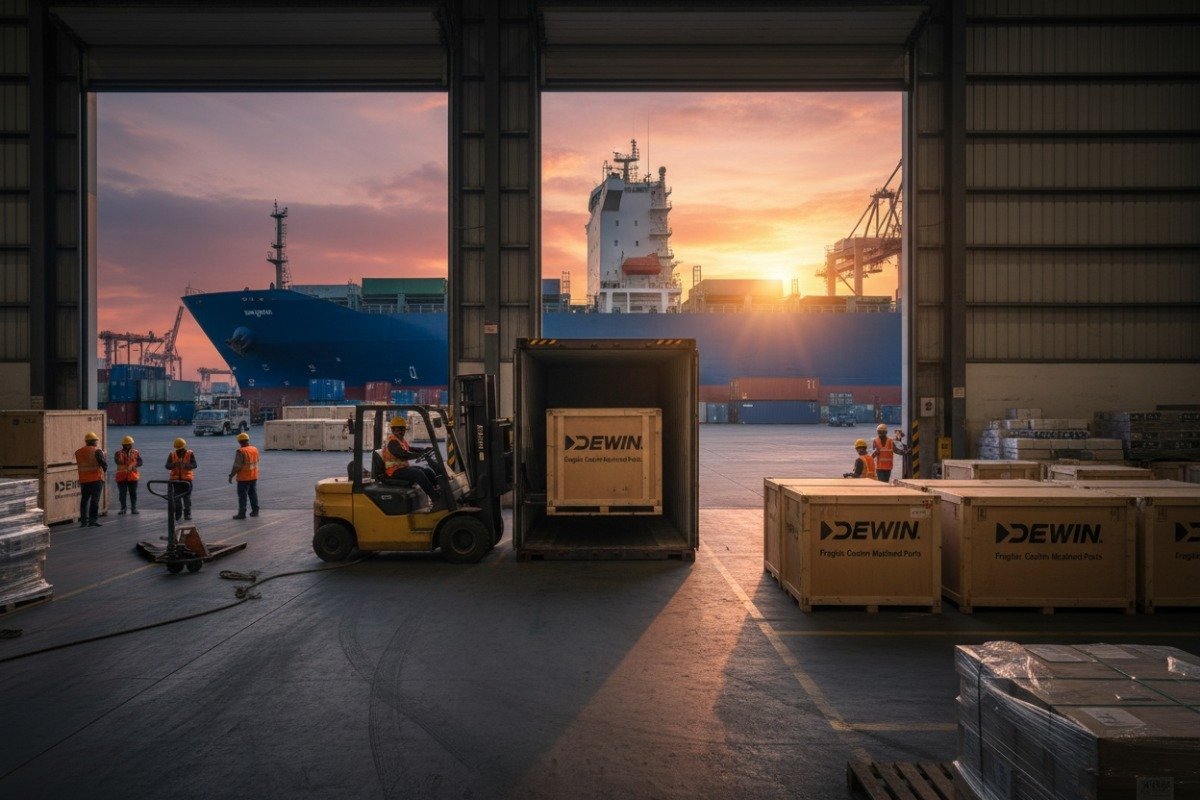
Late deliveries are the number one complaint we hear from U.S. purchasing managers working with Asian suppliers. It’s not always the factory’s fault — sometimes the root cause is unrealistic planning, unclear order confirmations, or logistics gaps. Here’s how to get ahead of it.
Understand Where Lead Time Actually Goes
Most buyers think of lead time as just “production time.” But the total lead time for a made-to-print order includes multiple phases:
| Lead Time Phase | Typical Duration | What Can Go Wrong |
|---|---|---|
| DFM Review & Quoting | 3–7 days | Incomplete drawings delay quoting |
| Tooling (if required) | 15–45 days | Design changes restart the clock |
| Raw Material Procurement | 5–20 days | Specialty materials have long lead times |
| Production | 10–30 days | Machine breakdowns, capacity conflicts |
| QC & Inspection | 3–7 days | Rejections trigger rework |
| Inland Transport to Port | 2–5 days | Trucking delays, customs clearance |
| Ocean Freight to U.S. | 18–35 days | Port congestion, vessel delays |
| U.S. Customs & Last Mile | 3–10 days | Documentation errors, inspections |
When you add it all up, a “30-day production” order can easily take 60–90 days door-to-door. Knowing this breakdown helps you plan backwards from your need date.
Build in Buffer Time
We always recommend adding at least 1–2 weeks of buffer to your internal timeline. Things go wrong. Material shipments get delayed. A machine breaks down. Chinese holidays (especially Chinese New Year, which shuts factories for 2–3 weeks) can wreck your schedule if you don’t plan for them.
Choose the Right Shipping Method
For urgent orders, air freight gets parts to you in 5–7 days but costs 5–8x more than ocean freight. Sea freight is the standard for most custom parts — it’s cost-effective for heavier shipments. For mid-size orders that need to arrive faster, sea-air hybrid routes through hubs like Singapore or Dubai can shave 7–10 days off ocean transit time.
Consolidate Shipments to Save Money
If you’re ordering from multiple suppliers, consolidate your shipments through a single freight forwarder. Combining several smaller orders into one container (LCL or even FCL) reduces per-unit shipping costs significantly. Our logistics team coordinates this for clients regularly — we hold goods at our warehouse until everything is ready, then ship together.
Negotiate the Right Incoterm
Your Incoterm 10 determines who pays for what in shipping and who bears the risk at each stage. For most U.S. importers of custom parts, FOB (Free on Board) is the most common choice — you control the ocean freight and insurance. But if you want the supplier to handle more, DDP (Delivered Duty Paid) shifts the logistics burden to them. The tradeoff is less control and usually a higher unit price.
Communicate Proactively
We send weekly production status updates to our clients, including photos from the factory floor. If a delay is developing, we flag it immediately — not the day before shipment. Ask your supplier for the same. Set clear milestones in your purchase order: material procurement complete by Date X, production 50% complete by Date Y, ready for inspection by Date Z. This gives you early warning if things are slipping.
One thing we’ve found that makes a big difference: having a local team near the factory. Our China office can visit the supplier in person, push for answers, and resolve issues that would take days to sort out over email. If you don’t have your own people in the region, consider working with a sourcing partner who does.
Conclusion
Sourcing made-to-print parts from China comes down to clear specs, verified suppliers, structured quality control, IP protection, and proactive logistics management — all working together as one system.
Footnotes
- Official ISO page explaining the ISO 9001 standard for quality management systems. ↩︎
- Replaced HTTP 403 link with an authoritative Wikipedia article on Non-Disclosure Agreements. ↩︎
- Fictiv offers a comprehensive guide to Design for Manufacturability (DFM) principles and benefits. ↩︎
- NIST provides technical information on Coordinate Measuring Machines and their measurement uncertainty. ↩︎
- ASQ provides a clear definition and purpose of First Article Inspection in quality assurance. ↩︎
- Quality-One explains the Production Part Approval Process (PPAP) and its importance in manufacturing. ↩︎
- ASQ details Statistical Process Control (SPC) and its application in monitoring quality. ↩︎
- QIMA provides a clear explanation of Acceptable Quality Limit (AQL) for product inspections. ↩︎
- Official website of the China National Intellectual Property Administration (CNIPA). ↩︎
- Official ICC page explaining the Incoterms® 2020 rules for international trade. ↩︎

 English
 Español de México
 Deutsch
 Français
 Русский
 العربية