
Every week, our project team reviews new custom part requests from U.S. buyers who need reliable production partners but keep running into the same problems — late deliveries, missed drawing specs, and parts that fail on arrival.
OEM manufacturers support global brands by providing specialized production infrastructure, strict quality systems, technical co-development expertise, scalable capacity, and supply chain services that let brands grow into new markets without building their own factories. The right OEM partner becomes an extension of your team, handling everything from PPAP documentation to final inspection and logistics.
In this article, we break down the key areas where an OEM partner makes or breaks your scaling strategy ISO 9001 certification 1. We cover quality control, project management, regional sourcing advantages, and payment terms that protect your cash flow. Each section draws from real challenges we see purchasing managers face every day.
How can I ensure my OEM partner maintains strict quality control as my production scales?
When we run first-article inspections on a new custom part, our QC engineers often catch tolerance issues that would have gone unnoticed until the parts reached the end user AS9100 (aerospace) 2. Scaling production is exciting, but it also multiplies every small quality gap into a big, expensive problem.
To ensure your OEM partner maintains strict quality control at scale, require documented processes like PPAP, in-process inspection checkpoints, ISO 9001 certification, and final inspection reports with measurable data. Build quality gates into every production stage so defects are caught early, not after shipping.
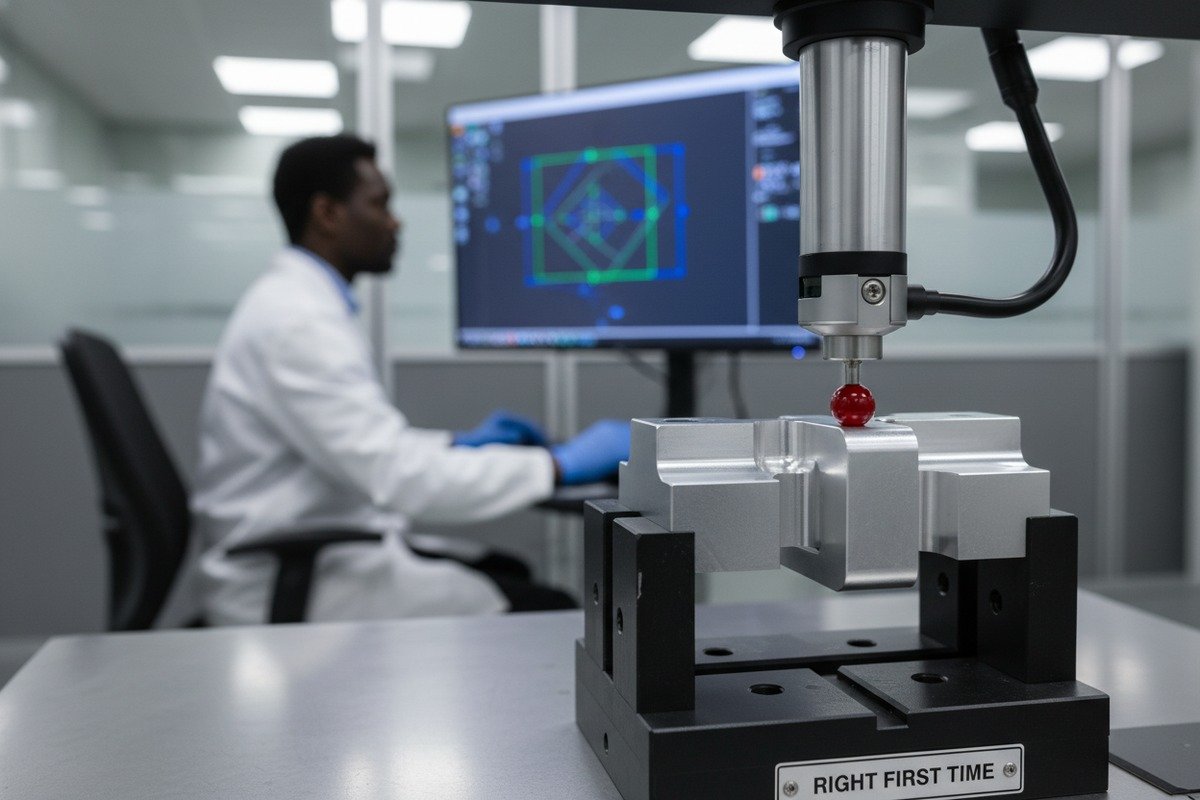
Quality does not happen by accident. It comes from systems. When production volume doubles, the number of things that can go wrong also doubles statistical process control 3. Without a structured quality framework, you end up with rework, returns, and unhappy customers. Here is how to think about quality control when you scale.
Start with PPAP Before Mass Production
PPAP stands for Production Part Approval Process. It is a standard method to verify that a supplier can consistently produce parts that meet your specifications. Our engineering team completes PPAP documentation 4 for every new custom part project. This includes dimensional reports, material certifications, process flow diagrams, and control plans 5. If your OEM partner cannot provide PPAP, that is a red flag.
Build Quality Gates into Every Stage
A single final inspection is not enough. You need checkpoints at incoming material, in-process, and final stages. Each gate should have clear pass/fail criteria tied to your drawing requirements.
| Quality Gate | What Gets Checked | Who Is Responsible |
|---|---|---|
| Incoming Material | Raw material certs, hardness, dimensions | QC + Warehouse |
| In-Process | Critical dimensions, surface finish, assembly fit | QC + Production |
| Final Inspection | Full dimensional report, visual check, packaging | QC Team |
| Pre-Shipment | Quantity, labeling, packing list accuracy | QC + Logistics |
Use Data, Not Just Visual Checks
Many suppliers rely on visual inspection alone. That works for cosmetic issues, but it misses dimensional drift. We use CMM (Coordinate Measuring Machine 6) reports and statistical process control to track trends. If a dimension starts drifting toward the tolerance limit, we catch it before it goes out of spec.
The “Right First Time” Mindset
One of the biggest pain points we hear from U.S. purchasing managers is rework. Parts arrive, fail inspection, and need to be sent back or scrapped. This wastes time and money. The goal should always be “right first time.” That means your OEM partner invests time upfront in understanding your drawings, asking questions about critical dimensions, and running pilot batches before full production. Skipping this step to save a few days always costs more in the end.
Certifications That Matter
Not all certifications carry the same weight. ISO 9001 is the baseline for quality management systems. If your parts go into regulated industries, you may also need IATF 16949 7 (automotive) or AS9100 (aerospace). Ask your OEM partner which certifications they hold and request copies. Then verify them independently.
How do I find an OEM that proactively manages my project and understands my technical drawings?
Our engineers spend the first few days on any new project doing nothing but reading drawings — checking GD&T callouts 8, identifying critical-to-function dimensions, and flagging anything that needs clarification before we cut a single piece of metal. Most quality failures we see trace back to a supplier who never really read the drawing in the first place.
Find an OEM that proactively manages your project by evaluating their technical review process, asking how they handle drawing ambiguities, and checking whether they assign a dedicated project engineer. A good OEM asks questions before production, not after parts fail inspection.

The difference between a reactive supplier and a proactive OEM partner is night and day. A reactive supplier waits for you to tell them what to do. A proactive partner reviews your drawings, spots potential issues, and brings solutions before production starts. Here is what to look for.
The Drawing Review Process
When you send technical drawings to a potential OEM, pay attention to what happens next. Do they come back with questions? Do they ask about material grades, surface finish requirements, or tolerance stacking? Or do they just quote a price and say “no problem”? In our experience, the suppliers who say “no problem” to everything are the ones who cause the most problems later.
A proper drawing review should cover these areas:
| Review Area | What a Good OEM Checks | Why It Matters |
|---|---|---|
| GD&T Callouts | Position, flatness, concentricity tolerances | Ensures parts fit in assembly |
| Material Specification | Grade, heat treatment, surface hardness | Affects performance and durability |
| Surface Finish | Ra values, plating, coating requirements | Impacts function and appearance |
| Critical Dimensions | Tight tolerances flagged for special attention | Prevents the most costly defects |
| Assembly Notes | Fit with mating parts, thread specs | Avoids integration failures |
Dedicated Project Management
Your OEM should assign a project engineer or project manager to your account. This person is your single point of contact. They track timelines, coordinate between departments, and keep you updated without you having to chase them. We assign a dedicated project manager to every client. That person owns the project from drawing review through final shipment.
Proactive Communication Saves Money
Here is a real scenario we see often. A drawing calls out a tight tolerance on a non-critical dimension. The supplier machines it to that tolerance, which takes longer and costs more. A proactive OEM would flag this and ask: “Is this tolerance truly required, or can we open it up to reduce cost and lead time?” That one question can save thousands of dollars on a production run.
How to Test a Potential OEM Partner
Before committing to a large order, send a small test project. Watch how they handle it. Do they ask smart questions? Do they deliver on time? Do they send inspection reports without being asked? The test project tells you more about a supplier than any factory audit. We encourage new clients to start with a pilot order so both sides can build trust and refine the process.
Red Flags to Watch For
Be cautious if your OEM partner never asks questions about your drawings, misses deadlines on samples without explanation, or sends parts that clearly do not match the print. These are signs of a supplier who lacks the technical depth or project management discipline to support your growth.
What are the benefits of partnering with an OEM that has local teams in Vietnam for my sourcing?
Our team in Vietnam — seven people on the ground in Ho Chi Minh City — spends every day visiting factories, checking production lines, and solving problems that would take weeks to handle remotely from the U.S. or even from Singapore. Having local eyes and ears changes everything about how fast and how well things get done.
Partnering with an OEM that has local teams in Vietnam gives you real-time factory oversight, faster supplier qualification, direct communication with production staff, and the ability to resolve quality or delivery issues on the same day instead of waiting for email replies across time zones.
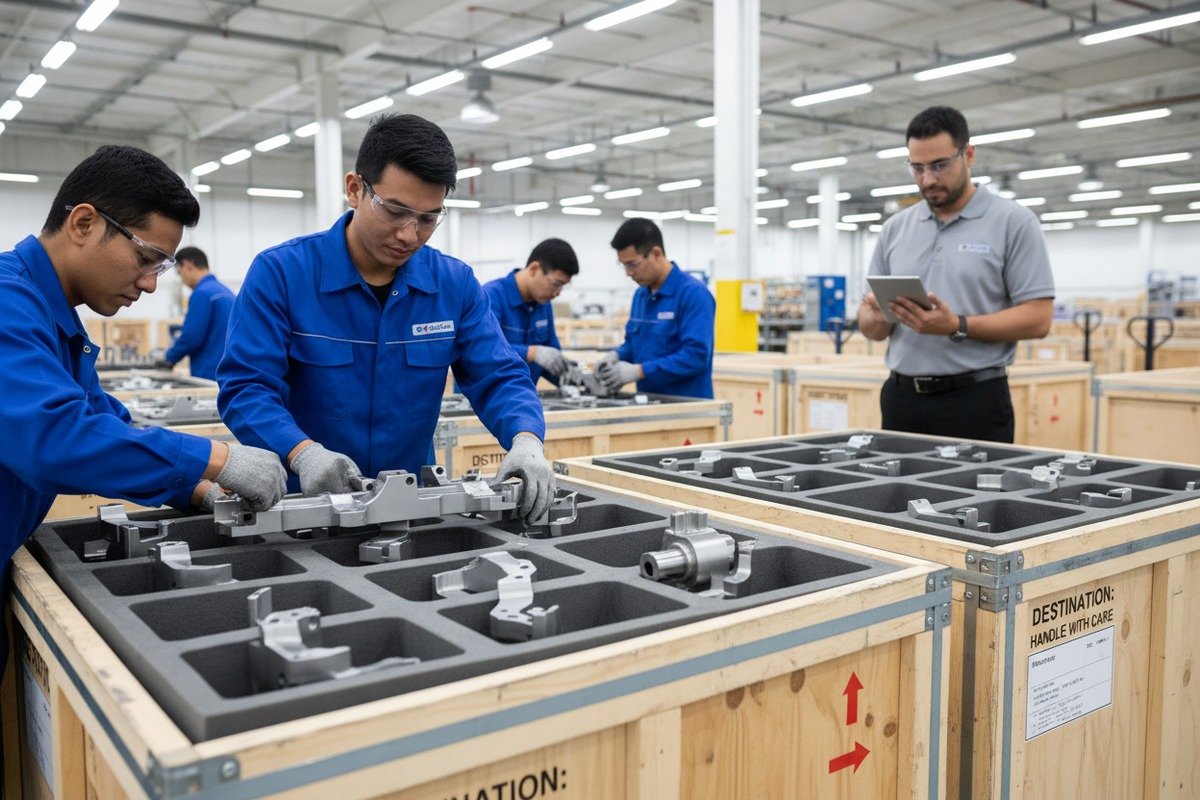
Vietnam has become one of the most important manufacturing hubs in Southeast Asia, especially for companies diversifying their supply chain away from a single-country dependency. But sourcing from Vietnam without local presence is risky. Here is why a local team matters.
Real-Time Factory Oversight
When your OEM partner has staff inside or near the factory, they can walk the production floor any day. They check that machines are calibrated, workers follow the control plan, and materials match the purchase order. Without local presence, you rely on the factory’s own reports — and those reports do not always tell the full story.
Faster Problem Resolution
Production issues happen. A machine breaks down. A raw material shipment arrives late. A dimension drifts out of spec. When your OEM has a local team, they find out the same day. They can visit the factory, assess the situation, and work on a fix immediately. Without local staff, you might not hear about the problem until the parts are already shipped.
Supplier Qualification and Audits
Finding a good factory in Vietnam takes time and local knowledge. Our Vietnam team conducts supplier audits that cover facility capability, quality systems, financial stability, and workforce skill level. We visit the factory, review their equipment list, check their inspection tools, and talk to their production managers. This is not something you can do effectively over a video call.
| Sourcing Approach | Response Time for Issues | Quality Visibility | Supplier Audit Depth |
|---|---|---|---|
| Remote management (no local team) | 3–7 days | Low — relies on supplier self-reporting | Surface-level, often virtual only |
| Local team in Vietnam | Same day | High — regular on-site visits | Comprehensive, in-person audits |
| Occasional travel visits | 2–4 weeks between visits | Periodic snapshots only | Moderate, limited by visit schedule |
The Vietnam Advantage for U.S. Importers
Vietnam offers competitive labor costs, a growing skilled workforce, and favorable trade agreements. For U.S. companies looking to reduce tariff exposure or diversify away from China, Vietnam is a strong option. But the country’s manufacturing ecosystem is still maturing. Factory capabilities vary widely. Having a local team helps you find the right factories and avoid the ones that look good on paper but cannot deliver consistently.
Cultural and Language Bridge
Communication gaps cause more sourcing failures than most people realize. Vietnamese factory managers may not speak fluent English. Technical terms get lost in translation. Our local team speaks Vietnamese and understands the local business culture. They translate not just words, but intent. When your drawing says “critical dimension,” they make sure the factory understands exactly what that means and why it matters.
How can my OEM manufacturer help me manage cash flow with open account payment terms?
When we first started offering open account terms to our U.S. clients, the reaction was almost disbelief. Most Asian suppliers require 30% deposit before production and 70% before shipment. That model ties up working capital 9 and creates cash flow pressure, especially for purchasing managers handling multiple projects at once.
An OEM manufacturer helps you manage cash flow by offering open account payment terms — typically net 60 or net 90 days — so you receive and even sell the goods before payment is due. This eliminates upfront deposits, frees working capital, and reduces financial risk on every order.

Cash flow is the lifeblood of any sourcing business. If your money is locked up in deposits and pre-shipment payments, you have less to invest in new projects, inventory, or growth. Open account terms change the equation. Here is how they work and why they matter.
How Open Account Terms Work
With open account terms, your OEM partner ships the goods first. You receive the parts, inspect them, and put them into your supply chain. Then you pay the invoice — usually 60 or 90 days after shipment. No deposit. No pre-payment. The OEM carries the financial risk during that period.
Why Most Asian Suppliers Do Not Offer This
Open account terms require trust and financial stability on the supplier side. Most factories in Asia operate on thin margins and cannot afford to wait 60–90 days for payment. They need cash upfront to buy raw materials and pay workers. We are able to offer open account terms because our business model is built to support it. We manage the cash flow internally so our clients do not have to.
The Impact on Your Business
Consider a purchasing manager who places five orders per month, each worth $20,000. Under traditional payment terms (30% deposit), that is $30,000 tied up in deposits at any given time. With open account terms, that $30,000 stays in your bank account, earning interest or funding other projects.
| Payment Model | Deposit Required | Payment Due | Cash Tied Up (5 orders/month) |
|---|---|---|---|
| Traditional (30/70) | 30% upfront | 70% before shipment | ~$30,000+ |
| Letter of Credit | Bank guarantee fee | Upon document presentation | Bank fees + margin hold |
| Open Account (Net 60) | None | 60 days after shipment | $0 upfront |
| Open Account (Net 90) | None | 90 days after shipment | $0 upfront |
Building Trust for Open Account Terms
Open account terms are not available on day one with every OEM. They are earned through a track record of reliable orders and timely payments. We typically start new clients on standard terms and transition to open account after a few successful orders. This protects both sides and builds a foundation for a long-term partnership.
Risk Mitigation for Both Parties
Some buyers worry that open account terms mean the OEM is cutting corners to save costs. That is not how it works. The OEM still needs to deliver quality parts on time — otherwise, the buyer has every reason to dispute the invoice. In fact, open account terms align incentives. The OEM is motivated to get it right because they only get paid after the buyer is satisfied with the goods.
When Open Account Terms Make the Most Difference
Open account terms are most valuable for companies that import regularly, manage multiple SKUs, or operate on tight margins. If you are a sourcing company distributing custom parts to U.S. manufacturers, every dollar of working capital matters. Having an OEM partner who understands this and offers flexible payment terms is a genuine competitive advantage.
Conclusion
The right OEM partner supports your brand with quality systems, technical expertise, local oversight, and payment flexibility — so you can scale production with confidence and keep your supply chain running smoothly.
`
Footnotes
- Replaced with a Wikipedia page providing an authoritative overview of the ISO 9000 family, including ISO 9001 certification. ↩︎
- Defines AS9100 as a quality management standard for the aerospace industry. ↩︎
- Replaced with a Wikipedia page offering a comprehensive and authoritative definition of statistical process control. ↩︎
- Explains PPAP as a tool for establishing confidence in component suppliers and their production processes. ↩︎
- Describes control plans as documents outlining actions to assure process outputs conform to requirements. ↩︎
- Explains CMM as a device measuring physical object geometry using a probe. ↩︎
- Describes IATF 16949 as an international standard for automotive quality management systems. ↩︎
- Replaced with an article that explains Geometric Dimensioning and Tolerancing (GD&T), including a section on ‘Feature Control Frames’ which are synonymous with ‘GD&T callouts’. ↩︎
- Replaced with a Wikipedia page providing an authoritative definition and explanation of working capital. ↩︎
- Explains open account as goods shipped and delivered before payment is due. ↩︎

 English
 Español de México
 Deutsch
 Français
 Русский
 العربية