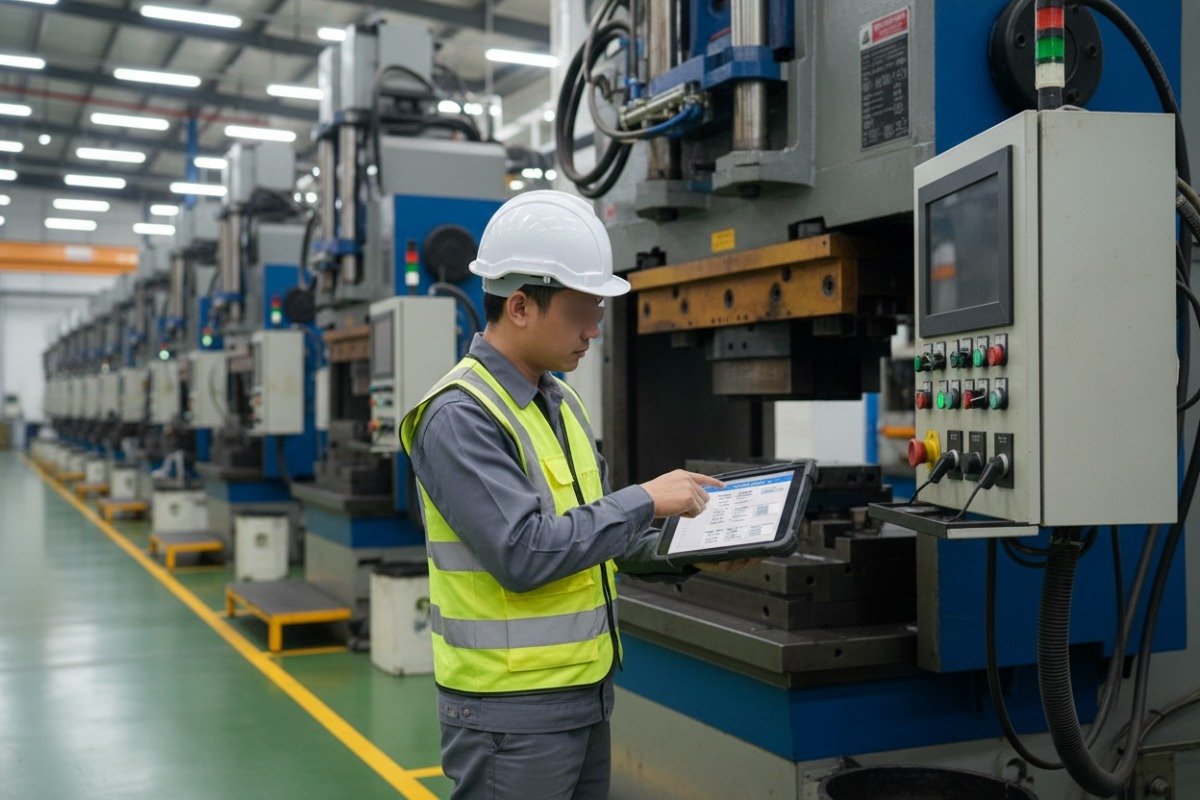
At our facilities, we know that skipping site visits leads to costly defects optical comparator (profile projector) 1. You need a structured plan to verify capabilities before signing contracts.
To audit a Vietnam stamping factory effectively, you must inspect the maintenance logs of hydraulic presses, verify ISO 9001 certifications, and check raw material storage conditions. Evaluate their in-process quality control (IPQC) stations and ensure tooling design capabilities match your specific tolerance requirements.
Visiting a factory is about more than just a handshake. It is a critical step to secure your supply chain 2. Let’s break down the specific areas you need to check.
How can I verify the production capacity and equipment maintenance of a Vietnam stamping factory during my visit?
When we audit potential partners, we often see outdated machines masked by fresh paint. You must look deeper to ensure consistent output.
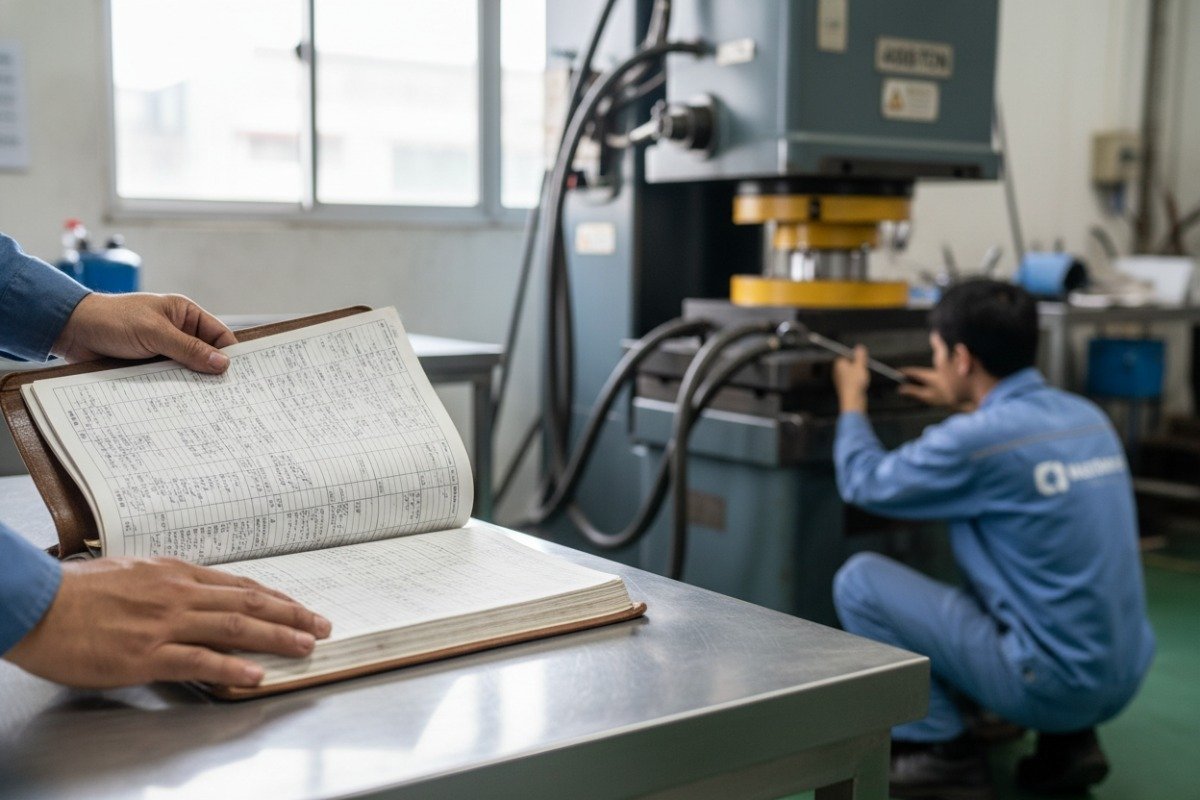
Verify production capacity by calculating the cycle time of their 100-600 ton hydraulic presses against your volume needs. For maintenance, demand to see physical machine logbooks showing recent calibration dates, oil change records, and repair histories rather than relying on verbal assurances.
Scrutinizing the Machinery
When you walk onto the shop floor in industrial hubs like Dongnai or Bac Ninh, your first stop should be the stamping presses. In Vietnam, capable factories typically operate hydraulic and mechanical presses ranging from 100 to 600 tons. Do not just look at the machine; look at how it runs. Is the press operating smoothly, or is it vibrating excessively? Excessive vibration often indicates poor foundation work or internal wear, which will eventually affect the tolerances of your custom parts.
You should also verify the "real" capacity versus the "theoretical" capacity. A factory might claim they can produce 100,000 units a month based on 24-hour shifts. However, if you see that half the machines are idle or undergoing repair during your visit, their actual output is much lower. Ask for the OEE (Overall Equipment Effectiveness) data 3 if they have it. If they cannot provide it, stand by a machine for 10 minutes. Count the strokes per minute and do the math yourself. We often find that theoretical numbers are inflated by 20-30% compared to reality.
The Truth is in the Logs
Maintenance documentation is the most honest part of a factory. We always ask to see the physical logbooks attached to the machines. You are looking for a history of preventative care, not just emergency repairs. A machine that is only fixed when it breaks is a liability to your supply chain.
A well-maintained factory will have logs that detail specific actions, such as "hydraulic oil filter replacement" or "ram alignment check," signed and dated by a technician. If the logs are empty, or if all entries look like they were written on the same day with the same pen, this is a major red flag. It suggests they only filled out the paperwork because they knew you were coming. Furthermore, check the spare parts inventory. A reliable factory keeps critical spares like seals, valves, and fuses on-site. If they have to order these parts from overseas after a breakdown, your production could be stalled for weeks.
Capacity and Maintenance Checklist
| Inspection Item | What to Look For | Red Flag |
|---|---|---|
| Press Condition | Clean surfaces, no oil leaks, smooth sound. | Puddles of oil at the base, loud grinding noises. |
| Maintenance Logs | Distinct entries, different dates, technician signatures. | Brand new notebooks, identical handwriting, missing dates. |
| Spare Parts | Organized inventory of critical spares (seals, valves). | No spare parts on-site; reliance on ordering after breakdown. |
| Calibration | Stickers on machines showing next due date. | Expired calibration stickers or no stickers at all. |
What specific quality control processes should I look for on the stamping shop floor?
In our daily operations, we find that poor QC leads to rejected batches. You need to see their inspectors in action, not just the lab.
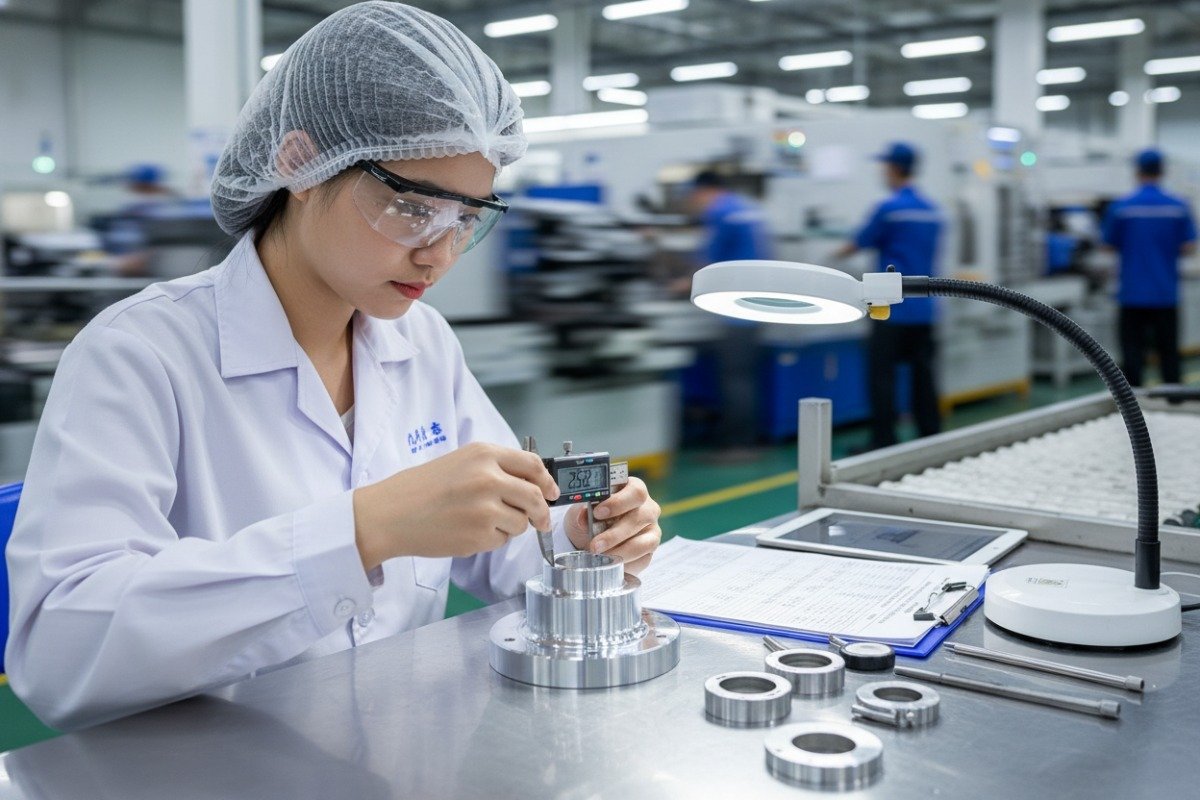
Look for active In-Process Quality Control (IPQC) stations located directly next to stamping lines, equipped with calibrated calipers and go/no-go gauges. Ensure inspectors are performing hourly checks to detect dimensional drift or burrs immediately, rather than waiting for final inspection.
The "Right First Time" Approach
Quality control is not just about catching bad parts at the end; it is about preventing them from being made. When we manage projects, we insist on strong In-Process Quality Control (IPQC). During your visit, look for QC stations situated right next to the stamping presses. These stations should not be empty desks. They should be active zones where operators or inspectors check parts at regular intervals—usually every hour or every 500 strokes.
Check the documentation at these stations. You want to see "run charts" or inspection sheets that track critical dimensions over time. If a dimension is slowly drifting toward the tolerance limit, a good operator will stop the machine and adjust the die before the parts become defective. If you only see a Final Quality Control (FQC) room, that is a problem. Relying solely on FQC means the factory might produce thousands of bad parts before realizing there is an issue. We also recommend checking for "First Article Inspection" (FAI) reports at the machine. Before the full run starts, the first few parts must be verified and signed off by a supervisor.
Verifying Inspection Tools
A factory is only as good as its measuring tools. Walk into their QC lab and look at their equipment. For precision stamping, they should have more than just hand calipers. Look for a Coordinate Measuring Machine (CMM) 4 or an optical comparator (profile projector). These tools are essential for checking complex geometries and flatness, which are common pain points in stamping.
Ask to see the calibration certificates for these tools. A CMM that has not been calibrated in two years is useless. Furthermore, watch a worker use a simple tool like a caliper. Do they handle it correctly? Do they zero it before measuring? We often find that while the equipment is good, the training is lacking. Ask the inspector to measure a sample part while you watch. If they struggle or use the wrong technique, their data is unreliable.
Essential QC Tools for Stamping
| Tool Name | Function | Why It Matters |
|---|---|---|
| Go/No-Go Gauge | Quickly checks if a hole or thread fits within limits. | Essential for high-volume speed checks on the production line. |
| Profile Projector | Magnifies the part to check contours and edges. | Critical for detecting burrs and checking small, complex shapes. |
| CMM | Measures 3D geometry with high precision. | Necessary for verifying complex custom parts and PPAP approval. |
| Hardness Tester | Checks the hardness of the metal. | Ensures the material was not weakened or altered during processing. |
How do I evaluate the factory's tooling design and mold storage capabilities for my project?
We know that precision parts start with precise molds. If a factory mishandles tooling, your product tolerances will fail quickly.
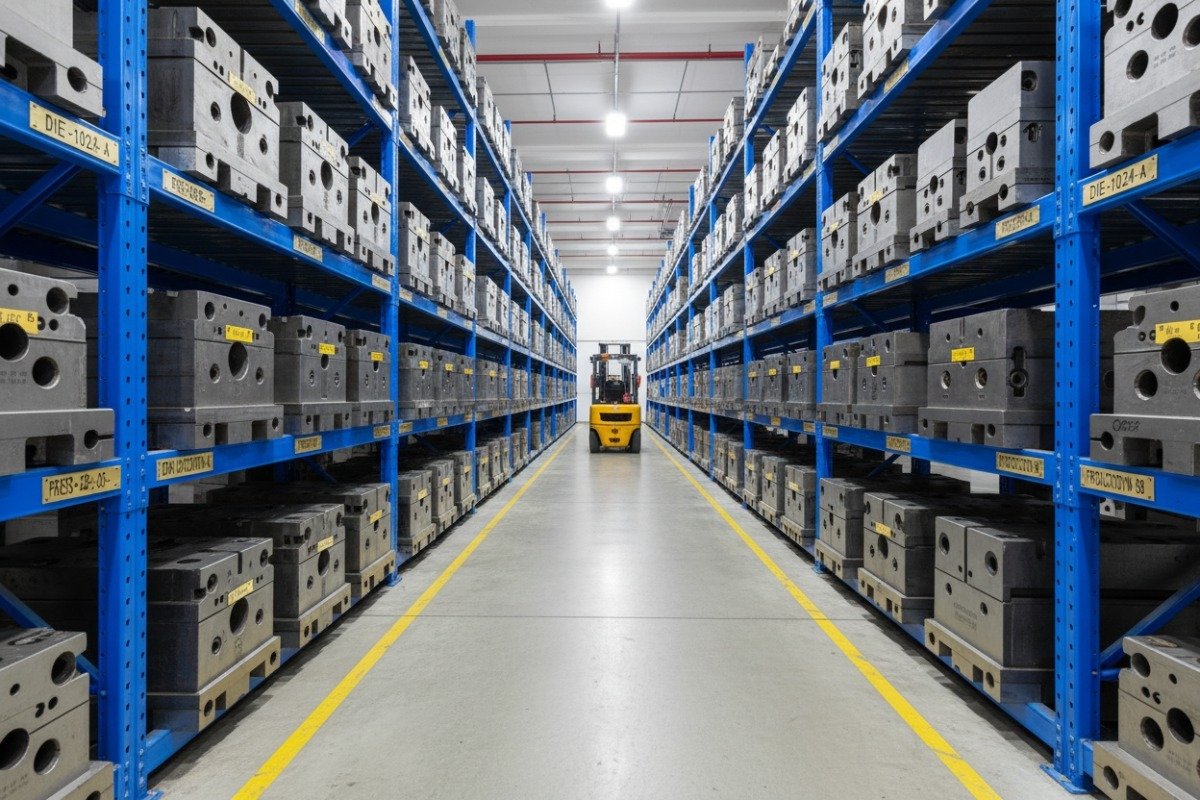
Evaluate tooling capability by reviewing their in-house CAD design process and 3D simulation reports for progressive dies. Inspect the mold storage area for climate control and organized racking systems to prevent rust, ensuring each die has a unique ID for maintenance tracking.
Assessing Design and Engineering
The best stamping factories in Vietnam do not just cut metal; they understand engineering. Ask to meet their design team. Do they use advanced software like AutoCAD or SolidWorks? Ask them to show you a recent design for a progressive die. You want to see that they run simulations to predict metal flow and spring-back 5. This step is crucial for custom parts. If they skip simulation, they are guessing, and you will pay for their trial-and-error process through delays.
We also recommend asking about their "Design for Manufacturing" (DFM) process. Design for Manufacturing (DFM) process 6 A proactive supplier will look at your drawing and suggest slight changes to make the part stronger or cheaper to produce. If they simply accept your drawing without any questions, they might lack deep technical expertise. Ask them specifically about how they handle "die life" management. Do they design the tool with easy-to-replace inserts for high-wear areas? This foresight saves significant money and time during long production runs.
Mold Storage and Maintenance
Tooling (molds and dies) is expensive property. Its condition directly dictates the quality of your parts. When you walk through the storage area, observe how the dies are stored. They should never be sitting directly on the concrete floor. This exposes them to moisture and dirt.
Look for heavy-duty racking systems where each die has its own spot. Check for tags or plates on the dies. Each tool should have a unique ID number that corresponds to a maintenance history. Ask the manager, "Show me the maintenance record for Die #A-102." They should be able to pull up a file showing when it was last sharpened or cleaned.
Also, check the environment. Vietnam is humid. The storage area should have some form of climate control or dehumidification. At the very least, the dies should be coated with a rust inhibitor when not in use. Rusty dies create pitted, rough surfaces on your final products. If you see orange spots on the stored molds, that rust will transfer to your parts or ruin the surface finish of the tool permanently.
Mold Storage Audit Points
| Feature | Good Practice | Bad Practice |
|---|---|---|
| Location | Dedicated racks off the ground. | Sitting on the floor or stacked on top of each other. |
| Identification | Clear metal tags with ID numbers. | Written on with marker or no ID at all. |
| Protection | Coated with anti-rust oil/grease. | Dry metal surface with visible orange rust spots. |
| Accessibility | Easy to retrieve with a forklift/crane. | Buried behind other equipment, hard to access. |
What environmental and safety standards should I check to ensure the facility meets my company's compliance requirements?
Our teams prioritize safety because accidents stop production. A chaotic, unsafe floor often indicates poor management and impending supply disruptions.
Check for clear emergency exits, functional machine guards on all presses, and proper ventilation in plating or welding zones. Verify compliance by requesting recent social audit reports and ensuring workers wear appropriate PPE, such as ear protection and steel-toed boots.
Safety as a Business Indicator
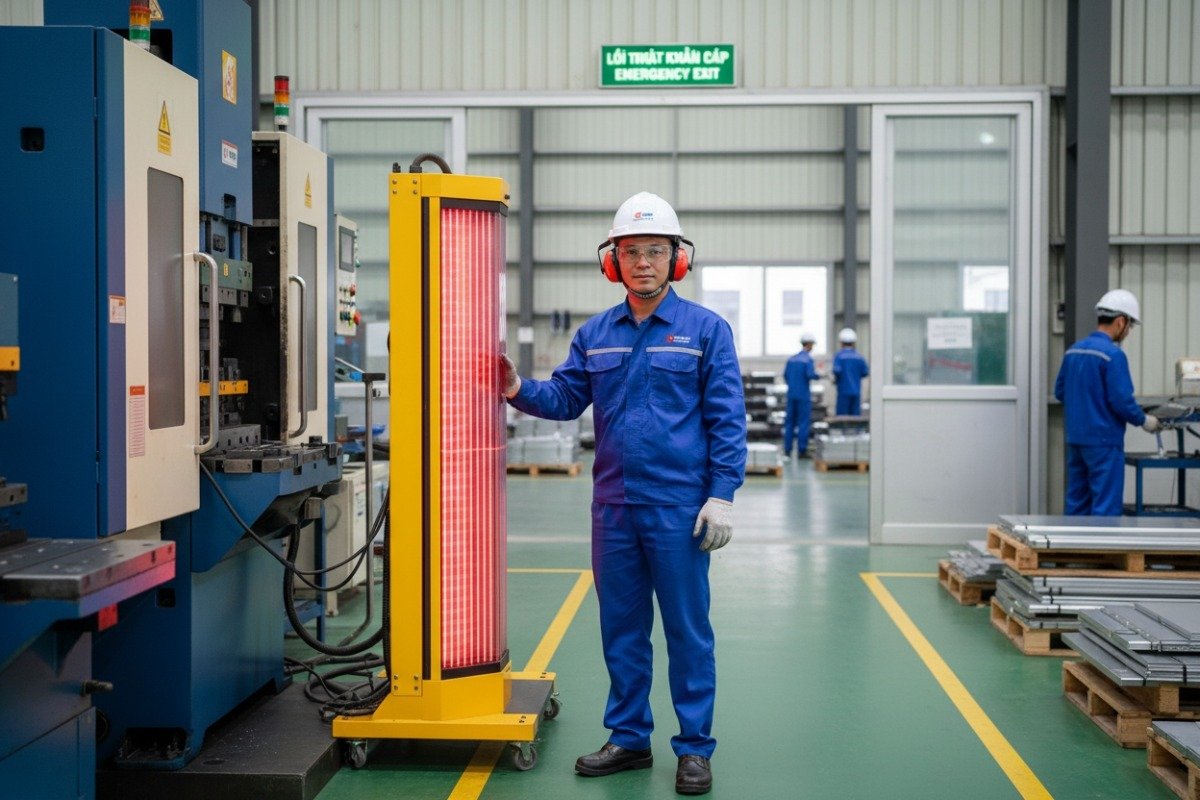
Safety is not just a moral obligation; it is a sign of operational discipline. In our experience, a factory that ignores safety regulations will also ignore quality standards. When you walk the floor, look at the stamping presses. Do they have "light curtains" or physical guards? These devices stop the machine instantly if a worker's hand gets too close to the die. If these are missing or disabled, the factory is a high-risk partner. An accident could shut down their production line—and your supply—for weeks.
Check the workers' attire. Are they wearing steel-toed boots? Stamping factories handle heavy metal coils and dies; flip-flops or sneakers are unacceptable. Are they wearing earplugs? Stamping presses are loud. A factory that does not protect its workers' hearing likely cuts corners elsewhere too. Observe the general organization of the floor (5S methodology 7). Are aisles clear, or are they blocked by boxes and scrap metal? Blocked aisles are a fire hazard and a sign of inefficient workflow.
Environmental Compliance and Chemicals
Stamping often involves secondary processes like plating, cleaning, or painting. These processes use chemicals that can be hazardous. You need to verify how they handle these materials. Look for designated chemical storage areas. These areas should have secondary containment (bunding) 8 to catch leaks. If a barrel leaks, the chemical should stay within a concrete barrier, not flow into the drainage system.
Ask to see their waste treatment records. In Vietnam, environmental regulations 9 are tightening. Factories must treat their wastewater before discharging it. If they are dumping untreated chemicals, they risk being shut down by the government. Ask for their environmental license and recent test reports for wastewater discharge. This protects your brand from being associated with pollution scandals. Additionally, check the ventilation in welding or plating areas. Poor air quality affects worker health and retention, leading to high turnover and inconsistent product quality.
Common Safety Violations to Watch For
| Violation Type | Specific Observation | Impact on Buyer |
|---|---|---|
| Machine Guarding | Disabled light curtains or removed physical gates. | High risk of injury leading to line shutdowns. |
| PPE Compliance | Workers in sandals or without ear/eye protection. | Indicates poor management enforcement and liability risk. |
| Chemical Storage | Chemicals stored near drains without containment pallets. | Environmental fines or factory closure by authorities. |
| Fire Safety | Blocked extinguishers or locked emergency exits. | Catastrophic risk to inventory and business continuity. |
Conclusion
A thorough site audit prevents future headaches. By verifying equipment, QC, tooling, and safety, you ensure your Vietnam supplier delivers quality parts on time.
Footnotes
1. Explains the function and usage of an optical comparator in inspection. ↩︎
2. Explains the concept of supply chain management and its importance. ↩︎
3. Replaced HTTP 404 with an authoritative Wikipedia page defining Overall Equipment Effectiveness. ↩︎
4. Provides a comprehensive definition and description of CMMs. ↩︎
5. Replaced HTTP 403 with an article that discusses both metal flow and spring-back within the context of metal stamping. ↩︎
6. Defines DFM as an engineering practice to reduce manufacturing costs and ease production. ↩︎
7. Describes 5S as a workplace organization method for efficiency and effectiveness. ↩︎
8. Defines secondary containment as a system to prevent hazardous spills and leaks. ↩︎
9. Discusses Vietnam’s environmental laws and their impact on manufacturers. ↩︎

 English
 Español de México
 Deutsch
 Français
 Русский
 العربية