
On our production floor, we have seen countless custom blow molding projects derailed by suppliers who claimed ASTM compliance but delivered containers that leaked, cracked, or failed under pressure ASTM D2463 for drop impact resistance 1. The real cost goes beyond defective parts—it includes recalls, damaged reputations, and lost customers.
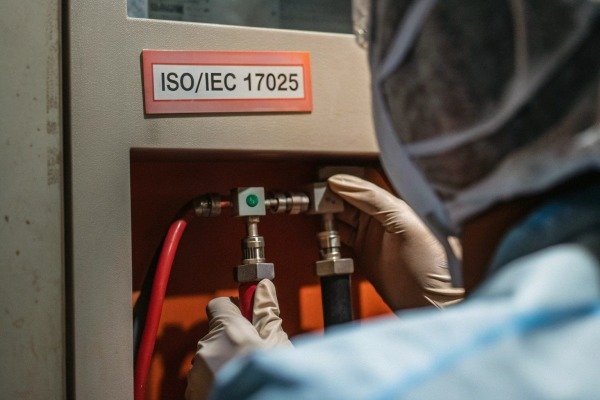
To verify plastic blow molding supplier lab compliance with ASTM standards, you must confirm ISO/IEC 17025 lab accreditation 2, audit calibration records for testing equipment, review documented test procedures matching specific ASTM methods like D2463 and D2659, validate staff competency through training records, and cross-reference internal reports with independent third-party test results.
This guide walks you through each verification step ASTM D2659 for column crush properties 3. We will cover which ASTM standards matter most, how to audit lab equipment and staff, and how to ensure data integrity through third-party validation.
Which critical ASTM standards should I specify for my custom plastic blow molding projects?
When our engineering team reviews supplier qualifications, we always start with the testing standards ASTM D2561 for environmental stress-crack resistance 4. Many suppliers list generic "ASTM compliance" without specifying which tests they actually perform. This vagueness creates risk for buyers.
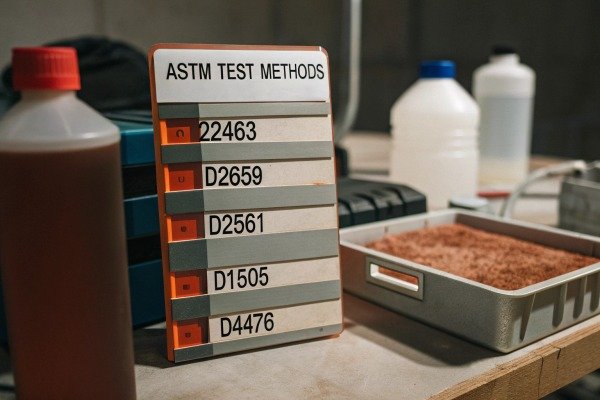
For custom plastic blow molding projects, specify ASTM D2463 for drop impact resistance, D2659 for column crush properties, D2561 for environmental stress-crack resistance, D1505 for density measurement, and D4976 for polyethylene material specifications including melt flow index and density requirements.
Understanding Each Critical ASTM Standard
Each standard serves a specific purpose in validating blow-molded container quality lab equipment calibration 5. Let me break down what each test measures and why it matters.
ASTM D2463 measures drop impact resistance using water-filled containers. The test requires a minimum of 20 specimens with closures. Procedure A uses the Bruceton staircase method, where drop height adjusts based on pass/fail results. Procedure B uses a fixed height with 20 or more drops around the mean failure height. Failure occurs when you see visible rupture or liquid leakage.
ASTM D2659 evaluates column crush properties under steady compression. This test applies to both laboratory and commercial blown containers. It tells you how much vertical load your container can withstand before structural failure.
ASTM D2561 specifically addresses environmental stress-crack resistance for blow-molded polyethylene containers. This test predicts long-term durability when containers contact various chemicals or detergents.
Key ASTM Standards Comparison Table
| Standard | Test Purpose | Key Requirements | Failure Criteria |
|---|---|---|---|
| D2463 | Drop impact resistance | Min 20 water-filled specimens with closures | Visible rupture or liquid leakage |
| D2659 | Column crush properties | Steady compression load | Structural collapse under load |
| D2561 | Environmental stress-crack resistance | PE containers under stress | Crack formation or material failure |
| D1505 | Density measurement | Gradient technique | Out-of-spec density reading |
| D4976 | PE material specification | Melt index, density, flammability per FMVSS 302 | Material property deviation |
Material-Specific Considerations
The ASTM D4976 standard 6 covers polyethylene plastics for molding and extrusion. It references D1505 for density testing and requires melt flow index measurement via extrusion plastometer. For automotive applications, it includes flammability testing per FMVSS 302.
When your project uses recycled HDPE, ask suppliers about D5203 compliance. This standard addresses post-consumer recycled content from bottles and milk jugs. With increasing regulations around recyclability, verifying recycled content testing becomes essential.
Pre-test conditioning under D618 ensures consistent specimen preparation. Without proper conditioning, test results vary significantly. Always confirm your supplier follows D618 protocols before running any mechanical tests.
Recent updates to watch include D2561-17(2023) and D2659-16(2023). These revisions align with ISO standards for global export compliance. Make sure your supplier references current standard versions, not outdated editions.
How can I verify that the supplier's lab equipment is calibrated and maintained correctly?
Our quality team audits supplier labs regularly. We have discovered that uncalibrated equipment is one of the most common sources of unreliable test data. A universal testing machine that drifts 2% can turn passing results into actual failures.
Verify lab equipment calibration by requesting current calibration certificates traceable to national standards, checking calibration intervals against manufacturer recommendations, reviewing maintenance logs for regular servicing, confirming equipment model suitability for specified ASTM tests, and auditing environmental controls like temperature and humidity in the testing area.
Essential Equipment for Blow Molding Testing
Different ASTM tests require specific equipment. Your supplier's lab should have properly calibrated instruments for each test they claim to perform.
For D2463 drop testing, the lab needs a calibrated drop tower with accurate height measurement. The height adjustment mechanism must provide precise increments for the staircase method. Water temperature measurement equipment ensures specimens are tested at the correct temperature.
Universal testing machines perform D2659 compression tests. These machines require load cell calibration at multiple points across their operating range. Crosshead speed calibration ensures consistent compression rates during testing.
Equipment Calibration Verification Checklist
| Equipment Type | Calibration Interval | Key Parameters | Traceability Requirement |
|---|---|---|---|
| Universal testing machine | Annual | Load cell accuracy, crosshead speed | NIST or equivalent national lab |
| Drop test tower | Annual | Height measurement, release mechanism | Certified measurement standards |
| Temperature controllers | Semi-annual | Temperature accuracy ±1°C | Calibrated reference thermometer |
| Thermocouples | Semi-annual | Temperature reading accuracy | Reference junction compensation |
| Density gradient column | Annual | Gradient linearity, temperature | Certified density standards |
| Melt flow indexer | Annual | Temperature, weight accuracy | National metrology institute |
Red Flags During Equipment Audits
Watch for these warning signs during supplier lab audits. Equipment with expired calibration stickers indicates poor quality management. Missing maintenance logs suggest reactive rather than preventive equipment care.
Labs that use equipment outside its specified range produce unreliable results. A load cell rated for 5000N should not test specimens requiring 10000N force. Similarly, testing at temperatures outside the equipment's rated range compromises accuracy.
Environmental controls matter significantly. ASTM D618 specifies conditioning environments at 23°C ± 2°C and 50% ± 10% relative humidity. Labs without climate control cannot produce repeatable results. Ask to see environmental monitoring records during your audit.
Leveraging Technology for Verification
Advanced suppliers now use digital twin technology to simulate blow molding processes. This allows them to predict material behavior before physical testing. While not a replacement for actual ASTM testing, it demonstrates technical sophistication.
Some progressive labs implement real-time equipment monitoring through IoT sensors. These systems flag calibration drift immediately rather than waiting for annual checks. This approach reduces the risk of testing with out-of-spec equipment.
Blockchain technology 7 creates immutable records of calibration events. Each calibration certificate gets timestamped and linked to specific equipment serial numbers. This prevents backdating or falsifying calibration records.
What steps should I take to validate the technical competence of the lab staff performing the tests?
During one supplier audit, our team watched a technician run D2463 drop tests. He used only 12 specimens instead of the required 20. When we asked why, he admitted he did not know the standard required more. Competent equipment means nothing without competent operators.
Validate lab staff competence by reviewing training records specific to each ASTM method, observing test procedures during on-site audits, verifying technician certifications from recognized bodies, checking for documented competency assessments, and confirming supervision arrangements for less experienced personnel under ISO/IEC 17025 requirements.

Core Competency Requirements
Lab staff must understand both the theory and practice behind each ASTM method. For D2463 drop testing, technicians should explain the Bruceton staircase method logic. They need to know why you start 300mm below the estimated mean failure height. They must recognize valid failure criteria—visible rupture or liquid leakage.
Specimen preparation competency ensures consistent results. For D2463, staff must properly fill containers with water, install closures correctly, and condition specimens per D618 requirements. Poor preparation introduces variability that masks true product performance.
Staff Competency Evaluation Matrix
| Competency Area | Evaluation Method | Minimum Requirement | Documentation Needed |
|---|---|---|---|
| ASTM method knowledge | Written examination | 80% pass score | Exam records and answer keys |
| Equipment operation | Practical demonstration | Zero critical errors | Observation checklists |
| Specimen preparation | Supervised practice | 10 supervised tests | Training logs |
| Data recording | Record review | 100% accuracy | Sample test reports |
| Failure identification | Visual assessment test | Correct identification rate ≥95% | Proficiency test records |
| Safety procedures | Practical assessment | Full compliance | Safety training certificates |
ISO/IEC 17025 Accreditation Significance
ISO/IEC 17025 accreditation provides the strongest assurance of lab competence. Accredited labs undergo regular external audits. These audits verify staff training, method validation, and quality management systems.
When a supplier claims ISO/IEC 17025 accreditation, verify the scope. Accreditation applies to specific test methods, not the entire lab. A lab accredited for D1505 density testing is not necessarily competent for D2463 impact testing. Request the certificate and check which ASTM methods are included.
On-Site Observation Protocols
Plan to observe actual testing during supplier audits. Arrive unannounced if possible to see normal operations. Announced visits often showcase the best technicians rather than typical performers.
Watch for procedural deviations. Does the technician follow the written procedure step by step? Do they record data immediately or from memory later? Do they handle specimens correctly to avoid introducing damage?
Ask questions during observation. A competent technician explains what they are doing and why. They reference specific ASTM requirements without checking notes. They recognize unusual results and know the escalation process.
Statistical process control knowledge indicates advanced competency. Technicians should understand control charts and recognize when processes drift out of specification. SPC training enables real-time detection of testing anomalies.
How do I cross-reference internal lab reports with third-party testing to ensure data integrity?
We learned an expensive lesson years ago. A supplier's internal lab consistently reported passing drop test results. But when containers reached our customer's warehouse, failure rates spiked. Third-party testing revealed the supplier had been testing at non-standard temperatures. Internal reports looked perfect but meant nothing.
Ensure data integrity by selecting ISO/IEC 17025 accredited third-party labs like Infinita Lab, randomly sampling production lots for independent testing, comparing results statistically against supplier data, requiring full raw data disclosure including failed tests, and establishing acceptance criteria for permissible variance between internal and external results.

Establishing a Third-Party Testing Program
Create a systematic sampling plan for third-party verification. Test a minimum of 5% of production lots through independent labs. For critical applications or new suppliers, increase this to 10% initially.
Select third-party labs with specific ASTM method accreditation. Geographic proximity to your supplier reduces shipping variables. However, never use a lab recommended by the supplier—this creates potential conflicts of interest.
Sample Third-Party Testing Schedule
| Production Phase | Sampling Rate | Tests Required | Third-Party Lab Selection |
|---|---|---|---|
| First article | 100% of PPAP samples | All applicable ASTM standards | Buyer-specified lab |
| Initial production (first 3 months) | 10% of lots | D2463, D2659, D2561 | Rotating between 2 labs |
| Steady-state production | 5% of lots | D2463, D2659 | Primary accredited lab |
| After process change | 20% of lots for 30 days | All applicable standards | Independent verification |
| Annual requalification | 3 representative lots | Full ASTM test suite | Buyer-specified lab |
Statistical Comparison Methods
Raw comparison of pass/fail results provides limited insight. Instead, compare actual measured values. For D2463, compare calculated failure heights between internal and third-party tests. Variance greater than 15% warrants investigation.
Request complete raw data from suppliers, not just summary reports. This includes individual specimen results, environmental conditions during testing, and any anomalies observed. Suppliers who resist providing raw data may be hiding problematic results.
Trend analysis over time reveals systematic biases. If supplier results consistently exceed third-party results, their testing may be non-conservative. This pattern suggests equipment calibration issues or procedural deviations.
Addressing Discrepancies
Establish clear protocols before discrepancies arise. Define acceptable variance limits in your supplier agreement. Specify who pays for retesting when results conflict.
Root cause analysis must follow significant discrepancies. Common causes include different specimen conditioning times, environmental control differences, or equipment calibration drift. Resolution requires corrective action verification.
Some buyers implement blockchain-based traceability for test records. This creates tamper-proof documentation linking specific production lots to both internal and third-party test results. While implementation requires investment, it eliminates disputes about data authenticity.
Balancing Cost and Assurance
Third-party testing adds cost and time. Balance this against risk. High-volume commodity containers may justify lower sampling rates after establishing supplier reliability. Custom containers for critical applications warrant ongoing intensive verification.
Consider tiered supplier status. Suppliers with consistent correlation between internal and third-party results over 12 months can qualify for reduced third-party testing rates. This incentivizes supplier quality investment while maintaining oversight.
Conclusion
Verifying plastic blow molding supplier lab compliance requires systematic attention to ASTM standards, equipment calibration, staff competence, and data integrity through third-party validation. Partner with suppliers who welcome scrutiny and invest in quality infrastructure.
Footnotes
1. Provides the official standard for assessing drop impact resistance of blow-molded thermoplastic containers. ↩︎
2. Explains the international standard for the competence of testing and calibration laboratories. ↩︎
3. Updated ASTM International page for D2659 standard. ↩︎
4. Updated ASTM International page for D2561 standard. ↩︎
5. Highlights the critical importance of accurate calibration for reliable laboratory test results and data integrity. ↩︎
6. Updated ASTM International page for D4976 standard. ↩︎
7. Explains blockchain as a decentralized, immutable ledger system for secure and transparent record-keeping. ↩︎

 English
 Español de México
 Deutsch
 Français
 Русский