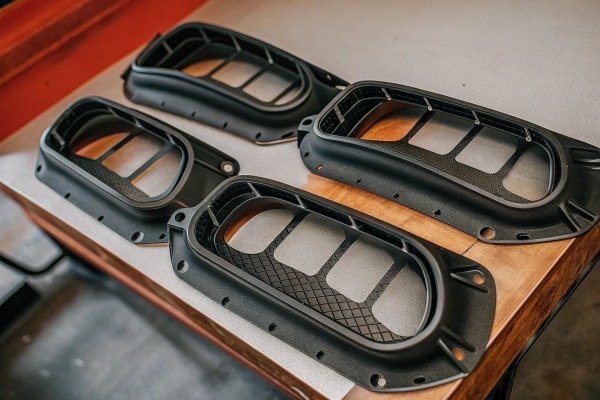
Sourcing automotive blow-molded parts is stressful when quality standards remain unclear ISO 9001 1. We see projects stall because buyers cannot pinpoint which certifications truly matter.
The primary certifications for automotive blow molding are IATF 16949 for quality management and ISO 9001 quality management 2 as the foundational standard. Additionally, ISO 14001 ISO 14001 3 is often required for environmental compliance, while specific OEMs may demand VDA 6.3 process audits to ensure defect-free production Production Part Approval Process 4.
Let’s break down exactly which standards protect your supply chain and investment.
Is IATF 16949 mandatory for my automotive blow molding projects?
We frequently guide clients who are unsure if their specific ducting or reservoir project strictly demands the highest tier of compliance environmental compliance 5.
IATF 16949 is mandatory if you supply components directly to an OEM or Tier 1 assembly plant. It ensures your blow molding process meets rigorous standards for defect prevention, waste reduction, and continuous improvement required by major automakers.
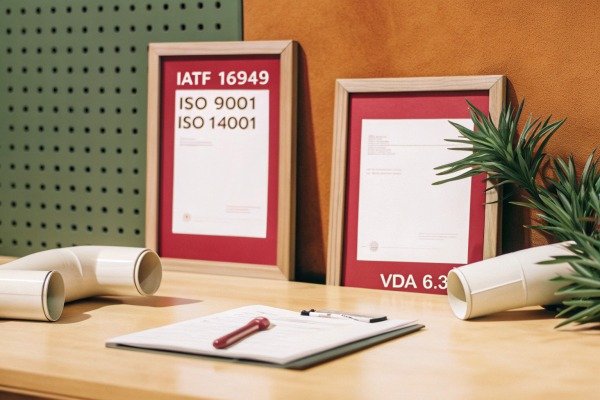
When we evaluate suppliers for our US clients, we often have to clarify the hierarchy of automotive standards. The requirement for IATF 16949 usually depends on where you sit in the supply chain. If you are selling parts directly to companies like Ford, Tesla, or General Motors, this certification is non-negotiable General Motors 6. It is the global ticket to entry.
However, the standard is more than just a badge. It fundamentally changes how a factory operates. In our experience, a factory running under IATF 16949 has a completely different mindset compared to a standard shop. They focus heavily on defect prevention rather than just detecting bugs at the end of the line. For blow molding, this is critical because internal defects in hollow parts are hard to see without destructive testing.
The Role of Core Tools
One major difference we see on the factory floor is the use of Core Tools. An IATF-certified supplier must use Advanced Product Quality Planning (APQP) and the Production Part Advanced Product Quality Planning 7 Approval Process (PPAP). For your air ducts or fluid tanks, this means the supplier validates the mold design and cooling times before mass production begins. They don't just "try it and see."
Tier Requirements Breakdown
If you are a Tier 2 supplier, the rules might be more flexible. Some Tier 1 buyers allow their suppliers to be ISO 9001 certified if they have a plan to achieve IATF compliance eventually. But generally, the closer your part is to the engine or safety systems, the stricter the rule.
| Feature | ISO 9001 (General) | IATF 16949 (Automotive) |
|---|---|---|
| Focus | Customer satisfaction and consistency | Defect prevention and reduction of variation |
| PPAP Requirement | Optional (depends on contract) | Mandatory functional requirement |
| Supplier Monitoring | Basic vendor evaluation | strict scorecards for delivery and quality |
| Blow Molding Context | Checks if part looks right | Validates wall thickness distribution & weight |
| Audit Frequency | typically Annual | Annual with stricter pass/fail criteria |
We always advise our clients to look at the "Customer Specific Requirements" (CSRs). Even if the standard is IATF, a specific car maker might add extra rules for plastic molding. Ignoring these can lead to immediate disqualification.
Can I accept ISO 9001 instead of IATF 16949 for non-critical plastic parts?
Our sourcing team often helps buyers evaluate if a standard factory can handle simpler parts like washer fluid tanks to lower unit costs.
You can accept ISO 9001 for non-critical, Tier 2, or aftermarket parts where safety risks are low. However, you must implement strict third-party inspections and process audits to compensate for the lack of rigorous IATF-mandated controls.

The short answer is yes, but it comes with conditions. We have successfully managed projects using ISO 9001 suppliers for our clients, but the approach is different. If you are sourcing aftermarket accessories, interior trim that doesn't impact safety, or simple fluid containers, an IATF shop might be overkill. IATF suppliers often charge a premium—sometimes 10% to 15% higher—because of the immense administrative overhead they carry.
Managing the Quality Gap
When we work with an ISO 9001 supplier for automotive parts, we don't just place the order and wait. We have to act as the quality bridge. Since ISO 9001 does not mandate techniques like Failure Mode and Effects Analysis (FMEA) Failure Mode and Effects Analysis 8, we have to enforce these steps ourselves. We might send our own engineers to the factory in Vietnam or China to oversee the mold trials.
Risk Assessment is Key
You need to ask: What happens if this part fails? If a blow-molded HVAC duct cracks, the driver gets annoyed. If a brake fluid reservoir cracks, the brakes fail. brake fluid 9 You can never use a standard ISO 9001 shop for the reservoir. But for the HVAC duct, a solid ISO 9001 partner is often a smart financial move.
Bridging with VDA 6.3
For clients targeting German markets, we sometimes use VDA 6.3 process audits. Even if a supplier lacks the full IATF certificate, passing a VDA 6.3 audit shows their process is robust. It is a middle ground that provides confidence without the full IATF price tag.
| Component Type | Risk Level | Recommended Minimum Cert |
|---|---|---|
| Fuel Tanks / Brake Reservoirs | Critical / Safety | IATF 16949 (Mandatory) |
| Structural Air Ducts | High | IATF 16949 (Highly Recommended) |
| Washer Fluid Bottles | Medium | ISO 9001 + PPAP capability |
| Interior Trim / Covers | Low | ISO 9001 |
| Aftermarket Accessories | Low | ISO 9001 |
Choosing ISO 9001 requires you to be an active buyer. You cannot rely on the system to catch errors; you must inspect the products yourself or hire a third party like us to do it.
How do I verify the authenticity of a supplier's quality management certificates?
We constantly encounter suppliers in Asia presenting questionable documents. Spotting these early prevents costly legal and quality nightmares down the road.
To verify authenticity, cross-reference the certificate number in the IATF Oversight database or the issuing registrar’s online directory. Always confirm the scope explicitly covers blow molding manufacturing, not just trading or assembly operations.

In our daily operations across Vietnam and China, we see many "photoshop certificates." It is a harsh reality of global sourcing. A supplier might send a PDF that looks perfect, but it could be expired, forged, or borrowed from another company. Relying on a PDF file alone is dangerous.
The Scope Trap
One common trick we see is a company presenting a valid certificate with the wrong scope. For example, a supplier might hold an ISO 9001 cert for "Sales and Trading of Plastic Parts." This does not mean they manufacture them. If you don't read the fine print, you might think you are hiring a factory when you are actually hiring a middleman with no process control. For blow molding, the scope must clearly say "Manufacturing of Blow Molded Components."
Steps for Verification
We follow a strict protocol when onboarding new vendors for our US clients. You should do the same. Never accept a certificate at face value.
- Check the Database: For IATF 16949, go to the IATF Oversight website. Enter the certificate number. If it does not appear, it is not valid.
- Contact the Registrar: Look at the logo on the certificate (e.g., SGS, TUV, BSI). Go to their official website and use their client directory.
- Match the Address: Does the address on the certificate match the factory address where you plan to send your molds? We often find suppliers using a certificate from a "sister factory" that is 500 miles away. That certificate does not cover your production.
Verification Checklist Table
Use this simple checklist before signing any contract.
| Verification Step | Action Required | Red Flag |
|---|---|---|
| IATF Database Check | Input unique ID into IATF portal | "No Record Found" |
| Scope Review | Read the "Scope of Registration" text | Says "Trading" or "Assembly" only |
| Address Match | Compare Cert Address vs. Physical Site | Different street or city |
| Expiration Date | Check valid dates | Expired or expires in < 30 days |
| Accreditation Mark | Look for IAF or ANAB logos | Logo is blurry or missing |
Verification is a cheap insurance policy. It takes ten minutes but saves you from partnering with a factory that cannot deliver what they promise.
What specific quality risks do I face if my manufacturer lacks these industry standards?
We have seen production lines stop because a factory without proper controls delivered parts with invisible structural weaknesses.
Lacking these standards increases the risk of inconsistent wall thickness, material contamination, and poor parison material contamination 10 control. These defects cause assembly line stoppages, expensive recalls, and safety failures that can permanently damage your brand reputation.
When a supplier lacks a robust Quality Management System (QMS), the biggest risk is inconsistency. In blow molding, the process is sensitive. A slight change in temperature, humidity, or resin batch can change the wall thickness of your part.
The Invisible Defect: Wall Thickness
In our inspections, the most frequent failure we find in non-certified shops is uneven wall distribution. A standard molder might just check if the part fits the jig. But in automotive applications, a thinning corner on an air duct might burst under pressure or vibration. IATF-certified shops use parison programming controls and verify weight distribution regularly. Without these controls, you might receive 1,000 good parts and then 50 bad ones scattered inside the shipment.
Material Contamination and Regrind
Another huge risk is material control. Blow molding produces a lot of flash (excess plastic). Certified factories have strict rules about how much "regrind" (recycled scrap) goes back into the machine. If a factory lacks ISO/IATF standards, operators often throw too much regrind back into the hopper to save money. This degrades the plastic's physical properties. We have seen parts become brittle and snap during vehicle assembly because the resin was degraded by too much heat history.
Traceability Nightmares
Imagine a car owner reports a leaking tank. You need to know exactly which batch caused it to recall only those vehicles.
- Certified Shop: Can trace the resin batch, machine number, and production date in minutes.
- Non-Certified Shop: Often has no record. You might have to recall every part you ever sold.
Supply Chain Resilience
Finally, uncertified suppliers are often less organized. They may not do preventive maintenance on their molds. We have seen projects delayed for weeks because a mold broke down, and the factory had no spare parts plan. Certifications like IATF 16949 force suppliers to have contingency plans, ensuring your supply chain keeps moving even when things go wrong.
Conclusion
Choosing the right certification level balances cost with safety. While IATF 16949 is essential for critical components, verified ISO 9001 suppliers can handle less risky parts if managed strictly.
Footnotes
1. Official standard page for the foundational quality certification mentioned. ↩︎
2. Definition of the broader concept governing these certifications. ↩︎
3. Official standard page for the environmental certification mentioned. ↩︎
4. Definition of the mandatory validation process for automotive parts. ↩︎
5. EPA resource providing context on regulatory environmental requirements. ↩︎
6. Homepage of a major OEM cited as requiring strict certification. ↩︎
7. Explanation of the specific core tool methodology required by IATF. ↩︎
8. Overview of the risk assessment technique mentioned in the text. ↩︎
9. Technical context for the critical safety fluid mentioned. ↩︎
10. Explanation of foreign matter risks in manufacturing processes. ↩︎

 English
 Español de México
 Deutsch
 Français
 Русский
 العربية