At our Vietnam facility, we often see suppliers claiming US experience while failing basic audits. Finding a partner who truly understands American quality standards is frustratingly difficult without the right vetting process.
To verify a Vietnamese supplier's US export experience, request historical Bill of Lading records via platforms like ImportGenius and ask for photos of past shipments. Validate their ISO 9001 certifications, check for US-standard mold components like DME fittings, and confirm their knowledge of Incoterms and FDA compliance.
Let's explore the specific verification steps we use to ensure our supply chain remains secure and compliant.
How Can I Verify a Vietnamese Supplier's Past Export Records to the US?
In our sourcing office, we never rely on verbal claims. Without hard proof of past shipments, your project faces significant risks of delay or rejection at the border.
You can verify export records by demanding redacted Bills of Lading or using third-party customs data tools like Panjiva. These documents prove the supplier has successfully shipped containers to US ports, confirming their ability to handle logistics, customs clearance, and specific American documentation requirements.
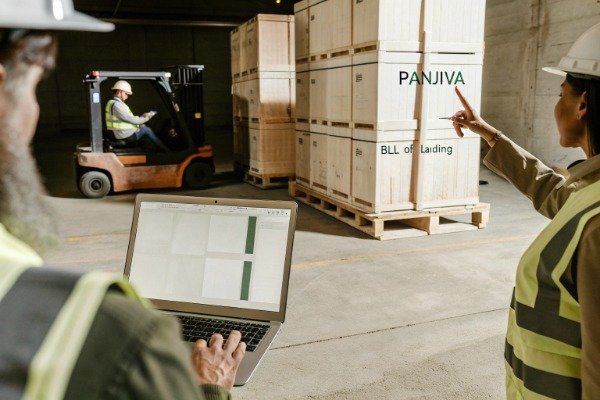
Verifying a supplier's history is the most critical step in our vetting process. When we evaluate a potential partner for blow molding projects, we look for tangible evidence that goes beyond a marketing brochure. A supplier might list "USA" as a market on their website, but that could mean they sent one sample package five years ago. You need proof of sustained, commercial-scale export activity.
The Power of Third-Party Data
We strongly recommend using customs data platforms like ImportGenius, Panjiva, or Datamyne. These tools allow you to search for a supplier’s name and see their actual shipping history. You are looking for the Bill of Lading (B/L). A valid B/L will show the shipper (the factory), the consignee (the US buyer), the product description, and the date of shipment. If a supplier claims to export 40% of their output to the US but shows no records in the last 12 months, that is a major discrepancy.
Visual Evidence from the Factory Floor
Beyond data, we always ask for visual proof. During our negotiations, we ask the supplier to share photos of goods being loaded into containers. Specifically, we look for shipping marks on the cartons that indicate a US destination. We also ask for photos of the products themselves. Do the labels meet US requirements? Are the pallets standard US size (48×40 inches) rather than Euro pallets?
One effective tactic we use is asking for a "sanitized" Bill of Lading directly from them. We tell them to black out the buyer's name to protect confidentiality. If they cannot provide even a redacted document, it usually means the shipment never happened.
Analyzing Export Volume vs. Capacity
Another red flag we look for is a mismatch between production capacity and claimed exports. If a small workshop with three blow molding machines claims to ship ten containers a month to the US, they might be acting as a middleman for Chinese goods to evade tariffs (transshipment). This is a high-risk activity that can get your goods seized by US Customs.
| Verification Method | Reliability Level | What It Proves |
|---|---|---|
| Customs Data (Panjiva/ImportGenius) | High | Actual shipment dates, volume, and US ports of entry. |
| Redacted Bill of Lading | Medium-High | Proof of logistics capability and document handling. |
| Website "Client Logos" | Low | Often outdated or fabricated for marketing purposes. |
| Loading Photos | Medium | Physical evidence of packaging standards and shipping marks. |
What Specific Documents Should I Request to Prove Their US Market Experience?
When we audit factories, missing paperwork is a major red flag. If a supplier cannot produce specific compliance documents, they likely lack genuine US market exposure.
Request valid ISO 9001 certifications, FDA registrations for food-grade parts, and social compliance audits like SA8000. Additionally, ask for proof of C-TPAT compliance and material certificates ensuring no forced labor involvement, which confirms their adherence to strict US regulatory and safety standards.
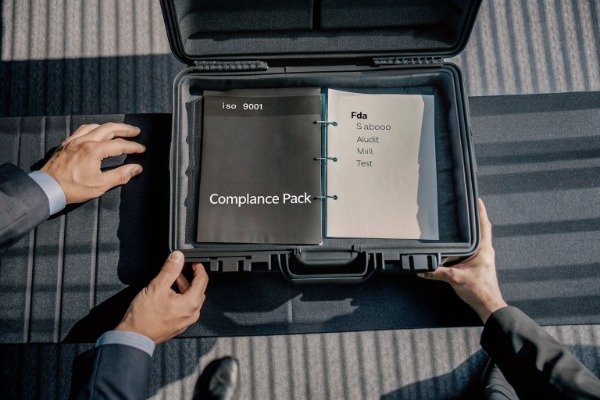
Documentation in international trade is not just about bureaucracy; it is the blueprint of a supplier's capability. In our experience, a factory that exports to the US regularly will have a "compliance pack" ready to go. If they hesitate or ask for weeks to prepare these documents, they are likely scrambling to figure out what you are asking for.
Incoterms 1
Quality Management Systems (QMS)
The baseline is ISO 9001:2015. However, for blow molding specifically, we look deeper. If the parts are for the automotive sector, we insist on IATF 16949. This certification is rigorous and rare among lower-tier suppliers. For packaging (bottles, containers), we check for ISO 22000 or FSSC 22000 if the products touch food. We verify these certificates by contacting the issuing body (e.g., SGS, TUV, BSI). Fake certificates are surprisingly common in Asia, so we never take a PDF at face value.
US-Specific Regulatory Compliance
Exporting to the US involves specific legal hurdles that do not apply to other markets. We always check if the supplier understands the Uyghur Forced Labor Prevention Act (UFLPA). US Customs is strictly enforcing this. We require suppliers to map their supply chain for raw materials (like HDPE or PP resin) to prove no inputs come from sanctioned regions. A supplier experienced in the US market will already have these supply chain maps or affidavits ready.
Social Compliance and Security
For our larger US corporate clients, social compliance is non-negotiable. We ask for valid audit reports like SMETA (Sedex), SA8000, or BSCI. These audits ensure the factory does not use child labor and follows safety laws. Furthermore, we ask about C-TPAT (Customs-Trade Partnership Against Terrorism). While the factory itself might not be C-TPAT certified (as it's a US program), a savvy exporter will be "C-TPAT compliant," meaning they have security measures like container seals, access controls, and background checks for employees. This reduces the chance of your cargo being flagged for intense inspection upon arrival in the US.
| Document Type | Purpose for US Market | Verification Tip |
|---|---|---|
| ISO 9001:2015 | General Quality Management | Check the certificate number on the registrar's website. |
| FDA Registration | Food/Medical Packaging | Ask for their FDA Establishment Identifier (FEI). |
| Mill Test Reports | Material Safety | Ensure resin batch numbers match production dates. |
| Social Audit (SMETA/BSCI) | Labor Law Compliance | Check the date of the last audit (must be <1 year). |
| C-TPAT Checklist | Supply Chain Security | Verify physical security (fences, cameras) during a site visit. |
Can I Ask for References from Other American Companies They Currently Supply?
We always ask for references, but many suppliers hesitate. A refusal to connect you with past clients often indicates poor performance or hidden quality issues.
ASTM standards 2
Yes, you should absolutely request references, though suppliers may protect client confidentiality. Instead of direct contact details, ask for redacted Purchase Orders or case studies demonstrating successful delivery to US firms. This validates their communication skills and ability to meet American engineering expectations.

Navigating the request for references requires a delicate balance. We respect that suppliers cannot hand over the phone number of a Purchasing Manager at a Fortune 500 company. However, a complete stonewall is unacceptable. We have found that honest suppliers will find a way to prove their track record without violating Non-Disclosure Agreements (NDAs).
Walmart 4
Alternatives to Direct Contact
If a supplier cites confidentiality, we propose alternatives. We ask to see a "case study" document. This should outline a problem a US client faced (e.g., "high defect rate in blow molded handles") and how this factory solved it. We also ask to see redacted Purchase Orders (POs). A PO from a US entity, even with the name blacked out, tells us a lot. It shows the terms of trade, the volume, and the technical specs.
Validating the "Story"
When a supplier does share a success story, we cross-reference it. If they claim to supply a major US tool brand, we look at that brand's products in a store. Does the "Made in Vietnam" label match? Does the plastic quality look like what we saw in the factory showroom? We also test the supplier's communication style during this process. Do they understand why we are asking? A supplier experienced with US buyers knows that trust is built on transparency.
The "Reference Check" Interview
On the rare occasion we get a direct reference, we keep the questions professional and specific. We don't just ask "Are they good?" We ask:
- "How did they handle the last quality issue?"
- "Did they meet the agreed lead time on the last three orders?"
- "How is their English communication regarding engineering changes?"
These questions reveal the operational reality of working with the supplier. If a supplier has burned bridges with past US clients, they will fight hard to prevent you from speaking to anyone.
C-TPAT 5
Analyzing the Client Base
We also look at the type of clients they serve. A supplier serving Walmart or Target has very different capabilities than one serving a small boutique shop. The big-box retailers require immense documentation and strict delivery windows. If a supplier has survived that ecosystem, they are likely robust.
Do They Understand US Quality Standards and Shipping Regulations for Blow Molded Products?
Our engineers frequently reject molds made with Asian standards. If a supplier ignores US specifications like imperial fittings, your maintenance costs will skyrocket.
SGS 6
Suppliers must demonstrate knowledge of US-specific standards, such as DME mold components and ASTM material specifications. They should also understand Incoterms like DDP and mandatory filings like ISF. Failure to comply with these technical and logistical rules often leads to expensive rework and customs delays.
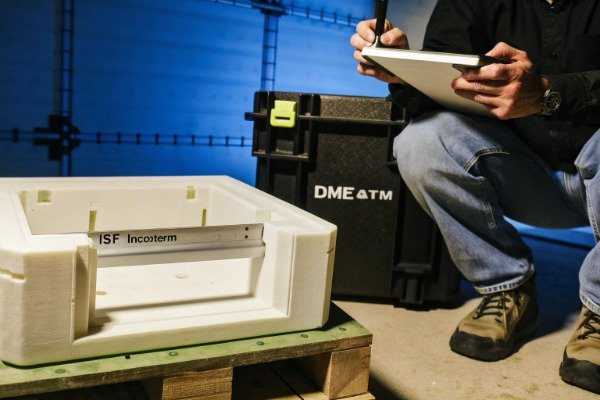
Uyghur Forced Labor Prevention Act 7
The gap between "making a plastic part" and "making a part for the US market" is massive. In our engineering meetings, we often see Vietnamese suppliers who are excellent at production but fail on the technical integration with US systems. This disconnect usually happens in two areas: the tooling (molds) and the logistics.
ISO 22000 8
Tooling and Technical Standards
For blow molding, the mold is the most expensive asset. If you plan to move the mold to the US eventually, or if you need US-based maintenance, the mold must be built to US standards. We specifically check if the supplier uses DME standard components rather than HASCO (European) or JIS (Japanese/Asian).
- Water Fittings: US factories use Imperial (inch) threads. If the supplier sends a mold with Metric water lines, you cannot connect it to a US cooling system without expensive adapters.
- Steel Types: We verify they use steel grades recognized in the US (like P20 or H13) and not obscure local equivalents that cannot be welded or repaired easily in America.
- Material Specs: US drawings often specify ASTM standards (e.g., ASTM D3350 for polyethylene). A supplier who only knows GB (Chinese) or JIS standards will struggle to source the correct resin, leading to parts that fail stress tests.
Logistics and Customs Knowledge
Shipping to Long Beach or New York is different from shipping to Bangkok. We test the supplier's logistics team on their knowledge of Importer Security Filing (ISF), also known as "10+2." This must be filed 24 hours before the ship leaves Vietnam. If the supplier doesn't know what this is, your cargo will be fined $5,000 upon arrival.
We also discuss Incoterms. Many Vietnamese factories prefer Ex-Works (EXW), putting all the risk on you. We prefer suppliers who are comfortable with FOB (Free on Board) or even DDP (Delivered Duty Paid). A supplier willing to quote DDP shows they are confident in their ability to navigate US tariffs, including the complex Section 301 duties if any Chinese components are involved.
ISO 9001:2015 9
Transshipment Risks
Finally, we rigorously audit for transshipment. Some "Vietnamese" factories are just warehouses repacking Chinese goods to avoid the 25% US tariff. We look at their electricity bills and raw material purchases. If they are buying 10 tons of resin but exporting 100 tons of finished product, they are faking the origin. US Customs uses forensic analysis on plastics; if you get caught importing transshipped goods, the legal liability falls on you, the importer.
| Feature | US Standard Requirement | Common Asian Default (Risk) |
|---|---|---|
| Mold Components | DME (Imperial) | JIS / LKM (Metric) |
| Water Lines | NPT Threads | BSP or Metric Threads |
| Resin Spec | ASTM / FDA Compliant | GB (Chinese National Std) |
| Pallet Size | 48" x 40" (US Standard) | 1200mm x 1000mm (Euro/Asia) |
| Customs Filing | ISF (10+2) Mandatory | Often ignored or unknown |
Conclusion
Verifying Vietnamese suppliers requires digging into data and technical details. By auditing documents and standards rigorously, we ensure successful, risk-free US market entry.
Bill of Lading 10
Footnotes
1. Definition of international commercial terms. ↩︎
2. Overview of the organization setting these material standards. ↩︎
3. Homepage of the major US retailer mentioned. ↩︎
4. Homepage of the major US retailer mentioned. ↩︎
5. Overview of the US customs security program. ↩︎
6. Homepage of the mentioned certification body. ↩︎
7. Explanation of the specific US labor law mentioned. ↩︎
8. Official page for the mentioned food safety standard. ↩︎
9. Official page for the mentioned quality management standard. ↩︎
10. Definition of the key shipping document. ↩︎

 English
 Español de México
 Deutsch
 Français
 Русский
 العربية