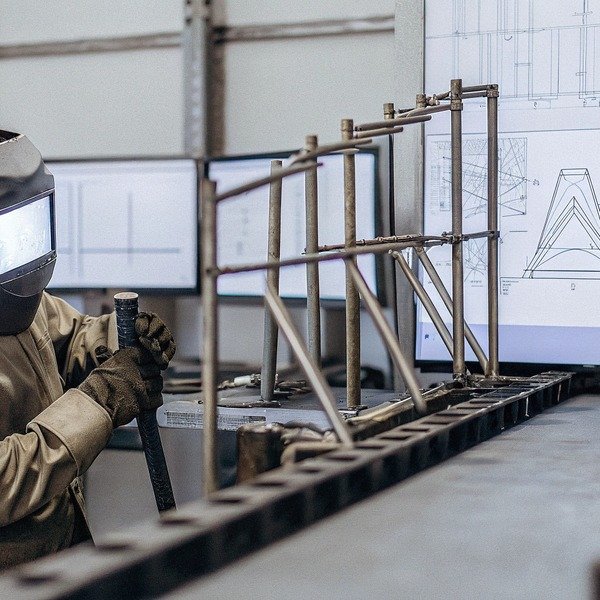
We frequently encounter clients who face severe project delays because their chosen factory treated a complex welded assembly like a simple commodity. It is painful to realize midway through production that your partner lacks the technical depth to solve thermal distortion issues or suggest material improvements. At our facilities in Vietnam and China, we have learned that true capability goes far beyond having enough welding torches.
To evaluate a supplier’s R&D capabilities, assess their mastery of engineering software like SolidWorks and FEA simulation, their adherence to welding standards such as ASME Section IX, and their ability to execute PPAP. Verify their internal fixture design skills and how proactively they communicate DFM suggestions to optimize your specific product designs.
Let’s examine the specific technical markers and questions we use to vet potential manufacturing partners for high-stakes welding projects.
What engineering software and welding standards should I look for in a potential partner?
When we audit potential partners for our US clients, we look beyond the shop floor to the engineering office to see if they simulate results before cutting metal. Relying on trial and error without digital validation is a recipe for inconsistent quality and costly delays.
You should prioritize partners who utilize advanced CAD software like SolidWorks or CATIA alongside Finite Element Analysis (FEA) to predict thermal stress. Furthermore, verify they hold certifications like ISO 3834 for quality requirements and qualify their procedures according to AWS D1.1 or ASME Section IX standards to ensure regulatory compliance.

The Critical Role of Digital Simulation
In modern manufacturing, R&D capability starts with software. You cannot afford a supplier who relies solely on 2D drawings. We insist that our engineering teams use 3D modeling tools to visualize the weldment from every angle. However, modeling is just the first step.
The true differentiator is Finite Element Analysis (FEA). Finite Element Analysis 1 Finite Element Analysis (FEA) 2 Welding introduces massive heat input, which causes metal to expand and contract. This leads to warping, residual stress, and potential failure points. A supplier with strong R&D capabilities will run thermal simulations before laying the first bead. They can predict exactly how a complex aluminum frame—like the one shown in the product image above—will behave under heat. aluminum frame 3 This allows them to adjust the welding sequence virtually, saving weeks of physical prototyping time.
Navigating the Alphabet Soup of Standards
Software predicts behavior, but standards ensure safety. A supplier might claim they can weld, but can they prove it according to international codes? We look for specific certifications that demonstrate a systemic approach to quality.
ISO 3834 is the gold standard for quality requirements in fusion welding. ISO 3834 4 Unlike general ISO 9001, which covers general management, ISO 3834 specifically targets welding controls. It validates that the supplier has competent welding coordinators and proper equipment maintenance.
Additionally, look for specific procedure qualifications. If your product is a pressure vessel, they must follow ASME Section IX. ASME Section IX 5 For structural steel, AWS D1.1 is non-negotiable. These standards require the supplier to create a Welding Procedure Specification (WPS) and prove it works through a Procedure Qualification Record (PQR). If a supplier cannot produce these documents for similar past projects, their R&D capability is likely immature.
Key Certifications and Their Impact
| Certification / Standard | What It Verifies | Why It Matters for R&D |
|---|---|---|
| ISO 3834-2 | Comprehensive quality requirements for fusion welding. | Proves the supplier has a dedicated welding management system, not just general quality control. |
| ASME Section IX | Qualification standard for welding/brazing procedures. | Ensures the supplier can develop and document a recipe that produces safe, code-compliant welds. |
| AWS D1.1 / D1.2 | Structural welding code (Steel / Aluminum). | Critical for structural integrity. D1.2 is essential if you are sourcing aluminum frames. |
| EN 15085 | Welding of railway vehicles and components. | Indicates an extremely high level of process control and safety culture, even if you aren't in rail. |
How do I assess their ability to handle prototyping and PPAP for custom welding projects?
Our team has seen projects fail because a supplier treated the prototype phase as a rough draft rather than a validation of the production process. Without a structured approval workflow, mass production becomes a gamble that puts your reputation at risk.
Assess their capability by reviewing past PPAP documentation, specifically looking for Control Plans and PFMEA records that address welding variables. A capable supplier treats prototyping as a validation phase, using production-intent materials and tooling to prove their process is stable, repeatable, and ready for volume manufacturing without defects.
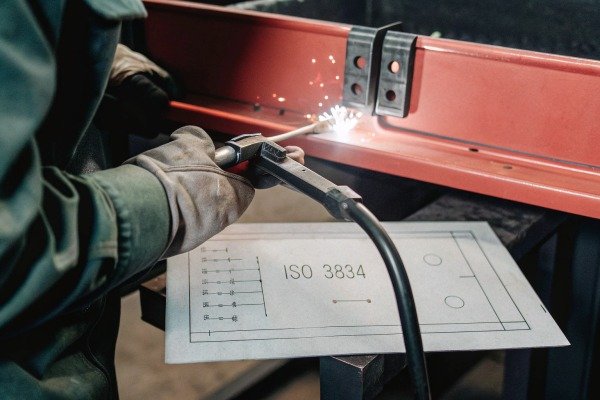
Moving Beyond "It Looks Good"
Many suppliers will hand-build a "golden sample" using their best master welder. This sample will look perfect. However, this is deceptive. It does not prove they can manufacture 5,000 units with the same quality. R&D capability is not just about making one good part; it is about designing a process that makes good parts every time.
We require suppliers to follow the Production Part Approval Process (PPAP). Production Part Approval Process (PPAP) 6 Production Part Approval Process 7 This is an automotive standard that has been adopted by high-end general manufacturing. It forces the supplier to prove their production tooling and processes—not just their best welder—can meet requirements.
The Importance of Destructive Testing
During the prototyping phase, a supplier with strong R&D skills will break things on purpose. They should perform destructive testing on the prototype welds. This includes:
- Macroscopic Examination: Cutting the weld verify penetration and fusion.
- Tensile Testing: Pulling the joint until it snaps to ensure the weld is stronger than the base material.
- Hardness Testing: Checking the Heat Affected Zone (HAZ) to ensure the metal hasn't become brittle.
If a supplier only offers a visual inspection report, they are missing the internal integrity aspect of R&D.
PFMEA: Predicting Failure Before It Happens
The most critical document in the PPAP package for R&D evaluation is the Process Failure Mode and Effects Analysis (PFMEA). Process Failure Mode and Effects Analysis (PFMEA) 8 This document asks: "What could go wrong, and how do we stop it?"
For a welding project, a good PFMEA might list "Incomplete Penetration" as a failure mode. The R&D team should then list a control, such as "Automated amperage monitoring" or "Destructive testing of 1 piece per batch." If you ask a supplier for a sample PFMEA and they provide a blank or generic template, their ability to anticipate and prevent technical issues is weak.
PPAP Elements Checklist for Welding
| PPAP Element | What to Look For in Welding | Warning Sign |
|---|---|---|
| Design Records | clear 2D/3D drawings with weld symbols. | Sketches without standard weld symbols. |
| PFMEA | Specific risks like burn-through or distortion listed. | Generic risks like "operator error" only. |
| Control Plan | specific frequencies for checking weld dimensions. | "Visual check" listed as the only control. |
| Material Certs | Mill certs for both base metal and filler wire. | Missing filler metal composition data. |
Can the supplier design and manufacture internal fixtures to ensure welding consistency?
We frequently encounter weldments that vary slightly in size because the factory relied on manual clamping rather than precise, custom tooling. This inconsistency destroys assembly line efficiency and forces expensive rework costs upon arrival at your warehouse.
A supplier with strong R&D capabilities must design and build custom internal fixtures to hold parts within tight tolerances during the thermal cycle. Ask for evidence of their fixture design process, including hydraulic or pneumatic clamping systems that minimize distortion and ensure every welded assembly is identical to the last.

The Hidden Hero of Welding Accuracy
In our experience, the difference between a mediocre shop and a high-end manufacturer often comes down to one thing: fixtures. A fixture (or jig) is the custom tool that holds the metal pieces in the exact correct position while they are welded.
R&D capability isn't just about the product; it's about the tools used to make the product. If a supplier expects a welder to hold pieces together with generic C-clamps and a tape measure, the result will vary every shift. A supplier with robust R&D will have an internal team or a dedicated partner specifically for designing and machining welding fixtures.
Managing Thermal Distortion
Referring back to the aluminum frame image, aluminum dissipates heat quickly but also expands significantly. If you weld one corner, the opposite corner might move by several millimeters.
A sophisticated supplier designs fixtures that do two things:
- Constraint: They hold the parts rigid so they cannot move out of tolerance.
- Heat Sinking: They use materials (like copper backing bars) within the fixture to absorb excess heat and prevent the frame from warping.
When evaluating a supplier, ask to see the fixture design for a current project. Look for "Poke-Yoke" (mistake-proofing) features. Poke-Yoke 9 Good fixtures are designed so that the part can only be loaded in the correct orientation. If the part can be loaded backward, eventually, it will be welded backward.
Evaluating Fixture Complexity
We categorize suppliers based on their tooling maturity. A Level 1 supplier relies on manual setup. A Level 3 supplier uses automated, dedicated fixtures.
| Level | Fixture Type | Description | R&D Maturity |
|---|---|---|---|
| 1 | Manual Layout | Uses table, tape measure, and generic clamps. | Low. High risk of human error. |
| 2 | Modular Fixturing | Uses reconfigurable welding tables (e.g., Demmeler tables). | Medium. Good for low volume, but depends on setup skill. |
| 3 | Dedicated Manual Fixture | Custom-built frame specifically for your part. | High. Shows commitment to repeatability. |
| 4 | Automated/Hydraulic Fixture | Clamps engage automatically; integrated with robot welders. | Advanced. Ideal for high-volume consistency. |
How will the engineering team communicate DFM suggestions to improve my product design?
We believe silence from a supplier during the design phase is a major red flag. If they simply accept your drawing without questioning potential weak points or cost drivers, they are acting as order takers rather than true engineering partners.
Effective engineering teams actively propose Design for Manufacturability (DFM) improvements to reduce costs and enhance weld strength. Evaluate their communication style by requesting examples where they modified joint geometries, suggested alternative materials, or adjusted tolerances to make a product easier to manufacture without compromising its functional performance.
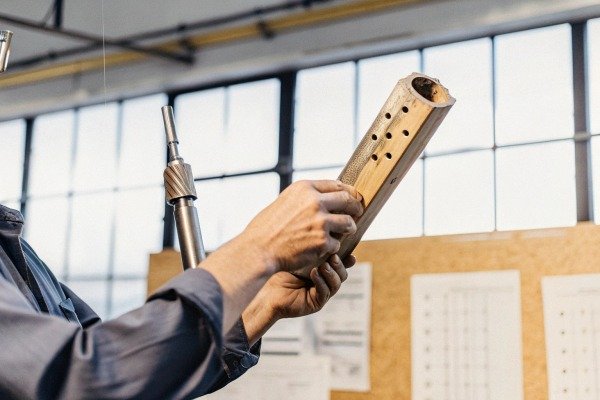
Proactive Problem Solving
The best R&D teams don't just build what you draw; they help you draw it better. Welding is a process with physical limitations. A welding gun cannot reach into a tight corner that is only 1 inch wide. If your design requires a weld in an inaccessible location, a good supplier will flag this immediately.
When we onboard a new client, our engineers review the drawings to identify "cost drivers." These are features that are expensive to make but might not add value. For example, specifying a full-penetration weld where a fillet weld would suffice fillet weld 10 can double the cost and increase distortion. A supplier with strong R&D will calculate the required strength and suggest the more efficient option.
Specific Welding DFM Checks
To test a supplier, send them a drawing with a deliberate, minor "trap"—perhaps a tolerance that is too tight for a welded assembly (e.g., +/- 0.1mm over a 1-meter span). Watch how they respond.
- The Order Taker: Quotes it as is. (Fail)
- The Partner: Responds asking if that tolerance is critical, noting that welding distortion makes it difficult and expensive to achieve without post-weld machining. (Pass)
This feedback loop is vital. It proves they understand the physics of the process and are looking out for your budget.
Common DFM Suggestions for Welding
Here are typical suggestions a high-capability R&D team might make.
- Joint Geometry: Changing a butt weld to a lap joint to make fit-up easier.
- Self-Fixturing Design: Adding tabs and slots (like puzzle pieces) to the laser-cut parts so they snap together. This reduces the need for complex fixtures and reduces assembly time.
- Weld Access: Moving a stiffener slightly to allow the welding torch proper angle of access.
- Material Selection: Suggesting a grade of aluminum (like 6061) that is more readily available and easier to weld than a specialized alloy, unless the application strictly demands it.
Communication Channels
Finally, assess how they communicate these ideas. Do they send a vague email, or do they send a marked-up PDF or a screenshot from their CAD software showing exactly what needs to change? We use WeChat and Zoom for real-time design reviews with our internal teams in China and Vietnam, ensuring that nothing gets lost in translation. Your supplier should be willing to hop on a call and share their screen to explain technical constraints.
Conclusion
Evaluating a supplier's R&D capability for welding is not about checking if they have the newest robot. It is about verifying their software workflows, their adherence to rigid standards like ISO 3834, their discipline in prototyping via PPAP, and their ability to design smart fixtures. Most importantly, it is about finding a partner who challenges your design to make it better, stronger, and more cost-effective.
Footnotes
1. Provides background on the mathematical method used for digital simulation. ↩︎
2. Official page from a major industry leader in engineering software explaining FEA. ↩︎
3. News report on the increasing use of aluminum in industrial manufacturing. ↩︎
4. Official standard page for quality requirements in fusion welding. ↩︎
5. Official source for the boiler and pressure vessel welding qualification code. ↩︎
6. Official page of the Automotive Industry Action Group, the governing body for PPAP standards. ↩︎
7. General background on the PPAP workflow used in manufacturing. ↩︎
8. Authoritative resource from the American Society for Quality defining FMEA/PFMEA. ↩︎
9. Definitive guide from the Lean Enterprise Institute on the mistake-proofing concept. ↩︎
10. Technical definition from TWI, a world-leading research organization for welding. ↩︎

 English
 Español de México
 Deutsch
 Français
 Русский
 العربية