
Raw material spikes can destroy your project margins overnight. In our Vietnam facility, we see how steel volatility impacts every weldment steel volatility 1 we export to the US.
To evaluate a supplier, verify their access to diversified steel mills and audit their inventory buffer capacity. Request open-book costing to track specific material indices rather than general inflation. Strong suppliers utilize duty-free raw material imports via FTAs to offset global price surges.
Let’s look at the specific mechanisms to protect your bottom line.
What specific contract terms help me lock in pricing for long-term welding projects in Vietnam?
Price renegotiations mid-project are a nightmare for purchasing managers. We draft our own supply agreements to prevent these surprise cost escalations for our clients.
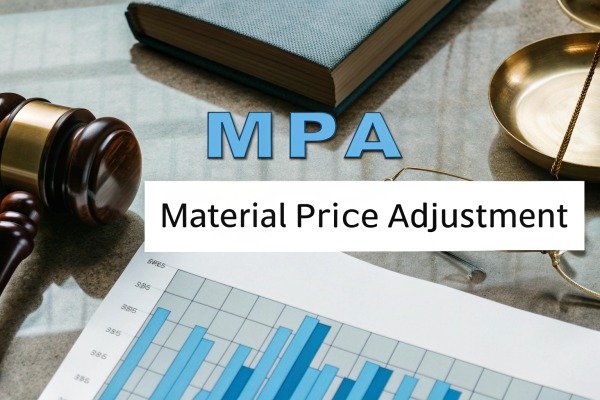
Negotiate contracts with a defined Material Price Adjustment (MPA) clause tied to a specific public index, such as the LME. Set a trigger threshold, typically +/- 5%, ensuring prices remain fixed unless fluctuations exceed this agreed percentage range.

When you source custom welding parts from Vietnam, vague contract language is a significant risk. A supplier might quote a low initial price to win the business, only to demand an increase three months later, citing "rising steel costs." Without a specific mechanism in place, you have no way to verify if the increase is legitimate or opportunism.
The Material Price Adjustment (MPA) Mechanism
The most effective tool we use is the Material Price Adjustment (MPA) clause. This removes emotion and negotiation from the table. The clause connects the unit price directly to a third-party index, such as the London Metal Exchange (LME) London Metal Exchange (LME) 2 or a specific Vietnamese steel index. London Metal Exchange (LME) 3 However, it does not change the price every day.
You must establish a "Trigger Threshold." This protects both parties from administrative fatigue. If the material index moves by only 1% or 2%, the price remains stable. The price only changes if the index moves beyond the agreed percentage (e.g., +/- 5%) over a defined review period (usually quarterly).
Validity Periods and Buffer Zones
Another critical term is the price validity period. For custom welding projects involving frames or chassis, raw material procurement often happens weeks before production. Your contract should specify a "Price Lock" period. This means once a Purchase Order (PO) is issued and accepted Purchase Order (PO) 4, the price is fixed for that specific batch, regardless of market movement.
Below is a comparison of contract structures we often see in the market:
| Contract Type | Price Stability | Risk Allocation | Recommended For |
|---|---|---|---|
| Spot Pricing | Low | 100% Buyer Risk | One-off, small urgent orders. |
| Fixed Price (1 Year) | High | 100% Supplier Risk (High premium charged) | Stable markets; Suppliers often break this if costs spike >20%. |
| Indexed MPA (+/- 5%) | Medium-High | Shared Risk | Long-term welding projects; Automotive or OEM parts. |
By using an Indexed MPA, you ensure that you only pay for actual market shifts, not the supplier's fear of the market.
How do I verify if a supplier has strong enough relationships with local steel mills to secure stable rates?
Small workshops often buy steel at spot prices, passing high costs to you. Our purchasing team mitigates this by securing long-term volume agreements directly with mills.
Ask for proof of direct mill purchasing accounts or long-term procurement contracts rather than spot-market receipts. Suppliers with strong mill relationships receive priority allocation and preferential pricing during shortages, protecting your supply chain from sudden market volatility.
In Vietnam, the gap between a "trader" and a "manufacturer" can be blurry. Many welding shops do not buy directly from steel mills like Hoa Phat or Formosa Hoa Phat 5. directly from steel mills 6 Instead, they buy from second or third-tier distributors. This adds a margin layer and exposes them to immediate spot price volatility. When global steel prices rise, distributors raise prices instantly. Direct mill buyers often have price locks or volume rebates that shield them for weeks or months.
Audit the Paperwork
To verify a supplier's strength, do not just listen to their sales pitch. Ask to see a redacted Mill Test Certificate (MTC) and the corresponding purchase invoice Mill Test Certificate (MTC) 7 for a recent batch of similar material.
If the invoice comes from a local trading house or a general hardware supplier, they have weak buying power. If the invoice comes directly from a major mill or a Tier-1 service center, they have leverage. This leverage matters when supply is tight. Mills prioritize direct, large-volume customers. Small shops get cut off or forced to pay premiums to secure material.
Assessing Regional Sourcing
Vietnam is long and geographically fragmented. A factory in the South (Ho Chi Minh City) buying steel from the North (Hai Phong) incurs significant internal logistics costs. A competitive supplier will have relationships with mills or service centers in their specific region to minimize transport costs.
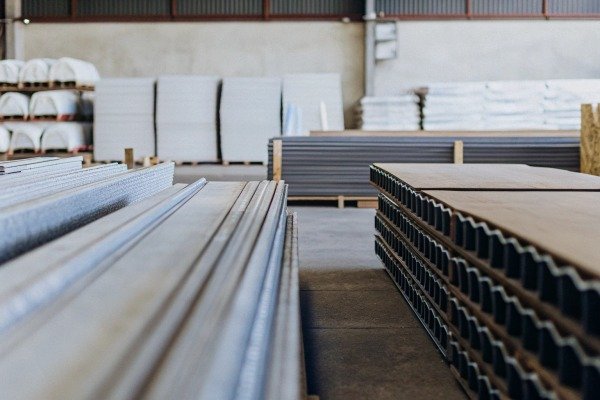
Furthermore, verify if they use Free Trade Agreements (FTAs). Free Trade Agreements (FTAs) 8 Free Trade Agreements (FTAs) 9 Vietnam has extensive FTAs. A savvy supplier can import specialized alloys (like the aluminum for the frame in the photo above) duty-free from Korea or Japan if local quality is insufficient, balancing cost and quality effectively.
Indicators of Buying Power
You can assess their standing in the supply chain using the following checklist:
- Direct Mill Account: Do they have a direct billing ID with the mill?
- Volume Commitments: Do they sign annual MOUs (Memorandums of Understanding) for tonnage?
- Payment Terms: Do mills offer them credit (e.g., 45 days)? This indicates financial trust.
Will the factory agree to an open-book costing structure so I can track actual material expenses?
Hidden markups on raw materials breed mistrust. We believe sharing our Bill of Materials (BOM) builds long-term partnerships and simplifies price discussions during market shifts. Bill of Materials (BOM) 10
Most capable Vietnamese suppliers will agree to open-book costing if assured of long-term volume. This transparency splits the unit price into material, labor, and overhead, allowing you to validate that price increases are strictly limited to verifiable raw material changes.
Open-book costing is the ultimate litmus test for a supplier's confidence. If a supplier refuses to break down their costs, they are likely hiding inefficiency or excessive profit margins on raw materials. In our dealings with US clients, we find that transparency eliminates friction.
Breaking Down the Bill of Materials (BOM)
When we discuss "open-book," we mean separating the unit price into three distinct buckets:
- Raw Material Cost: Weight x Price per kg (recoverable).
- Value-Add: Labor, electricity, welding consumables, overhead, and profit (fixed).
- Scrap/Yield Loss: The material wasted during cutting and processing.
When raw material prices rise, the "Value-Add" portion of your price should remain unchanged. Without this breakdown, a 10% rise in steel prices often leads to a supplier asking for a 10% rise in the total part price. This is incorrect math. Since material is only a fraction of the total cost, a 10% material hike should only increase the total price by a smaller percentage (e.g., 3-5%).
Evaluating the Scrap Rate
An open-book structure also reveals the supplier's technical efficiency. Look closely at the "Yield Rate" or scrap percentage. For a rectangular welded frame like the one pictured, there are cut-offs from the tubing. A highly efficient factory uses nesting software to minimize waste, keeping scrap under 5-10%. A disorganized factory might charge you for 20% waste.
Impact of Material Hikes on Total Price
The table below illustrates why you need open-book costing to prevent overcharging during inflation:
| Cost Component | Base Price ($) | Scenario: Material Costs Rise +20% | Correct New Price ($) | Incorrect "Flat" Increase ($) |
|---|---|---|---|---|
| Raw Material | $40.00 | $48.00 (+$8.00) | $48.00 | — |
| Labor & Overhead | $50.00 | $50.00 (No Change) | $50.00 | — |
| Profit | $10.00 | $10.00 (No Change) | $10.00 | — |
| TOTAL PRICE | $100.00 | — | $108.00 | $120.00 |
By isolating the material cost, you save $12.00 per unit in this scenario.
Do they maintain sufficient raw material inventory to buffer my orders against short-term market spikes?
Just-in-time delivery fails when raw material prices soar. We maintain strategic safety stock in our warehouse to absorb short-term shocks and keep your pricing stable.
Inspect the supplier’s warehouse turnover ratios and physical stock levels. A resilient supplier maintains at least 30 to 60 days of raw material inventory. This physical buffer allows them to ride out short-term price spikes without immediately raising your unit costs.

Inventory is expensive. It ties up cash flow and takes up valuable factory space. However, for an international buyer, a supplier with "lean" inventory is a risk. If a supplier buys material only after receiving your order, you are exposed to the spot price on that exact day. If that day happens to be during a market spike, you pay the premium.
The Financial Health Connection
Holding inventory requires liquidity. When we audit suppliers or manage our own stock, we look at working capital. A supplier struggling with cash flow cannot afford to buy steel in advance. They live hand-to-mouth. This makes them incapable of hedging against inflation.
You should ask during your factory audit (or ask your sourcing agent to check): "What is your standard stocking level for standard profiles?" For common materials like the aluminum tubing used in frames, or standard carbon steel sheets, a healthy factory should have racks full of material ready to go.
Strategic Stockpiling vs. Dead Stock
You must differentiate between strategic buffering and "dead stock."
- Strategic Stock: High-turnover materials kept in volume to smooth out price and lead time variances.
- Dead Stock: Rusty, dusty material from cancelled orders years ago.
Verify that the inventory matches your specs. If you buy 304 Stainless Steel, seeing a warehouse full of Carbon Steel helps you very little.
Value Engineering Substitutions
A supplier with good inventory management also knows when to suggest alternatives. If a specific alloy spikes in price due to a nickel shortage, a proactive engineering team will suggest a comparable material that is currently stable or in stock. This "Value Engineering" capability is a soft skill that directly impacts your hard costs.
Conclusion
To protect your margins, evaluate if your supplier has direct mill access, transparent costing, and sufficient inventory capital. Secure your supply chain with index-linked contracts today.
Footnotes
1. Authoritative statistics on global steel market trends and production data. ↩︎
2. Official website of the primary global marketplace for non-ferrous metals. ↩︎
3. Provides background on the global metal trading hub used for price indexing. ↩︎
4. Standard financial definition of the commercial document referenced. ↩︎
5. Official website of the major Vietnamese steel manufacturer mentioned in the text. ↩︎
6. Official website of Vietnam’s largest steel producer for verifying direct mill relationships. ↩︎
7. Technical definition from a leading welding institute explaining certification requirements. ↩︎
8. Official World Trade Organization resource explaining international trade agreement structures. ↩︎
9. Official Vietnam WTO Center resource detailing the country’s active trade agreements. ↩︎
10. Explains the structure of a BOM for transparency in manufacturing costs. ↩︎

 English
 Español de México
 Deutsch
 Français
 Русский
 العربية