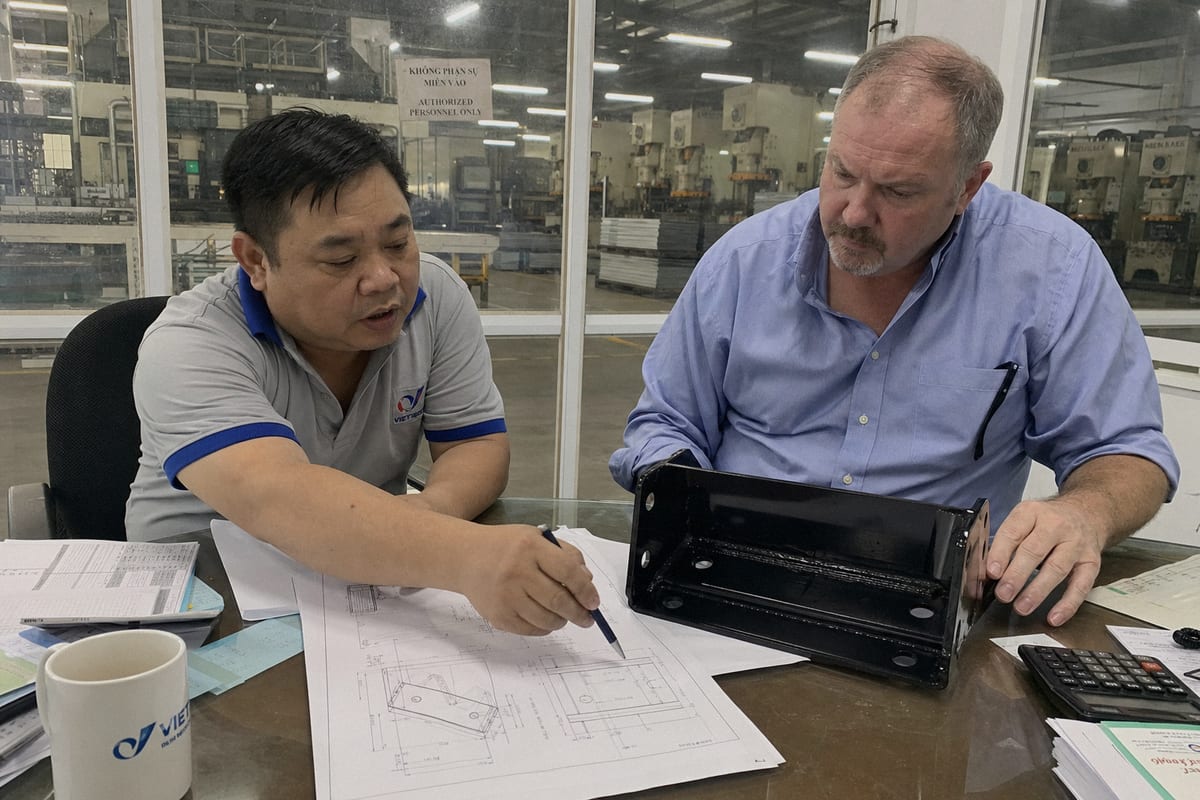
One rejected shipment of stamping parts can halt an entire production line. I’ve watched U.S. clients lose weeks — and thousands of dollars — because a supplier overlooked a single critical dimension on a drawing.
Поставщики штампованных деталей удовлетворяют индивидуальным требованиям заказчиков, когда покупатели применяют трехфазную структуру: раннее сотрудничество по проектированию для технологичности, строгие аудиты поставщиков, проверяющие возможности оснастки и измерений, и официальные соглашения о качестве, подкрепленные статистическим контролем процессов и четкими критериями приемки до начала производства.
The sections below break down each phase. I will share what our team has learned managing custom stamping projects across Vietnam, Taiwan, and other Asian supply bases for U.S. buyers who demand mid-to-high quality and on-time delivery.
Как я могу проверить способность поставщика штамповки соответствовать моим точным спецификациям чертежа до размещения заказа?
A few years ago, a client sent us a bracket drawing with fourteen dimensions — but only three were truly critical for assembly fit. The supplier they had been using treated every tolerance the same, inflating cost and still missing the ones that mattered.
Проверить возможности поставщика штамповки, запросив подробную проверку первого образца на опытном образце, подтвердив, что они владеют соответствующим тоннажем прессов, собственным инструментом и оборудованием CMM, и проанализировав их послужной список по аналогичным геометриям деталей и маркам материалов.

Start With Your Requirement Package
Before you even contact a supplier, your own documentation must be airtight. Ambiguity in the drawing is the number-one cause of non-conforming stamping parts. Our engineering support team reviews every client drawing before we forward it to a production partner. We look for missing information that will cause trouble later.
A complete requirement package should include:
| Document / Detail | Почему это важно |
|---|---|
| Dimensioned 2D drawing or 3D model with GD&T 1 | Eliminates interpretation errors on form, fit, and function |
| Material alloy, gauge, and temper specification | Prevents substitution of cheaper or incorrect material |
| Surface finish / plating / coating requirement | Ensures corrosion resistance and aesthetic standards are met |
| Annual volume and program life estimate | Allows supplier to select appropriate tooling class and press |
| Quality certification level (e.g., PPAP, FAI) | Sets the bar for documentation and sign-off before shipment |
| Sample or reference part (photo at minimum) | Bridges the gap between abstract drawing and physical reality |
Evaluate Press and Tooling Capabilities
Not every stamping shop can handle every part. Press tonnage, stroke length, and bed size must match your part geometry. When we audit a potential supplier, we walk the floor and check whether their presses — including servo presses for complex geometries or Advanced High-Strength Steel 2 — can physically produce the part.
In-house tool and die design is a strong indicator of quality control. If a supplier outsources its progressive dies, you lose visibility into tool quality, and lead-time risk increases. We always ask: who designed the die, who built it, and who maintains it?
Confirm Measurement and Inspection Equipment
A supplier who cannot measure a part cannot guarantee it. We verify that facilities have a CMM (Координатно-измерительная машина 3), optical comparators, or vision inspection systems that match the dimensional tolerances on the client's drawing. If the drawing calls for ±0.05 mm on a critical hole position, the supplier needs equipment capable of measuring to at least ±0.01 mm resolution.
Run a Prototype or Sample Order
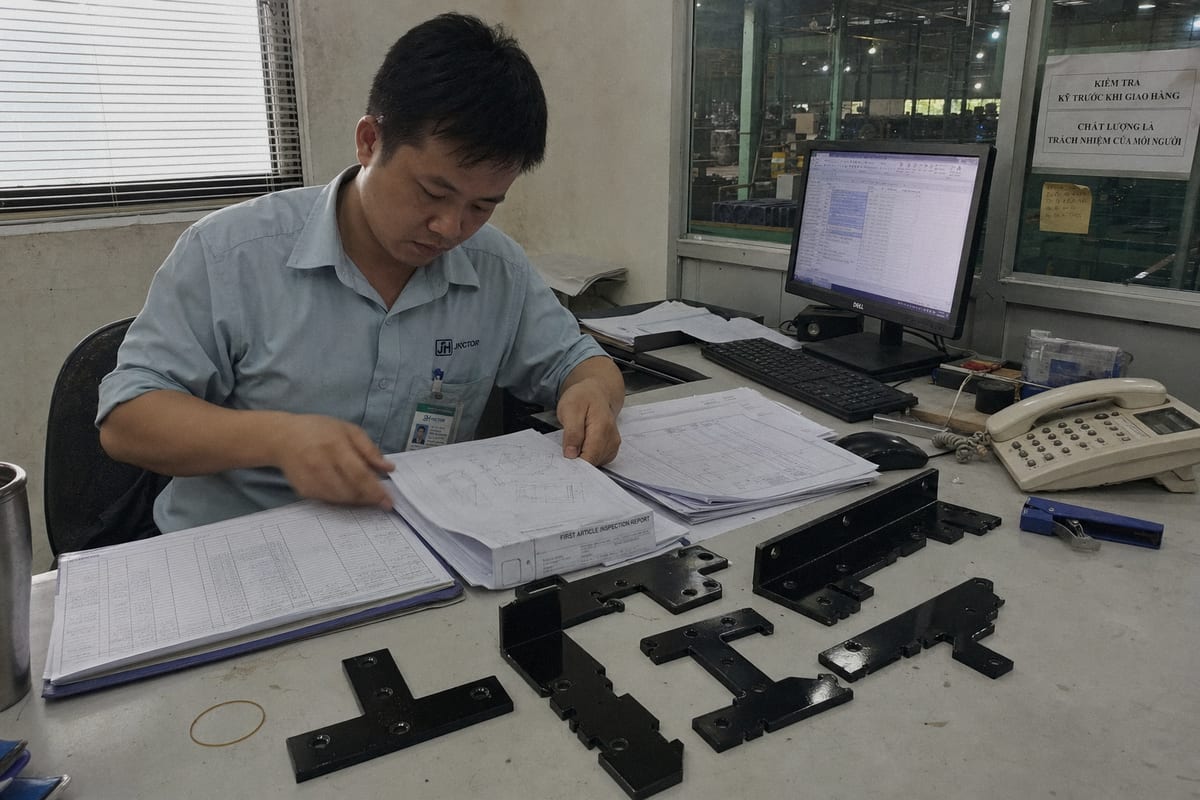
Words on a capability sheet are not proof. A prototype development run — even a short one of fifty to one hundred pieces — gives you real data. We require a formal first article inspection report signed by both the supplier's quality team and our own inspector before any production order moves forward. For a deeper dive into evaluating these capabilities, see our guide on how to verify a supplier’s high-precision stamping parts capability.
What quality control processes should I look for to avoid non-conforming stamping parts?
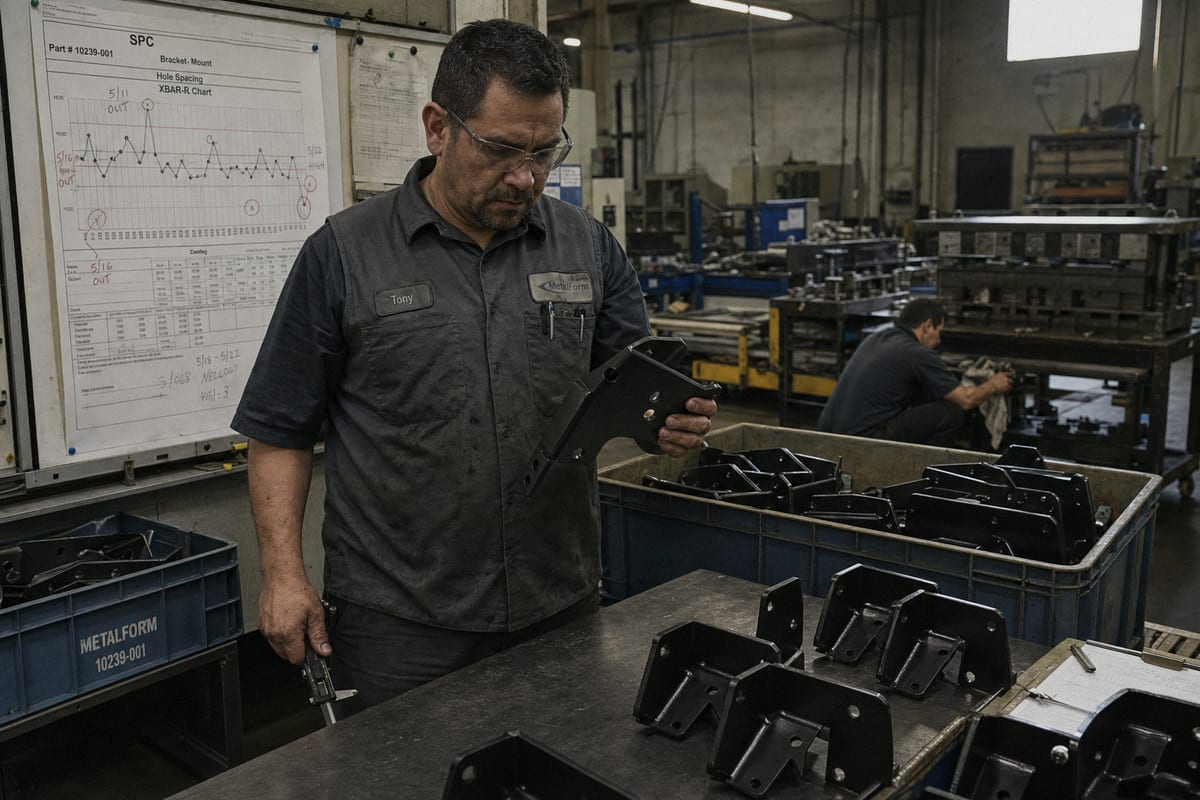
The most expensive stamping part is the one that arrives defective. I learned this the hard way when a shipment of powder-coated brackets failed incoming inspection at a client's warehouse because the supplier had not monitored a progressive die as it wore down over a 20,000-piece run.
Look for suppliers who implement statistical process control on critical dimensions, maintain a documented die maintenance schedule, enforce layered inspection (in-process, end-of-line, and periodic audit), and respond to nonconformances with formal root cause analysis and corrective action.
The Difference Between Inspection and Prevention
Many buyers focus only on final inspection. That is too late. By the time a part reaches the end of the line, the defective batch already exists. The goal is to prevent defects, not just catch them.
Статистический контроль процесса 4 (SPC) is the core tool for prevention. Operators chart critical dimensions during the run and react immediately when a measurement trends toward a control limit. Our team confirms that suppliers have documented escalation paths — who gets notified, what action is taken, and how fast.
Industry-Specific Certifications Matter
A generic quality management system may not be enough for your application. Here is how to match certifications to industry requirements:
| Отрасль | Обязательная сертификация | What It Adds Beyond ISO 9001 |
|---|---|---|
| Автомобильная промышленность | IATF 16949 5 | Customer-specific requirements, APQP, PPAP |
| Аэрокосмическая промышленность | AS9100 6 | Risk management, configuration control, traceability |
| Медицинские | ISO 13485 7 | Контроль проектирования, документация по биосовместимости |
| Общее промышленное применение | ISO 9001 | Baseline quality management system |
When our clients serve automotive end-users, we insist the stamping supplier holds IATF 16949 — or at minimum follows the Процесс утверждения производственной детали 8 framework even without formal certification.
The Supplier Audit Checklist
During a second-party audit, we evaluate areas that certifications alone cannot reveal:
- Die maintenance program. Is there a scheduled preventive maintenance log? Are punch and die components replaced at defined intervals?
- Material certification and traceability. Can the supplier trace a finished part back to the specific coil lot and its mill test certificate? Lot-level material traceability prevents blanket recalls.
- Nonconforming product handling. How does the supplier segregate, document, and disposition rejected parts? Do they issue formal corrective action reports with root cause analysis?
- Gauge calibration records. Are all measurement instruments calibrated on schedule with traceable standards?
Corrective Action Rigor
When defects do occur, the supplier's response quality tells you everything. We evaluate past SCAR (Supplier Corrective Action Request) responses. A good response identifies the root cause — not just the symptom — and implements a permanent fix such as a die redesign or an added in-process check. A bad response says "operator retrained" and nothing else.
How do I choose a stamping partner in Asia who can support co-development and reduce miscommunication on critical requirements?
Last year, a purchasing manager from the Midwest told us his biggest frustration was not price — it was the back-and-forth. He would send a drawing, wait two weeks, receive samples, find three issues, and start over. The cycle burned four months before he had acceptable parts.
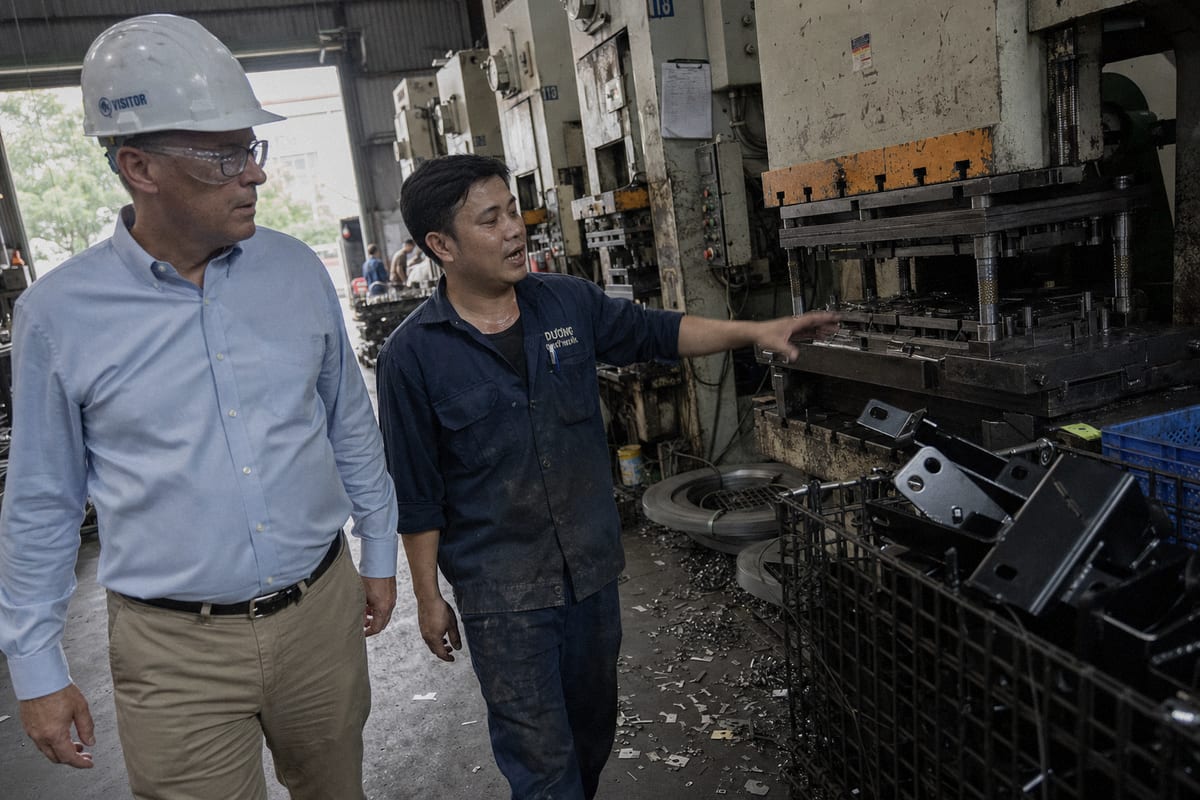
Choose a stamping partner in Asia who offers dedicated engineering support for Design for Manufacturability review, assigns a single project manager fluent in your language, provides transparent communication protocols, and has a proven process for aligning drawing intent with production reality early in the project.
Why "Design Then Source" Fails
The traditional approach — finalize the design, then find a supplier — creates problems. The design may include features that are expensive or impossible to stamp efficiently. A bend radius might be too tight for the material gauge. A hole might be too close to a bend line. These issues surface only after tooling is cut, and fixing them costs time and money.
Our approach flips this. We engage the stamping supplier during the design phase. The supplier reviews the drawing and flags manufacturability concerns before tooling begins. This is the core of Design for Manufacturability (DFM) — and it is where the most value is created.
What to Share Beyond the Drawing
A drawing alone is not enough context for a supplier halfway around the world. To reduce miscommunication, share:
- Function statements. What does this part do? What loads does it carry? What does it mate with?
- Assembly context. How does this stamping part fit into the larger assembly? Provide photos or exploded views.
- Environmental exposure. Will the part see outdoor weather, salt spray, or high temperatures?
- Lifecycle expectations. How many cycles must the part survive?
When we manage a co-development project, we build a requirement brief that captures all of this. It becomes the reference document that the supplier, our quality team, and the client all work from. For more on this topic, learn how you can ensure suppliers meet custom needs when sourcing stamping parts.
Communication Protocols That Work
Miscommunication is not just a language problem. It is a process problem. Here is what we have found effective:
| Protocol Element | How It Reduces Risk |
|---|---|
| Single point of contact (project manager) | Prevents conflicting instructions from multiple people |
| Weekly status updates with photo/video evidence | Keeps buyer informed without requiring travel |
| Shared digital folder for all drawings and revisions | Eliminates confusion over which version is current |
| Bilingual engineering review of all critical notes | Catches translation errors on material specs or tolerances |
| Formal DFM feedback report before tooling approval | Documents every concern and the agreed resolution |
Our Vietnam and China offices provide this layer of local presence. Having people on the ground who speak both the supplier's language and the buyer's language eliminates the most common source of errors: assumptions made when a question goes unasked. Understanding how to assess professionalism and trustworthiness of Vietnamese stamping parts suppliers can further strengthen your selection process.
The Value of Prototype Development in Co-Development
Before committing to production tooling, a prototype run with soft tooling or 3D-printed fixtures lets both sides validate the design. It answers the critical question: does this part actually work in the assembly? This step costs a fraction of a full production die and can save months of rework.
What steps can I take to ensure on-time delivery and avoid production delays with my stamping parts supplier?
A late delivery is never just a late delivery. It triggers expedited freight costs, idle production lines, missed customer commitments, and strained relationships. One of our U.S. clients once told me that a two-week delay on a stamping order cost him more in air freight and downtime than the parts themselves were worth.
Ensure on-time delivery by qualifying multiple material sources upfront, requiring the supplier to maintain safety stock of raw material, establishing milestone-based production schedules with weekly reporting, and building buffer time into the logistics plan for customs clearance and ocean transit variability.
Understand Where Delays Actually Come From
Most delivery delays in precision metal stamping do not start on the press. They start upstream — in material procurement, tooling readiness, or approval loops. Here is a breakdown of common delay causes and how to mitigate each:
| Delay Cause | Типичное воздействие | Стратегия смягчения последствий |
|---|---|---|
| Raw material shortage or long lead time | 2–6 недель | Pre-qualify multiple coil suppliers; maintain safety stock |
| Tooling damage or unplanned maintenance | 1–3 недели | Require preventive tool and die maintenance schedule |
| Drawing revision during production | 2–4 недели | Freeze design before tooling starts; use formal change control |
| Quality rejection requiring rework | 1–2 недели | Enforce SPC and in-process inspection to catch issues early |
| Customs or logistics disruption | 1–4 недели | Build buffer into transit schedule; use experienced freight forwarder |
Milestone-Based Production Scheduling
We break every stamping order into milestones and track each one. A typical schedule looks like this:
- Material procurement confirmed — Coil ordered and delivery date locked.
- Tooling ready / trial run complete — Die installed, test parts produced and measured.
- First article inspection approved — FAI report signed by supplier quality and our inspector.
- Production run start and midpoint check — SPC data reviewed at 50% completion.
- Final inspection and packing — Full dimensional and visual inspection before shipment.
- Shipment and tracking — Container loaded, bill of lading issued, tracking number shared.
Each milestone has a target date. If any milestone slips, we flag it immediately and work with the supplier on a recovery plan. This transparency is one of the reasons our clients value working with a цепочка поставок 9 partner rather than dealing directly with a factory that may not proactively communicate delays.
Планирование на случай непредвиденных обстоятельств
Relying on a single source for everything — material, stamping, and finishing — concentrates risk. We recommend qualifying at least two material sources and, for high-volume programs, considering a backup stamping supplier who has been through the audit and sample approval process. This does not mean splitting every order. It means having a qualified alternative ready if the primary source encounters a problem.
Payment Terms and Supplier Motivation
Payment terms also affect delivery reliability. When suppliers face cash flow pressure, they may prioritize orders from customers who pay faster. Our ability to offer structured payment terms — including open account arrangements — helps ensure our production partners stay motivated and financially stable enough to maintain delivery schedules without cutting corners.
Заключение
Ensuring stamping parts suppliers meet your custom requirements comes down to three things: verify capability before you order, enforce process control during production, and maintain clear communication throughout. Every step reduces risk and protects your bottom line.
Сноски
1. Background concept on geometric dimensioning used in drawing specifications. ↩︎
2. Background on the material type mentioned for press tonnage evaluation. ↩︎
3. Explains the measurement equipment referenced for dimensional verification. ↩︎
4. ISO relevance for the quality control methodology discussed throughout the article. ↩︎
5. Authoritative reference for the automotive quality management standard mentioned. ↩︎
6. Standards body reference for the aerospace quality certification listed. ↩︎
7. Official standards source for the medical device quality certification cited. ↩︎
8. Background on the PPAP framework referenced for automotive part approval. ↩︎
9. General background concept relevant to sourcing and logistics discussion. ↩︎


 English
  Español de México
  Deutsch
  Français
  Русский
  العربية
Оставить комментарий
Ваш адрес электронной почты не будет опубликован. Обязательные поля помечены *