
En gérant les frais généraux dans notre bureau de Singapour, nous constatons à quelle vitesse les coûts des consommables grignotent les marges de fabrication lorsque la demande augmente de manière inattendue.
Sécurisez une tarification échelonnée en vous engageant sur des bons de commande globaux qui garantissent le volume annuel tout en consolidant les dépenses auprès d'un fournisseur principal. Fournissez des prévisions détaillées sur 12 mois pour réduire le risque fournisseur, négociez des seuils de quantité spécifiques pour les articles à forte rotation et établissez des clauses de protection des prix pour plafonner les augmentations pendant la durée du contrat.
Voici les stratégies spécifiques que nous utilisons pour structurer efficacement ces accords.
Comment déterminer les bons seuils de volume pour une tarification échelonnée sur les pièces de soudage ?
Lorsque nous analysons les taux d'utilisation pour nos projets de fabrication personnalisée au Vietnam, une mauvaise estimation des seuils de volume détruit notre rentabilité.
Déterminez les seuils de volume en analysant les données d'utilisation historiques et en projetant une prévision de demande sur 12 mois. Appliquez le principe de Pareto Principe de Pareto 1 pour identifier les articles à haute vélocité, puis définissez trois niveaux de prix distincts – de base, de croissance et d'extension – pour aligner les niveaux de remise sur des objectifs de consommation réalistes plutôt que sur des suggestions arbitraires du fournisseur.

Définir les bons seuils est un exercice basé sur les données, pas une devinette. Si vous placez la barre trop haut, vous ne voyez jamais les économies. Si vous la placez trop bas, vous laissez de l'argent sur la table. Dans nos opérations de chaîne d'approvisionnement, nous commençons par regarder en arrière pour avancer. opérations de chaîne d'approvisionnement 2
Analysez votre "taux de fonctionnement" historique"
Avant de contacter un distributeur, extrayez votre historique d'achats des 12 à 24 derniers mois. Vous devez identifier vos "articles à rotation rapide" – les consommables comme les pointes de contact, les buses et le fil pointes de contact 3 que vous achetez de manière répétée. Appliquez la règle du 80/20 (principe de Pareto). Principe de Pareto 4 Généralement, 20 % de vos SKUs représentent 80 % de vos dépenses en soudage. Ce sont les articles pour lesquels la tarification par paliers est la plus importante.
Ignorez pour l'instant les pièces spécialisées à faible rotation. Concentrez votre énergie de négociation sur les articles à fort volume. Calculez votre consommation mensuelle moyenne et les pics saisonniers. Si vous utilisez 100 bobines de fil par mois, votre "Niveau de base" devrait être défini autour de ce nombre fiable.
Conception de la structure à trois niveaux
N'acceptez pas la feuille de prix standard du fournisseur. Proposez votre propre structure basée sur vos données. Nous structurons généralement les accords avec trois niveaux clairs pour inciter les deux parties.
- Niveau de base (Entretien) : Cela couvre votre volume standard garanti. La remise ici devrait être supérieure au prix catalogue standard.
- Niveau de croissance (Objectif) : Définissez-le à 10-15 % au-dessus de votre moyenne historique. Si vous remportez un nouveau projet ou augmentez votre production, vous atteignez ce niveau et le prix baisse encore.
- Niveau ambitieux (Fort volume) : Ceci est pour les contrats majeurs inattendus. Si votre volume augmente de 25 % ou plus, le coût unitaire devrait chuter pour refléter l'efficacité de la quantité.
En définissant ces éléments à l'avance, vous évitez d'avoir à renégocier chaque fois que votre volume de production change. Cela met les règles en place avant le début du jeu.
Tableau 1 : Exemple de structure de remise par paliers pour les consommables
| Niveau | Volume annuel (bobines de fil) | Remise sur le PDSF | Condition de déclenchement |
|---|---|---|---|
| Niveau 1 (Base) | 0 – 1 200 unités | 15% | Engagement d'utilisation annuel standard. |
| Niveau 2 (Croissance) | 1 201 – 1 500 unités | 22% | Atteint lorsque la production augmente de 10%. |
| Niveau 3 (Objectif ambitieux) | 1 501+ unités | 30% | S'applique à toutes les unités une fois le seuil franchi. |
Comment puis-je utiliser les bons de commande globaux pour obtenir des remises sur volume pour toute l'année ?
Notre équipe d'approvisionnement utilise souvent des engagements à long terme pour stabiliser les coûts des matières premières pour les projets de nos clients américains, assurant la prévisibilité du budget.
Les bons de commande globaux bloquent un prix fixe pour une quantité totale spécifique sur un an, vous permettant de commander des pièces selon vos besoins. Ce mécanisme garantit au fournisseur un revenu de base, justifiant des remises importantes sur volume, tout en vous donnant la flexibilité de gérer les flux de trésorerie et l'espace de stockage.

Un bon de commande global (BPO) est l'un des outils les plus puissants dans l'arsenal d'un acheteur. Bon de commande global 5 Bon de commande global 6 Il comble le fossé entre le besoin de certitude du fournisseur et votre besoin de flexibilité. Au lieu d'émettre un nouveau bon de commande (PO) chaque fois que vous avez besoin de pointes de soudage, vous émettez un bon de commande principal pour le volume estimé de toute l'année.
La perspective du fournisseur
Pourquoi cela vous permet-il d'obtenir une remise ? Parce que cela réduit les risques pour l'entreprise du fournisseur. Lorsque nous passons une commande d'achat globale (BPO) à nos sous-fournisseurs, ils peuvent planifier leurs cycles de production plus efficacement. Ils savent que la commande arrive, ils peuvent donc acheter leurs matières premières en gros. Ils vous répercutent ces gains d'efficacité de fabrication sous la forme d'un prix unitaire plus bas. Cela transforme la relation de transactionnelle à stratégique.
Gestion des "Livraisons" (Kanban)
Vous ne voulez pas que 12 mois de stock arrivent à votre quai le premier jour. Cela immobilise votre trésorerie et consomme de l'espace au sol. Le BPO doit spécifier des "livraisons". Vous pourriez accepter de recevoir 10% de la commande totale chaque mois, ou vous pourriez mettre en place un système de "tirage" où vous demandez l'expédition uniquement lorsque votre stock est bas.
C'est crucial pour la trésorerie. Vous ne payez que ce que vous libérez. Cependant, vous êtes contractuellement obligé de prendre la quantité totale d'ici la fin de l'année. Cet engagement est la "monnaie" que vous utilisez pour acheter la remise.
Clauses contractuelles critiques
Faites attention aux petits caractères. Vous avez besoin d'une clause de "Protection des prix". Cela garantit que le prix que vous avez négocié en janvier reste ferme en décembre, même si le prix du marché du cuivre ou de l'acier augmente. prix du marché 7 Inversement, demandez une clause de "Plus bas des deux". Si le marché s'effondre, vous voulez avoir la possibilité de renégocier ou d'obtenir le taux du marché le plus bas.
Tableau 2 : Analyse des coûts d'achat au comptant par rapport à la commande d'achat globale
| Facteur de coût | Achat au comptant (Ad-hoc) | Commande d'achat globale (Accord annuel) | Impact sur l'entreprise |
|---|---|---|---|
| Prix unitaire | 12,50 € (Taux du marché) | 10,00 € (Taux fixe) | 20% d'économies sur les matières premières directes. |
| Temps d'administration | Élevé (12+ commandes/an) | Faible (1 commande/an + livraisons) | Libère le personnel d'approvisionnement. |
| Risque de prix | Élevé (Sujet à l'inflation) | Zéro (Prix bloqué) | Coûts de projet prévisibles. |
| Ruptures de stock | Fréquentes | Rares (Stock réservé) | Empêche les arrêts de production. |
La consolidation de mes commandes de pièces de soudage auprès d'un seul fournisseur améliorera-t-elle mon pouvoir de négociation ?
Nous simplifions la logistique pour notre usine vietnamienne en minimisant les comptes fournisseurs, ce qui réduit considérablement notre charge administrative et renforce les relations.
La consolidation des commandes auprès d'un seul fournisseur principal améliore considérablement le pouvoir de négociation en augmentant la valeur totale de votre compte. Cette approche “Dépenses totales” vous qualifie pour des remises agrégées de niveau supérieur, réduit les coûts administratifs d'expédition et débloque souvent des services à valeur ajoutée tels que la gestion des stocks par le fournisseur ou des conditions de paiement prolongées.

Répartir vos dépenses entre cinq fournisseurs différents peut sembler un bon moyen de les "maintenir honnêtes", mais cela dilue souvent votre pouvoir d'achat. Dans le monde de l'approvisionnement industriel, il vaut mieux être un "gros poisson" pour un fournisseur que d'être un "petit poisson" pour cinq.
La stratégie des "dépenses totales"
Lorsque vous consolidez, vous déplacez la conversation du prix d'une seule buse. Vous commencez à parler de la valeur de la relation. Si vous déplacez vos contrats d'équipement de sécurité, d'abrasifs et de gaz vers votre fournisseur de pièces de soudage équipement de sécurité 8 équipement de sécurité 9, vos dépenses annuelles augmentent considérablement.
Les fournisseurs ont des niveaux internes pour leurs clients. Un client qui dépense 50 000 $ par an reçoit une attention et une tarification différentes d'un client qui dépense 5 000 $. En consolidant, vous vous forcez à entrer dans leur catégorie "Compte clé". C'est là que se trouvent les remises cachées.
Réduction des "coûts indirects"
L'effet de levier ne concerne pas seulement le prix facturé. Pensez aux coûts cachés de la gestion de plusieurs fournisseurs. Chaque fournisseur supplémentaire signifie :
- Plus de factures à traiter.
- Plus d'expéditions à suivre (et de frais d'expédition à payer).
- Plus de relations à gérer.
En consolidant, vous réduisez ces coûts administratifs. Nous négocions souvent des seuils de "livraison gratuite" avec les fournisseurs principaux. Si vous achetez tout au même endroit, atteindre le minimum de livraison gratuite devient facile pour chaque commande. C'est une amélioration immédiate de la marge qui n'apparaît pas sur la ligne du prix unitaire mais qui contribue certainement au résultat net.
Le risque d'un approvisionnement unique
Nous devons examiner cela de manière critique. Mettre tous ses œufs dans le même panier comporte des risques. Si ce fournisseur a une pénurie, vous êtes bloqué. La solution est le modèle "Primaire + Secondaire". Donnez 80 % de votre volume au fournisseur principal pour maximiser les remises, mais gardez un fournisseur secondaire actif avec 20 % du volume. Cela maintient votre ligne de secours active et garde le fournisseur principal sur ses gardes.
Tableau 3 : Matrice de consolidation des fournisseurs
| Caractéristique | Base d'approvisionnement fragmentée | Base d'approvisionnement consolidée |
|---|---|---|
| Pouvoir de négociation | Faible (Faible volume par fournisseur) | Élevé (Statut de compte majeur) |
| Coûts de fret | Élevé (Frais minimums multiples) | Faible (Expéditions en vrac/Fret gratuit) |
| Conditions de Paiement | Standard (Net 30) | Négociable (Net 45/60) |
| Charge administrative | Élevé (Commandes/Factures multiples) | Léger (Rationalisé) |
| Risque d'approvisionnement | Distribué (Faible risque) | Concentré (Risque élevé – nécessite une sauvegarde) |
Comment négocier des remises échelonnées sans compromettre la qualité de mes assemblages soudés ?
La livraison de pièces personnalisées “correctes du premier coup” est notre promesse fondamentale, c'est pourquoi nous ne laissons jamais la réduction des coûts dégrader l'intégrité des soudures.
Négociez des remises échelonnées sur les marques premium plutôt que de passer à des substituts génériques pour maintenir la qualité. Incluez des clauses de performance strictes dans votre contrat exigeant l'approbation d'échantillons pour toute pièce alternative, et liez les niveaux de prix à des noms de marque spécifiques ou à des normes techniques pour garantir que les économies de coûts n'entraînent pas des taux de rejet plus élevés.
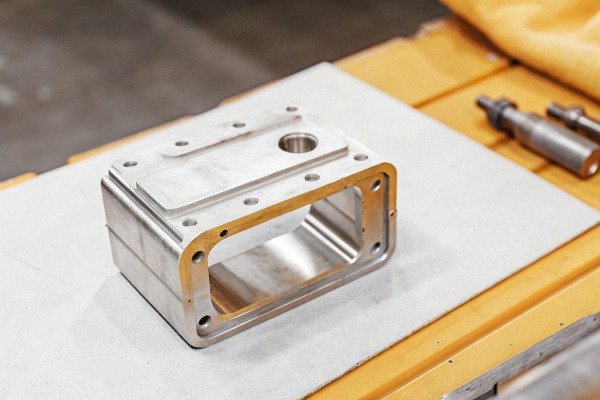
Il existe un piège dangereux dans les achats : rechercher le chiffre le plus bas au détriment du résultat. En soudage, une pointe de contact bon marché qui tombe en panne à mi-chemin d'un quart de travail vous coûte plus cher en temps d'arrêt et en retravail que ce que vous avez économisé sur le prix d'achat. Nous constatons cela constamment avec des acheteurs inexpérimentés. Ils obtiennent une remise de 20 %, mais le taux de rebut augmente de 5 %. C'est une perte nette.
Verrouillez la spécification, pas seulement le prix
Lors de la négociation des niveaux, soyez précis sur la marque et le modèle. Si vous négociez un contrat pour du "fil MIG", ne laissez pas au fournisseur la liberté de vous envoyer ce qui est le moins cher ce mois-là. Spécifiez le fabricant et la classification (par exemple, "Lincoln Electric ER70S-6" ou équivalent). approuvé par l'ingénierie).
Votre contrat doit stipuler explicitement qu'aucune substitution n'est autorisée sans approbation écrite préalable et un essai. Cela protège votre chaîne de production. Vous voulez la remise sur les bons produits, pas une remise parce qu'ils vous ont remplacé par des produits bon marché.
L'argument du "Coût de la Qualité"
Utilisez la qualité comme outil de négociation. Expliquez au fournisseur que vous recherchez un partenaire à long terme qui contribue à vos indicateurs "Bon du premier coup". Demandez un support technique dans le cadre de l'accord. Un bon fournisseur proposera d'auditer votre processus de soudage pour recommander des pièces qui durent plus longtemps.
Par exemple, passer à une pointe de contact plus chère et plus performante pourrait réduire les changements. Si le fournisseur peut prouver cette valeur, négociez un niveau basé sur la performance de cette pièce premium.
Mise en place d'un protocole de test
Avant de signer un accord annuel pour une alternative moins coûteuse, imposez un PPAP (Processus d'approbation des pièces de production) ou un simple test fonctionnel. PPAP (Processus d'approbation des pièces de production) 10
- Petit lot : Achetez une petite quantité de l'article à prix réduit.
- Test à l'aveugle : Faites-le utiliser par vos soudeurs sans qu'ils connaissent le prix.
- Collecte de données : Mesurez la durée de vie et la qualité de la soudure.
Ce n'est qu'après l'approbation de l'équipe d'ingénierie que vous verrouillez ce numéro de pièce dans l'accord d'approvisionnement.
Conclusion
L'obtention d'une tarification échelonnée consiste à équilibrer le pouvoir de négociation et la fiabilité. En utilisant des données pour définir des seuils réalistes, en vous engageant sur des commandes globales et en consolidant vos dépenses, vous pouvez réaliser des réductions de coûts significatives. Cependant, privilégiez toujours la spécification technique pour vous assurer que ces économies ne s'évaporent pas sur le terrain.
Notes de bas de page
1. Fournit un aperçu général de la règle du 80/20 utilisée pour l'analyse des stocks. ↩︎
2. Le Center for Transportation and Logistics du MIT est un leader dans la recherche sur la chaîne d'approvisionnement. ↩︎
3. L'American Welding Society fournit des normes pour les consommables de soudage tels que les pointes de contact. ↩︎
4. Explique la règle du 80/20 mentionnée pour identifier les articles à haute vélocité. ↩︎
5. Définition faisant autorité de cet instrument d'approvisionnement par une grande institution éducative. ↩︎
6. Règlement officiel d'acquisition du gouvernement américain définissant les accords d'achat globaux. ↩︎
7. Reuters fournit un suivi en temps réel des prix du marché des matières premières. ↩︎
8. L'OSHA fournit les réglementations officielles en matière de sécurité pour les environnements de soudage. ↩︎
9. Liens vers les réglementations officielles du gouvernement concernant l'équipement de protection mentionné. ↩︎
10. Fait référence à l'organisme de normalisation officiel de l'industrie pour ce processus d'assurance qualité. ↩︎

 English
 Español de México
 Deutsch
 Français
 Русский