
Every week, our engineering team fields the same question from purchasing managers across the U.S.: "Which brass grade should I use for this part?"
The best brass grade for precision CNC machining depends on your project's machinability, strength, corrosion resistance, and cost priorities. C36000 (free-cutting brass) is the industry benchmark with a machinability rating of 100, delivering high-speed cuts, minimal tool wear, and tight tolerances. Alternatives like C35300, C260, and lead-free C34000 serve specialized needs.
Picking the wrong brass grade costs you time, money, and rejected parts operating environment 1. In this guide, we break down the top brass alloys 2 grade by grade. We compare them on the factors that matter most to your bottom line. Let's dig in.
How Do I Choose the Right Brass Grade for My Precision CNC Machining Project?
Our team in Vietnam and Singapore has helped U.S. clients source thousands of custom brass parts over the years regulatory requirements 3. The number one mistake we see? Buyers default to whatever grade their last supplier used, without checking if it fits the new project.
To choose the right brass grade, start by defining your part's tolerances, mechanical loads, and operating environment. Then match those requirements to an alloy's machinability, strength, and corrosion resistance. C36000 suits most high-volume precision work, while C35300, C260, or lead-free C34000 address specific strength, ductility, or regulatory needs.
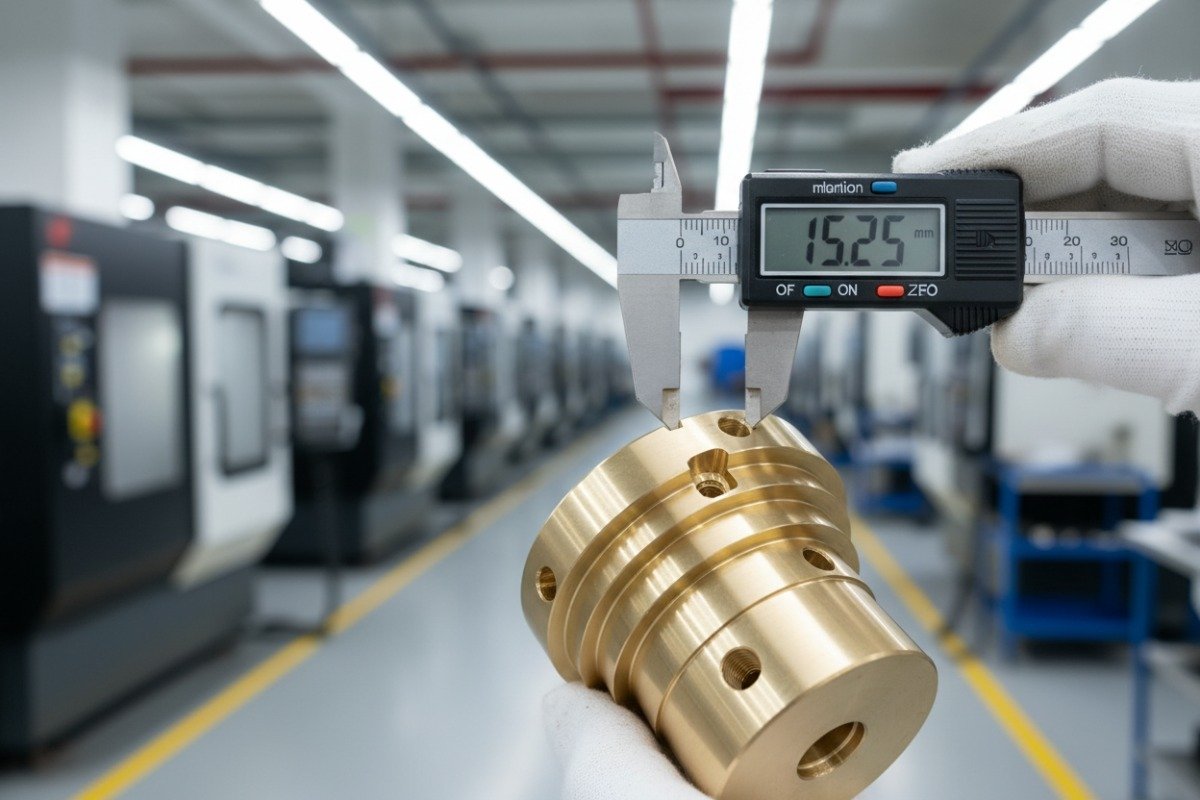
Start With a Decision Matrix
Before you call a supplier, build a simple decision matrix 4. Rate each requirement on a scale of 1 to 5. This forces you to prioritize what actually matters for your part Nickel plating 5.
Here is a comparison of the most common brass grades used in precision CNC machining 6:
| Brass Grade | Обрабатываемость | Предел прочности на растяжение | Коррозионная стойкость | Cost Level | Лучше всего подходит для |
|---|---|---|---|---|---|
| C36000 | ★★★★★ (100) | ~350 MPa | Moderate | Низкие | Screws, valves, fittings, connectors |
| C35300 | ★★★★☆ (90-95) | Higher than C360 | Moderate | Средний | High-torque fittings, couplings |
| C26000 | ★★★★☆ (90) | ~340 MPa | Good | Средний | Rivets, hinges, radiator cores |
| C34000 | ★★★★☆ (85-90) | ~345 MPa | Good | Средне-высокий | RoHS-compliant high-volume parts |
| C23000 | ★★★☆☆ (70) | ~310 MPa | Очень хорошо | Средний | Plumbing, moist environments |
| C46400 | ★★★☆☆ (65) | ~380 MPa | Отличная | Высокие | Marine hardware, naval fittings |
Step-by-Step Selection Process
Here is a straightforward process we walk our clients through:
Define tolerances and loads. What is the tightest tolerance on your drawing? What forces will the part see in service? If you need tolerances below ±0.01 mm, you need a grade with top-tier machinability.
Identify the operating environment. Will the part sit in saltwater? Contact acidic fluids? Stay indoors? This determines your corrosion resistance requirement.
Prioritize machinability for volume. If you are running 10,000 or more parts, even a 10% difference in cycle time adds up fast. C36000 gives you the fastest cuts and the lowest cost per piece in most scenarios.
Check regulatory requirements. If your parts touch drinking water or fall under RoHS, EU REACH, or California Prop 65, you must go lead-free. C34000 is the go-to here.
Request sample runs. We always recommend a small pilot batch before committing to full production. This catches issues with chip formation, surface finish, and dimensional stability early.
Why Alloy Composition Matters
Brass is not one material. It is a family. Most CNC brass alloys contain 60–90% copper and 10–40% zinc. Small additions of lead, tin, or silicon change everything.
Lead, for example, acts as a built-in lubricant. It breaks chips cleanly and reduces friction at the tool tip. That is why C36000, with its 2.5–3% lead content, machines so fast. But lead also raises health and environmental concerns 7. So the industry is shifting.
Tin improves corrosion resistance, especially in seawater. That is why naval brasses like C46400 contain tin. But tin makes the alloy harder to cut.
Understanding these trade-offs is the core of brass grade selection. There is no single "best" grade. There is only the best grade for your specific part.
Which Brass Alloy Should I Use if My Parts Require High Corrosion Resistance?
When we source brass parts for clients whose components will face moisture, chemicals, or marine exposure, we always push back on the default C36000 choice. It is a great alloy, but corrosion resistance is not its strongest suit.
If your parts require high corrosion resistance, consider C23000 (red brass, 85% Cu / 15% Zn) for plumbing and moist environments, C46400 (naval brass) for marine and saltwater applications, or C18700 for harsh industrial settings. Higher copper content generally improves corrosion resistance but may reduce machinability.
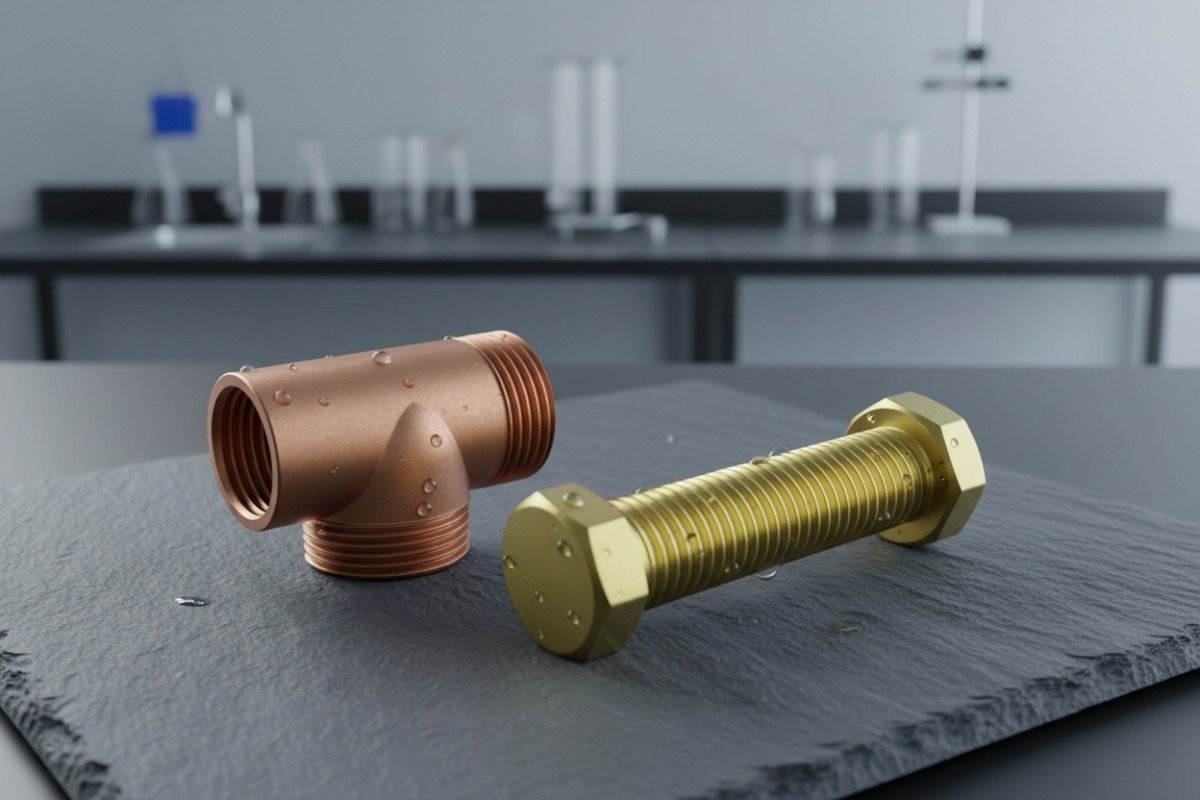
Understanding Corrosion in Brass
Brass corrodes through a process called dezincification 8. Zinc leaches out of the alloy, leaving behind a weak, porous copper structure. This happens faster in acidic environments, hot water, and saltwater.
The key rule: more copper means better corrosion resistance. That is why red brass (C23000, 85% copper) outperforms yellow brass (C26000, 70% copper) in wet environments.
C36000 has only 60–63% copper. It performs fine in dry indoor applications. But put it in contact with acidic fluids or saltwater, and you will see degradation within months.
Corrosion Resistance Ratings by Grade
| Brass Grade | Copper Content | Коррозионная стойкость | Dezincification Risk | Typical Environment |
|---|---|---|---|---|
| C23000 (Red Brass) | 85% | Очень хорошо | Низкие | Plumbing, water systems |
| C22000 (Commercial Bronze) | 90% | Отличная | Очень низкий | Architectural, outdoor fixtures |
| C46400 (морская латунь) | 60% + Tin | Отличная | Очень низкий | Marine, seawater hardware |
| C36000 (Free-Cutting) | 60-63% | Moderate | Moderate | Indoor, dry applications |
| C18700 (Arsenical Copper) | 99%+ | Отличная | Незначительное | Switchgear, electrical terminals |
When to Choose Naval Brass
Naval brass grades like C46400 and C48500 add tin to the alloy. Tin creates a protective oxide layer that resists saltwater corrosion. Corrosion rates in seawater run as low as 0.01–0.05 mm per year.
The trade-off is machinability. Naval brass is harder to cut. Cycle times run 30–50% longer than C36000. Tool wear increases. But if your part lives in a marine environment, the durability justifies the extra cost.
Red Brass for Plumbing and Water Contact
C23000 red brass is the standard for plumbing fittings and water-contact components. Its high copper content resists dezincification. It also meets most lead-free regulations for potable water systems.
Our clients in the valve and fitting industry often start by requesting C36000 for cost reasons. We walk them through the corrosion data and help them understand why C23000 or a lead-free alternative saves money in the long run. A part that corrodes in service costs far more than the premium you pay for a better alloy upfront.
Post-Machining Corrosion Protection
Even with a corrosion-resistant grade, post-machining treatments can extend part life. Options include:
- Nickel plating for a hard, corrosion-resistant surface layer.
- Tin plating for food-contact or solderability requirements.
- Lacquer coating for decorative parts that need tarnish resistance.
- Stress-relief annealing to reduce susceptibility to stress corrosion cracking in complex geometries.
We coordinate these finishing steps as part of our supply chain service, so clients get a complete, ready-to-install part.
Why Is C360 Free-Cutting Brass Often the Best Choice for My High-Speed Machining Needs?
On our production floor, we track cycle times down to the second. When clients need tens of thousands of turned brass parts, we almost always recommend C36000 first. The numbers speak for themselves.
C36000 free-cutting brass earns its reputation because its 2.5–3% lead content acts as a built-in chip breaker and lubricant, enabling material removal rates 2–3 times faster than stainless steel. It delivers clean chip formation, surface finishes of Ra 0.4–1.6 μm without polishing, and extends tool life by 30–50% compared to other alloys.
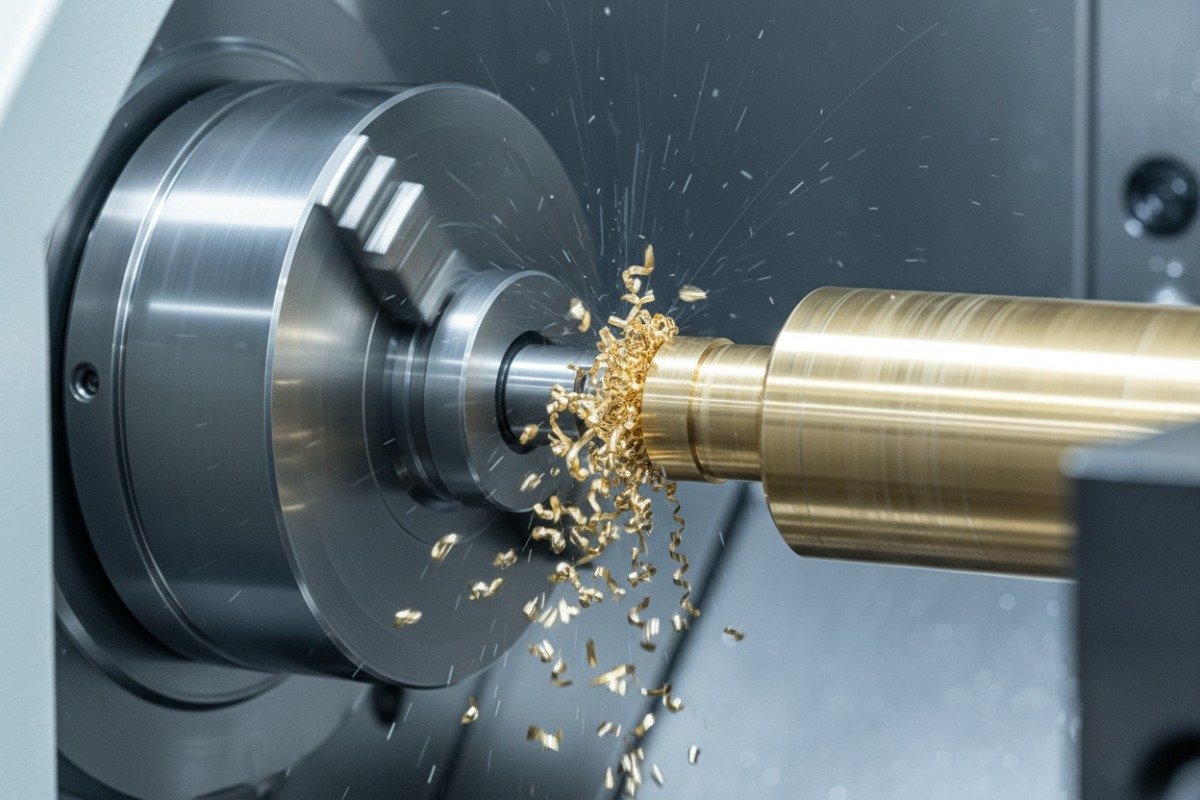
What Makes C36000 Machine So Well?
The secret is lead. At 2.5–3% by weight, lead particles sit at grain boundaries 9 in the brass microstructure. During cutting, these particles do three things:
- Break chips. Lead creates natural fracture points. Chips snap off cleanly instead of forming long, stringy tangles that wrap around the tool.
- Lubricate the cut. Lead has a low melting point. It softens at the tool-chip interface and reduces friction.
- Reduce heat. Less friction means less heat. Less heat means less tool wear and better dimensional stability.
This combination lets you run C36000 at feeds of 400–600 SFM (surface feet per minute) with confidence. Compare that to stainless steel at 100–200 SFM, and you see why brass dominates high-volume turned parts.
Real-World Performance Data
Our production data from recent high-volume runs tells a clear story:
| Метрика | C36000 Brass | 303 Stainless Steel | 6061 Aluminum |
|---|---|---|---|
| Рейтинг обрабатываемости | 100 | 36 | 75 |
| Typical Cutting Speed (SFM) | 400–600 | 100–200 | 500–800 |
| Tool Life (relative) | 100% | 30–40% | 80–90% |
| Chip Formation | Short, clean | Long, stringy | Moderate |
| Surface Finish (as-machined) | Ra 0.4–1.6 μm | Ra 1.6–3.2 μm | Ra 0.8–3.2 μm |
| Cycle Time (relative, 10K parts) | 100% | 250–300% | 110–130% |
On a recent valve body project, switching from 303 stainless to C36000 brass cut machining time by 38%. Tool changes dropped from every 2,000 parts to every 5,000 parts. The client saved over $12,000 on a 50,000-piece run.
When C36000 Falls Short
C36000 is not perfect for every job. Here are the honest limitations:
- Lead regulations. If your part contacts drinking water or falls under RoHS/REACH, C36000's lead content is a problem. You need a lead-free alternative.
- Acidic environments. C36000 corrodes faster than high-copper brasses in acidic or ammonia-rich conditions.
- High-strength demands. At ~350 MPa tensile strength, C36000 is strong enough for most fasteners and fittings. But for high-torque or high-load applications, C35300 offers better mechanical performance.
- Extreme precision at micro scale. For tolerances below 0.01 mm, grain size and microstructure matter more. Some lead-free alloys with finer grain structures may produce better dimensional stability at the micro level.
Chip Formation and Surface Finish
One of the biggest practical advantages of C36000 is what happens after machining. Parts often come off the machine with a surface finish good enough for final use. No secondary polishing. No buffing. This saves time and money on every single part.
The short, broken chips also mean cleaner machines, fewer stoppages for chip clearing, and safer operation. Long chips from other materials can wrap around spindles and cause crashes. With C36000, that risk drops dramatically.
For high-volume production where speed, cost, and consistency matter most, C36000 remains the gold standard. Our clients who run 10,000+ piece orders consistently see the best cost-per-part numbers with this grade.
How Can I Balance Material Performance and Cost When Selecting a Brass Grade for My Application?
When we quote custom brass parts for U.S. purchasing managers, the conversation always comes back to cost. But the cheapest alloy per kilogram is not always the cheapest part delivered to your door. We have seen this play out hundreds of times.
To balance performance and cost, calculate total cost of ownership — not just raw material price. C36000 offers the lowest machining cost per part for most high-volume work. Lead-free grades like C34000 cost 10–20% more in material but avoid regulatory risk. High-strength grades like C35300 justify premiums through longer service life and fewer field failures.

Total Cost of Ownership Thinking
Raw material cost is only one piece of the puzzle. Here is what actually drives your total cost per part:
- Cycle time. A grade that machines 15% slower adds 15% to your machining cost. On a 50,000-piece order, that adds up fast.
- Tool wear. Harder alloys eat through cutting tools. More tool changes mean more downtime and more tooling expense.
- Scrap rate. An alloy that is harder to hold tolerance on produces more rejects. Each reject is wasted material, wasted machine time, and wasted labor.
- Post-machining finishing. If the as-machined surface is not good enough, you pay for polishing, plating, or coating.
- Field failures. A part that corrodes or fails in service costs you returns, warranty claims, and customer trust.
Cost Comparison Across Common Grades
Here is a realistic breakdown based on our recent production data for a typical turned brass connector (10,000-piece order):
| Фактор затрат | C36000 | C35300 | C26000 | C34000 (Lead-Free) |
|---|---|---|---|---|
| Material Cost (relative) | 100% | 115% | 105% | 120% |
| Machining Cost (relative) | 100% | 108% | 125% | 112% |
| Tool Cost (relative) | 100% | 110% | 130% | 115% |
| Finishing Cost | Минимальная | Минимальная | Moderate | Минимальная |
| Regulatory Compliance Cost | May need exemption | May need exemption | May need exemption | Compliant |
| Total Cost Per Part (relative) | 100% | 112% | 122% | 118% |
C36000 wins on pure cost for most applications. But look at C34000. Yes, it costs 18% more per part. But if your product falls under lead-free regulations, C36000 is not even an option. And C34000 still machines well — far better than switching to stainless steel or bronze.
When Premium Grades Pay for Themselves
C35300 costs about 12% more per part than C36000 in our example. But for high-torque fittings, precision couplings, or connectors that see repeated mechanical stress, its superior strength means fewer field failures. One warranty claim on a critical part can cost more than the premium on an entire production run.
We had a client sourcing brass couplings for industrial hydraulic systems. They started with C36000 to save money. After three field failures in the first year, they switched to C35300. The higher material cost was a fraction of what they spent on returns, rework, and lost customer confidence.
The Lead-Free Transition
The global shift toward lead-free brass is accelerating. EU REACH, California Prop 65, and similar regulations are tightening. The lead-free segment is growing at roughly 12% year-over-year through 2026.
If your products sell into regulated markets, plan your transition now. C34000 is the most popular lead-free option for high-volume CNC work. Newer bismuth-based alloys are emerging that aim to replicate C36000's chip-breaking behavior without lead. They cost more today, but prices are coming down as adoption grows.
Our advice to clients: do not wait for regulations to force your hand. Test lead-free grades now. Build your machining parameters. Lock in supplier relationships. The companies that transition early avoid the scramble and cost spikes that come when regulations take effect.
Practical Tips for Cost Optimization
- Consolidate grades. If you can use one brass grade across multiple part numbers, you get better pricing on material and simplify inventory.
- Design for machinability. Small design changes — like adding a chamfer instead of a sharp internal corner — can reduce cycle time and tool wear regardless of grade.
- Run pilot batches. Before committing to 50,000 pieces, run 500. Measure cycle time, tool wear, and scrap rate. Use real data to make your grade decision.
- Work with your supplier. A good manufacturing partner will help you optimize grade selection. We regularly suggest grade changes that save our clients 10–20% on total part cost without sacrificing performance.
Заключение
Choosing the right brass grade comes down to knowing your part's real requirements and calculating total cost — not just picking the cheapest option on the shelf.
Сноски
1. Discusses how environmental factors influence the selection of brass grades. ↩︎
2. Provides a comprehensive guide to various types of brass alloys and their properties. ↩︎
3. Provides official information on the RoHS directive, a key regulatory requirement. ↩︎
4. Replaced with an authoritative guide on how to use a decision matrix. ↩︎
5. Describes the process, types, and applications of nickel plating. ↩︎
6. Explains the definition and importance of precision CNC machining. ↩︎
7. Provides authoritative information on the health and environmental impacts of lead. ↩︎
8. Replaced with an authoritative source (AMPP) explaining dezincification in detail. ↩︎
9. Explains the concept of grain boundaries in metallic materials and their properties. ↩︎
10. Defines material removal rate and its significance in machining operations. ↩︎

 English
 Español de México
 Deutsch
 Français
 Русский
 العربية