
Every year, our project team reviews dozens of CNC machining suppliers across Asia for our U.S. clients. The pattern is clear: most sourcing failures trace back to skipping basic due diligence First Article Inspection 1.
To source high-quality custom CNC machining services, evaluate suppliers on technical capabilities, quality certifications like ISO 9001 or AS9100, inspection processes including CMM and FAI, material expertise, and communication responsiveness. Then validate with prototype orders before committing to long-term production partnerships.
The difference between a smooth production run and a costly disaster often comes down to how well you vet your CNC partner upfront. Below, we break down the critical steps — from evaluating equipment and quality systems to balancing budgets and building lasting vendor relationships. Let's dig in.
How Do I Evaluate the Technical Expertise and Equipment of a Custom CNC Machining Supplier?
When our engineers visit a prospective CNC shop for the first time, the machines on the floor tell us more than any sales pitch ever could. Yet many buyers skip this step entirely and pay for it later.
Evaluate a CNC supplier's technical expertise by reviewing their machine inventory (3-axis, 4-axis, or 5-axis), CAD/CAM software compatibility, material processing experience, and tolerance capabilities. Request sample parts, inspect surface finishes, and confirm they can handle your specific part geometry and complexity.

Start With the Machine List
The first thing we ask any potential supplier is: what machines do you run? A shop with only 3-axis mills can handle simple parts. 3-axis, 4-axis, or 5-axis 2 But if your design has undercuts, compound angles, or deep pockets, you need 4-axis or 5-axis capability. There is no workaround for this.
We have seen buyers send complex aerospace brackets to shops that only own vertical machining centers. The result? Multiple setups, tolerance stack-up, and parts that fail inspection. It is a waste of time and money for everyone involved.
Here is a quick reference for matching part complexity to machine capability:
| Сложность детали | Recommended Machine Type | Типичный диапазон допусков | Лучше всего подходит для |
|---|---|---|---|
| Simple prismatic parts | 3-осевой фрезерный станок с ЧПУ | ±0,05 мм | Brackets, plates, housings |
| Moderate complexity | 4-axis CNC mill | ±0.025 mm | Parts needing indexing or rotational features |
| High complexity | 5-осевой ЧПУ фрезерный станок | ±0,01 мм или точнее | Aerospace components, turbine blades, medical implants |
| Turned parts | CNC lathe / turn-mill | ±0,01 мм | Shafts, bushings, fittings |
Check Software and Programming Capability
Machines are only half the equation. The programming team matters just as much. Ask what Программное обеспечение CAD/CAM 3 they use. Common platforms include Mastercam, Siemens NX, CATIA, and Fusion 360. If your design files are in STEP or IGES format, most shops can import them. But if you use SolidWorks or CATIA natively, confirm compatibility upfront.
Our team once worked with a supplier who could not read 3D model PMI (Product Manufacturing Information) data. Every tolerance and note had to be manually re-entered from the 2D drawing. This doubled their programming time and introduced transcription errors. We caught two critical dimension mistakes during FAI that would have caused a full batch rejection.
Assess Material Expertise
Not every shop can machine every material well. Cutting aluminum is very different from cutting titanium or Inconel. When we source parts in stainless steel 316L or titanium Grade 5 for medical or aerospace clients, we specifically ask:
- Have you machined this alloy before?
- What cutting tools and speeds do you use?
- Can you provide sample parts in this material?
A shop that hesitates on these questions is a red flag. Material expertise is not something you learn on your client's dime.
Inspect Their Measurement Tools
A CNC machine can cut to ±0.01 mm. But if the shop only owns a basic caliper, how do they verify it? Look for координатно-измерительные машины 4 (CMMs), optical comparators, surface roughness testers, and pin gauges. These tools are not optional for precision work. They are the backbone of any credible quality system.
During our supplier audits in Vietnam, we check calibration certificates for every measurement instrument. If a shop cannot produce current calibration records, we walk away. It is that simple.
What Quality Control Standards Should I Look for to Ensure My Precision Parts Meet Industry Requirements?
Our quality team spends more time reviewing a supplier's QC documentation than their price quotes. That might sound backwards, but we have learned that cheap parts with bad quality cost three times more in the end.
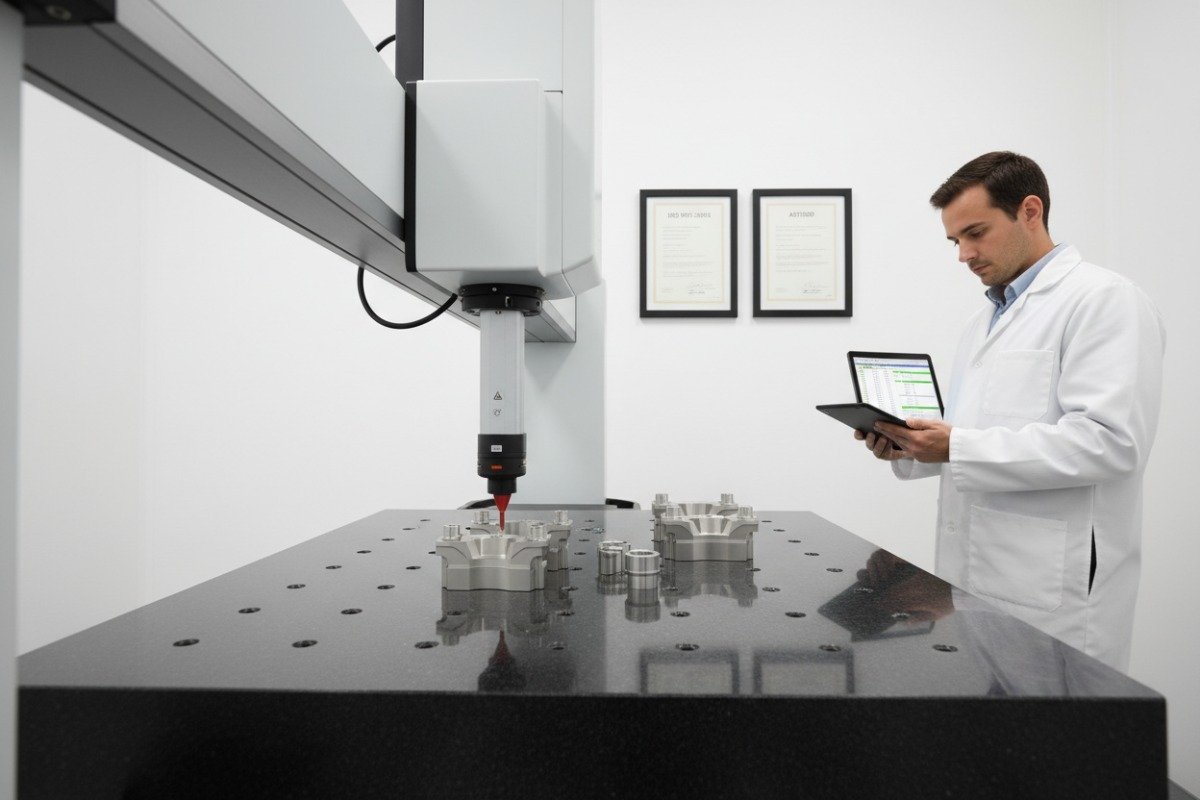
Look for ISO 9001:2015 certification as a baseline, plus industry-specific standards like AS9100D for aerospace or ISO 13485 for medical devices. Confirm the supplier uses First Article Inspection (FAI), in-process quality control (IPQC), statistical process control (SPC), and final inspection with documented reports.
Certifications Are the Starting Point, Not the Finish Line
ISO 9001 5:2015 tells you a supplier has a documented quality management system. It means they track processes, maintain records, and undergo regular audits. This is the minimum bar. But here is the thing — certification alone does not guarantee your parts will be right.
We have audited ISO-certified shops that still had no SPC in place, no traceability on raw materials, and inspection reports that were clearly filled in after the fact. Certification opens the door. Your own due diligence confirms what is behind it.
For regulated industries, the requirements go further:
| Сертификация | Отрасль | Что охватывает | Почему это важно |
|---|---|---|---|
| ISO 9001:2015 | Общее производство | Quality management system, process control, continuous improvement | Baseline for any serious supplier |
| AS9100D 6 | Аэрокосмическая и оборонная промышленность | Risk management, configuration management, counterfeit part prevention | Required by most aerospace OEMs and primes |
| ISO 13485 7 | Медицинские изделия | Design controls, sterilization validation, biocompatibility traceability | Mandatory for FDA-regulated medical components |
| ITAR registered | Defense (U.S.) | Export control of defense-related articles and services | Required for any U.S. defense supply chain work |
| IATF 16949 8 | Автомобильная промышленность | PPAP, FMEA, control plans, measurement system analysis | Standard for Tier 1 and Tier 2 automotive suppliers |
The QC Process That Actually Matters
Certifications set the framework. But the day-to-day quality comes from the actual inspection process. Here is what we require from every CNC supplier we work with:
Контроль первой партии (FAI): Before mass production begins, the supplier machines a small batch (usually 3–5 pieces) and measures every single dimension on the drawing. The FAI report compares actual measurements against nominal values and tolerances. If anything is out of spec, production does not start.
Контроль качества в процессе производства (IPQC): During production, operators check critical dimensions at set intervals. This catches tool wear, thermal drift, and fixture issues before they affect the whole batch.
Statistical Process Control (SPC): For higher volumes, SPC tracks measurement data over time. It identifies trends before they become defects. A process capability index (Cpk) of 1.33 or higher is the standard target. Anything below 1.0 means the process is not capable of holding the tolerance reliably.
Окончательный контроль: Every shipment gets a full dimensional check against the drawing, plus visual inspection for surface defects, burrs, and cosmetic issues. We require inspection reports with actual measured values — not just "pass/fail" checkboxes.
Red Flags in Quality Systems
Watch out for these warning signs:
- The supplier cannot provide a sample inspection report before you place an order.
- Inspection reports show only "OK" or "NG" without actual measured values.
- No calibration records for measurement equipment.
- No traceability on raw material (no mill certificates or material test reports).
- They claim SPC but cannot show you a control chart.
Our experience exporting to the U.S. market has taught us that American buyers expect full documentation. A supplier who resists providing it is hiding something.
How Can I Balance High-Quality Manufacturing With My Project's Budget and Lead Time Constraints?
When we sit down with a new client to plan a sourcing project, the conversation almost always starts the same way: "We need top quality, fast delivery, and a competitive price." The reality is that all three pull in different directions.
Balance quality, budget, and lead time by specifying only the tolerances your design truly requires, consolidating orders to improve volume pricing, building buffer time into your schedule, and choosing suppliers who offer DFM feedback to reduce unnecessary machining complexity and cost.
Tolerance Drives Cost More Than Anything Else
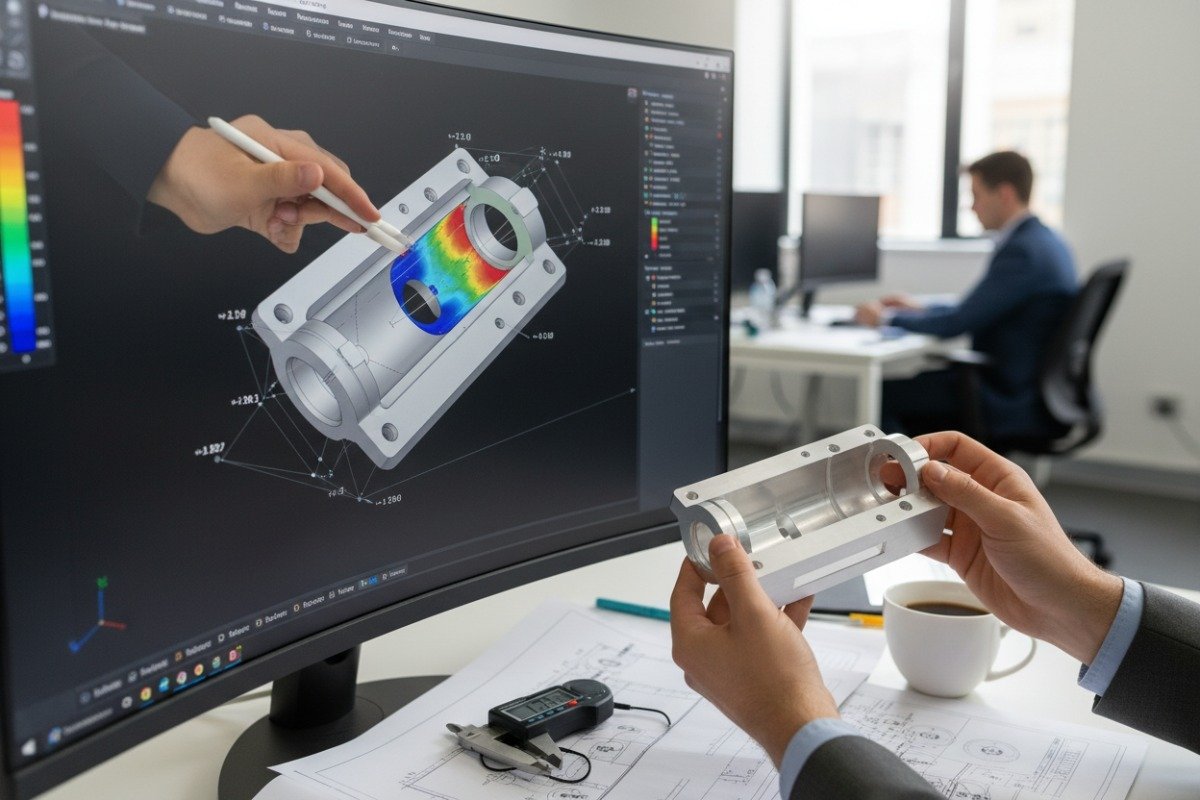
This is the single biggest lever you have. Tighter tolerances require slower cutting speeds, more inspection time, and often more expensive tooling. Yet we regularly see drawings where every dimension is toleranced to ±0.01 mm — even non-functional features like external edges or clearance holes.
Международный форум по аккредитации (IAF) ISO 2768-1 standard 10 defines general tolerances for dimensions that do not need tight control. Using "medium" class general tolerances for non-critical features can cut machining time by 20–30% on some parts.
Here is a practical comparison:
| Уровень допуска | Типичный диапазон | Относительная стоимость | Когда использовать |
|---|---|---|---|
| General (ISO 2768-m) | ±0.1 to ±0.5 mm | 1× (baseline) | Non-functional dimensions, clearance holes, external profiles |
| Precision | ±0.025 to ±0.05 mm | 1.5–2× | Mating surfaces, bearing bores, alignment features |
| High precision | ±0.005 to ±0.01 mm | 3–5× | Sealing surfaces, critical fits, aerospace interfaces |
| Ultra-high precision | ±0.0025 mm or tighter | 5–10× | Optical components, semiconductor tooling |
Our engineering team always reviews client drawings before quoting. We flag dimensions where tighter-than-necessary tolerances are adding cost without adding function. This DFM (Design for Manufacturability) review is free, and it often saves clients 15–25% on unit cost.
Lead Time Is a Planning Problem
Most lead time issues are not caused by slow machines. They are caused by late decisions, drawing revisions mid-production, and poor communication. Here is what we recommend:
Freeze your design before production starts. Every revision after tooling or programming is complete adds days or weeks. We have seen a single tolerance change on one feature delay a shipment by two weeks because it required a new fixture.
Build buffer into your timeline. If you need parts in 6 weeks, tell your supplier 5 weeks. This gives you a cushion for customs, shipping delays, or minor quality issues that need rework.
Order prototypes first. A prototype run of 5–10 pieces with a full FAI report takes 2–3 weeks. It validates the design, the process, and the supplier's capability. Skipping this step to save time almost always costs more time later.
The Real Cost of Cheap Suppliers
We track rework and rejection rates across our supplier network. Suppliers who quote 30–40% below market price consistently show higher defect rates. The math is simple: if you save $2 per part on a 1,000-piece order but 8% fail inspection, you have lost $160 in scrap plus the cost of re-ordering, re-shipping, and production line downtime.
One of our U.S. clients came to us after a bad experience with a low-cost provider. They had ordered 500 precision bushings. The supplier skipped IPQC to save time. Result: 43 parts were out of tolerance on the inner bore. The client's assembly line stopped for three days waiting for replacements. The "savings" on unit price cost them over $12,000 in downtime.
Quality sourcing is not about finding the cheapest price. It is about finding the lowest total cost of ownership.
What Steps Should I Take to Verify a CNC Vendor's Reliability Before Starting a Long-Term Partnership?
Our team in Vietnam conducts on-site supplier audits every month. We have walked through over 200 machine shops in the last five years. Some look great on paper but fall apart under scrutiny. Others surprise us with their discipline and consistency.
Verify a CNC vendor's reliability by conducting site audits (in-person or virtual), requesting references from existing clients, starting with a paid prototype order including FAI documentation, reviewing on-time delivery history, and confirming financial stability and adequate production capacity for your volume needs.
Step 1: Request and Verify Documentation
Before you visit or even call a supplier, ask for these documents:
- ISO 9001 certificate (check the expiration date and the certifying body)
- Machine list with model numbers and year of purchase
- Sample inspection report from a recent production run
- Material test report (mill certificate) for a recent order
- Client reference list (at least 2–3 contacts you can actually call)
If a supplier hesitates to provide any of these, that is your first red flag. Legitimate shops are proud of their documentation. They want you to see it.
Step 2: Conduct a Site Audit
Nothing replaces walking the factory floor. When our auditors visit a CNC shop, they look at:
- Housekeeping: Is the shop clean and organized? A messy shop usually means messy processes.
- Machine condition: Are machines well-maintained? Check for oil leaks, worn way covers, and outdated controls.
- Measurement room: Is there a dedicated, temperature-controlled inspection area? Precision measurement requires stable conditions.
- Operator skill: Talk to the machinists. Ask them about their setup procedures and how they handle tool wear.
- Material storage: Are raw materials labeled, segregated, and stored properly? Mixed material is a serious quality risk.
If you cannot visit in person, request a virtual tour via video call. It is not as thorough, but it is far better than nothing. We conduct virtual audits for clients who cannot travel, and we have caught significant issues this way — including one shop that claimed 5-axis capability but only had 3-axis machines on the floor.
Step 3: Start With a Prototype Order
Never commit to a large production order with a new supplier without testing them first. Place a prototype order of 5–20 pieces. Require a full FAI report with every dimension measured and recorded. Compare their results against your specifications.
Pay attention to more than just dimensions. Look at:
- Surface finish quality
- Deburring and edge treatment
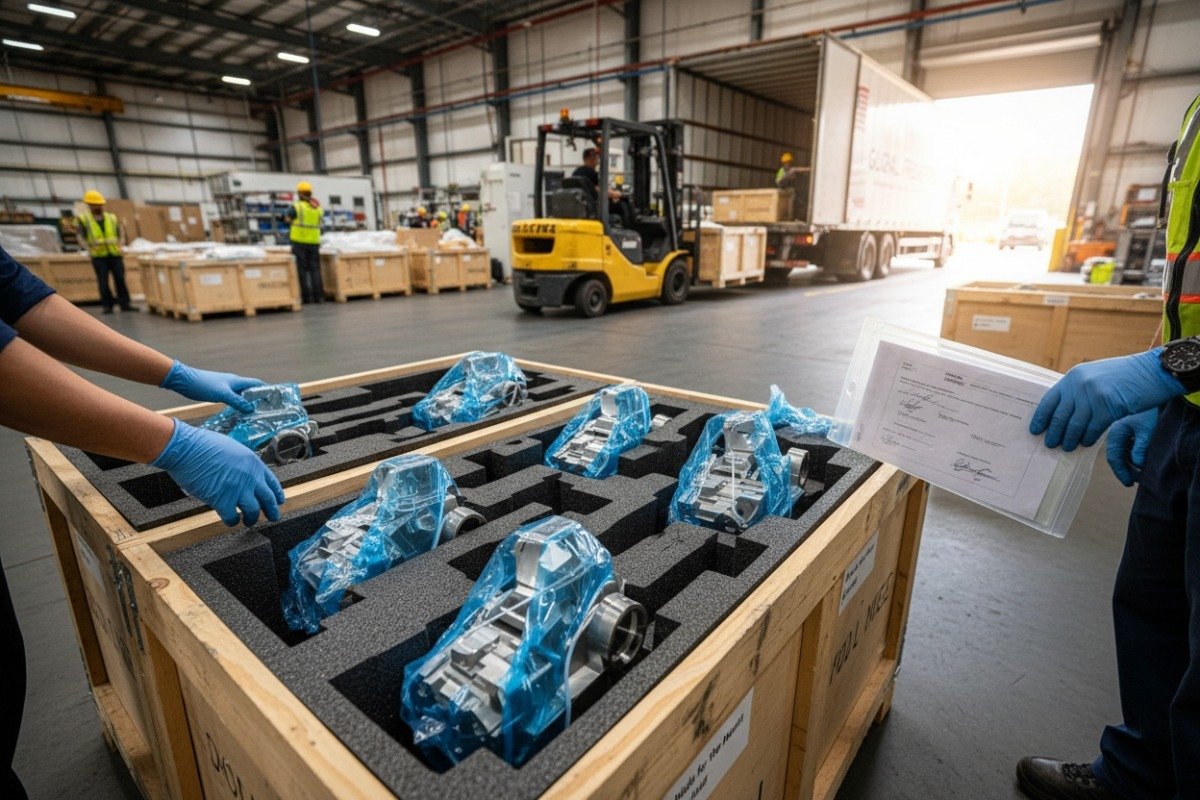
- Packaging and labeling
- Communication speed and clarity during the order
- Whether they delivered on time
This prototype order is your audition. Treat it that way.
Step 4: Evaluate Communication and Responsiveness
In our experience managing supply chains across Asia, communication failures cause more project delays than machine breakdowns. A reliable CNC partner responds to emails within 24 hours, asks clarifying questions about your drawing, and proactively flags potential issues.
We track response times for every supplier in our network. Here is what we consider acceptable:
| Communication Metric | Acceptable | Good | Отличная |
|---|---|---|---|
| Email response time | В течение 24 часов | Within 12 hours | Within 4 hours |
| RFQ turnaround | 5 business days | 3 business days | 1–2 рабочих дня |
| DFM feedback provided | Only when asked | On complex parts | On every new part |
| Issue escalation | After client complaint | When issue is detected | Before issue reaches client |
Step 5: Protect Your Intellectual Property
Before sharing detailed drawings, have the supplier sign a Non-Disclosure Agreement (NDA). Confirm how they store and manage your CAD files. Ask about their cybersecurity practices. This matters more than most buyers realize, especially for proprietary designs or defense-related components.
We maintain strict IP protocols for all client projects. Drawings are shared through secure channels, access is limited to project team members, and all files are purged from supplier systems after project completion upon request.
Step 6: Negotiate Payment Terms That Reflect Trust
A supplier willing to offer open account terms (Net 30, Net 60, or Net 90) is signaling confidence in the relationship. It also tells you they have financial stability. A shop that demands 100% payment upfront for every order, even after years of working together, may be cash-strapped.
We offer our U.S. clients flexible payment terms specifically to reduce their cash flow pressure. This is a competitive advantage that many Asian suppliers cannot match, and it reflects the financial health and commitment of the supplier.
Заключение
Sourcing high-quality CNC machining services is not about finding the perfect supplier on day one. It is about building a systematic process — evaluate, test, verify, and then commit — that protects your quality, budget, and timeline every time.
Сноски
1. Definition and purpose of First Article Inspection. ↩︎
2. Explains different types of multi-axis machining. ↩︎
3. Defines CAD/CAM software and its applications. ↩︎
4. Explains the fundamentals of CMM technology. ↩︎
5. Официальный стандарт систем менеджмента качества. ↩︎
6. Aerospace quality management system standard. ↩︎
7. Official standard for medical device quality management. ↩︎
8. Automotive quality management system standard. ↩︎
9. Overview of statistical process control methods. ↩︎
10. Official standard for general tolerances. ↩︎

 English
 Español de México
 Deutsch
 Français
 Русский
 العربية