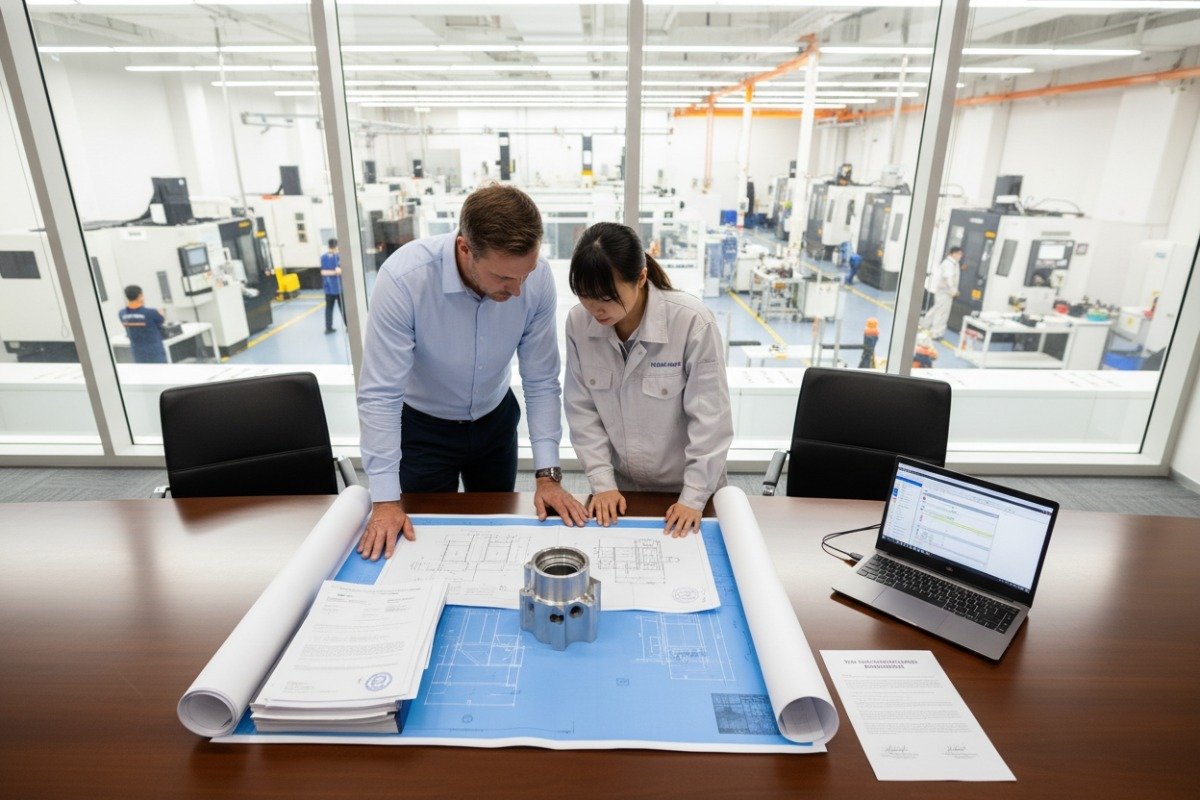
Over the years, our team has helped dozens of U.S. buyers source custom parts from Asia — and we have seen what happens when the wrong partner is chosen.
Finding a reliable bespoke manufacturing partner requires a systematic approach: define your technical requirements, vet candidates through audits and references, evaluate quality certifications, confirm scalability, protect your intellectual property with NDAs, and prioritize clear communication to ensure long-term alignment with your business goals.
The stakes are real. Industry data shows poor partner selection leads to 20–30% higher defect rates and delays in 40% of cases. But a strong partner can cut your time-to-market by 25–50%. Below, we break down the key questions you should ask — and the answers that matter most.
How Do I Effectively Vet the Quality and Reliability of a Potential Bespoke Manufacturing Partner?
When we onboard a new supplier in Vietnam or elsewhere in Asia, our quality engineers follow a strict vetting process — because one missed detail on a drawing can mean thousands of scrapped parts.
To effectively vet a bespoke manufacturing partner, review their quality certifications (ISO 9001, AS9100, ITAR), request sample production runs, audit their facility in person, check references from existing clients, and evaluate their inspection protocols including PPAP documentation and non-conformance procedures.
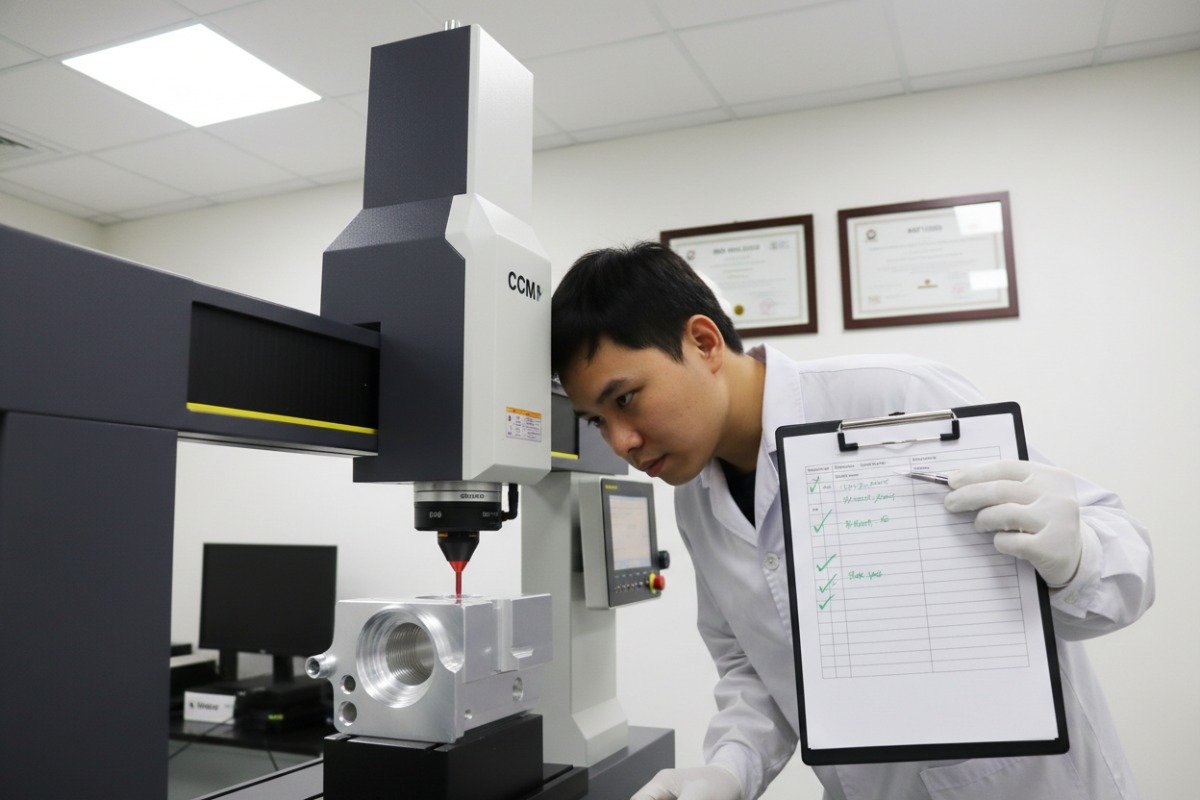
Vetting a manufacturer is not just about asking if they can make your part. It is about proving they can make it right — every single time. Here is how to break this down into actionable steps.
Start with Certifications
Certifications are your first filter. They tell you whether a manufacturer has invested in building a real quality management system or is just winging it. Look for these based on your industry:
| Отрасль | Key Certifications | Почему это важно |
|---|---|---|
| Общее производство | ISO 9001 1 | Baseline quality management system |
| Аэрокосмическая промышленность | AS9100 2, ITAR | Traceability, export compliance |
| Автомобильная промышленность | IATF 16949 3 | Process control, PPAP requirements |
| Medical / Life Sciences | ISO 13485 4, FDA registration | Patient safety, regulatory compliance |
| Оборона | CMMC, ITAR 5 | Cybersecurity, controlled information |
A certificate on the wall is a start. But ask to see their internal audit records. Ask how they handle non-conforming products. A good partner will have a documented corrective action process — not just a verbal promise.
Request a Sample Production Run
Never commit to a large order without a trial run. We always recommend a PPAP (Процесс утверждения производственной оснастки) 6 approach, even for non-automotive parts. This means the manufacturer produces a small batch using the exact same tooling, materials, and processes they will use for full production. Then you inspect the results against your drawings and specifications.
If they push back on doing a sample run, that is a warning sign.
Audit the Facility
Virtual tours became popular during the pandemic. They are better than nothing. But nothing replaces boots on the ground. When our team visits a factory, we look at things a camera will not show you: how clean the shop floor is, how workers handle materials, whether measuring instruments are calibrated, and how organized the production flow looks.
Check References — and Ask the Right Questions
Do not just ask "Were you happy with them?" Ask specific questions:
- Did they deliver on time consistently?
- How did they handle a quality issue?
- Were there any hidden costs after the quote?
- How responsive were they when you needed a design change?
Surveys indicate 70% of OEMs value quality consistency over cost savings of 10–15%. That tells you everything about where your priorities should be.
Evaluate Their Engineering Depth
A manufacturer with a high percentage of engineers on staff can catch drawing errors before production starts. They can offer DFM (Design for Manufacturability) feedback that saves you money and time. If their team cannot read your GD&T callouts or ask intelligent questions about your tolerances, they are not ready for bespoke work.
What Red Flags Should I Watch Out for When Selecting a Custom Manufacturer for My Business?
In our experience exporting custom parts to the U.S. and Europe, we have learned to spot trouble early — and the warning signs are often hiding in plain sight during the quoting stage.
Key red flags when selecting a custom manufacturer include vague or unusually low quotes, reluctance to share references or allow facility visits, poor communication responsiveness, lack of documented quality procedures, no clear capacity planning, and an inability to explain how they handle non-conforming products or design changes.
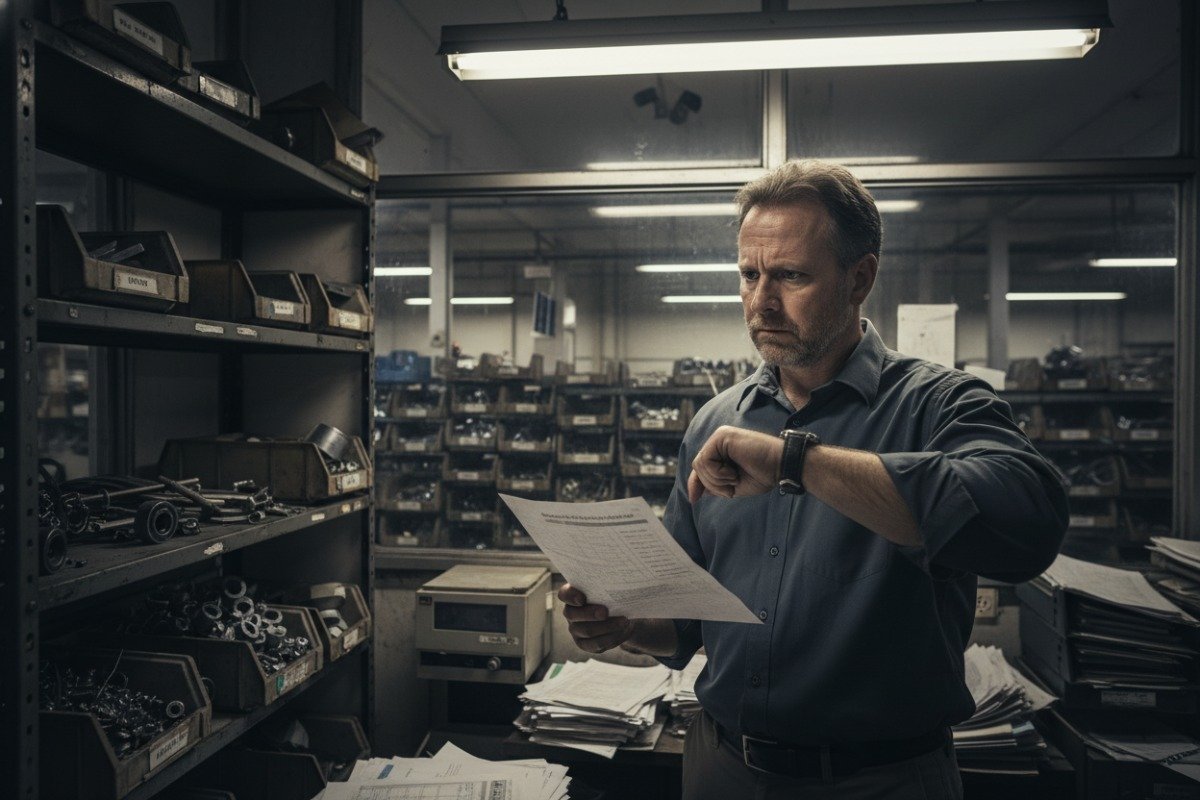
Choosing the wrong manufacturer does not just cost money. It costs time, reputation, and sometimes entire customer relationships. Here are the red flags we tell every client to watch for.
Pricing That Seems Too Good to Be True
It usually is. When a quote comes in 30–50% below everyone else, ask yourself what they are cutting. Common shortcuts include:
- Using cheaper, off-spec materials
- Skipping inspection steps
- Underpaying workers (leading to high turnover and inconsistent quality)
- Not accounting for proper packaging or shipping protection
A low price today often means rework, returns, and re-sourcing tomorrow.
Communication Gaps
If a supplier takes three days to reply to your email during the quoting phase — when they are trying to win your business — imagine how slow they will be after they have your purchase order. We have seen this pattern repeatedly. Good partners respond within 24 hours, ask clarifying questions, and keep you updated without being chased.
Red Flag Checklist
| Красный флаг | What It Signals | Your Action |
|---|---|---|
| No facility tour allowed | Something to hide | Walk away |
| Cannot provide references | No satisfied customers | Walk away |
| Quote missing line-item detail | Hidden costs likely | Request breakdown |
| No documented QC process | Quality is ad hoc | Request QC manual |
| Promises unrealistic lead times | Will miss deadlines | Verify with capacity data |
| High employee turnover | Training and consistency issues | Ask about retention rates |
| No experience with your material/process | Learning on your dime | Request relevant samples |
They Cannot Explain Their Process
Ask a potential partner: "Walk me through how you would produce this part from order to shipment." A reliable manufacturer will describe their process step by step — material procurement, incoming inspection, machining or forming, in-process checks, final inspection, packaging, and shipping. If they give you vague answers or skip steps, they probably skip steps in real life too.
They Resist Documentation
Bespoke manufacturing lives and dies on documentation. If a manufacturer resists signing an NDA, does not want to do a first article inspection report, or cannot provide material certifications, that is a serious problem. Documentation is not bureaucracy. It is proof that the process is under control.
They Are Evasive About Capacity
You need to know where you fit in their production schedule. If you are their biggest client, they may not have the resources to handle your growth. If you are their smallest, you may get deprioritized when a larger customer needs rush delivery. Ask directly: "What percentage of your capacity would my order represent?" A good partner will answer honestly.
How Can I Ensure My Intellectual Property Stays Protected During the Bespoke Manufacturing Process?
When we manage custom projects for our clients, IP protection is one of the first conversations we have — because once proprietary designs leak, there is no getting them back.
To protect your intellectual property during bespoke manufacturing, execute comprehensive NDAs before sharing any designs, register patents and trademarks in the manufacturing country, limit access to full drawings on a need-to-know basis, use separate suppliers for different components, and include clear IP ownership clauses in every contract.
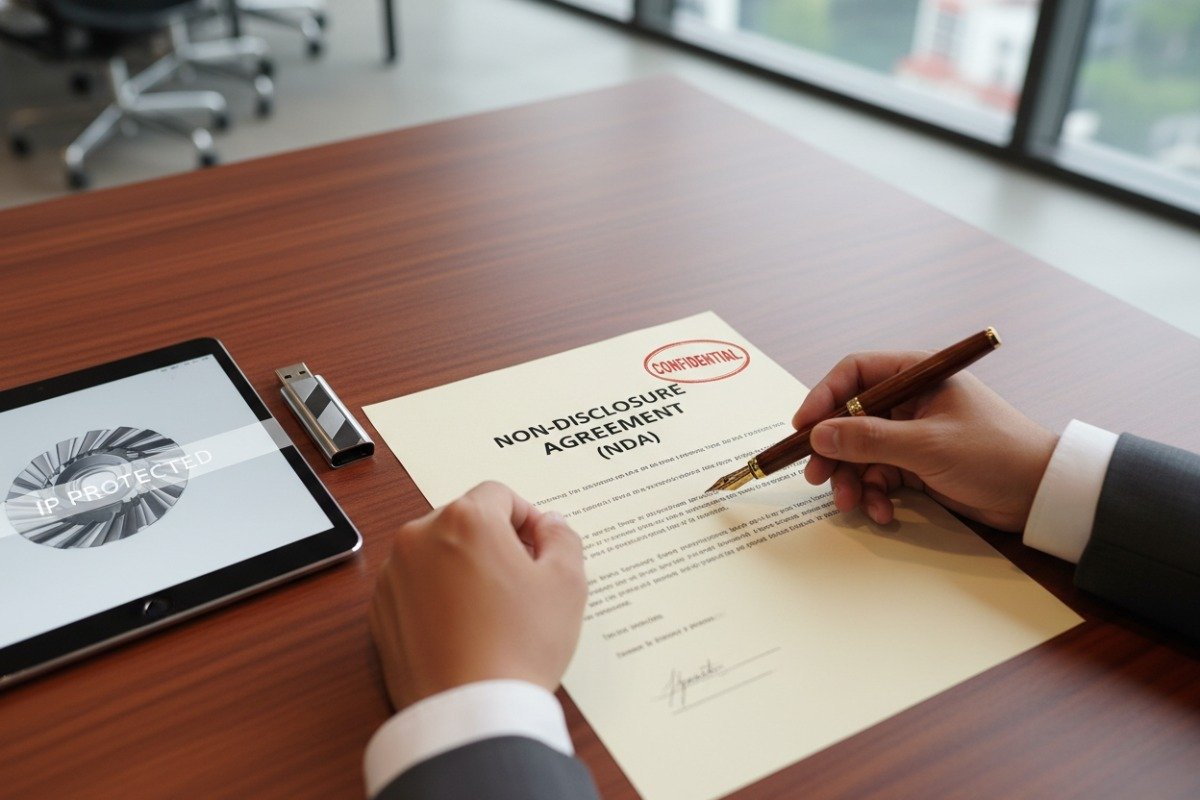
IP theft is not just a theoretical risk. It is a daily reality in global manufacturing. The good news is that practical steps can dramatically reduce your exposure. Here is what works.
Legal Protections Come First
Before you send a single drawing, have your manufacturer sign a Non-Disclosure Agreement (NDA) 7. But not just any NDA. Make sure it:
- Specifies the jurisdiction for disputes (preferably your home country or a neutral one like Singapore)
- Defines what constitutes confidential information broadly
- Includes penalties for breach
- Covers the manufacturer's employees and subcontractors
Also consider registering your patents and trademarks in the country where manufacturing takes place. In many jurisdictions, local registration gives you stronger legal standing if a dispute arises.
Operational Protections Matter More
Legal documents are your safety net. But operational controls are your first line of defense.
| Protection Strategy | Как это работает | Эффективность |
|---|---|---|
| Split manufacturing | Different suppliers make different components; no single supplier sees the full design | Высокие |
| Need-to-know access | Only share the drawings and specs each supplier needs for their portion | Высокие |
| Watermarked drawings | Embed unique identifiers in each drawing set so leaks can be traced | Средний |
| Аудиты поставщиков | Regular visits to verify no unauthorized production runs | Средне-высокий |
| Contractual IP clauses | Clearly state that all tooling, designs, and processes belong to you | Высокие |
Choose Your Manufacturing Country Wisely
IP protection varies dramatically by country. Post-pandemic reshoring trends show that 78% of U.S. manufacturers now prioritize proximity and legal reliability. Countries like Singapore, Taiwan, and South Korea have stronger IP enforcement frameworks than some lower-cost alternatives.
Our team in Singapore helps bridge this gap. We manage supplier relationships on the ground, conduct regular audits, and ensure that contractual protections are actually enforced — not just signed and forgotten.
Control Your Tooling
If you pay for tooling (molds, dies, fixtures), make sure your contract states clearly that you own it. Require that your tooling is marked with your company name and stored separately. And if you ever end the relationship, you should be able to retrieve your tooling without a fight. We have seen too many cases where a buyer paid for a mold but could not get it back when switching suppliers.
Digital Security
In today's world, IP theft can happen through a forwarded email. Use secure file-sharing platforms with access controls. Avoid sending full 3D CAD files when 2D drawings with limited dimensions will suffice for quoting. And make sure your manufacturer's IT systems meet basic cybersecurity standards — especially if you are in defense or aerospace.
What Criteria Should I Use to Determine if a Manufacturer Can Scale Production as My Business Grows?
Our engineers and project managers evaluate scalability from day one when qualifying a new supplier — because a partner who works great at 500 pieces may completely fall apart at 50,000.
To determine if a manufacturer can scale, evaluate their equipment capacity and utilization rates, workforce flexibility, supply chain depth, ability to transition from prototype to volume production, financial stability, and track record of successfully ramping output for other clients without sacrificing quality or delivery timelines.
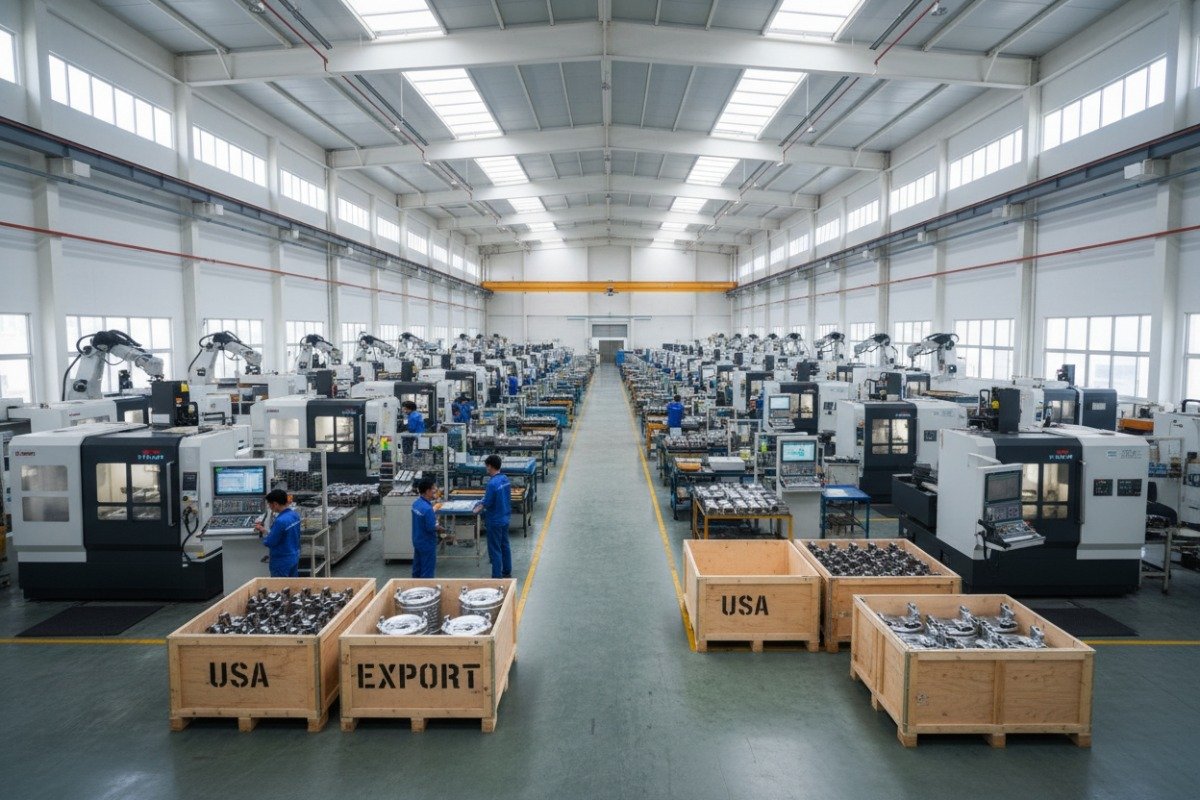
Scalability is where many bespoke manufacturing relationships break down. The prototype phase goes smoothly. The first few production runs are fine. Then demand doubles, and suddenly lead times stretch, defect rates climb, and communication deteriorates. Here is how to avoid that trap.
Assess Current Capacity vs. Your Needs
Ask the manufacturer directly: What is your current capacity utilization? If they are already running at 90%, there is very little room for your growth. Ideally, you want a partner operating at 60–75% capacity, with clear plans for expansion if needed.
Also ask about shift flexibility. Can they add a second or third shift? Do they have trained workers available, or would they need to hire and train from scratch?
Prototype-to-Production Transition
The best bespoke manufacturing partners can handle the full lifecycle. They start with CNC machining or 3D printing for prototypes, then transition to more cost-effective processes like die casting, stamping, or injection molding for volume production. This continuity reduces risk because the same team that developed your prototype understands the design intent when scaling up.
Vertically integrated firms — those that control multiple manufacturing processes in-house — cut lead times by up to 40% compared to fragmented suppliers who outsource steps to subcontractors.
Устойчивость цепочки поставок
A manufacturer is only as reliable as their supply chain. supply chain resilience 9 Ask about their material sourcing:
- Do they have multiple approved suppliers for critical raw materials?
- Do they maintain safety stock for long-lead-time items?
- How did they perform during recent supply chain disruptions?
Финансовая стабильность
A manufacturer that is struggling financially may cut corners, delay material purchases, or even shut down unexpectedly. Request basic financial information or at minimum ask for trade references from their material suppliers. If they pay their own suppliers on time, that is a good sign.
Scalability Evaluation Framework
| Критерии | What to Ask | Green Flag | Красный флаг |
|---|---|---|---|
| Capacity utilization | "What % of capacity are you using now?" | 60–75% | >90% |
| Shift flexibility | "Can you add shifts if needed?" | Yes, with trained staff | No plan for expansion |
| Process range | "Can you go from prototype to volume?" | Full lifecycle capability | Prototype only |
| Supply chain | "How many approved material suppliers do you have?" | 2+ per critical material | Единственный источник |
| Financial health | "Can you provide trade references?" | Pays suppliers on time | Evasive or refuses |
| Vertical integration | "What processes do you do in-house?" | Most critical steps in-house | Heavy subcontracting |
Look at Their Track Record
Ask for case studies or examples where they successfully scaled production for another client. How did they handle the ramp? Were there quality issues during the transition? How long did it take to reach stable full-rate production?
Industry data shows that scalable partners enable 25–50% faster time-to-market. That is not just a nice-to-have. In competitive markets, it is the difference between winning and losing contracts.
Think Long-Term
The manufacturing landscape is shifting. технологии Индустрии 4.0 10 — AI-driven quality controls, flexible automation, digital twins — are becoming standard tools for managing fluctuating demand. Ask your potential partner about their technology roadmap. A manufacturer investing in automation and digital tools today will be better positioned to scale with you tomorrow.
Sustainability is another growing factor. More U.S. and European buyers are requiring environmental compliance from their supply chains. A forward-thinking partner will already be working toward certifications like ISO 14001 or tracking their carbon footprint.
Заключение
Finding the right bespoke manufacturing partner takes effort upfront — but it saves you from costly failures later. Vet thoroughly, protect your IP, confirm scalability, and prioritize communication above all.
Сноски
1. Replaced with an authoritative source from BSI, a global certification body for ISO standards. ↩︎
2. Details the quality management system standard for the aerospace industry. ↩︎
3. Describes the official quality management system standard specific to the automotive sector. ↩︎
4. Provides information on the quality management system standard for medical devices. ↩︎
5. Explains U.S. regulations governing the export of defense-related articles and services. ↩︎
6. Defines the process for formal approval of production parts in manufacturing. ↩︎
7. Replaced with a highly authoritative legal definition from Cornell Law School’s Legal Information Institute. ↩︎
8. Provides a general overview of intellectual property rights and protection from the global authority. ↩︎
9. Replaced with a comprehensive and authoritative overview of supply chain resilience from IBM. ↩︎
10. Replaced with an authoritative explanation of Industry 4.0 technologies from IBM. ↩︎

 English
 Español de México
 Deutsch
 Français
 Русский
 العربية