
Every week, our engineering team in China reviews dozens of custom part drawings from U.S. buyers who are frustrated by missed tolerances, late deliveries, and suppliers who simply don't read the specs. The problem is real. And it costs businesses thousands in rework and lost time.
Sourcing custom engineered parts from China requires detailed engineering drawings, thorough supplier vetting through audits and samples, robust quality control at every stage, and clear IP protection agreements. When done right, businesses can achieve 20–50% cost savings compared to Western suppliers while maintaining strict technical standards.
China's manufacturing ecosystem is massive. Over 700,000 factories span industrial clusters specializing in Обработка на станках с ЧПУ 1, injection molding, casting, forging, and sheet metal fabrication. But size also means complexity. Finding the right partner takes method, not luck. Below, we break down the process step by step — from finding reliable manufacturers to protecting your designs.
How Do I Find and Vet Reliable Manufacturers for My Custom Engineered Parts in China?
Our team in China has visited hundreds of factories over the years. Some look great on paper but fall apart on the shop floor. Others are hidden gems tucked inside industrial zones that no online platform will surface without effort.
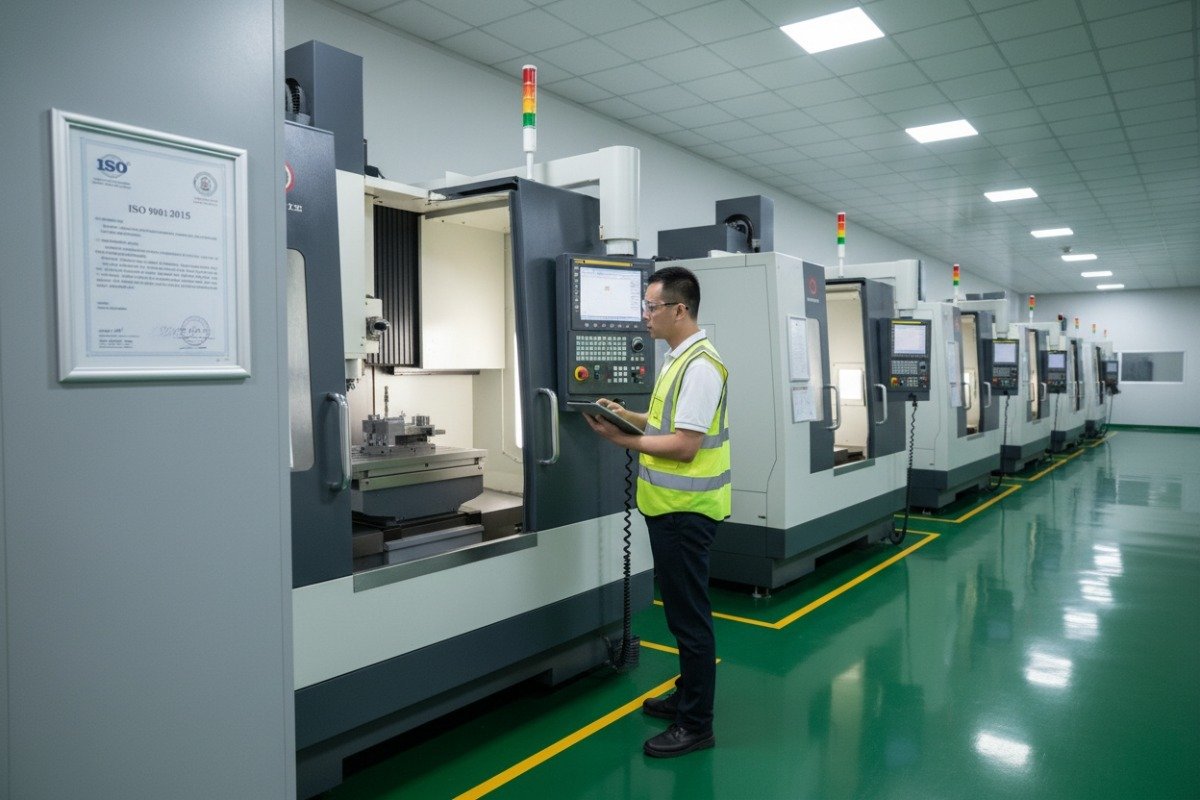
To find and vet reliable manufacturers in China, start with B2B platforms and sourcing agents, then verify capabilities through factory audits, reference checks, and certification reviews such as ISO 9001 or IATF 16949. Always request trial samples before committing to production orders.
Where to Start Your Search
Most buyers begin on online platforms. Alibaba, Made-in-China, and GlobalSources list thousands of suppliers. Newer platforms like Haizol use AI to match your uploaded specs with verified factories and return quotes within 24 hours. In one case, a buyer found 18 qualified suppliers for a complex sheet metal part in a single day.
But platforms are just the starting point. You also need to tap into industry networks, attend trade shows like Canton Fair, and ask competitors or peers for referrals. Our experience shows that the best factories are often not the ones with the flashiest online profiles. They are the ones with deep process expertise and repeat customers.
How to Vet a Supplier Properly
Vetting is where most sourcing projects succeed or fail. Here is a practical checklist:
| Vetting Step | Что проверить | Тревожные сигналы |
|---|---|---|
| Online Research | Website, certifications, customer reviews | No website, no certifications listed |
| Аудит фабрики | Equipment, capacity, workforce, cleanliness | Reluctance to allow visits, outdated machines |
| Certification Review | ISO 9001 2, IATF 16949, AS9100 (if applicable) | Expired or unverifiable certificates |
| Reference Check | Contact existing clients directly | Cannot provide references |
| Sample Order | Dimensional accuracy, surface finish, material | Samples that don't match specs |
| Financial Health | Business registration, years in operation | Very new company, unclear ownership |
A factory audit is non-negotiable for custom engineered parts. You or your sourcing partner should walk the production floor. Check if they have the right CNC machines, measuring equipment (CMMs, calipers, gauges), and trained operators. Ask to see their inspection records from recent jobs.
Regional Clusters Matter
China's manufacturing is organized into regional clusters. Each region has strengths:
| Регион | Специализация | Преимущества |
|---|---|---|
| Guangdong / Dongguan | Fast-turn exports, electronics, low MOQs | Proximity to Shenzhen/Hong Kong ports |
| Shanghai / Jiangsu | High-end precision engineering | Strong engineering talent pool |
| Zhejiang / Ningbo | Casting, forging, hydraulic components | Deep raw material supply chains |
| Cangzhou / Hebei | Sheet metal, welding, heavy fabrication | Cost-effective for large structures |
Knowing which cluster fits your part type saves time. For example, if you need precision CNC-turned components for robotics, Dongguan is a strong starting point. If you need large welded assemblies, Cangzhou offers better pricing and capacity.
The Role of Sourcing Agents
Sourcing agents like BCT International or China Sourcing International provide English-speaking engineers who can refine your designs for manufacturability, conduct audits, and handle logistics. They add value — but they also add cost, typically 10–30% on top of factory pricing.
Our recommendation: use agents when you are new to China sourcing or when the project is complex. Once you build direct relationships with proven factories, you can reduce agent dependency and lower costs.
How Can I Ensure the Quality of My Custom Components Meets My Specific Technical Standards?
When we calibrate inspection processes for a new custom part, we start from the drawing — every tolerance, every surface finish callout, every material grade. If the drawing is unclear, the factory will interpret it their own way. And that is where quality problems begin.
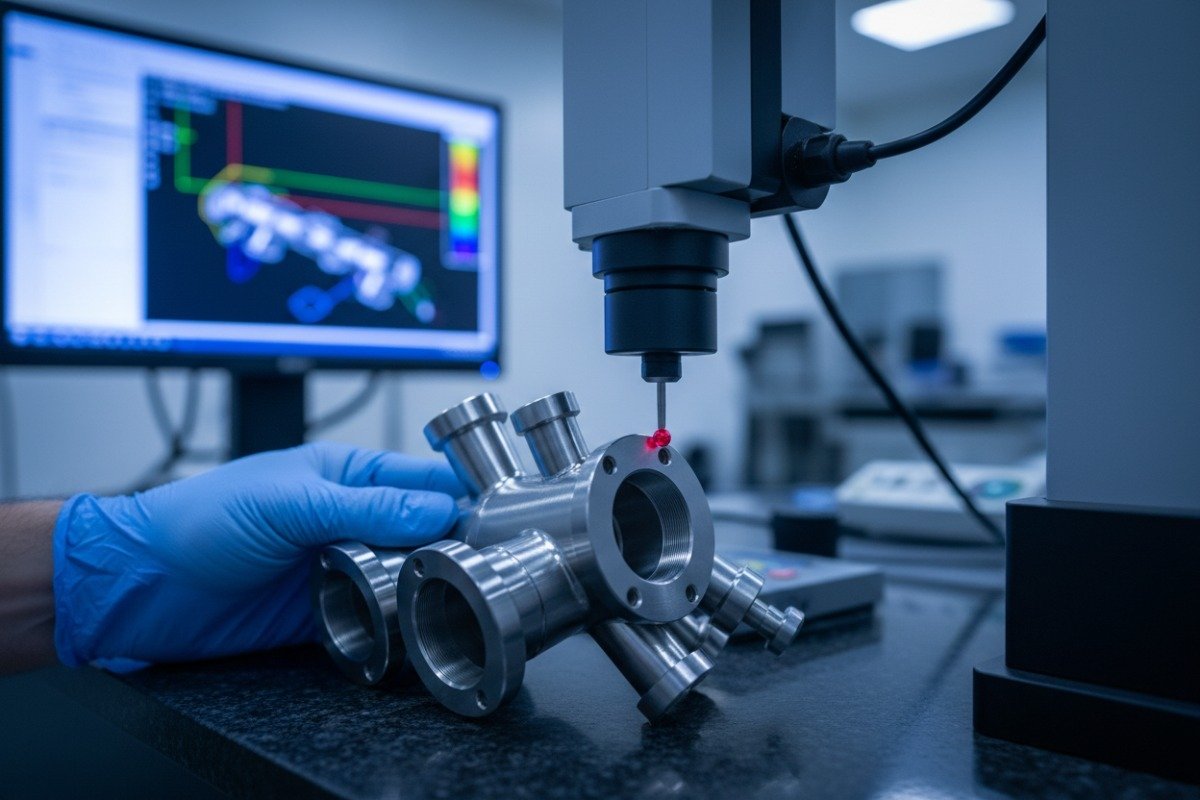
Ensuring quality requires detailed engineering drawings with clear tolerances and material specs, a Production Part Approval Process (PPAP), in-process inspections using SPC methods, and pre-shipment checks by third-party inspectors. These steps catch defects early and prevent costly rework or returns.
Start with the Drawing
Your engineering drawing is the contract between you and the factory. It must include:
- Material grade and standard (e.g., ASTM A36, 6061-T6 aluminum)
- Dimensional tolerances (use metric units — Chinese factories work in metric)
- Surface finish requirements (Ra values, plating, anodizing, painting)
- Critical-to-quality (CTQ) dimensions clearly marked
- Geometric tolerances (GD&T) 3 where needed
A vague drawing leads to vague parts. We have seen projects fail simply because the buyer used imperial units without conversion notes, or left surface finish unspecified. The factory made assumptions. The parts arrived wrong.
Implement a Multi-Stage Inspection Process
Quality cannot be inspected into a product at the end. It must be built in at every stage. Here is how a proper inspection flow works:
| Этап инспекции | Что происходит | Who Does It |
|---|---|---|
| Входной контроль материалов | Verify raw material certs, dimensions, hardness | Factory QC team |
| Первичная инспекция изделия (FAI) | Measure first production parts against drawing | Factory QC + buyer review |
| Контроль в процессе производства | SPC charts, random sampling during production | Factory QC team |
| Финальной инспекции | 100% check on CTQ dimensions, visual inspection | Factory QC + third-party inspector |
| Предварительная инспекция перед отгрузкой | AQL sampling, packaging check, labeling | Third-party (e.g., SGS, Bureau Veritas) |
The PPAP Approach
For buyers with strict technical standards — especially in automotive, aerospace, or industrial equipment — the Процесс утверждения производственной партии (PPAP) 4 is the gold standard. It requires the supplier to submit:
- Dimensional reports on sample parts
- Material test certificates
- Диаграммы технологического процесса
- Планы контроля
- Capability studies (Cpk values)
Not every Chinese factory understands PPAP. But the good ones do. Our team walks suppliers through the process when needed. It takes extra time upfront, but it dramatically reduces quality escapes in production.
Инспекции третьими сторонами
Even with a strong factory QC team, independent verification matters. Third-party inspection companies like SGS, TÜV, or Intertek can perform pre-shipment inspections based on your AQL (Допустимый уровень качества) 5 requirements. This is especially important for first orders or high-value shipments.
We use third-party inspectors on nearly every project. The cost is small — typically $300–$500 per inspection — compared to the cost of receiving a container of non-conforming parts.
Communication Is the Hidden Quality Tool
Many quality failures are actually communication failures. The factory didn't understand a note on the drawing. The buyer assumed the factory knew a certain standard. Nobody confirmed the surface treatment process.
Clear, written communication — ideally with photos, marked-up drawings, and reference samples — prevents most of these issues. Weekly check-ins during production keep everyone aligned.
What Is the Best Way to Manage the Prototyping and Sampling Process with My Chinese Supplier?
Our engineers have found that the prototyping phase is where most buyer-supplier relationships are either built or broken. Rush through it, and you pay the price in production. Invest in it, and you set the foundation for years of reliable supply.
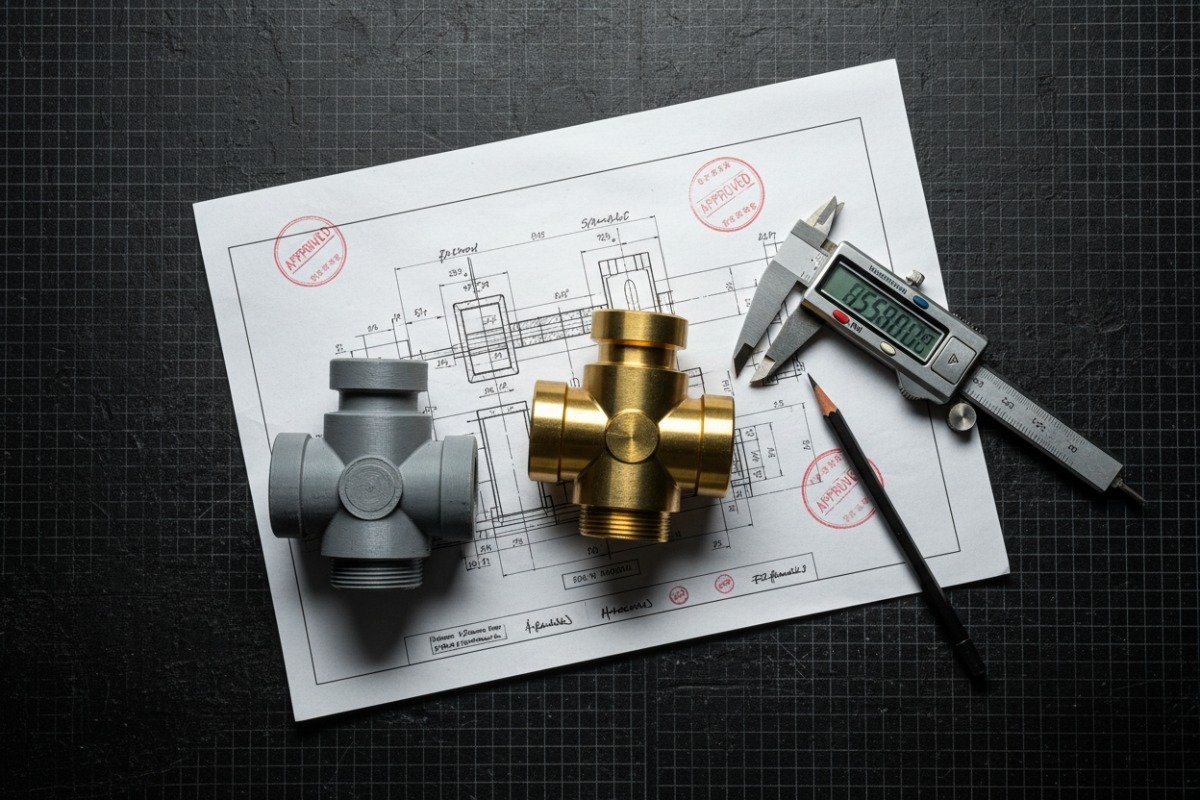
The best way to manage prototyping is to submit complete 3D models and 2D drawings, request a 3D-printed or CNC-machined prototype first, conduct a thorough First Article Inspection, iterate on feedback before approving mass production, and document every revision in writing to avoid miscommunication.
Why Prototyping Matters More Than You Think
A prototype is not just a sample. It is a test of the supplier's ability to read your drawing, select the right material, hold tolerances, and apply the correct finish. If they get the prototype wrong, they will get the production run wrong — at 10x the cost.
For custom engineered parts, we recommend a two-stage approach:
- Rapid prototype — 3D printed (SLA/SLS) or soft-tooled for form and fit check. This is fast (3–7 days) and cheap ($50–$500 depending on complexity).
- Production-representative sample — Made using the actual production process (CNC machining, литье под давлением 7, die casting). This confirms material properties, dimensional accuracy, and surface finish.
Step-by-Step Prototyping Workflow
Here is how we manage the prototyping process with our supplier network:
Step 1: Submit Complete Documentation. Send 3D CAD files (STEP or IGES format), 2D drawings with GD&T, material specs, and a list of CTQ dimensions. Include photos or reference samples if available.
Step 2: Review the Supplier's DFM Feedback. A good factory will come back with Проектирование для производства (DFM) 8 suggestions. They might recommend a different material grade for better machinability, or suggest adjusting a wall thickness to avoid warping. Listen to this feedback. It saves money and improves quality.
Step 3: Approve the Prototype Plan. Agree on prototype quantity (usually 3–5 pieces), timeline, and cost. Prototyping costs are typically separate from production pricing.
Step 4: Inspect the Prototype. Measure every CTQ dimension. Test material hardness, tensile strength, or other mechanical properties if required. Check surface finish. Compare against your 3D model using a CMM report.
Step 5: Provide Written Feedback. If changes are needed, mark them clearly on the drawing. Use red-line markups. Don't rely on verbal instructions alone.
Step 6: Approve for Production. Only after the prototype passes all checks should you issue a production order. Document the approved sample as the "golden sample" — the reference standard for all future production.
Common Prototyping Mistakes
Many buyers skip prototyping to save time. This is a false economy. Here are mistakes we see regularly:
- Approving a prototype based on photos alone, without measuring it
- Not testing material properties (hardness, composition)
- Changing the design after prototype approval without re-sampling
- Using a different process for the prototype than for production (e.g., CNC prototype for an injection-molded part)
Технология цифрового двойника
Some advanced buyers now use digital twin technology for virtual prototyping. This means simulating the part's performance in software before making a physical prototype. It reduces iterations and catches design flaws early. While not yet mainstream for SMEs, it is becoming more accessible through cloud-based CAE platforms.
The key takeaway: never skip the prototype stage. It is your insurance policy against production failures.
How Do I Protect My Intellectual Property and Design Rights When Manufacturing in China?
In our experience working with U.S. clients who source custom parts from Asia, IP protection is consistently their top concern — and for good reason. Without proper safeguards, your proprietary designs can end up in a competitor's hands.
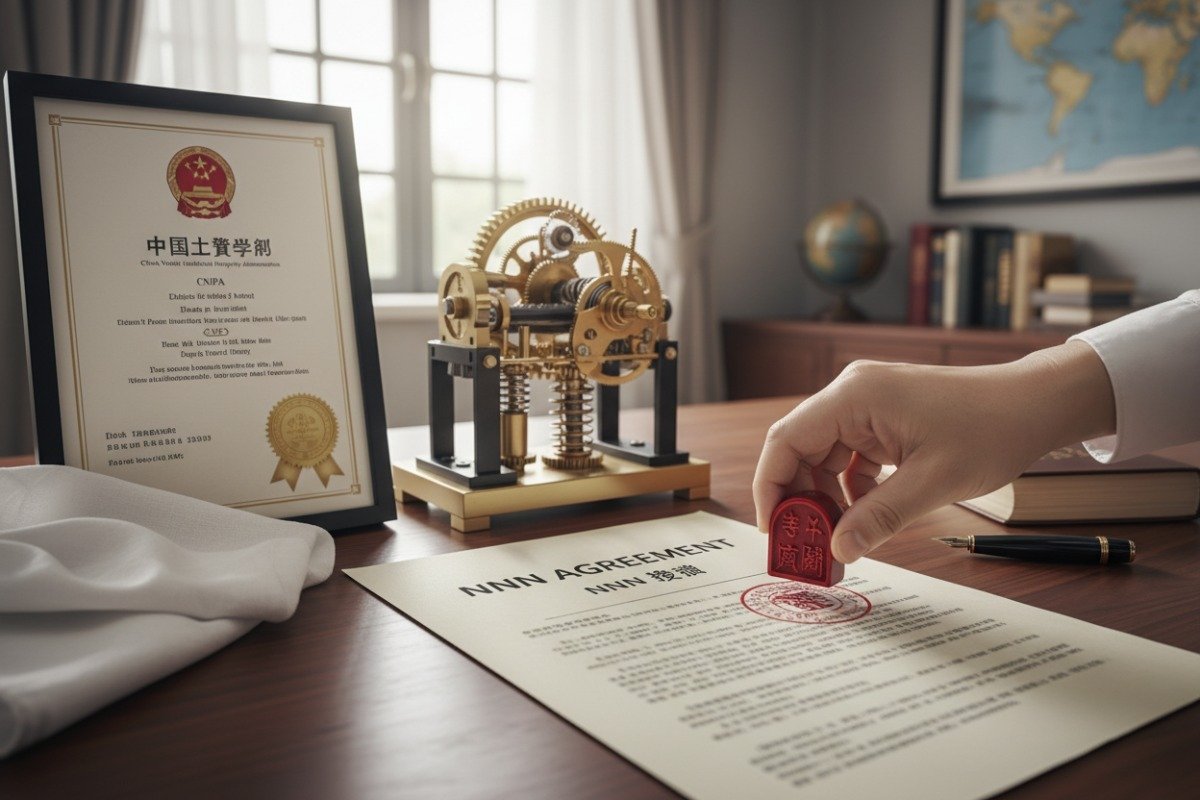
Protecting your intellectual property in China requires registering patents and trademarks in China specifically, signing enforceable Non-Disclosure Agreements (NDAs) and Non-Compete Agreements under Chinese law, splitting production across multiple suppliers so no single factory holds your complete design, and conducting regular audits to verify compliance.
Register Your IP in China First
This is the most important step — and the one most buyers skip. China operates on a "first to file" system. This means whoever registers a patent or trademark first in China owns it, regardless of who invented it. If you don't register your design in China before sharing it with a factory, someone else can.
File your patents and trademarks with China's National Intellectual Property Administration (CNIPA) 9 before you send drawings to any supplier. This gives you legal standing to enforce your rights in Chinese courts.
Use Proper Legal Agreements
A handshake deal offers zero protection. You need written agreements, and they must be enforceable under Chinese law. Here is what to include:
NNN Agreement (Non-Disclosure, Non-Use, Non-Circumvention): This is the China-specific version of an NDA. A standard Western NDA is often unenforceable in Chinese courts. An NNN agreement 10, drafted in Chinese and governed by Chinese law with a Chinese jurisdiction clause, carries real legal weight.
Manufacturing Agreement: This should clearly state that all IP, tooling, and designs remain your property. It should include penalty clauses for unauthorized use or disclosure.
Tooling Ownership Clause: If you pay for molds or tooling, the agreement must state that you own them. Without this clause, the factory may claim ownership and use your tooling to produce parts for other buyers.
Split Your Production
One effective strategy is to split your product across multiple suppliers. No single factory sees the complete design. For example:
- Supplier A makes the housing
- Supplier B makes the internal mechanism
- Supplier C handles final assembly
This approach adds complexity to your supply chain, but it significantly reduces the risk of any one supplier copying your entire product.
Monitor and Audit
IP protection is not a one-time activity. It requires ongoing vigilance. Conduct periodic factory audits — announced and unannounced. Check production records to ensure the factory is not running extra units beyond your order quantity. Monitor Chinese e-commerce platforms (Taobao, 1688) for copies of your product.
Our team in China performs these checks as part of our standard service. We have caught unauthorized production runs early, before any copies reached the market.
Practical IP Protection Checklist
- Register patents and trademarks with CNIPA before sharing designs
- Use NNN agreements drafted in Chinese, governed by Chinese law
- Include IP ownership and penalty clauses in manufacturing contracts
- Retain ownership of all tooling and molds in writing
- Split production across multiple suppliers when feasible
- Conduct regular audits and market monitoring
- Work with a China-based IP attorney for enforcement
The Reality Check
No system is foolproof. IP theft still happens. But the combination of legal registration, proper contracts, production splitting, and active monitoring reduces your risk dramatically. The buyers who get burned are almost always the ones who skipped these steps.
China's legal system has also improved significantly in recent years. Chinese courts now handle thousands of IP cases annually, and foreign companies win a majority of them — provided they have registered their IP and have proper documentation.
Заключение
Sourcing custom engineered parts from China offers significant cost and capability advantages — but only when you follow a disciplined process. Define your specs clearly, vet suppliers thoroughly, control quality at every stage, and protect your IP with proper legal tools.
Сноски
1. Replaced with a Wikipedia article for a comprehensive and authoritative overview of CNC machining. ↩︎
2. Official information on the ISO 9001 quality management standard. ↩︎
3. Replaced with a Wikipedia article for an authoritative explanation of Geometric Dimensioning and Tolerancing. ↩︎
4. Replaced with an article from Quality-One, a reputable quality consulting firm, providing a detailed explanation of PPAP. ↩︎
5. Explains the statistical sampling method for quality control. ↩︎
6. Official information on the IATF 16949 automotive quality management system. ↩︎
7. Provides an overview of the injection molding manufacturing process. ↩︎
8. Describes the engineering practice of designing products for ease of manufacturing. ↩︎
9. Official government body responsible for intellectual property in China. ↩︎
10. Explains the specific legal agreement used for IP protection in China. ↩︎

 English
 Español de México
 Deutsch
 Français
 Русский
 العربية