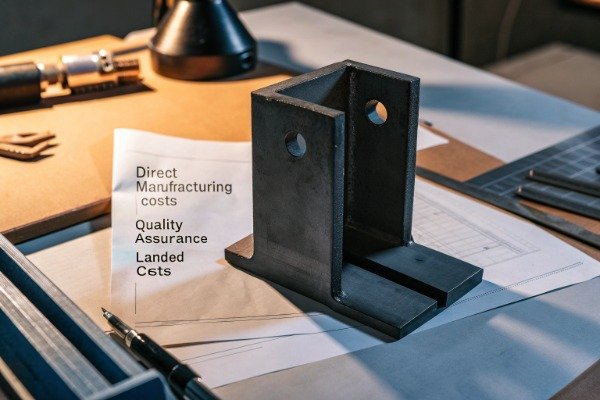
In our working practice, we frequently encounter procurement managers who are exceptionally skilled at sourcing standard components but find themselves navigating uncharted waters when tasked with procuring custom welded assemblies. The complexity lies not just in the welding process itself—whether it is MIG, TIG, or Stick—but in the intricate cost structure that surrounds the fabrication. We often see initial Requests for Quotation (RFQs) that underestimate the total landed cost because they focus solely on the unit price of the part, neglecting the volatile nature of raw material markets and the hidden layers of international trade. Sourcing custom parts requires a mindset shift from simply buying a product to managing a supply chain, where every variable from steel indices to port fees impacts your bottom line.
MIG, TIG, or Stick 1
To effectively set a procurement budget for welding parts, you must categorize your expenses into three primary tiers: direct manufacturing costs (raw materials and labor), quality assurance (including third-party inspections and rework contingencies), and landed costs (logistics, tariffs, and port fees). A robust budget for beginners should always include a 10–15% buffer specifically allocated for material price fluctuations and engineering changes during the initial sample development phase.
Once you have established this high-level framework, the next step is to drill down into the specific cost drivers that can make or break your project's profitability.
How do I estimate the raw material costs for steel or aluminum?
In our daily operations managing supply chains across Asia, we advise clients to look beyond the spot price of metal and consider the "utilization rate" of the material. We have found that many buyers calculate costs based on the finished weight of the part, forgetting that welding and fabrication processes generate significant scrap.
You must estimate raw material costs by tracking real-time market indices like the LME for aluminum or regional steel benchmarks, while simultaneously factoring in a 15–20% scrap rate for processing waste. Always base your budget calculations on the gross weight of the raw material required for production rather than the net weight of the final finished part to ensure accuracy.
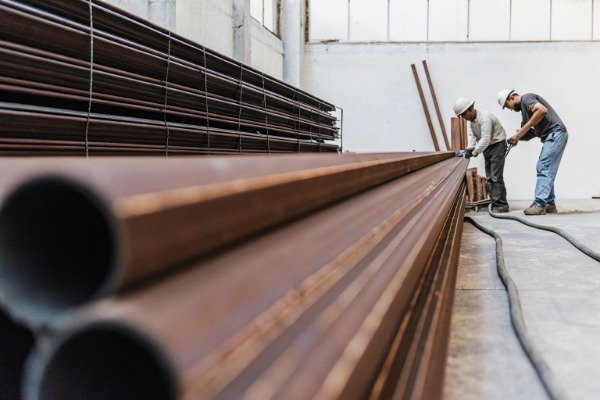
Understanding the Material Cost Formula
When you are sourcing custom welded parts, the raw material often constitutes 30% to 50% of the total unit price. To estimate this accurately, you cannot simply weigh a sample part and multiply it by the current price of steel. You need to think like a manufacturer.
The formula we use internally for estimation is:
$$ \text{Material Cost} = (\text{Gross Weight} \times \text{Market Price}) + \text{Processing Surcharges} $$
Gross Weight vs. Net Weight:
If your design is a complex bracket stamped and welded from a steel sheet, the "skeleton" left behind is waste. In the welding process, especially if parts are cut from standard plates, the yield rate might only be 80%. If you budget based on the 1kg final part, you are missing the cost of the 0.2kg of scrap that you are still paying for.
Tracking Market Volatility
Steel and aluminum prices are not static. They fluctuate based on global supply and demand, energy costs, and geopolitical factors. For a beginner, this volatility is a major risk. We recommend using a "trailing average" approach. Look at the average price over the last three months rather than today's spot price to build a buffer into your budget.
Material Grades and Their Impact
Not all steel is created equal. A common pitfall is budgeting for standard mild steel (like A36) when the engineering drawing specifies a higher grade or a specific surface finish that commands a premium.
Table 1: Comparative Cost Factors for Common Welding Materials
| Тип материала | Common Grade | Relative Cost Factor | Scrap/Waste Factor | Лучше всего подходит для |
|---|---|---|---|---|
| Углеродистая сталь | A36 / Q235 | 1.0 (Baseline) | 10-15% | Structural frames, heavy brackets |
| Нержавеющая сталь | 304 / 304L | 3.5x – 4.0x | 10-15% | Food processing, corrosion resistance |
| Алюминий | 6061-T6 | 2.8x – 3.2x | 15-20% | Lightweight frames, aerospace parts |
| Высокопрочная сталь | 4140 / Q345 | 1.5x – 1.8x | 12-18% | Heavy machinery, load-bearing parts |
The "MOQ" Trap in Materials
Another hidden cost is the Minimum Order Quantity (MOQ) for raw materials. If your welded assembly requires a specialized tube profile that isn't a market standard, the steel mill might require a minimum run of 5 tons. If your order only uses 2 tons, you might be forced to pay for the entire 5 tons or pay a heavy surcharge. Always ask your supplier: "Is this a standard stock material?" If the answer is no, increase your material budget by at least 30%.
What percentage should I allocate for international shipping and logistics?
When we coordinate shipments from our Vietnam or China offices to the United States, we see that logistics is often the most underestimated line item in a beginner's budget. It is not just about the boat ride; it is about the entire journey from our factory floor to your warehouse door.
freight forwarder 2
For a comprehensive budget, you should allocate approximately 12–18% of the total commercial invoice value for international logistics, specifically if you are shipping via sea freight. However, this percentage can spike to 30–40% for air freight on smaller batches, so it is critical to calculate costs based on the "chargeable volume weight" rather than just the actual physical weight of the welded parts.

Anti-Dumping and Countervailing Duties 3
The Reality of "Volume Weight" in Welding Parts
Welded assemblies are notoriously inefficient to ship. Unlike machined screws that can be densely packed in a box, a welded frame is mostly air. Logistics companies charge based on the greater of two metrics: actual weight or volumetric weight.
If you are importing 100 welded frames that are light but bulky, you will be charged for the space they take up in the container, not how heavy they are. To mitigate this, we often work with clients to design "collapsible" parts or nestable designs, but if the design is fixed, your budget must account for this "paying for air" scenario.
Пошлины по Разделу 301 4
Sea Freight vs. Air Freight
For a beginner, the instinct is to get parts fast. However, air freight is prohibitively expensive for heavy metal parts.
- Sea Freight (LCL/FCL): This is your standard mode. It takes 30–45 days from Asia to the US.
- Air Freight: Only use this for samples or emergency shortages. It can cost 5x to 10x more than sea freight.
The "Landed Cost" Stack
Your logistics budget is not a single number. It is a stack of fees. When we quote DDP (Delivered Duty Paid) to a client, we are factoring in all these steps. If you are buying FOB (Free on Board), you need to manage these costs yourself.
Table 2: Typical Logistics Cost Breakdown (Asia to US West Coast)
| Компонент затрат | Описание | Estimated Budget Impact |
|---|---|---|
| Морские перевозки | The cost of the container slot. | $2,000 – $4,000 per 40ft Container |
| LCL Fees | If sharing a container (Less than Container Load). | $80 – $150 per CBM (Cubic Meter) |
| ISF & Bond | US Customs filing requirements. | $100 – $150 per shipment |
| Port Handling (THC) | Terminal Handling Charges at destination. | $300 – $600 per shipment |
| Trucking (Drayage) | Port to your warehouse. | $500 – $1,500 (Distance dependent) |
| Chassis Fee | Rental of the trailer for the container. | $30 – $50 per day |
Critical Thinking: The Incoterm Factor
Your budget depends entirely on the Incoterms you negotiate.
- EXW (Ex Works): You pay for everything from the factory door. Highest risk, hardest to budget.
- FOB (Свободно на борту): Supplier pays to get it on the ship. You pay ocean freight + US side costs. Most common for B2B.
- DDP (Delivered Duty Paid): Supplier pays everything. Easiest to budget, but the supplier will add a markup for the risk.
For a beginner, we recommend budgeting for FOB terms but getting a quote from a local freight forwarder до того, как placing the order to lock in your logistics budget.
Should I budget extra for third-party quality inspections?
In our experience, the philosophy of "trust but verify" is the cornerstone of successful international procurement. While we maintain rigorous internal processes including PPAP (Production Part Approval Process), we actively encourage our clients to engage third-party inspectors, especially during the first production run.
Гармонизированное тарифное расписание (HTS) 5
You should absolutely budget an additional 5–8% of your total order value, or a fixed daily rate of roughly $300–$500, for third-party quality inspections. This expense is not a cost but an investment that prevents the exponentially higher financial loss associated with receiving non-conforming welded parts that require rework or scrapping.

The High Cost of "Cheap" Quality
Welding is a special process. Unlike machining, where a caliper can verify a dimension, a weld's quality is often hidden. A weld can look beautiful on the surface but lack penetration or fusion underneath. If you skip inspection to save $500, you risk receiving a container of parts that fail under load. The cost to rework these parts in the US is often 10x the cost of manufacturing them in Asia.
Types of Inspections to Budget For
Different stages of production require different checks.
- During Production Inspection (DUPRO): Occurs when 10-20% of goods are finished. Catches systematic errors early (e.g., wrong welding wire used, fixture misalignment).
- Pre-Shipment Inspection (PSI): The standard "final exam" before goods are loaded.
- Container Loading Check (CLC): Ensures the goods are packed correctly to avoid rust or damage during the ocean voyage.
Specialized Welding Inspections
For critical structural parts, visual inspection is not enough. You may need to budget for Non-Destructive Testing (NDT).
- Visual (VT): Checks for porosity, undercut, and spatter. (Standard)
- Пенетрантный контроль (PT): Checks for surface cracks. (Moderate cost)
- Ultrasonic (UT) / X-Ray (RT): Checks for internal defects. (High cost)
Table 3: Estimated Costs for Quality Control Services
| Тип инспекции | Область применения | Estimated Cost (3rd Party) | Рекомендуется для |
|---|---|---|---|
| Standard PSI | Visual check, dimension check, quantity check (AQL Standard). | $300 – $500 per man-day | All initial orders. |
| Капиллярный контроль (PT) | 10% sampling of welds for surface cracks. | +$100 – $200 consumables/labor | Pressure vessels, liquid tanks. |
| Lab Testing | Material composition analysis (Spectrometer). | $150 – $300 per sample | Verifying steel grade (304 vs 316). |
| Weld Strength Test | Destructive pull test of a sample coupon. | $200 – $500 per test | Structural safety components. |
How to Reduce This Cost Over Time
You don't need to inspect every shipment forever. The goal is to qualify the supplier.
- Order 1-3: 100% Inspection or strict AQL Level II. Budget high.
- Order 4-10: Reduce to "Skip-lot" inspection (inspect every other shipment) if quality is stable.
- Long-term: Rely on the supplier's internal QC reports (like the ones we provide at DEWIN) and perform random spot checks once a year.
How do I factor in potential tariff costs into my budget?
Navigating the trade landscape between Asia and the West is something we deal with daily, particularly given our footprint in both China and Vietnam. The trade war has fundamentally changed how buyers must budget for imported metal products.
Инкотермс 7
Factor potential tariff costs into your budget by first identifying the precise Harmonized Tariff Schedule (HTS) code for your specific welded assembly, and then checking for Section 301 duties which can add 25% to goods from China. Conversely, sourcing from countries like Vietnam often allows you to bypass these punitive tariffs, significantly lowering your landed cost.
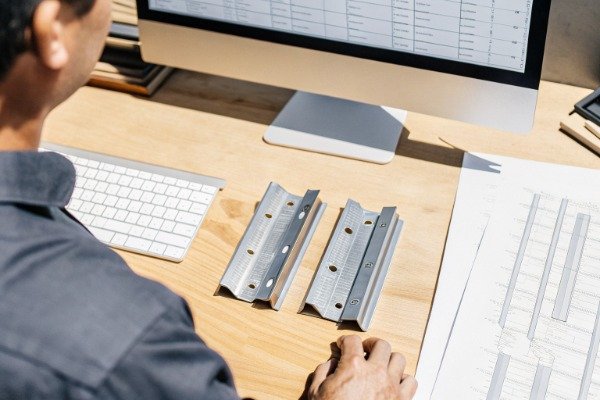
The HTS Code Maze
The Harmonized Tariff Schedule (HTS) determines your duty rate. For welding parts, this can be tricky. Is it a "part of a machine" or "general fabricated metal"?
- General Steel Articles (Heading 7326): Often attracts standard duties.
- Parts of Specific Machinery (Heading 84 or 85): Might have lower duties.
Warning: Misclassifying your product to get a lower rate is customs fraud. Always budget based on the most conservative (highest cost) classification until a customs broker confirms otherwise.
The "China Factor" (Section 301)
If you are sourcing from China, you are likely subject to Section 301 tariffs. These are additional duties on top of the standard MFN (Most Favored Nation) rate.
- Standard Duty: 0% – 6% (Typical for metal parts).
- Section 301 Duty: +25% (For many steel/aluminum products from China).
This means a $10 part actually costs you $12.50 + freight + fees. This 25% gap is exactly why many of our clients choose our Vietnam facility for their custom parts.
standard mild steel (like A36) 9
Country of Origin Strategy
Budgeting for tariffs is also about strategic sourcing.
- Китай: High maturity, huge capacity, but high tariffs (25%). Best for complex, high-precision parts where the tariff cost is offset by efficiency.
- Vietnam/India: Lower maturity, growing capacity, low/no tariffs. Best for labor-intensive welded assemblies (frames, brackets).
Антидемпинговые и компенсационные пошлины (AD/CVD)
This is the "nuclear bomb" of budgeting. The US Department of Commerce places massive duties (sometimes 200%+) on specific products from specific countries to protect domestic industries. This is common in steel and aluminum sectors.
- Check the scope: Does your welded part fall under an existing AD/CVD order (e.g., "Steel Racks" or "Aluminum Extrusions")?
- Budget Impact: If yes, the project is likely unviable abroad. You must verify this before spending a dime.
Calculation Example
Let's say you buy $10,000 worth of welded brackets.
Scenario A (China):
- Invoice: $10,000
- Standard Duty (3.2%): $320
- Section 301 Duty (25%): $2,500
- Total Duty: $2,820 (28.2% effective rate)
Scenario B (Vietnam):
- Invoice: $10,500 (Labor/Material might be slightly higher)
- Standard Duty (3.2%): $336
- Section 301 Duty: $0
- Total Duty: $336 (3.2% effective rate)
Even if the Vietnam invoice is higher, the total landed cost is often lower.
Заключение
Setting a procurement budget for welding parts is a multidimensional exercise that extends far beyond the price on a supplier's quote. As we have explored, a professional buyer must account for the hidden realities of raw material yield rates, the volumetric inefficiencies of shipping air, the non-negotiable need for third-party quality verification, and the geopolitical impact of tariffs. By building a budget that includes these "below the surface" costs—typically adding 30–40% to the ex-factory price—you protect your company from financial surprises and ensure a sustainable supply chain. Remember, in custom manufacturing, the lowest quote is rarely the lowest final cost; the most accurate budget is the one that anticipates the inevitable complexities of global trade.
LME for aluminum 10
Сноски
1. Major manufacturer documentation explaining the specific welding processes mentioned. ↩︎
2. General background information defining this logistics role. ↩︎
3. Official government guide explaining these specific trade enforcement measures. ↩︎
4. Official government source detailing the specific tariffs on Chinese goods. ↩︎
5. Official US government tool for looking up the tariff codes mentioned. ↩︎
6. Educational resource from Iowa State University explaining this testing method. ↩︎
7. Official organization (ICC) that defines and regulates these trade terms. ↩︎
8. Major logistics company guide explaining the calculation method. ↩︎
9. Official standard body defining the specific material grade referenced. ↩︎
10. Official industry organization providing the market index data cited. ↩︎

 English
 Español de México
 Deutsch
 Français
 Русский
 العربية