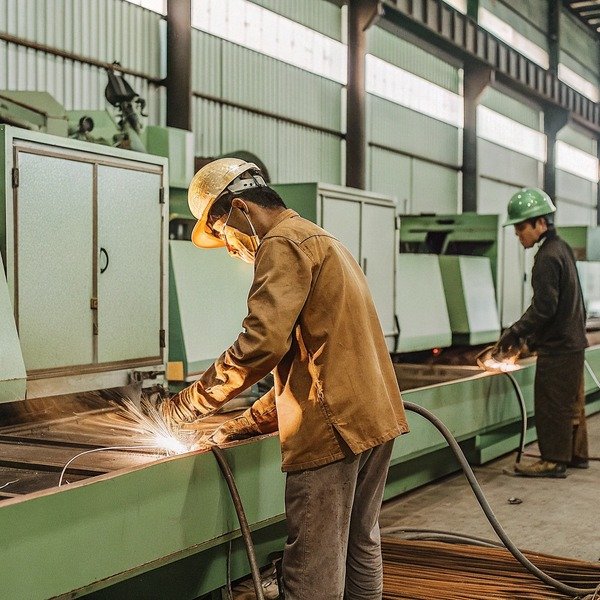
We understand the frustration of supply chain disruptions. сбои в цепочке поставок 1 When we expanded our operations into Vietnam to support our US clients, we quickly realized that locating a reliable partner goes beyond a simple Google search.
To determine if a Vietnamese factory is suitable, you must verify their legal export licenses and specific welding certifications like ISO 3834. You need to conduct on-site audits to assess equipment maintenance, review their raw material sourcing to avoid tariff issues, and ensure they have a robust quality management system in place.
Let’s break down the critical steps for validating a new manufacturing partner.
What specific welding certifications and quality standards must I verify during a factory audit?
In our experience navigating the Vietnamese market, we often find factories that claim high standards but lack documentation. We always demand proof of specific qualifications before we even discuss pricing for a project.
You must verify that the factory holds a valid ISO 9001 certificate for general quality management and, crucially, ISO 3834 for welding quality requirements. Additionally, for exports to the US, check if their welders are qualified under AWS D1.1 standards and if they maintain documented Welding Procedure Specifications (WPS).
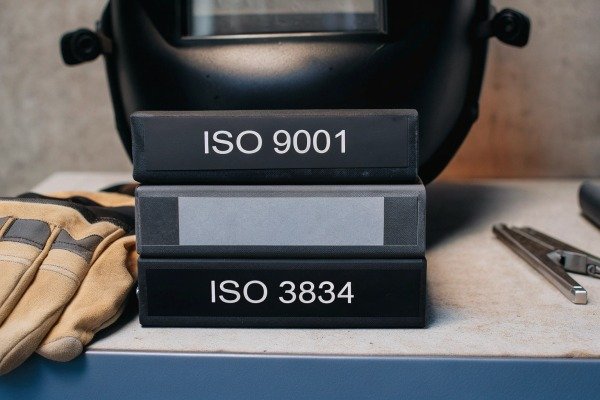
When you evaluate a new supplier for complex metal fabrication, paperwork is your first line of defense. A factory might produce good samples, but certifications prove they can do it consistently. In Vietnam, the manufacturing landscape is growing rapidly. This growth means new players enter the market frequently, but not all of them adhere to international standards.
The Hierarchy of Certifications
You should not treat all certificates equally. A general business license is the minimum legal requirement, but it tells you nothing about welding quality. ISO 9001 is a good baseline. ISO 9001 2 It shows the factory has a management system. However, for the geometric structures and rectangular tubes we often manufacture, ISO 9001 is not enough.
We specifically look for ISO 3834. This standard controls the fusion welding process itself. It proves the factory can manage welding operations, not just general office paperwork. If your product is structural, this is non-negotiable.
Worker Qualifications
Equipment does not weld parts; people do. Even with robotic arms, skilled operators are essential. We always check the individual qualifications of the welding team.
- Welder Performance Qualification (WPQ): Does the specific welder have a certificate?
- Standard Adherence: For US clients, we verify if they follow AWS (American Welding Society) standards, specifically AWS D1.1 for structural steel. AWS D1.1 3
- Expiry Dates: Welding certificates expire. We frequently catch expired licenses during audits.
Documented Procedures
A suitable factory must have a "recipe" for your weld. This is called the Welding Procedure Specification (WPS). The WPS tells the welder exactly how to set the machine, what consumables to use, and what travel speed to maintain. Without a WPS, the factory is guessing. We also ask for the Procedure Qualification Record (PQR), which proves the recipe actually works through testing.
| Document Type | Назначение | Criticality for Welding |
|---|---|---|
| ISO 9001 | Общее управление качеством | High (Baseline) |
| ISO 3834 | Quality Requirements for Welding | Очень высокий |
| AWS D1.1 | Structural Welding Code (Steel) | Mandatory for US Structure |
| WPS | Step-by-step Welding Instructions | Обязательно |
| WPQ | Individual Welder Skill Certificate | Обязательно |
How do I evaluate the technical capabilities and equipment list of a potential welding supplier?
When we walk through a factory floor in Vietnam, we look past the shiny new machines in the lobby. We examine the actual production line where the daily work happens to see the real story.
To evaluate capability, assess the age and condition of their CNC and welding equipment, specifically looking for robotic welding arms for high-volume consistency. You must also verify their maintenance logs to ensure machines operate at consistent voltages, which is critical for preventing hidden defects in complex geometric structures.
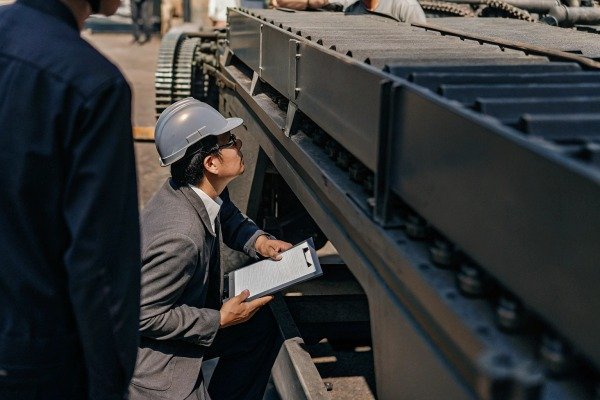
A machine list sent via email is often misleading. It might list equipment that is broken, sold, or borrowed. Physical verification or a detailed video audit is the only way to confirm technical capacity.
Assessing Welding Equipment
For the complex geometric structures mentioned, consistency is key. Manual welding is versatile, but it relies heavily on the welder's mood and health. We prefer suppliers who invest in robotic welding for high-volume orders. роботизированная сварка 4 роботизированная сварка 5 Robots do not get tired. They place the weld in the exact same spot on the interconnected rectangular tubes every time.
If the factory relies on manual welding, look at their welding machines. Are they modern inverters or old transformers? Modern machines offer better control over the arc, which is vital for the brushed silver finish you require. A messy weld requires heavy grinding, which ruins the finish and increases costs.
Maintenance and Infrastructure
Vietnam is a tropical country with high humidity. This environment is harsh on machinery. During our audits, we check the maintenance logs. A machine that is not maintained will have voltage fluctuations. Inconsistent voltage leads to cold laps or burn-throughs. cold laps 6
We also check the factory's power supply. Does the factory have a dedicated transformer or a heavy-duty generator? Power outages or brownouts can happen in industrial zones. If the power cuts out mid-weld, that part is scrap. A suitable supplier has backup power systems to ensure production continuity.
Jig and Fixture Capabilities
For a frame made of interconnected tubes, the jig is as important as the welding machine. The jig holds the parts in place.
- Design Capability: Does the factory design jigs in-house?
- Storage: How do they store jigs? Are they rusting in a corner?
- Changeover: How quickly can they swap jigs for different product models?
A factory with a dedicated jig department is usually a more mature and reliable partner. They understand that precision comes from preparation, not just the welding act itself.
Technical Evaluation Checklist
| Equipment Category | На что обратить внимание | Почему это важно |
|---|---|---|
| Роботизированная сварка | Brand (Yaskawa, Fanuc, OTC) | Ensures repeatability for complex frames. |
| Manual Machines | Digital displays, clean cables | Better arc control for aesthetic finishes. |
| Power Supply | Industrial generators | Prevents defects caused by voltage drops. |
| Jigs & Fixtures | Dedicated storage area | Ensures dimensional accuracy of the base. |
What inspection processes and non-destructive testing methods should I require to ensure weld integrity?
We believe that quality control starts long before the final shipment. In our production monitoring, we insist on seeing the testing happen in real-time, not just reading a report after the goods are packed.
You should require a combination of Visual Testing (VT) for 100% of parts and Penetrant Testing (PT) or Magnetic Particle Inspection (MPI) for a statistical sample. For critical structural components, demand Macro-etching on test coupons to verify weld penetration depth without destroying your finished products.

For a product with a brushed silver finish and a geometric structure, the weld is both structural and aesthetic. You cannot hide a bad weld under thick paint if the finish is brushed metal. The inspection process must be rigorous.
Visual Inspection (VT)
This is the baseline. Every single part must undergo visual inspection. We train our inspectors to look for:
- Непровар: A groove melted into the base metal.
- Пористость: Tiny holes in the weld bead.
- Брызги: Metal droplets stuck to the surface (fatal for brushed finishes).
- Weld Size: Using a weld gauge to measure the throat and leg length of the fillet weld.
If a factory relies only on visual inspection for structural parts, it is a red flag. Eyes cannot see inside the metal.
Penetrant Testing (PT)
Since your product uses rectangular tubes and likely stainless steel or aluminum for that silver finish, Penetrant Testing (PT) is essential. Penetrant Testing (PT) 7 It is a low-cost, effective method.
The inspector applies a red dye to the weld. After a few minutes, they wipe it off and apply a developer. The dye bleeds out of any invisible surface cracks. This is crucial for preventing failure at the interconnection points of your frame. We typically require PT on 10% to 20% of the production lot.
Macro-Etching for Penetration
How do you know the weld connects the tubes internally? You cannot cut open every product. The solution is Macro-etching. Macro-etching 8
We instruct the factory to weld a "coupon" (a sample piece) at the start of each shift using the exact same settings as the production run. We cut this coupon, polish the cross-section, and apply acid. The acid reveals the weld structure. We can clearly see if the weld has penetrated the root of the joint. If the coupon fails, the entire shift's production is suspect.
Dimensional Inspection
Welding involves heat, and heat causes distortion. A geometric frame made of tubes will warp if not welded in a specific sequence.
You must require the factory to use a "checking fixture" (Go/No-Go gauge) for final inspection. Every finished frame must fit into this fixture. If it does not fit, it is rejected. This ensures that when the product arrives in the US, it fits perfectly into the final assembly.
How does the availability of raw materials in Vietnam affect the pricing and delivery of my welded components?
We often warn our clients that Vietnam’s raw material supply chain differs significantly from China’s. We spend considerable time verifying the origin of steel and aluminum to prevent unexpected costs for our partners.
Raw material availability in Vietnam impacts pricing through potential import tariffs and longer lead times if materials must be sourced from overseas. You must verify if the factory sources locally or imports, and check for “Certificate of Origin” documents to ensure compliance and avoid anti-dumping duties when importing to the US.
Vietnam has a growing steel industry, but it still imports a significant amount of specialized alloys and specific tube profiles. This affects your project in two ways: cost and time.
The Import Factor and Lead Times
If your geometric structure requires a standard steel grade, local Vietnamese mills like Hoa Phat can likely supply it. Hoa Phat 9 This is good for speed. However, if you need a specific high-grade alloy or a custom tube profile, the factory might need to import it from China, Japan, or Korea.
- Local Sourcing: Lead time is 1-2 weeks. Prices are stable.
- Imported Sourcing: Lead time can jump to 4-6 weeks. You also face currency exchange risks and shipping delays.
We always ask the factory: "Do you have this material in stock, or do you buy it?" If they buy it, we ask: "Where from?"
Tariff Risks and Anti-Dumping
This is a critical legal aspect. The US government is strict about "transshipment." This happens when Chinese steel is sent to Vietnam, slightly modified, and exported to the US to avoid tariffs.
To protect your business, you must ensure the factory provides a legitimate Certificate of Origin Сертификат происхождения 10 (C/O). For Vietnam, this is typically Form B (for general exports). If the factory uses Chinese raw materials, the product might still be subject to US tariffs on Chinese steel.
We advise sourcing materials that undergo "substantial transformation" in Vietnam or using Vietnamese-origin steel. This ensures your product is legally "Made in Vietnam" and benefits from better tariff rates.
Устойчивость цепочки поставок
Price is important, but availability is king. During peak seasons, smaller factories in Vietnam often get pushed to the back of the line by material suppliers.
We evaluate the factory's purchasing power. Large factories have contracts with steel mills and guarantee supply. Small workshops buy from the spot market. When prices rise, small workshops might delay your order or ask for a price increase mid-production. We verify their raw material inventory turnover to gauge their financial health and supply security.
Material Sourcing Impact Table
| Источник материалов | Lead Time Impact | Стабильность цен | Фактор риска |
|---|---|---|---|
| Domestic (Vietnam) | Short (1-2 weeks) | Высокие | Низкие |
| Imported (China) | Medium (3-5 weeks) | Средний | High (Tariff/Duty Risks) |
| Imported (Japan/Korea) | Long (5-8 weeks) | Low (High Cost) | Low (Quality is High) |
Заключение
Determining if a Vietnamese factory is the right alternative supplier requires a holistic approach. You cannot rely on price alone. You must validate their legal standing, scrutinize their ISO and welding certifications, and physically audit their machinery and quality processes. By understanding the raw material supply chain and insisting on rigorous NDT testing, you protect your business from quality defects and legal risks. A thorough evaluation upfront ensures a stable, long-term partnership.
Сноски
1. Official US government resource on supply chain resilience strategies. ↩︎
2. General background on the international standard for quality management systems. ↩︎
3. The primary American standard for structural steel welding design and fabrication. ↩︎
4. Authoritative technical explanation of the robotic welding process. ↩︎
5. Technical overview of industrial robots used for automated arc welding processes. ↩︎
6. Technical definition of this specific welding defect. ↩︎
7. Official society standard for this non-destructive testing method. ↩︎
8. Technical definition of the macro-etching inspection process. ↩︎
9. Market profile of Vietnam’s leading steel manufacturer and industrial supplier. ↩︎
10. Official US Customs guidance on import documentation requirements. ↩︎

 English
 Español de México
 Deutsch
 Français
 Русский
 العربية