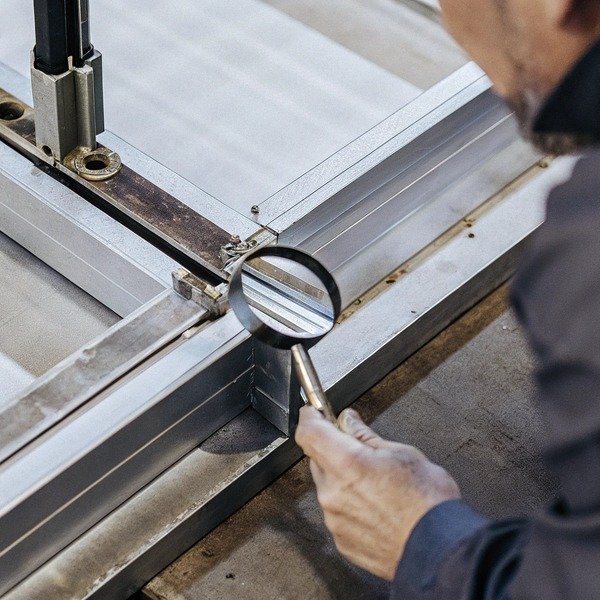
We often see production timelines collapse because a supplier delivered materials that looked acceptable on the outside but failed during assembly.
To establish a reliable process, verify all documentation against purchase orders, perform visual checks for surface defects, and use calibrated tools for dimensional accuracy. Implement a structured sampling plan and specific non-destructive Non-Destructive Testing (NDT) methods 1 tests to ensure material integrity before acceptance.
Let’s break down the specific steps to secure your supply chain and prevent costly rework.
What are the most common visual defects I should look for in welded assemblies?
Our quality engineers in Vietnam frequently reject shipments where simple surface irregularities indicate much larger structural problems hidden within the metal. structural problems hidden within 2
You must immediately inspect for visible flaws such as porosity, undercut, cracks, and excessive spatter. Additionally, check for inconsistent bead profiles and lack of fusion at the toes, as these surface indicators often suggest deeper structural failures within the weldment.
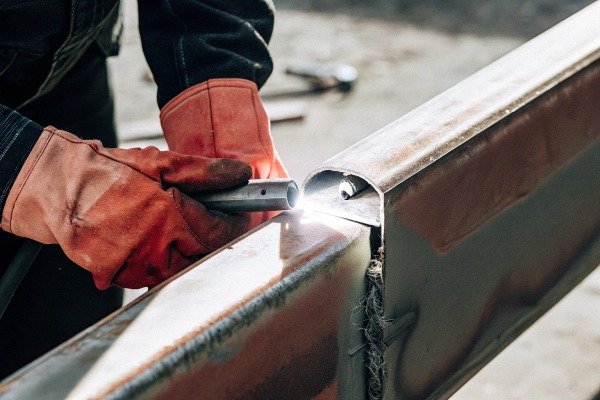
Visual inspection (VT) is the first line of defense Визуальный осмотр (VT) 3 in our quality control process. It is the most cost-effective method because it requires minimal equipment—often just a flashlight, a magnifying glass, and weld gauges—but it requires a trained eye. When we receive custom parts like the aluminum frames mentioned earlier, we look for specific "tell-tale" signs that the welding process was out of control.
Surface Irregularities and Cleanliness
The appearance of the weld bead tells a story about the welder's stability. We look for porosity, which appears as small pinholes on the surface. This usually happens when the shielding gas coverage was poor during fabrication. Another common issue is undercut, where the base metal is eroded at the toe of the weld. This reduces the cross-sectional thickness of the part and creates a stress concentration point, making the frame susceptible to fatigue failure.
Dimensional Consistency and Profile
Beyond just "ugly" welds, you must measure the physical profile. A weld that is too convex (bulging) adds unnecessary weight and cost, while a concave weld (under-filled) may be weak. We use fillet weld gauges to verify leg length and throat thickness. If the dimensions do not match the technical drawing, the part is non-conforming, regardless of how clean the metal looks.
Common Visual Defects Checklist
Below is a breakdown of what our team looks for during the initial visual check:
| Тип дефекта | Appearance Description | Potential Cause | Критерии приемки |
|---|---|---|---|
| Пористость | Small holes or pits on the weld face. | Drafty environment, wet electrodes, or lack of shielding gas. | Zero tolerance for critical structural welds. |
| Подрез | Канавка, проплавленная в основном металле рядом с краем сварного шва. | Amperage too high or travel speed too fast. | Typically max depth of 0.5mm depending on code. |
| Нахлест | Weld metal spilling over the toe without fusing. | Travel speed too slow or wrong electrode angle. | Not acceptable; must be ground down and re-welded. |
| Брызги | Small droplets of metal stuck to the surrounding area. | High current or incorrect arc length. | Acceptable if removed; requires cleaning for aesthetics. |
Which non-destructive testing methods are essential for verifying weld integrity?
When we manage high-stress custom projects, relying solely on eyesight leaves too much room for catastrophic failure once the part is in use.
Essential non-destructive testing methods include Liquid Penetrant Testing (PT) for surface breaking cracks and Ultrasonic Testing (UT) for internal flaws. For critical structural components, Radiographic Testing (RT) provides a permanent record of internal volumetric defects without damaging the part.
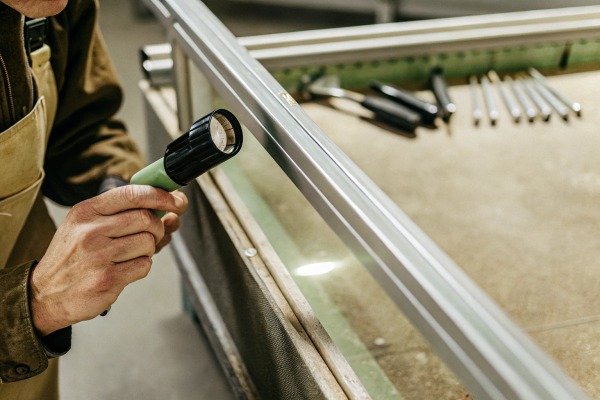
Visual inspection only reveals what is on the surface. However, many welding defects, such as lack of fusion or slag inclusions, happen inside the joint. To ensure the integrity of the parts we source for our US clients, we employ specific Non-Destructive Testing (NDT) methods depending Неразрушающий контроль (NDT) 4 on the material and the criticality of the application.
Жидкостная пенетрантная дефектоскопия (PT)
For non-magnetic materials like the aluminum frames we produce, Liquid Penetrant Testing (PT) is essential. Since we cannot use magnetic particle inspection on aluminum, PT is the best way to find hairline cracks that are invisible to the naked eye. The process involves applying a red dye to the weld, letting it sit, cleaning it off, and then applying a developer. The developer draws the dye out of any cracks, creating a bright red line on a white background. It is cheap, portable, and highly effective for surface-breaking defects.
Ultrasonic Testing (UT) vs. Radiographic Testing (RT)
When we need to look deep inside the weld, we choose between UT and RT. choose between UT and RT 5
- Ultrasonic Testing (UT): This uses high-frequency sound waves. If there is a crack or void inside the metal, the sound wave bounces back. It is excellent for detecting planar defects like cracks and lack of fusion. Modern Phased Array UT (PAUT) can even create a 3D image of the weld.
- Radiographic Testing (RT): This uses X-rays or Gamma rays to take a picture of the internal structure. It is better for volumetric defects like porosity or slag. The main advantage of RT is that it produces a physical film (or digital image) that serves as a permanent record for your compliance files.
Choosing the Right NDT Method
Not every part needs every test. We help clients balance cost versus risk using the following comparison:
| Метод неразрушающего контроля | Лучше всего подходит для | Преимущества | Минусы |
|---|---|---|---|
| Жидкостный контроль (PT) | Surface cracks on non-porous materials (Aluminum, Stainless). | Low cost, portable, easy to learn. | Only detects surface defects; messy. |
| Ультразвуковой (UT) | Internal cracks and thickness sizing. | Instant results, safe (no radiation), detects deep flaws. | Requires highly skilled operators; surface must be smooth. |
| Радиографический (РТ) | Internal porosity and inclusions. | Provides permanent record (film/digital); universally trusted. | Radiation hazard; slow process; expensive equipment. |
| Магнитопорошковый контроль (MT) | Surface/near-surface cracks on steel (Ferrous only). | Fast, sensitive to fine cracks. | Cannot be used on aluminum or stainless steel. |
How do I determine the right AQL sampling plan for my welding parts shipment?
We advise clients that inspecting every single screw or bracket is cost-prohibitive, yet skipping checks entirely invites potential disaster.
Determine your AQL based on part criticality and supplier history; use tighter inspection levels (Level II or III) for new vendors or safety-critical parts. Switch to reduced sampling only after a supplier demonstrates consistent quality over consecutive shipments.
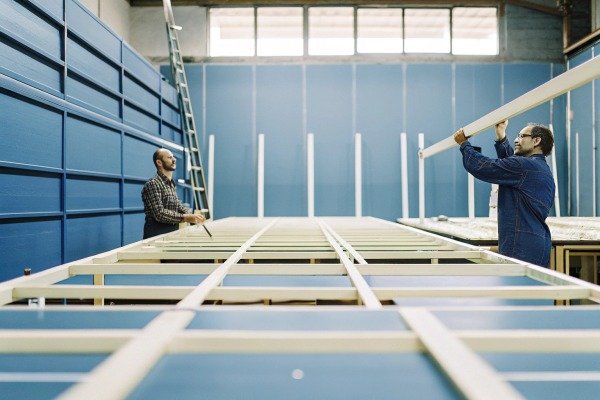
One of the biggest challenges in supply chain management is balancing the cost of inspection against the cost of failure. You cannot X-ray every single inch of welding on a 1,000-unit order without blowing your budget. This is where Acceptable Quality Limit (AQL) sampling plans, typically based on ISO 2859-1 or ANSI/ASQ Z1.4 ISO 2859-1 6, become critical tools for our operations. ISO 2859-1 7
Understanding Inspection Levels
The standard starting point for most incoming goods is General Inspection Level II. This provides a statistically significant sample size that represents the whole batch.
- Level I (Reduced): We use this for proven suppliers who have delivered perfect quality for at least 5 consecutive shipments. It reduces the number of parts you need to touch.
- Level III (Tightened): We immediately switch to this if a supplier has had a recent rejection or if the part is safety-critical. This increases the sample size to ensure we catch bad parts before they enter your inventory.
Defining Your AQL Limit
The AQL limit determines how many defects are "acceptable" before the whole batch is rejected.
- Critical Defects (AQL 0 or 0.10): Issues that cause injury or total product failure (e.g., a cracked frame support). We accept zero defects here.
- Major Defects (AQL 1.0 or 2.5): Issues that affect function but are not dangerous (e.g., weld spatter interfering with assembly).
- Minor Defects (AQL 4.0): Cosmetic issues that do not affect function (e.g., slight scratches).
The Switching Rule Strategy
We do not keep the inspection level static. We use a dynamic system. If a supplier fails a Level II inspection, they are automatically downgraded to Level III for the next shipment. They must pass 5 consecutive Level III inspections to return to Level II. This puts the pressure on the supplier to improve their process controls, rather than relying on our incoming inspection to catch their mistakes. This system protects your cash flow and ensures you aren't paying for extensive inspections on reliable vendors.
What specific documentation and material certs should I request to validate weld quality?
Our procurement team in China refuses any shipment that lacks a full paper trail, ensuring total material traceability total material traceability 8 for our customers.
Request a Material Test Report (MTR) to verify chemical composition and mechanical properties, along with a Certificate of Conformance (CoC). For welded assemblies, demand Procedure Qualification Records (PQR) and Welder Performance Qualification (WPQ) records to ensure process compliance.
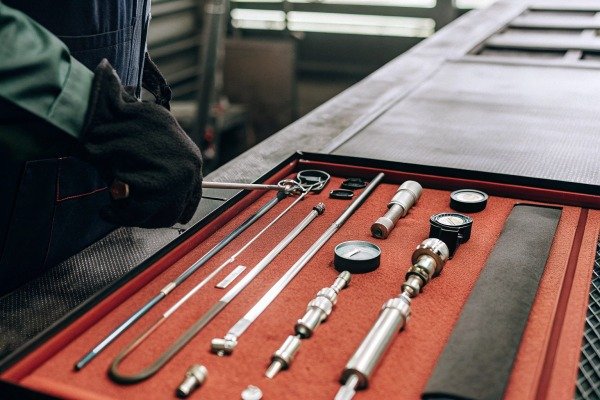
Physical inspection is only half the battle. In the custom parts business, a physical part is worthless if you cannot prove what it is made of. prove what it is made of 9 We have seen cases where a factory used cheaper, lower-grade aluminum that looked identical to the requested alloy but snapped under load. Documentation is your legal and technical safety net.
Material Test Reports (MTR / Mill Certs)
This is the DNA of your metal. An MTR comes from the mill that produced the raw steel or aluminum. It must list:
- Heat Number: A unique ID linking the material to the production batch.
- Chemical Analysis: The percentage of elements (Carbon, Manganese, Silicon, etc.) to prove it meets the standard (e.g., ASTM or EN).
- Механические свойства: Tensile strength, yield strength, and elongation results.
- Прослеживаемость: The Heat Number on the paper must match the number stamped or laser-etched on the parts you receive.
Welding Procedure and Performance Qualification
For welded assemblies, you need to know как it was welded and кто welded it.
- WPS (Спецификация сварочной процедуры): The "recipe" used (voltage, speed, filler metal).
- PQR (Procedure Qualification Record): The lab test results proving that the recipe works.
- WPQ (Welder Performance Qualification): Proof that the specific welder working on your order is certified to perform that specific weld.
Основной список документов
To streamline the receiving process, we provide our warehouse teams with a checklist. If these documents are missing, the goods are quarantined immediately.
| Название документа | Назначение | Когда запрашивать |
|---|---|---|
| Material Test Report (MTR) | Verifies raw material chemistry and strength. | With every shipment of raw material or finished parts. |
| Сертификат соответствия (CoC) | Supplier's legal declaration that goods meet specs. | With every shipment. |
| WPS / PQR | Proves the welding method is scientifically sound. | During the First Article Inspection (FAI) or initial contract. |
| Welder Certs (WPQ) | Proves the human operator is skilled/certified. | Annually or upon project setup. |
| Отчет об инспекции | Results of the supplier's own final QC check. | With every shipment (compare against your own findings). |
Заключение
Establishing a robust incoming inspection process protects your production incoming inspection process 10 line from disruption and liability. By combining visual checks for surface defects, appropriate NDT methods for internal integrity, smart AQL sampling, and rigorous document verification, you ensure only quality parts enter your inventory.
Сноски
1. General background information on various non-destructive testing techniques and applications. ↩︎
2. Official government safety guidelines and standards for welding and structural integrity. ↩︎
3. Authoritative definition and explanation of visual inspection in welding. ↩︎
4. Official website of the American Society for Nondestructive Testing. ↩︎
5. Comprehensive technical tutorial on ultrasonic testing principles from a major equipment manufacturer. ↩︎
6. Direct link to the official ISO standard for sampling procedures. ↩︎
7. Official ISO standard for sampling procedures by attributes used in quality control. ↩︎
8. NIST provides the definitive standards for measurement and material traceability. ↩︎
9. International standards for material specifications and testing protocols to ensure quality. ↩︎
10. ASQ is a leading industry authority on quality inspection processes. ↩︎

 English
 Español de México
 Deutsch
 Français
 Русский
 العربية