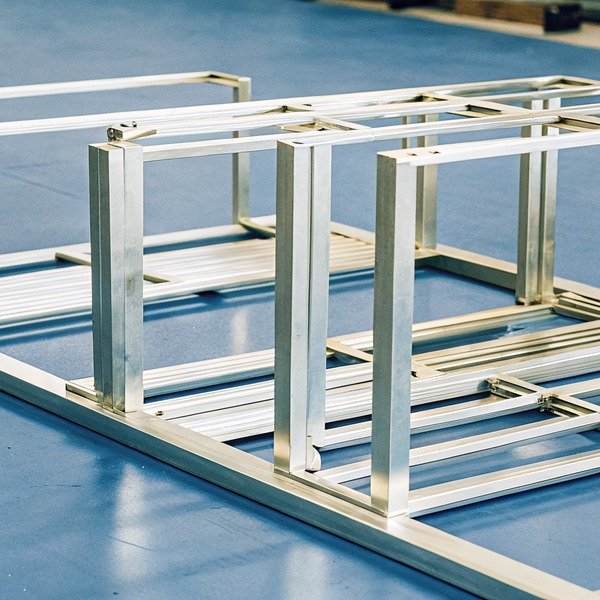
When our Vietnam team processes orders for custom welding assemblies, we often see US clients hesitating before finalizing the contract. You worry about high tariffs or getting flagged by Customs for compliance issues. It is frustrating to find a competitive price for your metal fabrications only to face the risk of losing those savings to unexpected duties or supply chain audits.
Vietnam Rules of Origin determine the economic nationality of your welding parts for tariff purposes. To meet these requirements, goods must be either wholly produced in Vietnam or undergo substantial существенная трансформация 1 transformation, typically defined by a change in tariff classification or a regional value content of at least 40 percent.
Let’s break down exactly how we verify these rules to keep your supply chain secure.
What specific criteria determine if my welding parts qualify as "Made in Vietnam" for tariff purposes?
Our engineers analyze bills of materials daily to confirm origin status before we even cut the first metal tube. It is often confusing when you see imported raw steel on the list, yet the final geometric welding frame is labeled as Vietnamese.
Two main criteria determine origin: Change in Tariff Classification (CTC) and Regional Value Content (RVC). CTC requires the final product’s HS code to differ from its non-originating inputs, while RVC mandates that a specific percentage, usually 40 percent, of the value is added locally within Vietnam.
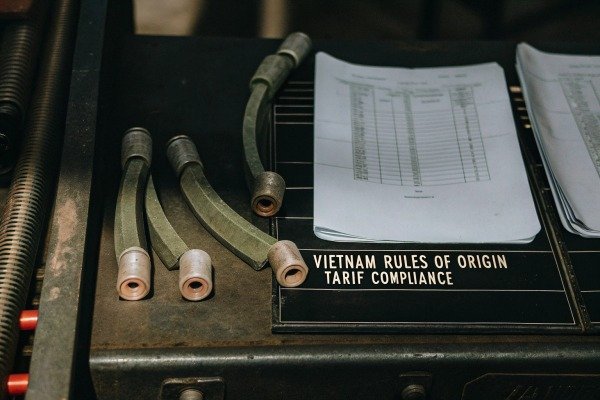
Понимание существенной переработки
In our experience, the concept of "substantial transformation" is the most critical factor for metal fabrication. существенная трансформация 2 Simply bolting two pieces of metal together does not count. For the complex, brushed silver frames we manufacture, the process involves cutting, bending, jigging, welding, and finishing. This physical change is what usually allows a product to meet the "Change in Tariff Classification" (CTC) rule.
The CTC rule implies that if we import raw steel tubes (which might fall under HS Code Chapter 72) and transform them into a finished welding structure (often falling under HS Chapter 83 or 84), the shift in the Harmonized Harmonized System code 3 System code proves that significant Harmonized System code 4 manufacturing took place. This is legally robust because the product has changed its essential character.
The Criteria Breakdown
However, not all welding parts are straightforward. Sometimes the input materials and the final product share a similar heading. In these cases, we rely on the Regional Value Content (RVC) method. This calculates the value added in Vietnam—including labor, overhead, factory profit, and local materials—against the total Free On Board (FOB) price.
We guide our clients through these specific criteria to ensure compliance:
Table 1: Common Origin Criteria for Metal Fabrications
| Criteria Method | Определение | Application for Welding Parts |
|---|---|---|
| Wholly Obtained (WO) | 100% of the material is mined or grown in Vietnam. | Rare for manufacturing. Only applies if the iron ore was mined and smelted locally. |
| Change in Tariff Classification (CTC) | Non-originating materials must change HS Code level (2-digit, 4-digit, or 6-digit). | Common. Turning imported steel coils (HS 72) into a welded frame (HS 8302). |
| Региональное содержание стоимости (RVC) | A percentage of the product's FOB price must originate in Vietnam. | Used when HS codes don't change. Requires usually >40% local value (Labor + Local Material + Overhead). |
| Process Rule (SP) | Specific manufacturing operations must occur (e.g., chemical reaction). | Less common for general welding, but sometimes applies to specific metallurgy processes. |
The "De Minimis" Rule
It is also important to note the "De Minimis" provision. Sometimes, we might use a small amount of non-originating filler material, like specific imported fasteners or welding flux, that does not undergo a tariff shift. As long as the value of these non-conforming materials does not exceed a certain threshold (typically 10% of the FOB price), the finished welding part still qualifies as originating in Vietnam. This provides a safety buffer for our complex assemblies that require specialized, imported screws or washers.
How can I verify that my supplier is not illegally transshipping Chinese parts through Vietnam?
We strictly audit our sub-suppliers because we know the severe risks of transshipment allegations. You cannot afford to have your container seized by US Customs simply because a factory essentially repackaged Chinese goods without adding real value.
To detect illegal transshipment, you must verify that the supplier possesses actual manufacturing capacity matching their output. Conduct on-site audits to inspect machinery, review electricity bills for production activity, and trace raw material invoices to ensure substantial processing occurs inside their Vietnamese facility.

The Enforce and Protect Act (EAPA)
The United States is aggressive in investigating duty evasion, particularly under the Enforce and Protect Act Enforce and Protect Act 5 (EAPA). Transshipment occurs when goods are made in China (or another country subject to high tariffs) and shipped through Vietnam with minimal processing to disguise their origin. For a product like your geometric structure made of rectangular tubes, simply polishing a finished frame imported from China would constitute illegal transshipment.
Verifying Production Capacity
When we vet a facility, we look for alignment between capacity and output. If a factory claims to export 50 containers of welded frames a month but only has two manual welding stations and five employees, that is a major red flag. Real manufacturing leaves a footprint. We check the wear and tear on the jigs, the consumption of welding wire, and the piles of scrap metal.
A "screwdriver plant"—a facility that only assembles or packages pre-made kits—will not have the heavy machinery required for cutting and welding rectangular tubes. We specifically look for the presence of laser cutters, CNC bending machines, and active welding bays.
Supply Chain Audit Checklist
We recommend using a rigorous checklist when visiting or auditing a potential partner in Vietnam. If you cannot visit personally, we often perform these checks on behalf of our clients.
Table 2: Transshipment Risk Indicators
| Область аудита | Green Flag (Legitimate Manufacturer) | Red Flag (High Transshipment Risk) |
|---|---|---|
| Оборудование | CNC machines, welding robots, heavy presses installed and anchored. | Light assembly tables, only packaging equipment, machines covered in dust. |
| Инвентарь | Raw materials (tubes, sheets), work-in-progress inventory at various stages. | Only finished goods in boxes; no raw steel or scrap metal visible. |
| Энергопотребление | High electricity bills consistent with heavy fabrication. | Low energy consumption consistent with office or warehouse lighting only. |
| Labor Skill | Certified welders, QA staff checking dimensions, active production lines. | Unskilled labor primarily focused on packing, labeling, or simple screwing. |
| Документация | Invoices for raw steel, shielding gas, and consumables. | Invoices only for "semi-finished" goods; lack of procurement records for raw materials. |
Documenting the Production Lifecycle
To protect your shipments, we maintain a "production lifecycle" file. This includes photos of your specific geometric frames at the tack-welding stage, the full-welding stage, and the finishing stage. If US Customs and Border Protection (CBP) ever issues a Request for Information (CBP Form 28), having time-stamped photos of your product being created from raw tubes in Vietnam is the strongest defense against transshipment accusations.
Which Certificate of Origin documents must I request for welding components exported to the US?
Our logistics team in Ho Chi Minh City prepares specific documentation for every US-bound container to ensure smooth clearance. Missing the correct paper trail or filing the wrong certificate form can leave your goods stuck at the port indefinitely.
For exports to the US, you generally require a non-preferential Certificate of Origin, often Form B, issued by the Vietnam Chamber of Commerce and Industry. While no FTA currently exists, this document is crucial for proving the country of origin to avoid punitive Section 301 tariffs on Chinese goods.
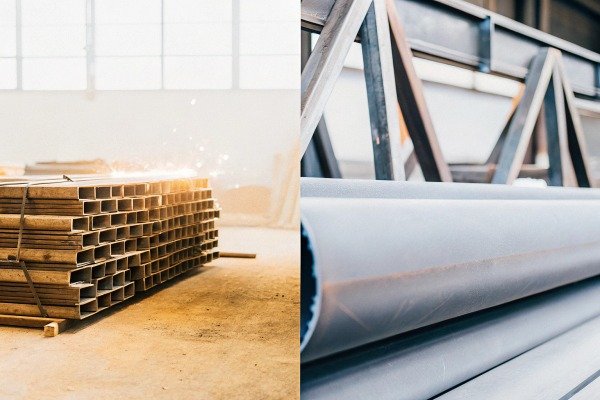
The Role of Non-Preferential Origin
Unlike exports to Europe or Japan, where Vietnam has Free Trade Agreements agreements like the CPTPP 6 (FTAs) that lower duties Соглашения о свободной торговле 7 to zero, the United States does not currently have a bilateral FTA with Vietnam. Therefore, you are not asking for a certificate to claim a lower duty rate (preferential treatment). Instead, you are requesting a Certificate of Origin (C/O) to prove that the goods are не Chinese.
Since Section 301 tariffs on Chinese metal products can be Тарифы Раздела 301 8 25% or higher, proving Vietnamese origin is a financial necessity. The standard document for this is Form B, issued by the Vietnam Chamber of Commerce and Industry (VCCI). It certifies non-preferential origin according to international standards.
Digital Certification and Transparency
Vietnam's Ministry of Industry and Trade (MOIT) has modernized Министерство промышленности и торговли 9 this process. We now utilize the electronic Certificate of Origin (e-C/O) system for many shipments. This allows us to submit data directly to the issuing authority, reducing errors and processing time. When we handle your logistics, we ensure the HS codes on the C/O match your commercial invoice and packing list exactly.
If you were importing to other regions, the forms would differ significantly. It is vital to know the destination requirements before shipping.
Table 3: Certificate of Origin Types by Destination
| C/O Form Type | Destination Market | Назначение | Issuing Authority |
|---|---|---|---|
| Form B | United States / General | Non-preferential origin. Proves goods are Vietnamese to avoid anti-dumping duties or Section 301 tariffs. | VCCI |
| Form EUR.1 | European Union (EVFTA) | Preferential origin. Allows for 0% or reduced duty under the EU-Vietnam FTA. | MOIT / VCCI |
| Form D | ASEAN Countries | Preferential origin under ATIGA. | MOIT |
| Form CPTPP | Canada, Mexico, Japan, etc. | Preferential origin under CPTPP. | MOIT / Self-Certification |
| Form VK / VJ | Korea / Japan | Bilateral FTAs with Korea and Japan. | MOIT / VCCI |
The "Back-to-Back" Certificate
We also handle scenarios where goods might be consolidated in a hub like Singapore before reaching the US. In these cases, a "Back-to-Back" C/O is necessary. This document is issued by the intermediate country based on the original Vietnamese C/O, ensuring the origin status is not lost during transit. Without this, your welding parts could lose their Vietnamese status upon entering the US, potentially triggering higher duties.
What is the required local value content percentage for welding assemblies under current trade agreements?
When we source raw materials for our geometric frames, we calculate the local value carefully to protect our clients’ interests. If the local content calculation drops too low, your duty benefits or origin status could disappear instantly.
The standard local value content threshold for most welding assemblies is 40 percent under general rules of origin. However, specific Free Trade Agreements may vary, sometimes allowing a lower threshold of 30 to 35 percent depending on the specific product category and the calculation method used.
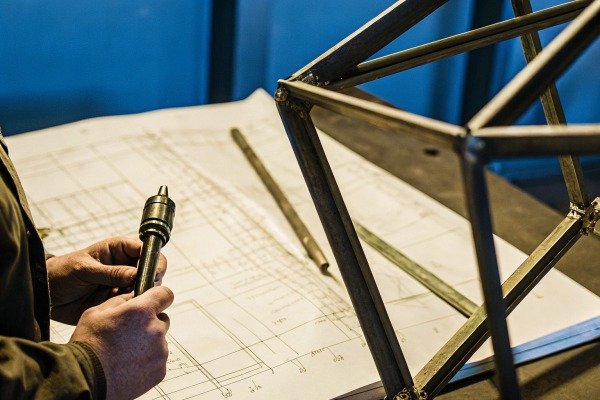
Calculating Regional Value Content (RVC)
For products like your brushed silver frames, achieving the 40% threshold is usually manageable, but it requires diligent accounting. The formula generally used is:
$$ RVC = \frac{FOB Price – Value of Non-Originating Materials}{FOB Price} \times 100% $$
To meet the 40% requirement (RVC 40), the value of non-Vietnamese materials (e.g., imported steel tubes, imported welding wire) must not exceed 60% of the final selling price.
What Counts as "Local Value"?
Many buyers mistakenly think "Local Value" only includes the raw materials bought in Vietnam. In reality, when we calculate this for our production, we include:
- Direct Labor: Wages for the welders, grinders, and QA staff.
- Direct Overhead: Electricity, water, and factory rent attributed to the production line.
- Profit: The manufacturer's profit margin is part of the FOB price and contributes to local value.
- Inland Transport: Cost to move goods to the port of export.
For a complex geometric structure, the labor cost is high because of the precision welding and finishing required. This high labor component helps significantly in meeting the 40% RVC threshold, even if we have to import high-grade steel from Japan or Korea.
Cumulation Rules
Under certain agreements like the CPTPP, we can use agreements like the CPTPP 10 "Cumulation." This means if we source steel from Japan (a CPTPP member) to manufacture welding parts in Vietnam (also a CPTPP member), that Japanese steel counts as "originating" material. This makes hitting the 40% target much easier. However, for exports to the US, cumulation usually does not apply because there is no shared FTA. Therefore, for US-bound shipments, we focus strictly on the value added within Vietnam's borders.
Cost Breakdown Analysis
We perform a cost breakdown analysis for every new project. If the RVC is borderline (e.g., 41%), we advise our clients to source at least one major component locally or adjust the supply chain to ensure a safety margin. Currency fluctuations can shift material costs, potentially dropping an RVC of 40% down to 39%, which would be a compliance disaster.
Заключение
Navigating Vietnam's Rules of Origin for welding parts requires more than just trusting a "Made in Vietnam" sticker. It demands a proactive approach to understanding Substantial Transformation, verifying production capacity to avoid transshipment risks, and securing the correct Form B documentation. By partnering with a transparent manufacturer who understands the nuances of RVC calculations and supply chain auditing, you can secure the cost advantages of Vietnam without the sleepless nights over compliance. We are ready to help you build that secure supply chain today.
Сноски
1. US CBP definition of substantial transformation for determining country of origin. ↩︎
2. WTO explanation of the substantial transformation principle in international trade. ↩︎
3. General background on the international nomenclature for the classification of products. ↩︎
4. World Customs Organization explanation of the Harmonized System. ↩︎
5. Official US Customs page detailing EAPA regulations and enforcement. ↩︎
6. Overview of the Comprehensive and Progressive Agreement for Trans-Pacific Partnership. ↩︎
7. WTO Center Vietnam listing all active Free Trade Agreements. ↩︎
8. Official USTR page regarding Section 301 investigations and tariffs. ↩︎
9. Official website of Vietnam’s Ministry of Industry and Trade. ↩︎
10. Comprehensive details on the CPTPP trade agreement. ↩︎

 English
 Español de México
 Deutsch
 Français
 Русский
 العربية