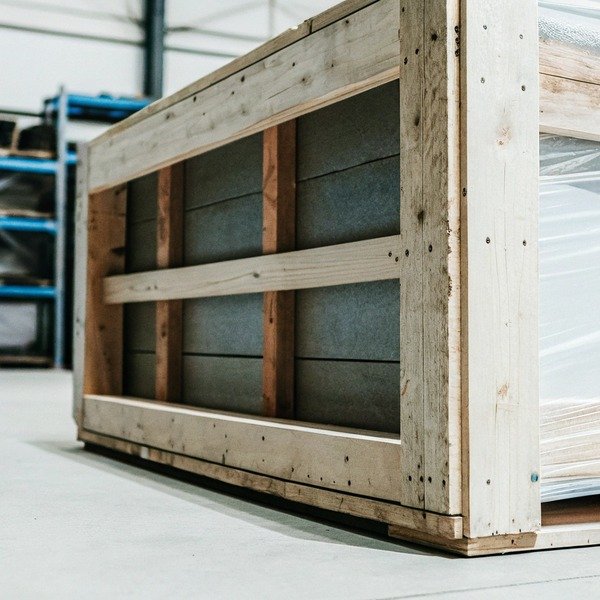
We often see perfectly fabricated frames ruined by salt air or rough crane handling crane handling 1 before they even reach the warehouse. In our Vietnam facility, we treat packaging as the final manufacturing step, not an afterthought, because we know that a damaged part is just as useless as a missing one. Securing heavy weldments requires a strategy that goes far beyond basic wrapping.
To ensure safe delivery, require ISPM 15 compliant heat-treated wood for all crates and pallets to meet international customs regulations VCI chemicals 2. Mandate Vapor Corrosion Inhibitor (VCI) protection for ferrous and aluminum metals alongside robust internal blocking to secure heavy loads. Specify stackability limits and center-of-gravity markings to ensure safe handling during transit.
Proper packaging specifications protect your investment and prevent costly supply chain delays.
How can I prevent rust and corrosion on my welding parts during long sea shipments?
Opening a container to find white oxidation on aluminum frames is a sourcing manager’s nightmare. We realized early on that standard plastic wrap often traps moisture rather than blocking it during humid ocean crossings, essentially cooking the parts in a damp environment. Effective prevention requires active chemical protection.
Use Volatile Corrosion Inhibitor (VCI) films and desiccants to create a dry micro-environment inside the crate. For precision machined areas, apply specific barrier oils compatible with your material. Ensure the outer barrier bag is heat-sealed to prevent salt-laden sea air from penetrating the package and damaging sensitive metal surfaces.
Understanding the Marine Environment Risks
When shipping metal components from Asia to the US or Europe, the cargo spends weeks on the ocean. The environment inside a shipping container is harsh. Temperatures fluctuate drastically between day and night, causing "container rain" container rain 3—a phenomenon where condensation forms on the container roof and drips down onto your cargo. For aluminum structures like silver-colored tubing frames, this moisture leads to white rust (oxidation), which ruins the aesthetic finish. For steel, it causes red rust, often rendering the part scrap.
We have found that simple oiling is rarely enough for a 45-day transit. The oil can drip off or dry out. Instead, a multi-layered approach is necessary.
The Role of VCI Technology
VCI (Volatile Corrosion Inhibitor) materials are essential for export welding parts. VCI (Volatile Corrosion Inhibitor) 4 VCI chemicals are infused into plastic packaging (films or bags) or paper. They release invisible, odorless vapors that settle on the metal surface, forming a molecular barrier against oxygen and moisture.
- VCI Film: This is preferred for wrapping large, complex geometric frames. It allows you to see the part while offering protection.
- VCI Emitters: For large crates, we often throw in VCI foam pads or sachets to boost the concentration of protective vapor.
Desiccant Calculation
Desiccants (silica gel or clay) absorb moisture. However, simply throwing a few bags in a crate is ineffective. You must calculate the units based on the volume of air inside the barrier bag and the transit duration. If you do not use a heat-sealed barrier bag, the desiccants will try to dehumidify the entire ocean, which is impossible. They will saturate in hours and become useless.
Comparing Protection Methods
To help you decide which level of protection to specify in your RFQ, here is a comparison of common methods we use:
| Protection Method | Mechanism | Лучшее применение | Pros/Cons |
|---|---|---|---|
| Standard Oil/Grease | Physical barrier coating | Machined steel surfaces, gears. | Плюсы: Cheap. Минусы: messy, requires cleaning upon arrival, can stain aluminum. |
| VCI Film/Paper | Chemical vapor barrier | Complex weldments, aluminum frames, clean parts. | Плюсы: Dry protection, no cleaning needed. Минусы: Must be sealed properly to work. |
| Vacuum Barrier Bag | Vacuum + Moisture barrier | High-precision electronics or highly sensitive polished metals. | Плюсы: Best protection. Минусы: Expensive, requires specialized equipment. |
| Desiccant Packs | Поглощение влаги | Used inside VCI or Barrier bags. | Плюсы: Removes trapped humidity. Минусы: Useless if the outer bag is punctured. |
Critical Thinking: The "Clean" Requirement
One often overlooked aspect is the cleanliness of the part до того, как packaging. If a welder leaves cutting fluid or sweaty fingerprints on a raw metal surface, VCI may not stop the corrosion that has already started underneath. We strictly require parts to be cleaned and dried before being wrapped.
What are the best crating and palletizing methods for heavy structural weldments?
Heavy weldments often crush standard pallets during the first lift at the port if the wood quality is poor. When we engineer skids for large structural frames, we calculate dynamic loads rather than just static weight to prevent collapse during crane movements. Using the wrong crate design is the fastest way to damage heavy components.
Select fully enclosed crates made from ISPM 15 certified lumber with reinforced bases for heavy weldments. Utilize 4-way entry skids for forklift accessibility and bolt heavy components directly to the crate base. Implement cross-bracing to prevent lateral movement and ensure the structure can withstand stacking pressures.
ISPM 15 Compliance is Non-Negotiable
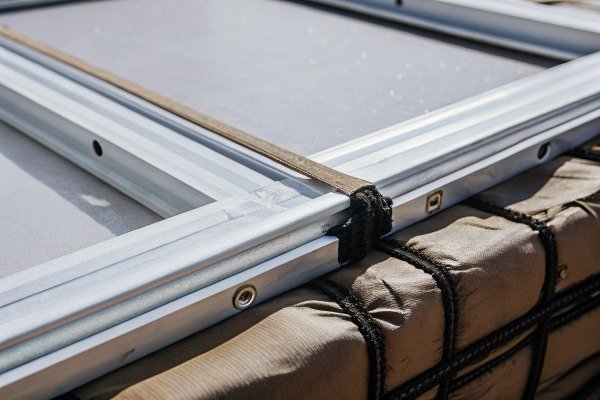
Before discussing design, we must address legality. All solid wood packaging material (WPM) used in international trade must meet ISPM 15 standards. ISPM 15 standards 5 This means the wood has been heat-treated or fumigated to kill pests.
- The Mark: Every crate and pallet must bear the IPPC stamp.
- Риск: If your shipment arrives in Long Beach or Rotterdam without this stamp, customs will reject the entire shipment, not just the wood. You face return freight costs and fines. We strictly audit our lumber suppliers to ensure valid certification.
Designing for Heavy Loads
For heavy structural weldments, a standard "grocery store" pallet is insufficient. We design custom skids (the base of the crate) based on the specific footprint of the welding part.
- Runners (Stringers): We increase the number of runners to distribute weight. For a 2,000 lb weldment, we might use 4×4 lumber headers rather than standard 2x4s.
- Bolting Down: The most effective way to secure a heavy frame is to bolt it to the skid. We utilize existing mounting holes in the weldment. If the part cannot be bolted, we use heavy-duty polyester strapping and wooden blocking blocks screwed into the deck to prevent sliding.
Crate Types and Selection
Not every part needs a fully enclosed box. However, for international sea freight, full sheathing provides the best protection against theft and impact.
Blocking and Bracing
The interior of the crate matters more than the exterior. "Blocking and bracing" refers to the wooden structures built inside the crate to hold the part in place.
- Ограничение: The part should not move more than a few millimeters, even if the crate is tilted.
- Load Path: Bracing must push against structural nodes of the welding frame, not against delicate thin-walled tubing. Pushing on a weak point will bend the part during a sudden stop.
Wood Packaging Selection Guide
Here is how we determine the right packaging type for different welding components:
| Packaging Type | Описание | Лучше всего подходит для | Weight Capacity |
|---|---|---|---|
| Fully Enclosed Crate | Solid plywood or lumber walls on all sides. | Precision weldments, parts with loose accessories, high-value items. | High (Limited only by base design) |
| Skeleton Crate | Open slat design (you can see inside). | Rugged structural steel, parts requiring ventilation. | Высокие |
| Custom Skid (No Walls) | A heavy-duty pallet base with strapping. | extremely large frames that don't fit in containers, break-bulk cargo. | Очень высокий |
| Standard Pallet + Collar | Standard pallet with detachable walls. | Small, loose heavy fittings or brackets. | Low to Medium (<1000 kg) |
How should I protect critical machined surfaces on precision welding components to avoid damage?
A single scratch on a machined flange can render a complex assembly useless, regardless of weld quality. Our quality team insists on separating every metal-to-metal contact point to ensure the surface finish remains within tolerance upon arrival. Precision areas require a completely different protection strategy than rough structural beams.
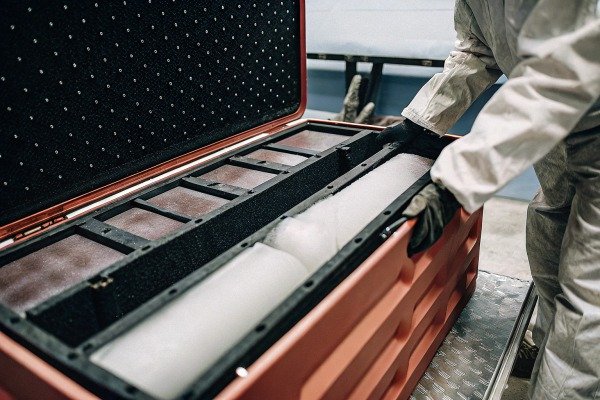
Isolate critical surfaces using high-density foam inserts or custom-molded plastic caps to prevent impact damage. Avoid metal-to-metal contact by placing separators between stacked parts. For machined faces, use specific protective covers that guard against scratches while allowing VCI vapors to circulate effectively around the component.
The "No Metal-on-Metal" Rule
The golden rule in our packaging department is that no two metal parts should ever touch. Vibration during transit acts like sandpaper. Even if two aluminum frames are stacked tightly, the microscopic rubbing over 30 days will wear through the natural oxide layer and create unsightly fretting corrosion or deep scratches. fretting corrosion 6
Materials for Surface Protection
We employ specific materials depending on the sensitivity of the surface:
- PE Foam (EPE): This is the industry standard. It is resilient and non-abrasive. We use it to wrap individual tubes of the geometric frame.
- Corrugated Plastic: For flat machined surfaces, we often tape a layer of corrugated plastic (like Coroplast) over the face. It absorbs impact better than cardboard and doesn't generate dust.
- Netting: For threaded ends or cylindrical shafts, extruded plastic mesh netting is excellent. It slides on tight and protects threads from being dinged.
- Plastic Caps: For bolt holes or open tube ends, properly sized plastic plugs prevent debris entry and protect the chamfers.
Handling Geometric Complexity
The product described—a complex aluminum frame with an upright section—presents a challenge. It cannot be simply wrapped in bubble wrap; the sharp corners will puncture the bubbles.
- Corner Protectors: We use rigid cardboard or plastic corner guards on all 90-degree edges. This distributes the pressure from strapping bands so the band doesn't dig into the soft aluminum.
- Suspension Packaging: For extremely sensitive precision instruments welded onto frames, we might use "floating" packaging where the item sits in a foam cradle that is separated from the outer crate walls by several inches of air space.
Cost vs. Risk Assessment
Precision packaging adds cost. However, the cost of reworking a machined surface in the US is often 10x the cost of the original manufacturing in Vietnam.
Protective Material Selection Matrix
We use this guide to select the right buffer material:
| Material | Density/Hardness | Лучшее применение | Note |
|---|---|---|---|
| EPE Foam (Low Density) | Soft | Wrapping painted or polished surfaces. | Good for scratch prevention, poor for heavy impact. |
| EPE Foam (High Density) | Hard/Firm | Supporting heavy loads, blocking under skids. | Does not compress easily; maintains spacing. |
| Rubber Mats | Very Hard | Friction barriers between steel beams. | High friction prevents sliding; can stain some metals. |
| Bubble Wrap | Very Soft | Lightweight parts only. | Do not use for heavy weldments; it pops instantly under weight. |
| VCI Paper | Thin Sheet | Interleaving between stacked plates. | primarily for corrosion, minimal impact protection. |
What specific stacking and weight distribution requirements should I include in my packaging specs?
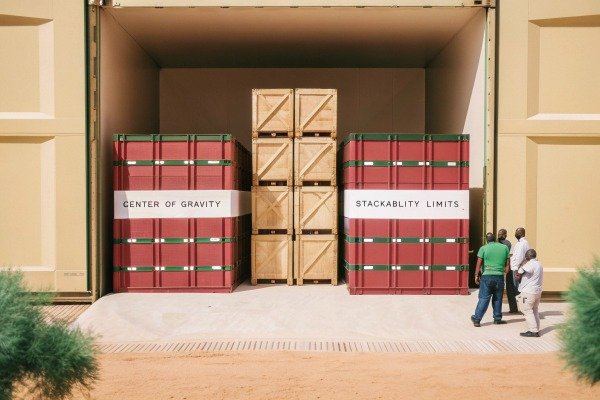
Uneven weight distribution causes containers to tip or crates to shatter lower units during transport. We always mark the center of gravity on our drawings center of gravity 7 because we know forklift drivers cannot guess where the weight lies in a complex frame. Clear visual communication on the crate exterior is mandatory for safety.
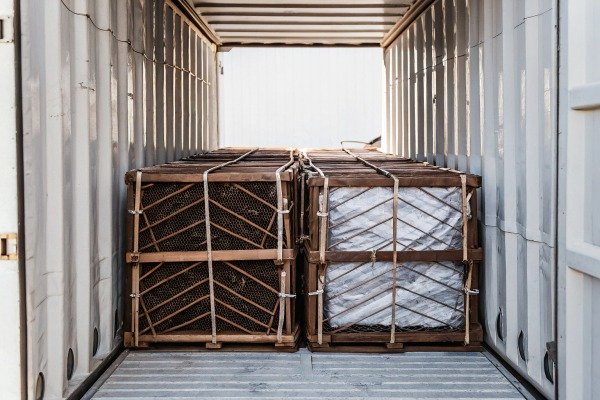
Clearly mark the Center of Gravity (COG) and lift points on the exterior of every crate using international symbols. Specify maximum stacking heights and require anti-topple cones for top-heavy items. Distribute weight evenly within the container to prevent shifting and verify total gross weight against the container’s payload limit.
The Center of Gravity (COG) Challenge
Complex welding assemblies are rarely symmetrical. The "upright section" mentioned in the product description likely shifts the center of gravity to one side. center of gravity 8 If a forklift driver lifts the crate from the center, it will tip.
- Marking: We require the "umbrella" symbol (Keep Dry), the "wine glass" (Fragile), and crucially, the Center of Gravity symbol (a circle with crosshairs) painted on the crate exactly where the balance point is.
- Design: We design the skid so that the forklift pockets are centered around the COG, not necessarily the geometric center of the box.
Stacking Limitations
Space is money in logistics, so we always try to stack. However, heavy welding parts can crush the crate below them.
- Static vs. Dynamic Load: A crate might hold 1,000 kg sitting still. But on a ship pitching in a storm, the g-forces multiply the effective weight.
- "Do Not Stack" Cones: If a part is absolutely too fragile or irregular to bear weight, we strap triangular cardboard "cones" to the top of the crate. This physical barrier prevents dock workers from attempting to place another pallet on top.
Container Weight Distribution
When loading the container (stuffing), weight must be spread evenly over the floor. loading the container 9
- The 60/40 Rule: Never have more than 60% of the load in half the container length.
- Blocking and Bracing the Container: Once the crates are loaded, they must be secured to the container floor. We use air bags (dunnage bags) to fill gaps between crates dunnage bags 10 so they don't slam into each other. We also nail wooden blocks into the container floor (most containers have wood floors) to prevent the pallets from sliding toward the doors.
Communication is Key
Your packaging spec sheet must be explicit. Do not assume the supplier knows how to load a container. We provide a loading plan for every shipment.
Critical Checklist for Stacking and Handling
Include these requirements in your purchase order:
- COG Markings: Required on at least two sides of the crate.
- Lift Points: clearly indicated with "Lift Here" markings.
- Gross Weight: Must be stenciled in large block letters (e.g., "GW: 850 KG").
- Stacking Limit: Explicitly state "Max Stack: 2 High" or "No Stack."
- Dunnage: Use air bags to fill void spaces > 15cm inside the container.
Заключение
Sourcing heavy and precision welding components requires a defensive approach to packaging. By mandating ISPM 15 compliance, aggressive corrosion protection via VCI, and engineered weight distribution, you mitigate the high risks of international logistics. We have found that investing an extra 2-3% of the product cost into professional packaging prevents 100% of the headaches associated with damaged arrivals, ensuring your production line keeps moving without interruption.
Сноски
1. Official OSHA safety standards and guidance for crane operations and heavy material handling. ↩︎
2. Manufacturer technical data on how VCI chemicals provide corrosion protection for metal parts. ↩︎
3. Authoritative insurance guide on condensation risks. ↩︎
4. Technical explanation of VCI technology by industry leader. ↩︎
5. Official source for international wood packaging standards. ↩︎
6. Technical definition of wear corrosion by industry leader. ↩︎
7. General background on the physics of center of gravity for safe handling. ↩︎
8. ISO standard for packaging handling symbols. ↩︎
9. International Maritime Organization code of practice for the safe packing of cargo transport units. ↩︎
10. Industry standard overview for cargo securing bags. ↩︎

 English
 Español de México
 Deutsch
 Français
 Русский
 العربية