
We have seen entire shipments delayed because a supplier’s internal test results didn't match the reality on our receiving dock in Singapore. It creates massive headaches for everyone involved.
To verify a supplier's testing laboratory, confirm they hold valid ISO/IEC 17025 accreditation with a scope matching your specific test methods. Additionally, verify that testing personnel hold current certifications like AWS CWI or ASNT Level II, and request evidence of equipment calibration traceable to national standards.
Let's examine the specific credentials and checks required to ensure your welded parts meet safety standards.
What specific international accreditations, such as ISO 17025, should I look for in a supplier's lab?
When we vet new partners in Vietnam, we never rely solely on a general quality certificate to guarantee weld integrity for critical custom parts.
You should specifically look for ISO/IEC 17025 accreditation, which validates technical competence for testing and calibration labs. Ensure the accrediting body is an ILAC MRA signatory, and verify that the lab's specific Scope of Accreditation explicitly lists the destructive and non-destructive test methods required for your parts.
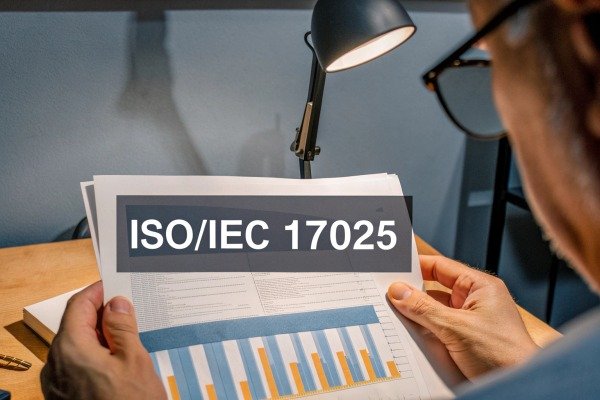
Understanding the "Scope of Accreditation"
Many buyers make the mistake of seeing ISO 9001 certifies management systems 2 an "ISO" logo and assuming the laboratory is qualified for everything. This is a dangerous assumption. ISO 9001 certifies management systems, but it does not verify technical competence. For welding verification, ISO/IEC 17025 is the ISO/IEC 17025 3 gold standard. However, holding this certificate is not enough on its own. You must read the attached "Scope of Accreditation."
This document details exactly what the lab is allowed to test. For example, a lab might be accredited for concrete testing but not for metallic tensile testing. If your part requires an ASTM E8 tensile test or an ASTM E23 impact test, those specific codes must appear on their scope document. If they are not listed, the lab is technically unaccredited for that specific test, even if they have the certificate hanging on the wall.
The Importance of ILAC MRA
In our international trade operations, we ensure International Laboratory Accreditation Cooperation (ILAC) 4 that the body granting the accreditation is a signatory to the International Laboratory Accreditation Cooperation (ILAC) Mutual Recognition Arrangement (MRA). This is crucial for cross-border sourcing. It means that a test report issued by a lab in Vietnam or China is technically equivalent to one issued in the United States. If the accrediting body is not part of this network, the report may not be recognized by Western regulatory authorities.
Differentiating Key Standards
Different industries require different stamps of approval. While ISO 17025 is the baseline for competence, specific sectors like aerospace or pressure vessels have stricter rules. We often summarize the differences for our clients to help them decide what to demand from a supplier.
Comparison of Common Laboratory Accreditations
| Accreditation Standard | Основное внимание | Лучше всего подходит для |
|---|---|---|
| ISO/IEC 17025 | Technical competence of the lab and accuracy of results. | General industrial welding, automotive, and structural parts. |
| AWS ATF (Accredited Test Facility) | Compliance with American Welding Society programs. | Structural steel, bridges, and projects strictly following AWS codes. |
| Nadcap (National Aerospace and Defense Contractors Accreditation Program) | Strictly controlled special processes for aerospace. | Aerospace components and high-stakes defense contracts. |
| ISO 9001 | General quality management systems. | assessing overall business organization, не lab technical competence. |
Checking these documents is the first step in our auditing process. It filters out suppliers who are organized but lack the technical rigor to verify complex welded assemblies.
How can I verify that the lab equipment is regularly calibrated and traceable to national standards?
During our factory audits, we often walk straight tensile testers 5 to the tensile testers to check the stickers before even looking at the metal parts themselves.
Verify equipment calibration by requesting current calibration certificates that show an unbroken chain of traceability to national metrology institutes like NIST. Check that the dates on the equipment stickers match these certificates and that the specific ranges used for your tests fall within the calibrated range.
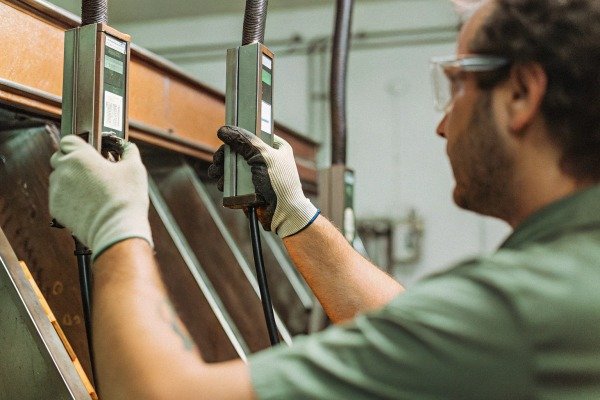
The Chain of Traceability
Calibration is not just about resetting NIST in the USA 6 a machine; it is about proving accuracy through a documented chain. When we source parts, we look for "Metrological Metrological Traceability 7 Traceability." This means the supplier’s lab equipment was measured against a standard, which was measured against a higher standard, eventually leading back to a National Metrology Institute (NMI) like NIST in the USA, NIM in China, or VMI in Vietnam.
If a supplier cannot produce a certificate linking their machine to a national standard, their test results are just guesses. We always ask to see the full "Certificate of Calibration" rather than just looking at the sticker on the machine. The certificate will list the reference standards used and the uncertainty of measurement.
Verifying the "As-Used" Range
A common trap we see involves machines that are calibrated, but not for the range being used. For instance, a 50-ton tensile tester might be calibrated for high loads, but if your aluminum tubing requires precise low-load measurements, the machine might not be accurate at that lower end.
You must review the calibration report to ensure the "calibrated range" covers the expected values of your weld tests. If the lab is testing a small bracket requiring 5kN of force, but their machine is only calibrated from 20kN upwards, the data is invalid.
Equipment Maintenance Schedules
Beyond the main testing machines, peripheral tools like calipers, micrometers, and temperature gauges (for pre-heat verification) must also be tracked. A professional lab maintains a master schedule. We look for gaps in this schedule during audits—if a machine was due for a check three months ago and "they just haven't gotten around to it," it is a major red flag regarding their process control.
Common Lab Equipment Calibration Requirements
| Тип оборудования | Функция | Typical Calibration Interval | Critical Check Point |
|---|---|---|---|
| Universal Testing Machine (UTM) | Tensile and yield strength testing. | 12 Months | Verify load cell accuracy across the specific force range used for your parts. |
| Charpy Impact Tester | Impact toughness testing (ductility). | 12 Months | Check for indirect verification using standardized specimens (e.g., NIST specs). |
| Твердомер | Rockwell or Vickers hardness testing. | 12 Months (Daily verification) | ensure daily verification blocks are used before testing begins. |
| Welding Power Sources | Voltage and amperage output. | 12 Months | Crucial for validating Welding Procedure Specifications (WPS). |
What credentials must the testing personnel hold to ensure accurate non-destructive testing results?
Our engineering team knows that a high-end X-ray machine is useless if the operator cannot correctly interpret the film for porosity or cracks.
Testing personnel must hold specific certifications relevant to the method used, such as AWS Certified Welding Inspector (CWI) for visual inspections. For non-destructive testing, technicians should hold at least Level II qualification under ASNT SNT-TC-1A or ISO 9712 to independently set up equipment and interpret results.
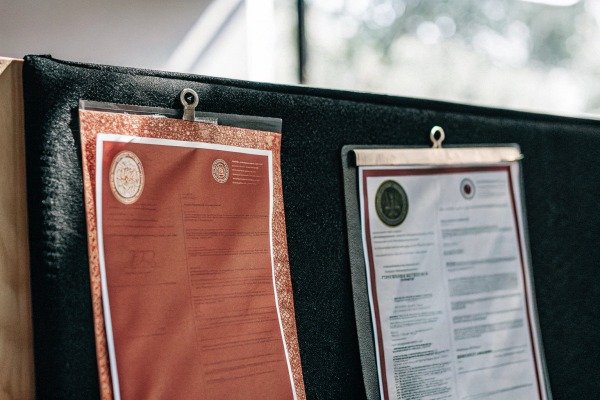
Distinguishing Between Welders and Inspectors
It is vital to separate the people making the parts from the people checking them. The welder needs a Welder Performance Qualification (WPQ). The person checking the weld needs inspection credentials. In many smaller shops, we find the foreman trying to do both, which is a conflict of interest.
For visual inspection, we insist on an AWS Certified Welding Inspector (CWI) 8 AWS Certified Welding Inspector (CWI) AWS Certified Welding Inspector 9 or a CSWIP 3.1 (common in Europe and Asia). These individuals are trained to look at bead profile, undercut, and surface porosity. They understand the "accept/reject" criteria defined in codes like AWS D1.1 or D1.2.
NDT Certification Levels Explained
For Non-Destructive Testing (NDT) such as Ultrasonic (UT), Radiographic (RT), or Magnetic Particle (MT), the industry follows a tiered system. This is usually governed by ASNT SNT-TC-1A (American standard) or ISO 9712 (International standard).
- Level I: Can verify the equipment works and perform the test, but cannot interpret the results or sign off on the report.
- Level II: Can set up equipment, perform the test, interpret the results, and sign the report. This is the minimum requirement you should accept for final approval.
- Level III: Can develop the procedures and train Level I and II staff. They usually oversee the program but don't do the daily testing.
Verifying Credentials in Asia
When sourcing from regions like China or Vietnam, verification gets tricky. Certificates can be forged. We always verify the certification number online with the issuing body (like AWS or The British Institute of Non-Destructive Testing). We also check that the certificate is current—most require renewal every 3 to 5 years. If a supplier presents a certificate that expired last month, it indicates a lack of diligence.
Personnel Certification Responsibilities
| Certification Level | Can Calibrate Equipment? | Can Interpret Results? | Can Sign Final Report? | Recommended Role for Your Supplier |
|---|---|---|---|---|
| Trainee / Level I | Yes (under supervision) | Нет | Нет | Helper / Data collector only. |
| Level II | Да | Да | Да | Требуется for performing inspections on your parts. |
| Level III | Да | Да | Да | Required to write the test procedures the Level II follows. |
Should I accept the supplier's internal lab reports or insist on independent third-party verification?
We frequently navigate this decision with our US clients, balancing the speed of internal checks against the absolute certainty of external validation.
Accept internal reports only if the lab is ISO 17025 accredited and you have audited their data integrity protocols. For critical structural welds or initial production runs, insist on independent third-party verification or establish witness points to ensure objective compliance with safety standards and design specifications.

The Risk of Internal Bias
Internal labs are convenient and cheaper, but they face pressure from production managers to "pass" products to meet shipping deadlines. Even honest labs can have subconscious bias. We often see issues where borderline results—like a tensile test that is just 1% below the requirement—are rounded up to pass.
To mitigate this without the cost of 100% third-party testing, we verify if the supplier uses a Laboratory Information Management System (LIMS) Laboratory Information Management System 10. A good LIMS pulls data directly from the machine to the computer, preventing manual typing errors or manipulation. If they are typing results into Excel manually, the risk of error or fraud increases significantly.
When to Use Third-Party Labs
We recommend a hybrid approach. For routine batches, an accredited internal lab is usually acceptable if you have vetted them. However, you should mandate third-party testing in these scenarios:
- Procedure Qualification (PQR): When setting up the initial welding recipe.
- First Article Inspection (PPAP): The first shipment must be proven perfect by an unbiased source.
- Critical Safety Parts: Anything that carries a load overhead or contains high pressure.
- Dispute Resolution: If your incoming inspection fails a part that the supplier passed.
Implementing "Witness Points"
A cost-effective alternative to full third-party testing is establishing "Witness Points." In our contracts, we reserve the right to send our local engineers (or a third-party agency) to the factory to watch the testing happen live.
We don't just read the report; we watch the technician load the sample, run the machine, and see the number pop up on the screen. This pressure ensures the supplier follows their procedures strictly. It is often enough to keep the internal lab honest for future unattended batches.
Data Integrity Red Flags
During our evaluations, we look for specific warning signs in internal reports:
- Perfect Data: Real data has variance. If every single hardness reading is exactly "55 HRC," it is likely fake.
- Identical Photos: Using the same microstructure or X-ray photo for different batches.
- Missing Raw Data: A report should not just say "Pass." It must list the actual values (e.g., "Yield Strength: 450 MPa").
Заключение
Verifying a supplier's lab is about peeling back layers of documentation. Look for ISO 17025 scope, check NDT personnel levels, and never blindly trust a simple "Pass" on a report without seeing the raw data and calibration history.
Сноски
1. Official standard page for laboratory competence. ↩︎
2. Общая информация о стандарте менеджмента качества ISO 9001. ↩︎
3. Official standard page for testing and calibration laboratories. ↩︎
4. Official website of the international organization for accreditation bodies. ↩︎
5. Leading manufacturer of tensile testing equipment. ↩︎
6. Official website of the National Institute of Standards and Technology. ↩︎
7. Official NIST explanation of metrological traceability. ↩︎
8. Official certification details from the American Welding Society. ↩︎
9. Official certification page from the American Welding Society. ↩︎
10. General background definition of the software system. ↩︎

 English
 Español de México
 Deutsch
 Français
 Русский
 العربية