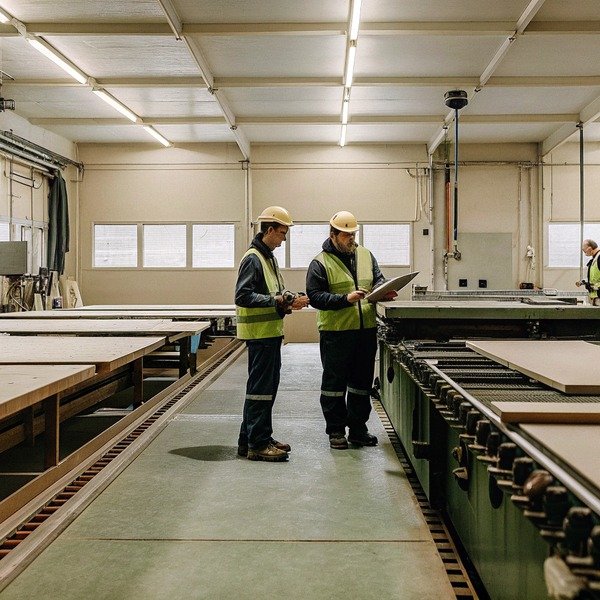
We often see complex designs arrive at our Vietnam office that fail because the previous supplier could not coordinate the workflow.
To assess a supplier for multi-process orders, you must evaluate their entire Quality Management System rather than just their welding skills AWS D1.2 1. Key indicators include valid ISO certifications, a documented history of handling similar complex geometries, and robust traceability systems that track parts through welding, machining, and assembly without losing dimensional accuracy.
Let’s look at the specific checkpoints you need to verify to avoid costly delays.
How do I verify their engineering capability to interpret complex welding and machining drawings?
Our engineering team frequently discovers that a supplier's inability to read GD&T leads to immediate failure GD&T 2 on lattice-like structures.
Verify capability by requesting a Design for Manufacturability review and examples of past projects where they resolved tolerance stack-ups. Check if they use advanced CAD software to simulate workflows and identify potential collision points or warping issues before they cut a single piece of metal.
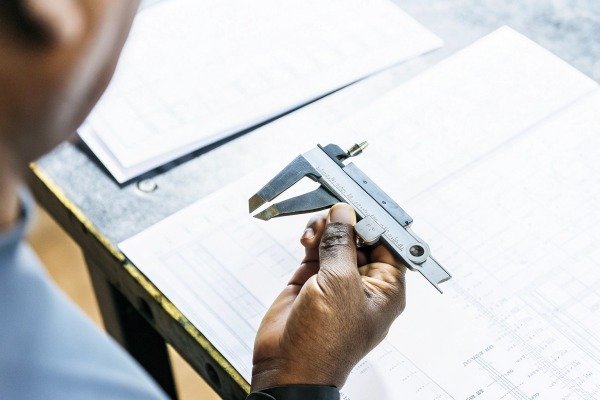
When you are sourcing a complex item like a geometric aluminum frame with multiple supports, the supplier's engineering strength is just as critical as their welding torch. Many suppliers are essentially "job shops" that cut and weld job shops 3 exactly what is drawn, even if the drawing has inherent contradictions. A partner capable of complex orders will act as a filter, catching errors before production begins.
The Role of Design for Manufacturability (DFM)
A true multi-process supplier does not just accept a drawing; they interrogate it. When we review a new project, we look for "tolerance stack-up." This occurs when the allowable variance in cutting, welding, and machining adds up to result in a final part that does not fit. You should ask your potential supplier to provide a DFM report on your initial drawing. If they return the quote immediately with no questions or suggestions, that is a red flag. A capable supplier will suggest adjustments to the lattice design to accommodate the heat distortion typical of aluminum extrusions.
Software and Simulation
Ask the supplier what software they use for process planning. High-level suppliers use systems that can simulate the welding sequence. For aluminum frames, the order in which you weld the joints affects the final shape. If they weld all the vertical supports first, the frame might twist. Capable engineers plan a "balanced" welding sequence to distribute heat.
Engineering Competency Checklist
You can assess their level of sophistication by asking how they handle data. Do they accept 3D models directly into their CNC machines, or do they manually re-enter data? Manual entry introduces human error. Below is a comparison of engineering behaviors.
Supplier Engineering Maturity Levels
| Характеристика | Low Capability Supplier | High Capability Supplier |
|---|---|---|
| Drawing Review | Quotes based on rough dimensions only. | Performs detailed GD&T review and DFM analysis. |
| Software | Basic 2D viewers or printed paper only. | 3D CAD/CAM with simulation tools (e.g., SolidWorks, Mastercam). |
| Tolerance Planning | Ignores stack-up; blames design for fit issues. | Calculates stack-up and designs fixtures to compensate. |
| Решение проблем | Reacts to problems after parts are made. | Proactively suggests design changes to prevent warping. |
| File Formats | Requests simple PDFs only. | Works with STEP/IGES files to drive CNC equipment. |
What quality control steps should I check to ensure they maintain tight tolerances across multiple processes?
We have found that inspecting only at the end of the line is a recipe for disaster with aluminum structures.
You must ensure the supplier implements in-process inspections at every critical transition point, not just final checks. Look for the use of coordinate measuring machines and fixed gauges that verify dimensional accuracy after welding but before machining to catch distortion early and maintain strict tolerances.
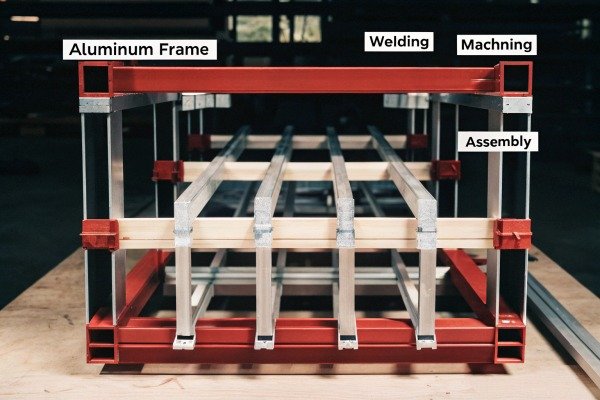
For a product like your silver-colored aluminum frame, maintaining the lattice geometry is difficult because welding introduces heat, and heat causes movement. If the supplier waits until the entire frame is assembled to check dimensions, they will likely find it has warped out of tolerance. At that point, it is scrap.
The Importance of the "Traveler"
When we audit suppliers, the first document we ask for is the "traveler" or "router." This is a physical or digital document that travels with the batch of parts. It must list every step: Cutting -> Inspection -> Tacking -> Inspection -> Final Weld -> Stress Relief -> Machining -> Final Inspection.
If the supplier cannot produce a traveler that shows mandatory stop points for inspection, they are not managing the process; they are hoping for the best. You need to see a "gate" between welding and machining. The part must be measured after welding to ensure there is enough material left for the machining process to clean up the surfaces.
Fixturing and CMM Capabilities
Complex lattice designs cannot be measured accurately with a tape measure. You need to verify if the supplier has a Coordinate Measuring Machine (CMM) large enough Координатно-измерительная машина 4 to handle your frame. A CMM probes the part in 3D space to verify the position of the vertical and horizontal supports relative to each other.
Furthermore, ask about their fixturing strategy. A capable supplier designs custom fixtures (jigs) that hold the aluminum extrusions in place during welding. These fixtures should be robust enough to resist the pull of the cooling weld metal. If you walk through their shop and see welders clamping parts to a generic table with C-clamps for a complex order, they are likely not capable of maintaining tight tolerances consistently.
Calibration and Equipment
You should also check the calibration stickers on their measurement tools. It sounds basic, but in many lower-tier shops, calipers and height gauges are rarely calibrated. For multi-process orders where a deviation in the first step ruins the last step, accurate measurement tools are non-negotiable.
Critical Inspection Points for Aluminum Frames
| Этап | What to Inspect | Почему это важно | Оборудование |
|---|---|---|---|
| Raw Material | Extrusion straightness and alloy type. | Warped raw material leads to warped frames. | Straight edge, Spectrometer. |
| Post-Tacking | Squareness and alignment. | Easier to fix a bad tack than a full weld. | Squares, Custom Fixtures. |
| Post-Welding | Distortion and weld penetration. | Ensures the frame is true before costly machining. | CMM, Visual, NDT. |
| Post-Machining | Hole locations and surface flatness. | Verifies final fit for assembly. | CMM, Go/No-Go Gauges. |
| Final Finish | Surface uniformity (silver color). | Ensures aesthetic compliance. | Gloss meter, Visual. |
How can I determine if they effectively manage secondary operations like surface treatment and assembly?
In our experience managing supply chains, the most frustration occurs when a perfectly welded part is ruined by a poor finish.
Determine their effectiveness by auditing their sub-supplier management protocols and requesting specific quality plans for surface treatments. A capable supplier will prohibit unauthorized outsourcing and conduct their own final adhesion and salt spray testing to ensure the finish meets your durability and aesthetic standards.
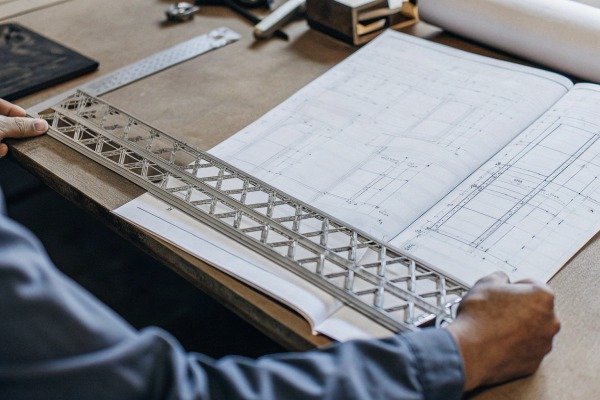
For your silver-colored frame, the surface finish is not just cosmetic; it is the first thing your customer sees. Secondary operations like anodizing, powder coating, or plating anodizing 5 are often outsourced by welding shops. This is where control is frequently lost.
Supply Chain Transparency
You must determine if the supplier does these processes in-house or outsources them. If they outsource, you need to know who they use. We often find that excellent welding shops use the cheapest available plating shop down the street. You should require that the welding supplier uses only approved sub-suppliers. Ask them: "How do you qualify your plating vendor?" If they answer, "We've used them for years," that is insufficient. They should answer, "We audit them annually and require a Certificate of Compliance (CoC) with every batch Certificate of Compliance 6."
Controlling the "Hand-Off"
The transition from the welding floor to the finishing line is critical. Aluminum welding often leaves residue, oxide layers, or small spatters. If these are not perfectly cleaned before the part goes into the anodizing tank, the silver finish will have blotches or pits.
A capable supplier will have a specific "pre-finish" preparation station. They will grind down the weld beads (if required by your design) and mechanically clean the lattice structure. Ask to see their standard operating procedure (SOP) for cleaning. If they rely solely on the chemical bath at the plating shop to clean the part, they are taking a risk.
Assembly and Functional Testing
If your order involves assembly (e.g., inserting bushings or attaching brackets to the frame), you must verify their assembly area. Is it clean? Is it separate from the dirty welding environment? separate from the dirty welding 7 We have seen instances where metal dust from grinding contaminated the final assembly because the two areas were not separated.
Furthermore, ask for "fit-check" evidence. The supplier should have a "gold standard" gauge or a checking fixture that mimics the mating part your frame connects to. Every frame should be placed in this fixture to guarantee it will fit in the real world.
Common Secondary Operation Risks
| Тип дефекта | Причина | Prevention Method |
|---|---|---|
| Surface Pitting | Poor pre-cleaning or weld porosity. | Mechanical polishing and stringent weld QC before plating. |
| Color Variation | Inconsistent chemical bath time. | Automated timing controls and master color samples. |
| Assembly Misalignment | Drilling holes before welding (thermal shift). | Machine critical holes после welding and stress relief. |
| Physical Damage | Poor packaging during transport to plater. | Dedicated dunnage/racks for transport between factories. |
What specific evidence should I request to validate their Welding Procedure Specifications and welder qualifications?
We maintain strict files on every welder because we know that skill fades if not used regularly on specific alloys.
Request copies of their Welding Procedure Specifications (WPS) and the corresponding Procedure Qualification Records (PQR) for your specific material type. Additionally, ask for current welder continuity logs to verify that their staff has actively performed these specific weld types within the last six months, ensuring their skills remain sharp and compliant.
Many buyers assume that if a supplier says they are "certified," they are covered. However, in the welding world, certification is extremely specific. A welder certified to weld thick structural steel bridges may be completely unqualified to weld your thin-wall aluminum lattice frame.
WPS and PQR: The Recipe and the Proof
You must ask for two distinct documents. The Welding Procedure Specification (WPS) is the "recipe" used on the shop floor. It tells the welder what amperage, voltage, travel speed, and filler metal to use. The Procedure Qualification Record (PQR) is the lab report that proves this recipe actually works.
For your aluminum frame, the WPS should likely reference WPS 8 AWS D1.2 (Structural Welding Code – Aluminum). Structural Welding Code – Aluminum 9 If they send you a WPS for steel (AWS D1.1), they do not understand the metallurgical differences. Aluminum requires specific cleaning methods (stainless steel brushes only) and specific alternating current (AC) settings for TIG welding. TIG welding 10
Welder Performance Qualification (WPQ)
While the WPS qualifies the company's process, the WPQ qualifies the person. You need to see the certifications for the specific individuals who will touch your parts. Critically, these certifications expire.
In the US and compliant Asian factories, a welder must maintain a "continuity log." This is a record signed by a supervisor stating the welder has used that specific process within the last six months. If a welder got certified three years ago but hasn't welded aluminum since, their certification is effectively void. You should explicitly ask: "Please send the continuity logs for the welders assigned to my project."
Visual Standards and Workmanship
Finally, ask what "acceptance criteria" they use. "Good welding" is subjective. "AWS D1.2 Class B" is objective. The standard defines exactly how much porosity is allowed, how much undercut is acceptable, and the maximum size of a crater crack (usually zero).
A capable supplier will have visual aids or "limit samples" on the production floor. These are physical examples or photos showing the minimum acceptable weld quality. Ask them to show you their limit samples for aluminum welds. If they don't have them, their quality control relies on the mood of the inspector that day.
Заключение
Sourcing complex, multi-process parts requires looking beyond the price tag. By validating the supplier's engineering software, auditing their "hand-off" inspections, enforcing strict sub-supplier controls, and verifying specific welder logs, you protect your supply chain from costly failures. Thorough assessment upfront ensures the final product fits your specifications every time.
Сноски
1. Official American Welding Society page for the specific code cited. ↩︎
2. Official standard body (ASME) for Geometric Dimensioning and Tolerancing. ↩︎
3. Defines the specific manufacturing production model contrasted with full-service suppliers. ↩︎
4. Authoritative government source (NIST) explaining CMM technology. ↩︎
5. Industry authority (Aluminum Anodizers Council) explaining the anodizing process. ↩︎
6. International Standards Organization explaining conformity assessment and certification documents. ↩︎
7. OSHA safety standards regarding the environmental requirements for welding and assembly areas. ↩︎
8. Major technical institute providing the standard definition for Welding Procedure Specifications. ↩︎
9. Official AWS standard for aluminum welding, ensuring the supplier follows correct metallurgical procedures. ↩︎
10. Miller Welds’ technical guide on TIG welding settings and techniques for aluminum. ↩︎

 English
 Español de México
 Deutsch
 Français
 Русский
 العربية