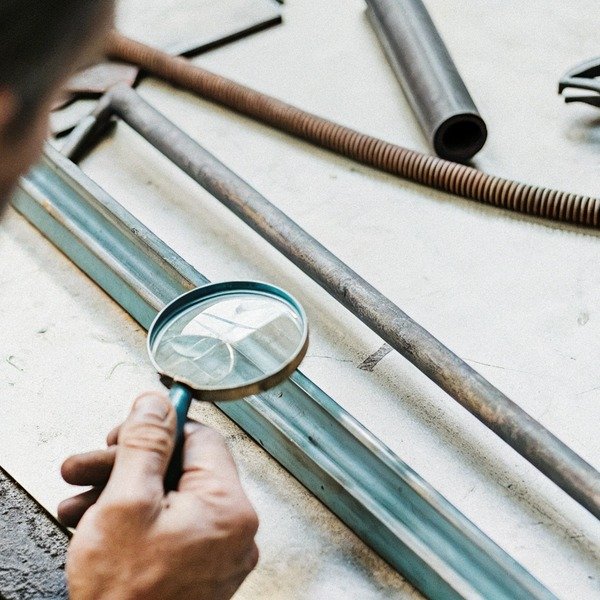
We often see clients struggle with inconsistent material quality because documentation requirements weren’t clear from day one. Without proper certification, you risk structural failure and costly liability claims down the road.
To request a raw material Mill Certificate, explicitly state the requirement for EN 10204 Type 3.1 or 3.2 certification in your initial Request for Quote and final Purchase Order. You must specify the applicable standard, such as ASTM or ASME, and demand that the document includes heat numbers, chemical composition, and mechanical properties before shipment.
Let’s break down the exact steps to ensure your welding parts meet every specification.
At what stage of the order process should I demand the Mill Test Certificate?
Waiting until the goods arrive at your dock to ask for paperwork is a recipe for disaster in our supply chain operations. Late documentation often hides non-compliance issues that halt production lines.
You should demand the Mill Test Certificate during the Request for Quote (RFQ) stage and confirm it within the Purchase Order (PO). Establishing this requirement early ensures the supplier sources correct materials before manufacturing begins. We recommend requiring a digital copy for review at least three days prior to final shipment.

Timing is everything in international procurement. international procurement 1 If you request the Mill Test Certificate (MTC) after the welding parts have been produced, you lose all leverage. The material is already cut, formed, and welded. If the certificate shows the wrong grade, you are left with a pile of scrap metal.
The Request for Quote (RFQ) Phase
We always advise specifying your documentation needs when you first reach out for a price. In your RFQ, include a line item that asks for "Material Certification per EN 10204 3.1." This filters out suppliers who cannot provide traceability. cannot provide traceability 2 If a supplier hesitates or says they "usually don't provide that," it is a red flag. It tells us they might be buying stock material from the open market without proper history.
The Purchase Order (PO) Confirmation
Your PO is a binding contract. It must explicitly list the MTC as a deliverable item. Do not just write "Certificates required." Be specific. Write: "Supplier must provide Mill Test Reports for all raw materials prior to shipment." This gives our quality team in Vietnam or China the authority to hold a shipment if the paperwork is missing. We verify these documents before the container doors close.
Pre-Shipment Verification
The best practice is to require the digital PDF of the MTC before the goods leave the factory. This allows your engineers to check the chemical composition against your specs. check the chemical composition 3 If there is an error, the goods are still at the factory. It is much easier to negotiate a solution when you haven't paid the balance or shipped the goods across the ocean.
| Stage of Order | Action Required | Risk if Skipped |
|---|---|---|
| RFQ | State requirement for EN 10204 3.1/3.2. | Supplier quotes lower price using untraceable scrap metal. |
| Purchase Order | List MTC as a mandatory deliverable line item. | No legal recourse if the supplier ships without documents. |
| Pre-Production | Verify supplier has material in stock with certs. | Production starts with wrong material; rework required. |
| Pre-Shipment | Review digital MTC against specs. | Receiving non-conforming goods that must be returned/scrapped. |
What critical information must I look for when reviewing a Mill Certificate?
We have rejected countless batches of raw aluminum because the paperwork lacked specific mechanical data. Accepting incomplete reports blinds you to potential weaknesses in your custom welded assemblies.
When reviewing a Mill Certificate, look for the material grade, specific heat number, chemical composition analysis, and mechanical property results like tensile and yield strength. Ensure the document bears the manufacturer’s official stamp, a quality control signature, and a clear reference to the applicable standard, such as ASTM or ASME.
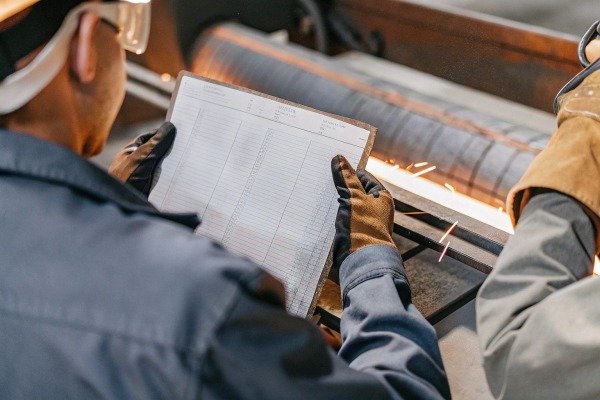
A Mill Certificate is not just a receipt; it is a technical identity card for your steel or aluminum. When we audit suppliers, we look for specific data points that prove the material will perform as designed. A generic paper saying "Quality OK" is worthless.
Traceability and Heat Numbers
The most critical link is the Heat Number (or Lot Number). This code identifies the specific batch of molten metal from which your parts were made.
- On the Paper: The MTC must clearly list a Heat Number.
- On the Part: The welding parts or the raw material bundle must have this same number stamped, etched, or tagged.
If these two numbers do not match, the certificate does not belong to that material. It is a common issue we catch during final inspections.
Chemical Composition
The certificate must list the actual percentages of elements like Carbon, Manganese, Sulfur, and Phosphorus. Do not accept a certificate that just says "Pass." You need the numbers. For welding applications, the Carbon Equivalent (CE) is vital. If the carbon content is too high, the material may crack during welding. Our engineers check these values to ensure the material is weldable without special pre-heating procedures.
Mechanical Properties
You need to verify the physical strength. Look for:
- Yield Strength: The stress at which the material starts to deform permanently.
- Tensile Strength: The maximum stress the material can withstand before breaking.
- Elongation: How much the material stretches before breaking (crucial for forming).
For the custom aluminum frames we produce, specific hardness values are also often required to ensure the grid-like base can support the intended load without bending.
Applicable Standards
The top of the document must state the standard used, such as ASTM A36 for steel or ASTM B221 ASTM A36 4 for aluminum. or ASTM B221 5 such as ASTM A36 6 It should also reference the testing methods. If the header is blank or vague, it is likely a fake or generated document.
| Data Point | What to Check | Почему это важно для сварки |
|---|---|---|
| Плавочный номер | Matches the stamp on the physical part. | Proves the document belongs to the material delivered. |
| Химический анализ | Carbon, Manganese, Sulfur % | High sulfur or carbon causes weld cracking and porosity. |
| Mechanical Test | Yield/Tensile Strength, Elongation | Ensures the part won't fail under structural load. |
| Спецификация | ASTM, ASME, or EN Standard | Confirms the material meets the legal/design requirements. |
How can I verify if the raw material documents from my supplier are genuine?
In our years managing logistics from Vietnam and China, we have encountered altered documents that look surprisingly authentic. Fake certificates jeopardize your product liability and can lead to catastrophic field failures.
To verify raw material documents, cross-reference the heat number on the certificate with the physical markings on the product. You should also contact the issuing mill directly to validate the report number and check for digital inconsistencies, such as mismatched fonts or altered dates, which often indicate forgery.

Fraudulent documentation is a silent risk in the global metal supply chain. A supplier might buy cheaper, lower-grade material and "borrow" a high-quality certificate from a previous job. We use several layers of defense to protect our US clients from this deceit.
Visual and Digital Inspection
First, look at the document itself. Does it look like a photocopy of a photocopy? Are the fonts inconsistent? Sometimes, bad actors will digitally cut and paste a new heat number over an old one. If the background pixelation changes around the heat number or the date, that is a clear sign of tampering. We also check for "clean" PDF metadata. If a document claims to be from a major steel mill but the PDF properties show it was created by "Admin" in a generic software yesterday, be suspicious.
Contacting the Original Mill
The most definitive way to verify a certificate is to go to the source. The MTC will have the name, address, and contact info of the original mill (the company that melted the metal). We often send an email to their quality department with the cert attached. "Can you verify this MTC #12345 is valid?" Most reputable mills are happy to confirm this to protect their brand. If the supplier tries to hide the original mill's name, demand it. You have a right to know the origin of melt.
Third-Party Laboratory Testing
If you are buying a large volume or the parts are safety-critical (like the upright supports on a custom frame), do not rely solely on paper. Send a sample to an independent lab (like SGS or Intertek). Ask for a chemical analysis (OES) and a tensile test. a tensile test 7 tensile test 8 Compare these independent results with the supplier's MTC. If the MTC says Carbon is 0.18% but your lab says 0.25%, the material is non-conforming, and the certificate is likely invalid for that batch.
The "Chain of Custody"
For our clients, we also verify the logistics. We check if the quantity on the MTC matches the quantity of the production run. If the MTC covers 5 tons of steel, but the supplier produced 20 tons of parts, where did the other 15 tons come from? Checking the mass balance is a simple but effective audit tool.
Should I specify EN 10204 3.1 or 3.2 standards for my welding part materials?
Our engineering team frequently advises clients that choosing the wrong certification level either wastes money or compromises safety. Using a basic compliance statement for critical pressure vessels is a dangerous oversight.
You should specify EN 10204 3.1 for most standard structural welding applications where manufacturer validation is sufficient. However, for safety-critical parts like pressure vessels or pipelines, you must require EN 10204 3.2, which mandates validation by an independent third-party inspector to guarantee absolute compliance with material specifications.
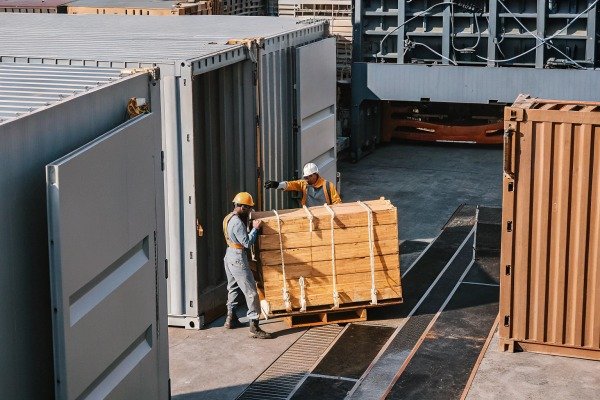
The EN 10204 standard is the global language for material certificates. Choosing between 3.1 and 3.2 depends entirely on the risk profile of your project.
Understanding EN 10204 Type 3.1
This is the industry standard for 90% of the custom parts we source.
- Who issues it: The manufacturer of the material.
- Who validates it: An inspection representative from the manufacturer who is independent of the manufacturing department.
- Content: It lists specific test results (chemical and mechanical) for the materials in your specific shipment.
Type 3.1 provides a strong level of trust. It confirms that the factory's quality department has tested the material and it passed. For general machinery, frames, and non-pressure applications, this is sufficient and cost-effective.
When to Upgrade to Type 3.2
Type 3.2 is the heavy lifter. It is required for high-risk applications like oil and gas pipelines, pressure vessels, or lifting equipment pressure vessels 9 pressure vessels 10 where failure could cause death or disaster.
- Who issues it: Both the manufacturer's authorized inspection representative AND an independent third-party inspector (like TUV, DNV, or Lloyd's Register).
- The Process: The third-party inspector visits the mill, witnesses the sampling and testing, and co-signs the document.
- Стоимость: This is significantly more expensive and takes longer to arrange.
Making the Decision
Do not ask for 3.2 "just to be safe" if you don't need it. It adds cost and lead time. Conversely, never accept a "Type 2.1" or "2.2" for welding parts. These are just declarations of compliance without specific test data. They basically say, "We promise this is steel," which is not enough for engineering purposes.
| Тип сертификата | Validator | Risk Level | Typical Application |
|---|---|---|---|
| Type 2.1 / 2.2 | Производитель | Low / None | Non-critical hardware, aesthetic parts. |
| Type 3.1 | Manufacturer's Indep. QA | Средний | Structural frames, machine bases, standard welding. |
| Type 3.2 | Third-Party Agency | High / Critical | Pressure vessels, offshore structures, hazardous storage. |
Заключение
Requesting the right Mill Certificate is your first line of defense against poor quality. By specifying EN 10204 3.1 standards in your RFQ, verifying heat numbers upon receipt, and understanding when to demand third-party validation, you protect your supply chain. We handle these checks daily to ensure every shipment meets rigorous global standards.
Сноски
1. Official US government resource for international trade and procurement best practices. ↩︎
2. ISO standard defining requirements for traceability in the supply chain. ↩︎
3. NIST provides standard reference materials for verifying the chemical composition of metals. ↩︎
4. Official standard specification for the structural steel grade cited. ↩︎
5. Official standard specification for aluminum and aluminum-alloy extruded bars and profiles. ↩︎
6. Official standard specification for carbon structural steel from ASTM International. ↩︎
7. Educational resource explaining the engineering principles behind material strength testing. ↩︎
8. Authoritative standard for the mechanical testing method mentioned. ↩︎
9. OSHA safety guidelines and regulations regarding the construction and inspection of pressure vessels. ↩︎
10. Official code governing the safety and design of pressure vessels. ↩︎

 English
 Español de México
 Deutsch
 Français
 Русский
 العربية