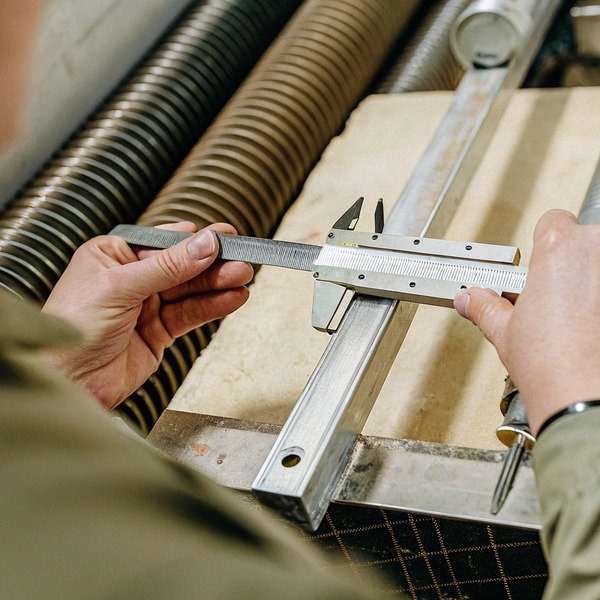
In our Vietnam facility, we often see technical drawings 1 technical drawings that lack clear gauging details, leading to unnecessary confusion during production. This ambiguity frequently causes fitment issues on your assembly line, delaying projects and increasing costs.
You must explicitly reference a specific thread standard like ASME B1.3 or ISO 1502 and define the inspection system. Specify System 21 for general applications or System 22 for critical loads. Always mandate checking threads after welding to account for thermal distortion.
Here is how to write clearer specifications for your suppliers to ensure consistent quality.
Should I specify 6H or 6G tolerance classes for weld nuts to accommodate thermal distortion?
When our engineering team reviews weld nut prints, tight 6H tolerances often raise red flags regarding potential assembly failures. Welding heat naturally shrinks threads, causing standard bolts to seize or cross-thread during your final assembly.
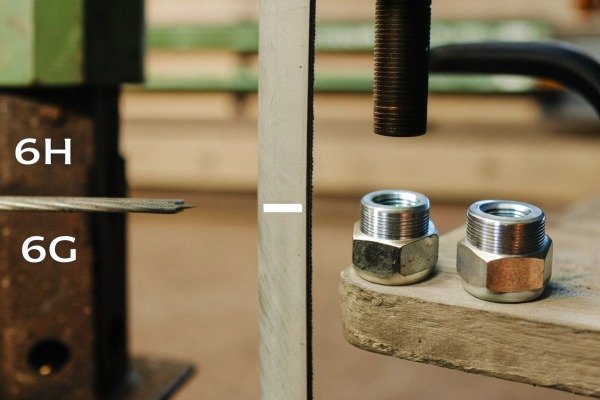
For weld nuts, specifying a 6G tolerance class is generally better than 6H because it provides a larger allowance. This extra gap accommodates the slight thread shrinkage and deformation caused by high welding heat, ensuring the mating bolt still fits correctly without binding.

Specifying the correct tolerance class is one of the most effective ways to prevent assembly headaches. In the metric system, tolerance positions are indicated by letters. tolerance positions 2 The position "H" indicates zero fundamental deviation—meaning the thread is cut exactly to the basic profile size. This is perfect for standard machined parts but dangerous for welded assemblies.
The Physics of Weld Shrinkage
When we weld a nut to a frame, the intense heat causes the metal to expand. As the part cools, the metal contracts. This contraction is rarely uniform. It often pulls the thread walls inward, effectively shrinking the hole diameter. Furthermore, the heat can slightly warp the roundness of the nut.
If you start with a 6H tolerance (zero allowance), this shrinkage pushes the thread dimensions out of specification. The result is a nut that is now too tight for the bolt. By switching to a 6G tolerance, you introduce a planned gap (fundamental fundamental deviation 3 deviation) before welding. This gap acts as a safety buffer. When the weld cools and the material shrinks, the thread dimensions usually settle into a range that still allows the bolt to enter freely.
Comparing Tolerance Classes
Choosing the right class depends on your specific application and the welding method used. TIG welding might introduce less heat than MIG welding, affecting your decision. TIG welding 4
| Tolerance Class | Описание | Recommended Application |
|---|---|---|
| 6H | Standard fit with zero allowance. | Machined parts, cold assembly, or post-weld tapping operations. |
| 6G | Loose fit with small clearance. | General welding applications. Accommodates moderate thermal distortion. |
| 6E | Large clearance fit. | Heavy welding, thick plating requirements, or parts subject to dirty environments. |
Avoiding Post-Weld Retapping
Some buyers stick to 6H and simply ask the factory to "chase" (retap) the threads after welding. We advise against this when possible. Retapping adds a manual labor step, increasing your unit cost. It also breaks the protective coating on the threads if the nut was pre-plated, inviting rust. Designing with 6G from the start eliminates this extra processing cost and preserves the finish integrity.
Do I need to define separate thread gauge inspection criteria for pre-weld and post-weld stages?
We have seen entire batches rejected because the factory only checked parts before welding, assuming the quality would hold. Thermal stress changes dimensions, making pre-weld approvals insufficient for your final quality requirements.
Yes, you absolutely need separate criteria. Pre-weld inspection verifies the component was machined correctly, while post-weld inspection ensures the heat-affected zone has not distorted the thread form. Mandating a final “Go” gauge check after welding prevents assembly failures at your facility.
Quality control is not a static event; it is a sequence of verifications. In our process control plans, we treat pre-weld and post-weld inspections as distinct milestones with different goals. Failing to separate these leads to a common scenario: the supplier claims the part was perfect (before welding), but you receive a part that doesn't fit (after welding).
The Pre-Weld Inspection
The goal here is to verify the component supplier did their job. If we are sourcing weld nuts from a sub-supplier, we must inspect them based on their manufacturing state. At this stage, we usually use a standard System 21 check 5 System 21 check. The "Go" gauge must pass freely, and the "No-Go" gauge must stop within two turns. This confirms the starting material is good.
The Post-Weld Inspection
After the welding process, the risks change. We are no longer just looking for machining errors; we are looking for process errors.
- Distortion: Has the heat warped the thread?
- Spatter: Is there weld slag inside the threads?
- Alignment: Is the nut sitting flat?
You should specify that the final acceptance is based on the post-weld condition. A part that was perfect before welding but distorted during the process is a scrap part.
Recommended Inspection Protocol
To ensure we are on the same page, we recommend incorporating a table like this into your quality agreement.
| Inspection Stage | Gauge Type | Objective | Failure Action |
|---|---|---|---|
| Incoming Material (Pre-Weld) | Go / No-Go Plug Gauge | Verify manufacturing tolerance of the nut/boss. | Return components to sub-supplier. |
| In-Process (Post-Weld) | Go Gauge Only | Check for thread shrinkage and weld spatter blockage. | Rework (retap) or Scrap. |
| Final Audit (Pre-Shipment) | Go Gauge (Random Sampling) | Confirm no debris or rust prevents assembly. | Re-inspect full lot. |
Handling Weld Spatter
Weld spatter is the enemy of threaded parts. Even a tiny bead of metal inside a thread will stop a bolt dead. Standard Go/No-Go gauges are excellent at detecting this. If the Go gauge stops halfway, it often indicates spatter. We train our operators to differentiate between a "tight" thread (shrinkage) and a "blocked" thread (spatter), as the corrective actions differ. Shrinkage might require a different tolerance class (like 6G), while spatter requires better welding shields or anti-spatter sprays.
How should I adjust my thread gauge specifications if the parts require plating after welding?
Our logistics team often handles plated parts where the coating thickness ruins the thread fit, causing unexpected delays. Neglecting plating buildup in your specs leads to immediate assembly line stoppages.
You must specify “threads to be gauged before plating” or select a tolerance class that accounts for coating thickness. Alternatively, require special “pre-plate” gauges that leave room for the zinc or nickel layer, ensuring the final plated part fits the standard “Go” gauge.

Plating is one of the most overlooked aspects of thread design. Buyers often assume that a few microns of zinc won't make a difference. However, geometry works against you here. When you apply a coating to a 60-degree thread profile, the thickness builds up on both flanks of the thread V-shape.
The Multiplier Effect
The geometric relationship in a standard 60-degree thread means that the change in pitch pitch diameter 6 diameter is approximately four times the thickness of the plating. If you specify a zinc plating thickness 7 zinc plating thickness of 5 microns (0.005mm), the pitch diameter decreases (for a nut) by roughly 0.020mm. If the plating is heavier, say 15 microns for better corrosion resistance, you lose nearly 0.060mm of clearance. corrosion resistance 8 In the world of precision threads, that is a massive reduction.
Specifying the "Pre-Plate" Condition
To avoid parts that are too tight to assemble, you have two main strategies for your technical drawings:
- Oversized Tapping (Recommended): You specify that the manufacturer must use oversized taps. For metric threads, this often means moving from 6H to 6G or even 6E. For Unified threads (inches), you might specify a Class 2B fit после plating, which implies the manufacturer must cut it larger initially.
- Chemical Cleaning: The manufacturer masks the threads or chemically strips the plating from the threads after the bath. This is labor-intensive and expensive, so we rarely recommend it unless electrical conductivity is required on the bare metal.
Plating Thickness Impact Table
Use this reference to understand how much clearance you are losing based on your finish requirements.
| Plating Type | Typical Thickness (microns) | Approx. Pitch Diameter Reduction (mm) | Recommended Action |
|---|---|---|---|
| Flash Zinc | 3 – 5 µm | 0.012 – 0.020 mm | Standard 6H usually accepts this, but 6G is safer. |
| Standard Zinc | 8 – 12 µm | 0.032 – 0.048 mm | Must use 6G or special pre-plate gauges. |
| Hot Dip Galvanize | 40 – 80 µm | 0.160 – 0.320 mm | Requires aggressive oversizing (special taps required). |
The "Go" Gauge Rule
Your purchase order should state: "Final acceptance based on passing a standard Go gauge AFTER plating." This places the responsibility on us, the manufacturer, to calculate the necessary pre-plate dimensions. We will then calculate the buildup and choose the correct tap size to ensure the final product meets your needs.
What specific notes should I add to my technical drawings to ensure proper thread quality control?
When we receive drawings with vague notes like “standard thread,” mistakes happen because interpretation varies between cultures and factories. Precise text notes on your blueprints act as a contract that protects your interests.
Include notes specifying the exact standard (e.g., ASME B1.3), the gauging system (System 21 or 22), and the timing of inspection (post-weld/post-plate). Explicitly state that threads must be clean and free of spatter, and define the Acceptance Quality Limit (AQL) for threaded features.
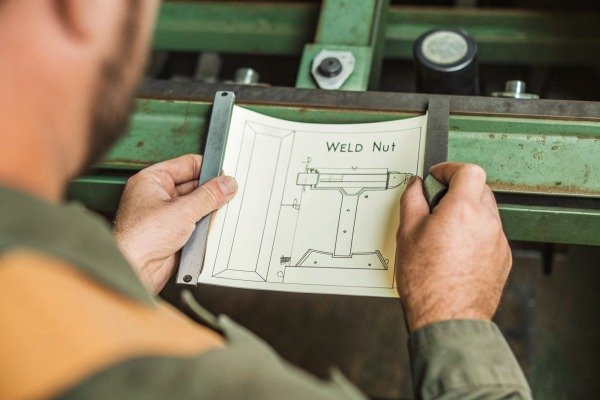
Ambiguity is the enemy of outsourced manufacturing. To get the "right first time" results you prefer, your drawings must leave no room for guessing. Over the years, we have compiled a list of essential notes that prevent the most common defects we see in Asian manufacturing hubs.
Defining the Gauging System
Do not just say "check threads." You must define how.
- System 21 (Go/No-Go): This is the industry standard for general fasteners. It uses a binary pass/fail check. It is fast and cost-effective.
- System 22 (Variable Measurement): This measures the actual thread dimensions (pitch diameter, lead, etc.). This is expensive and slow. Only specify this for high-stress critical safety joints (like suspension parts or pressure vessels).
Recommended Note: "Thread inspection per ASME B1.3, System 21. Threads must accept a GO gauge freely and reject a NO-GO gauge."
Cleanliness and Spatter
We often see parts that pass the gauge but fail in the field because of loose debris. A gauge is hard steel; it can crush through soft dirt. A mating bolt might not be so forgiving.
Recommended Note: "All threads must be clean, dry, and free of weld spatter, scale, and foreign debris prior to gauging. Re-tapping after welding is permitted only if thread tolerance limits are maintained."
Timing of Inspection
As discussed earlier, the state of the material matters. You must lock in when the final decision is made.
Recommended Note: "Gauging acceptance criteria applies to the finished part (Post-Weld and Post-Plate). Supplier is responsible for adjusting pre-weld dimensions to accommodate process variables."
Acceptance Quality Limit (AQL)
If you buy 10,000 parts, we cannot gauge every single one without raising the price significantly. We use statistical statistical sampling 9 sampling. You should define the risk level you are comfortable with.
Recommended Note: "Thread quality to be inspected per ANSI/ASQ Z1.4, Level II. AQL 1.0 for thread function (Go/No-Go)."
By placing these specific notes on your drawing, you remove the "tribal knowledge" factor. Any supplier, whether in Vietnam, China, or India, will read these standards and understand exactly what tool to pick up and what criteria to meet.
Заключение
Clear specifications prevent costly rework and production delays. By explicitly defining gauge standards, selecting the right tolerance class for thermal distortion 10 thermal distortion, and specifying inspection timing, we ensure your custom parts arrive ready for assembly every time.
Сноски
1. Authoritative standard for engineering drawing practices and documentation. ↩︎
2. Explains the fundamental concepts of metric thread tolerance classes. ↩︎
3. International standard defining the terminology and concepts for linear and geometric tolerances. ↩︎
4. Manufacturer guide explaining the technical characteristics of TIG welding. ↩︎
5. Official standard defining the System 21 gauging method mentioned. ↩︎
6. Background information on screw thread geometry and diameter definitions. ↩︎
7. Standard specification for electrodeposited zinc coatings on iron and steel. ↩︎
8. Explains the importance of plating for protecting metal from environmental degradation. ↩︎
9. Authoritative resource explaining quality control sampling methodologies. ↩︎
10. Technical explanation of distortion mechanisms in welded assemblies. ↩︎

 English
 Español de México
 Deutsch
 Français
 Русский
 العربية