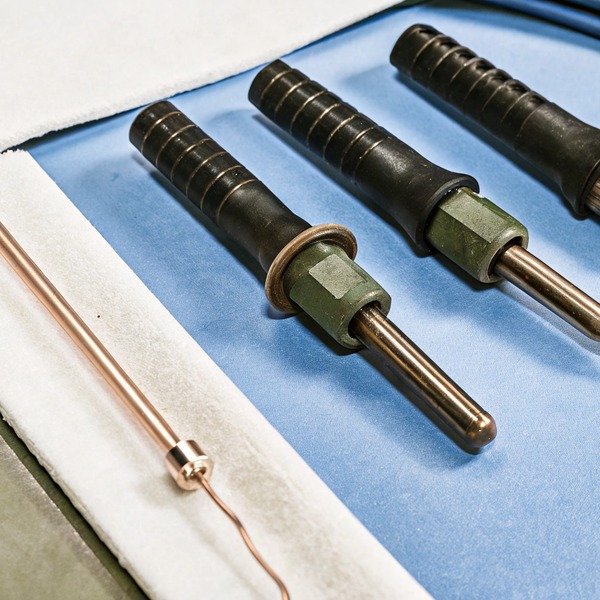
In our years of sourcing custom components for clients across the US and Europe, we have seen production lines halt simply because a welding accessory was slightly out of spec. We often encounter projects where a lack of detailed parameters in the initial drawings leads to inconsistent welds and costly rework later on.
Critical parameters include RWMA alloy classification for conductivity and hardness balance, electrode tip geometry for current density control, and precise taper dimensions for leak-proof fitting. Additionally, buyers must specify cooling hole depth to prevent thermal softening and surface finish standards to minimize contact resistance.
Let’s examine the specific technical details you need to verify to ensure your production runs smoothly.
How do I determine the correct RWMA class and alloy composition for my specific welding application?
Our engineering team frequently rejects drawings that specify generic copper instead of specific alloys for the intended workpiece. Using the wrong material often leads to rapid tip wear or electrode sticking, causing frustrated operators and significant downtime on your assembly line.
Select RWMA Class 2 (Chrome Copper) for general purpose welding of cold-rolled steel due to its balance of conductivity and hardness. Choose Class 3 (Beryllium Copper) for high-force applications requiring greater hardness, and Class 11 (Copper Tungsten) for welding non-ferrous metals like copper or brass.
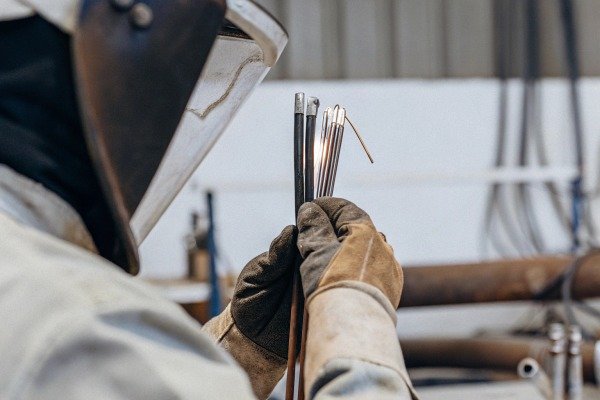
When we evaluate a project, the first thing we look at is the relationship between the electrode material and the workpiece. This is a balancing act between electrical conductivity and mechanical hardness. electrical conductivity and mechanical hardness 1 In resistance welding, heat is generated by resistance. resistance welding 2 If your electrode is too conductive relative to the workpiece, you will not generate enough heat at the weld interface. Conversely, if it is too hard but lacks conductivity, the electrode itself will overheat.
Balancing Hardness and Conductivity
The Resistance Welder Manufacturers' Association (RWMA) standardizes these alloys. Resistance Welder Manufacturers' Association 3 Resistance Welder Manufacturers' Association 4 For the vast majority of mild steel applications we handle, Class 2 is the standard. It conducts current well enough to keep the electrode cool but is hard enough to resist deformation under pressure. However, if we are welding stainless steel or high-strength alloys that require higher clamping forces, we switch to Class 3. The trade-off is that Class 3 has lower conductivity, so machine settings must be adjusted.
For challenging materials like brass or copper sheets, standard copper electrodes will just stick to the part. In these cases, we must use refractory metal compositions like Class 11 or Class 13 (Tungsten). These materials withstand intense heat and resist alloying with the workpiece, preventing the "sticking" issue that ruins surface cosmetics.
Common RWMA Alloy Applications
Refer to the table below to match your workpiece material with the correct accessory alloy.
| RWMA Class | Material Composition | Conductivity (% IACS) | Rockwell Hardness | Best Application |
|---|---|---|---|---|
| Class 2 | Chrome Copper | ~85% | 83 B | Cold Rolled Steel, Coated Steel |
| Class 3 | Beryllium Copper | ~50% | 100 B | Stainless Steel, High Force Welding |
| Class 11 | Copper Tungsten | ~46% | 99 B | Brass, Bronze, Spot Welding Inserts |
| Class 13 | Tungsten | ~32% | 70 A | Copper, Silver, Non-Ferrous Metals |
What taper dimensions and shank tolerances must I confirm to ensure compatibility with my equipment?
We meticulously check shank tolerances during our final inspection process because a loose fit is disastrous for process stability. Even a slight mismatch results in coolant leaks and poor electrical contact, risking damage to both the machine transformer and the operator's safety. operator's safety 5
You must confirm the specific standard taper, such as RWMA #4 or #5, or Morse tapers, ensuring the angle matches the holder exactly. Verify shank diameter tolerances within ±0.002 inches to ensure a high-pressure mechanical seal that prevents water leaks and ensures maximum current transfer.

The connection between the electrode and the holder is not just physical; it is the primary electrical and thermal bridge. If this connection is poor, you introduce a new point of resistance. This extraneous resistance creates heat at the holder rather than at the weld nugget. In our production experience, this is a leading cause of inconsistent weld strength.
The Importance of the Taper Seal
Most resistance welding accessories utilize a tapered fit. This design allows the electrode to seat firmly under the welding force and creates a watertight seal without O-rings. The most common standards we work with are RWMA #4 and #5 tapers. However, Asian and European equipment often utilize Metric tapers (1:10 ratio) or Morse tapers. Morse tapers 6 Morse tapers 7 Metric tapers 8 You cannot force a Metric taper into an RWMA holder; it might feel tight initially, but it will eventually leak or fly out under pressure.
Shank Diameter Tolerances
When ordering custom shanks or adapters, the tolerance is critical. We typically hold these diameters to very tight specifications. A shank that is undersized by even a few thousandths of an inch will bottom out in the holder before the sides engage the taper. This prevents the seal from forming. Conversely, an oversized shank will stick out too far, altering your stroke length and potentially causing alignment issues with the fixture.
See the chart below for common taper dimensions we verify.
| Taper Standard | Major Diameter (approx.) | Taper Rate | Typical Region |
|---|---|---|---|
| RWMA #4 | 0.463 inches | Matches RWMA Spec | North America |
| RWMA #5 | 0.625 inches | Matches RWMA Spec | North America |
| Metric 12mm | 12.00 mm | 1:10 | Asia / Europe |
| Morse No. 1 | 0.475 inches | Standard Morse | Global |
| Morse No. 2 | 0.700 inches | Standard Morse | Global |
Why should I specify cooling hole depth and geometry requirements in my technical drawings?
When we co-develop welding components with our partners, we always insist on detailed internal geometry specifications regarding the water tube. Neglecting the cooling tube placement causes the tip to overheat rapidly, leading to "mushrooming" and drastically inconsistent weld nuggets over time.
Specifying cooling hole depth ensures the water tube reaches within 6-12mm of the welding face, which is vital for effective heat dissipation. Proper geometry maintains the electrode's hardness by preventing thermal softening, thereby extending accessory life and maintaining consistent weld quality during high-volume production.

Heat is the enemy of electrode life. While heat is necessary to form the weld, it must be removed from the copper accessory immediately after the current cycle ends. If the heat remains, the copper anneals. Annealed copper becomes soft. Once soft, the high clamping force of the welder flattens the electrode face, a defect known as "mushrooming." mushrooming 9 This increases the contact area, lowers the current density, and results in weak or cold welds.
Managing Thermal Loads
The internal geometry of the accessory dictates how water flows. It is not enough to just have a hole; the hole must be deep enough. We recommend that the bottom of the cooling hole extends as close to the face as structurally possible without compromising the strength of the tip. Usually, this leaves a wall thickness of about 6mm to 10mm at the nose.
Water Tube Placement
Furthermore, the water tube (the quill inside the holder) must be long enough to reach into this hole. If you buy a long electrode but have a short water tube in your holder, the water effectively "short circuits" near the top of the shank and never cools the tip. The water acts as a stagnant insulator rather than a coolant. When reviewing specs, we ensure the internal diameter allows for a specific flow rate—typically at least 1.5 gallons per minute—to ensure turbulent flow, which scrubs heat away faster than laminar flow.
What surface finish standards should I request to minimize contact resistance and extend accessory life?
At our Vietnam facility, we treat surface finish as a functional specification, not just an aesthetic one for our custom parts. Rough surfaces create high resistance spots that cause arcing and surface expulsion, which ruins the cosmetic appearance of the final product and degrades the electrode.
Request a surface finish of 16-32 micro-inches Ra for the contact face to ensure uniform current distribution. A smooth, polished finish reduces initial contact resistance, prevents localized hot spots, and minimizes the tendency of the electrode to stick to galvanized or coated workpieces.
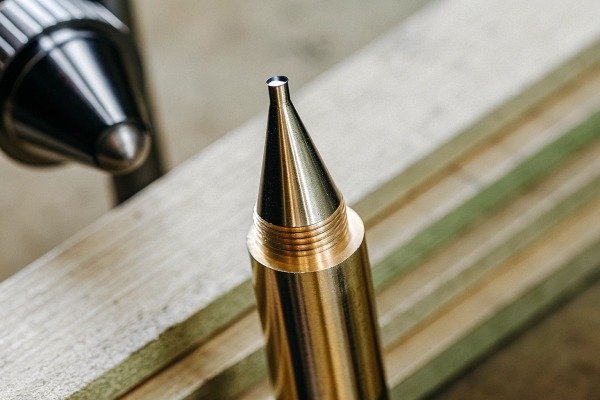
Surface finish directly influences "contact resistance." contact resistance 10 In resistance welding, we want the resistance to be at the interface of the two metal sheets, not between the electrode and the sheet. If the accessory surface is rough (high Ra value), the current concentrates on the peaks of the metal roughness. This creates extreme localized heat, leading to pitting and sparking on the surface of your part.
Micro-Topography and Resistance
For clients requiring high-aesthetic parts, such as the silver aluminum frames we manufacture, we cannot afford surface burns. We specify a polished finish on the electrode face. This ensures that when the welding force is applied, the contact is uniform across the entire face diameter. This uniformity keeps the surface cool and forces the heat generation to occur internally between the sheets, where it belongs.
Prevention of Pick-up
Surface finish is also your first line of defense against "pick-up" or alloying. When welding coated steels like Galvanneal or Zinc-coated sheets, the coating tends to melt and stick to the copper electrode. A rough electrode surface provides more mechanical anchor points for this zinc to bond to. A highly polished surface resists this accumulation for longer periods. This means your maintenance team spends less time dressing tips and more time running production.
| Surface Condition | Ra Value (Micro-inches) | Resulting Contact Resistance | Recommended Use |
|---|---|---|---|
| Rough Turned | 63 – 125 | High / Variable | Not Recommended |
| Standard Grind | 32 – 63 | Moderate | Structural Steel Welding |
| Polished | 16 – 32 | Low / Uniform | Aluminum, Cosmetic Parts |
| Mirror Finish | < 16 | Very Low | Micro-welding, Precious Metals |
Заключение
Paying attention to alloy class, taper fit, cooling geometry, and surface finish prevents costly production failures. Correct specs ensure your resistance welding process runs efficiently with minimal downtime and high-quality output.
Сноски
1. Academic research on the optimization of electrode materials for resistance spot welding. ↩︎
2. Provides a foundational overview of the resistance welding process for general readers. ↩︎
3. Official organization responsible for the RWMA standards mentioned. ↩︎
4. Official body responsible for the alloy classifications discussed in the article. ↩︎
5. Federal safety standards for the operation and maintenance of resistance welding equipment. ↩︎
6. Explains the history and dimensions of the Morse taper standard. ↩︎
7. General background on the standardized tapered mounting system. ↩︎
8. ISO 1089 defines the dimensions and tolerances for electrode taper fits. ↩︎
9. Authoritative explanation of this specific electrode deformation defect. ↩︎
10. Technical overview of electrical resistance at material interfaces. ↩︎

 English
 Español de México
 Deutsch
 Français
 Русский
 العربية