
Every week, our project team reviews supplier audit reports from factories across Asia FMEA (Анализ видов и последствий отказов) 1. One pattern keeps showing up: buyers who rush the selection process end up paying more in rework, delays, and frustration.
Choosing the right custom metal stamping manufacturer means evaluating certifications like ISO 9001, assessing equipment capabilities, verifying quality control systems, and comparing total cost of ownership—not just unit price—to secure consistent quality, on-time delivery, and long-term value.
Picking a stamping partner is not a one-step decision. It takes structured vetting across multiple dimensions. Let's break down each critical factor so you can build a reliable supply chain from day one.
What Specific Certifications Should I Look for When Vetting a Custom Metal Stamping Manufacturer?
Our quality engineers have rejected suppliers who looked great on paper but could not produce a single controlled document during the audit. Certifications matter, but understanding what they actually prove matters more.
When vetting a custom metal stamping manufacturer, prioritize ISO 9001:2015 for quality management, IATF 16949 for automotive applications, and ISO 14001 for environmental compliance. These certifications confirm that the supplier follows documented, auditable processes rather than relying on ad-hoc methods.

Why ISO 9001:2015 Is the Baseline
ISO 9001:2015 2 is the most widely recognized quality management standard. It requires a manufacturer to document processes, set measurable quality objectives, and undergo regular third-party audits. Data from industry benchmarks shows that ISO-certified stampers report approximately 99% on-time delivery rates, compared to around 85% for non-certified shops. That gap alone can save you weeks of production delays per year.
But here is the nuance. A certificate on the wall does not guarantee good parts. You need to ask how the manufacturer uses the system day to day. Do they track corrective actions? Do they run management reviews? Can they show you their internal audit schedule?
IATF 16949 for Automotive-Grade Requirements
If your stamped parts go into vehicles, IATF 16949 3 is non-negotiable. This standard builds on ISO 9001 and adds automotive-specific requirements like PPAP (Процесс утверждения производственной оснастки) 4, FMEA (Failure Mode and Effects Analysis), and control plans. When we prepare PPAP packages for our U.S. clients, we follow this framework even for non-automotive projects because it enforces discipline.
Other Certifications Worth Checking
| Сертификация | Что охватывает | Лучше всего подходит для |
|---|---|---|
| ISO 9001:2015 | Системы менеджмента качества | Все отрасли |
| IATF 16949 | Автомобильная система менеджмента качества | Автомобильные запчасти |
| ISO 14001 5 | Экологический менеджмент | Покупатели, ориентированные на устойчивое развитие |
| AS9100 | Аэрокосмическая система менеджмента качества | Аэрокосмические компоненты |
| NADCAP | Special process accreditation | Surface treatment, heat treatment |
| RoHS / REACH | Hazardous substance restrictions | Electronics, EU exports |
Ловушка сертификации
Some buyers over-rely on certifications. A smaller shop with 20 years of niche stamping expertise might outperform a large ISO-certified factory on your specific part. Certifications confirm process discipline, but they do not replace technical skill. The best approach is to use certifications as a filter for your shortlist, then dig deeper into capability and track record.
We always tell our clients: check the certificate, then check the shop floor. If the two do not match, walk away.
How Can I Determine if a Supplier Has the Right Equipment to Handle My Complex Stamping Requirements?
When we onboard a new stamping factory in Vietnam or elsewhere in Asia, the first thing our engineers do is walk the production floor and count presses. Tonnage range, press speed, and feed systems tell us more than any sales brochure.
To determine if a supplier can handle complex stamping, request a detailed equipment list including press tonnage range, bed size, stroke speed, and feed type. Then match these specs against your part geometry, material thickness, and tolerance requirements to confirm technical fit.
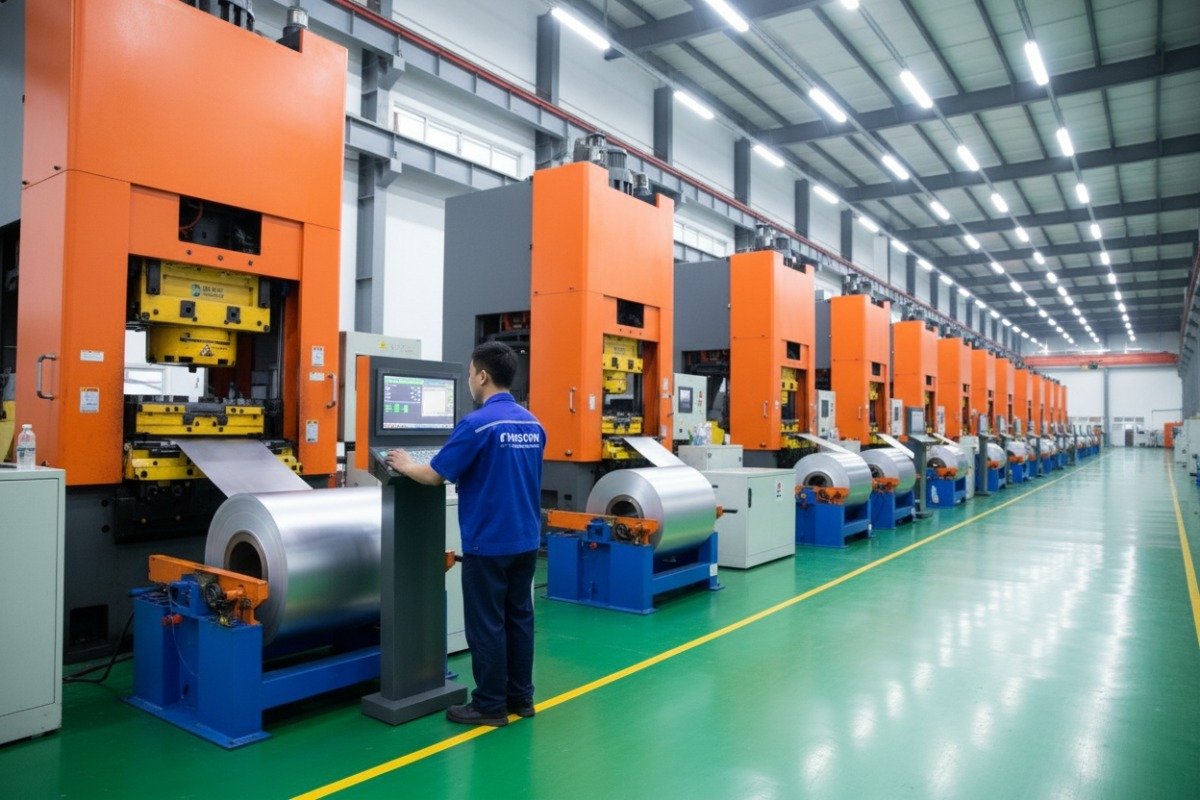
Key Equipment Specifications to Evaluate
Not all stamping presses are equal. A 200-ton mechanical press handles different work than a 600-ton servo press. Here is what to look at:
| Equipment Factor | Что спросить | Почему это важно |
|---|---|---|
| Press tonnage range | Min and max tonnage available | Must exceed your part's forming force |
| Bed size | Length × width of the press bed | Must accommodate your die dimensions |
| Stroke rate | Strokes per minute (SPM) | Affects production speed and cost |
| Press type | Mechanical, hydraulic, or servo | Servo presses offer variable speed control for complex draws |
| Feed system | Roll feed, gripper feed, or transfer | Determines material handling precision |
| In-house tooling | Do they design and build dies? | In-house tooling cuts lead time by 20–30% |
In-House Tooling Is a Major Advantage
Manufacturers who design and build their own прогрессивные штампы 6 have far more control over quality and timelines. When tooling is outsourced, communication gaps between the die maker and the stamper often cause fit issues. We have seen projects delayed by four to six weeks because of this disconnect.
Ask the supplier: Do you have a tool room? How many toolmakers are on staff? Can you show me a die you built for a similar part? These questions separate real capability from marketing claims.
Matching Equipment to Your Part
Start with your part drawing. Identify the tightest tolerance, the deepest draw, and the thinnest material section. Then ask the supplier how they would run it. A capable manufacturer will walk you through the process—blanking, forming, piercing, trimming—and explain which press and die configuration they would use.
If they cannot answer clearly, that is a red flag.
Prototyping and Simulation
Advanced suppliers use solid modeling software 7 and stamping simulation tools to predict material flow, springback, and potential cracking before cutting steel for the die. This reduces trial-and-error during tryout. It also gives you confidence that the first samples will be close to spec.
Our engineering team runs simulations on critical parts before we even issue a tooling order. It costs a little upfront but saves significant rework later.
What Steps Should I Take to Ensure My Manufacturer Can Maintain Consistent Quality Across High-Volume Runs?
Our inspection team in Vietnam once caught a dimensional drift on a 500,000-piece run at piece number 80,000. The die had worn just enough to push a critical dimension out of tolerance. Without real-time monitoring, the entire remaining run would have been scrap.
To ensure consistent quality in high-volume metal stamping, require your manufacturer to implement in-die sensors, real-time statistical process control (SPC), scheduled tooling maintenance, and documented inspection plans with defined sampling frequencies at every production phase.
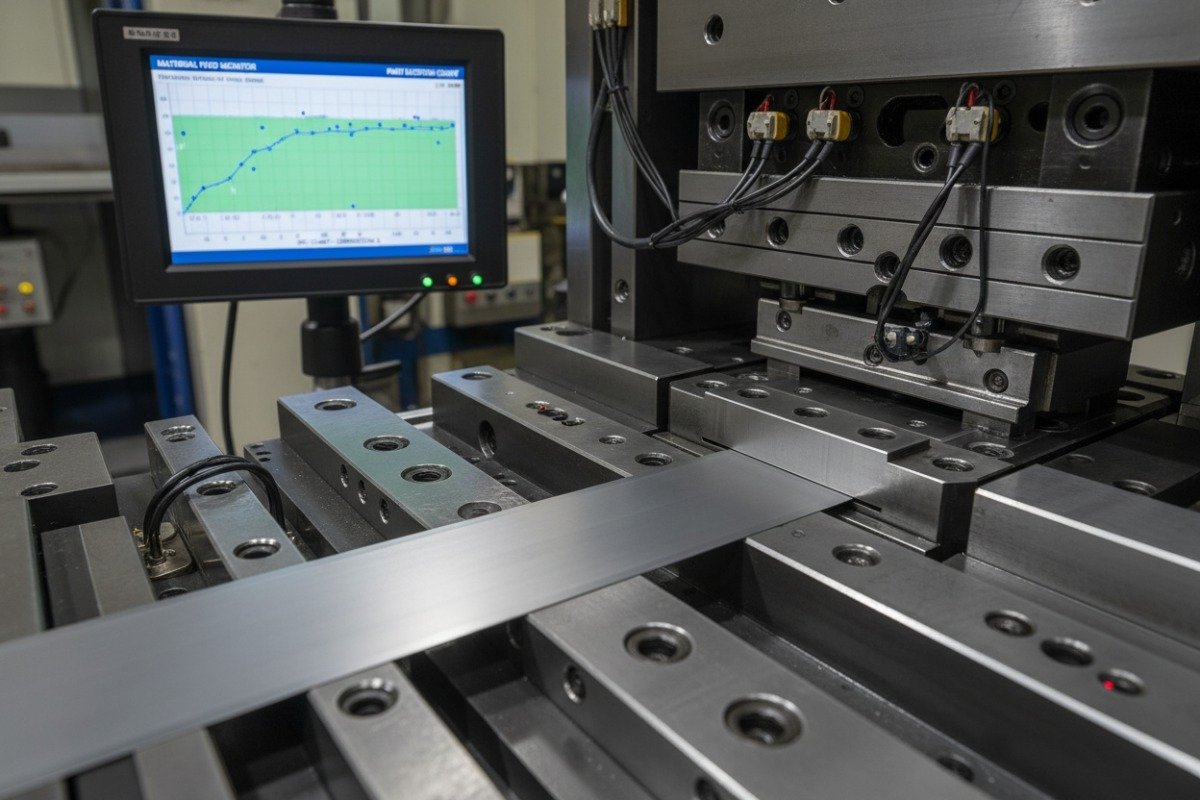
The Three Pillars of High-Volume Quality
Consistent quality across millions of parts rests on three pillars: process control, tooling maintenance, and inspection discipline. Remove any one, and defect rates climb.
Контроль процесса
Statistical process control tracks key dimensions in real time. The operator sees a control chart on a screen next to the press. If a measurement trends toward the control limit, they stop and adjust before producing bad parts. This is not optional for high-volume work. It is the minimum standard.
In-die sensors add another layer. They detect misfeed, slug retention, short feed, and strip buckle inside the die during every stroke. When something goes wrong, the press stops automatically. This prevents cascading defects.
Tooling Maintenance
Progressive dies wear over time. Punches dull. Forming inserts crack. A good manufacturer tracks die hits and schedules preventive maintenance at defined intervals—typically every 50,000 to 100,000 hits depending on material hardness and part complexity.
Ask your supplier: What is your die maintenance schedule? Do you track die hits electronically? Can you show me maintenance logs for a current production die?
Inspection Discipline
Even with process controls, you need a layered inspection plan. Here is a typical structure:
| Этап инспекции | Метод | Частота |
|---|---|---|
| First article inspection | CMM or optical measurement | Every setup / die change |
| In-process SPC | Go/no-go gauges + control charts | Every 500–2,000 pieces |
| In-die monitoring | Sensors (load, feed, misfeed) | Every stroke (100%) |
| Окончательная инспекция | Visual + dimensional sampling | AQL-based sampling per lot |
| Capacity study (Cpk) | Statistical analysis | At PPAP and annually |
Mistake-Proofing (Poka-Yoke)
The best manufacturers build mistake-proofing into the die and the downstream process. Examples include sensors that detect a missing hole, optical systems that verify orientation, and fixtures that reject parts with burrs above a threshold. These are not expensive additions. They are smart engineering that prevents defective parts from reaching your dock.
What Cpk Tells You
Cpk is a process capability index. A Cpk of 1.33 or higher means the process is centered and capable of holding tolerance with margin. If your supplier cannot provide Cpk data for critical dimensions, they are not monitoring their process closely enough for high-volume work.
We include Cpk requirements in every PPAP package we manage. It gives our clients a clear, data-driven picture of process health.
How Do I Compare Quotes from Different Stamping Companies to Find the Best Long-Term Value for My Business?
Our sales team fields this question every week. A client receives three quotes, picks the cheapest, and six months later calls us because the supplier missed delivery three times and shipped parts with flash. The lowest price almost never equals the lowest total cost.
To compare stamping quotes for long-term value, break down each quote into tooling cost, piece price, material markup, secondary operations, inspection fees, packaging, and logistics. Then factor in the supplier's quality track record, on-time delivery rate, and payment terms to calculate true total cost of ownership.

The Hidden Costs Behind a Low Quote
A quote that looks 15% cheaper might exclude tooling maintenance, finishing, or packaging. Or the supplier might use thinner material than specified. Or they quote a fast cycle time they cannot actually sustain, leading to delays.
Industry audits show that choosing the cheapest bid often leads to 10–20% higher defect rates and significant rework costs over the life of the program. That "savings" evaporates quickly.
How to Structure a Fair Comparison
Build a comparison table that normalizes every cost element. Here is a template we use internally:
| Статья расходов | Supplier A | Supplier B | Supplier C |
|---|---|---|---|
| Tooling (one-time) | $18,000 | $22,000 | $15,000 |
| Piece price (per unit) | $0.42 | $0.38 | $0.45 |
| Спецификация материала | SPCC-SD, 1.2mm | SPCC-SD, 1.2mm | SPCC-SD, 1.0mm ❌ |
| Secondary ops included? | Deburr + plate | Deburr + plate | Deburr only |
| Inspection level | SPC + CMM | SPC + CMM | Visual only |
| Tooling maintenance | Включено | $500/quarter | Not mentioned |
| Упаковка | Custom trays | Custom trays | Bulk bag |
| Lead time (first order) | 8 недель | 10 недель | 6 недель |
| On-time delivery record | 98% | 95% | Unknown |
| Условия оплаты | Net 60 | Чистый 30 | T/T in advance |
In this example, Supplier C looks cheapest at first glance. But they quoted thinner material, excluded plating, offer no SPC, and require full payment upfront. The real cost over a 12-month program would likely be the highest of the three.
Мышление о совокупной стоимости владения
Total cost of ownership (TCO) 9 includes everything from quoting to final delivery at your warehouse. It covers:
- Амортизация оснастки over expected die life
- Цена за единицу × annual volume
- Scrap and rework based on the supplier's historical defect rate
- Логистика including freight, duties, and customs brokerage
- Quality failures including sorting, returns, and line stoppages at your customer's plant
- Cash flow impact from payment terms (Net 60 vs. prepayment)
When we help clients source stamped parts from Asia, we build a TCO model for each qualified supplier. This removes emotion from the decision and lets the numbers speak.
Ценность условий оплаты
Payment terms are often overlooked in quote comparisons. A supplier offering Net 60 or Net 90 terms frees up your working capital. You receive the parts, sell them, and pay the supplier from revenue. A supplier requiring 50% deposit and 50% before shipment ties up your cash for months.
We offer open account terms to qualified clients specifically because we understand this pressure. It is a competitive advantage that does not show up in the piece price but has a real impact on your business.
Site Visits Validate Claims
Surveys show that 70% of OEMs switch suppliers due to quality issues, and 80% of buyers who conduct site visits confirm that the supplier's capabilities match their claims. A visit lets you see the presses running, meet the quality team, and observe housekeeping. Clean floors and organized tool rooms are strong indicators of a disciplined operation.
If you cannot visit in person, ask for a video walkthrough or hire a third-party audit firm. We conduct supplier audits as part of our service, so our clients get eyes on the factory without booking a flight.
Заключение
Choosing the right custom metal stamping manufacturer comes down to structured vetting—certifications, equipment, quality systems, and true total cost. Do the homework upfront, and your supply chain will reward you for years.
Сноски
1. Provides details on the failure mode and effects analysis methodology. ↩︎
2. Official information on the quality management standard. ↩︎
3. Official information on the automotive quality management standard. ↩︎
4. Replaced with a comprehensive guide on PPAP from Quality-One, a recognized expert in quality management. ↩︎
5. Replaced with a page from the U.S. Environmental Protection Agency (.gov), an authoritative source for environmental management systems. ↩︎
6. Replaced with a detailed guide on progressive die stamping from Kenmode, Inc., an industry leader. ↩︎
7. Provides information on the use of solid modeling in engineering design. ↩︎
8. Explains the principles and application of statistical process control. ↩︎
9. Replaced with the Wikipedia page on Total Cost of Ownership, providing a broad and accessible overview. ↩︎

 English
 Español de México
 Deutsch
 Français
 Русский
 العربية