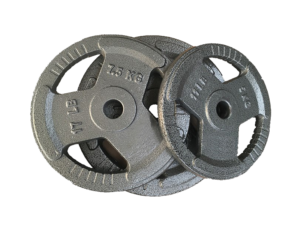
While aluminum is about speed and lightness, Iron Casting is about raw power, endurance, and stability. It remains the backbone of the industrial world, found in everything from massive engine blocks and manhole covers to the heavy bases of precision milling machines.
Iron isn’t just one material; it’s a sophisticated carbon-silicon-iron matrix. The way that carbon is shaped inside the metal—whether it looks like tiny flakes or small round spheres—completely changes how the metal behaves when under pressure.
The primary choice in the foundry is between Gray Iron (traditional) and Ductile Iron (the modern evolution). Their performance depends entirely on their microscopic structure.
| Propriété | Gray Iron (GG25 / HT250) | Ductile Iron (GGG40 / QT400) |
| Carbon Shape | Flakes (like tiny crackers) | Nodules (like small spheres) |
| Résistance à la traction | 200 – 300 MPa | 400 – 700+ MPa |
| Ductility (Stretch) | Low (Brittle) | High (Flexible) |
| Vibration Damping | Excellent | Moderate |
| Best Used For | Machine bases, brake rotors | Gears, crankshafts, pipes |
Gray iron is famous for its vibration damping. Because the carbon flakes act like microscopic shock absorbers, it is the only choice for the “beds” of precision lathes and CNC machines. If you want a machine to stay still and quiet while cutting steel, you build it out of Gray Iron. It also has excellent “wear resistance” because the graphite flakes provide a natural self-lubricating effect.
Ductile iron is often called “The Steel-Alternative.” By adding a tiny amount of magnesium to the molten iron, the carbon flakes turn into spheres (nodules). This simple change stops cracks from spreading. While Gray Iron will snap if bent, Ductile Iron can actually stretch and deform without breaking. This makes it perfect for parts that face sudden impacts or heavy loads, like automotive steering knuckles and high-pressure water valves.
Most iron parts are created through Sand Casting. We create a “pattern” (a replica of your part), pack it in specialized green sand or resin sand, and pour the molten iron at temperatures exceeding 1150°C.
Low Tooling Cost: Unlike die casting, sand casting doesn’t require expensive steel molds, making it ideal for large parts or medium-volume production.
Complex Geometry: Using “cores,” we can create hollow internal chambers—essential for engine cooling jackets or hydraulic housings.
Is your part going to be under constant vibration or subject to sudden heavy impacts? I can help you decide if the stability of Gray Iron or the “unbreakable” nature of Ductile Iron is the right fit for your engineering specs.
Contactez-nous pour évaluer la fabricabilité, les tolérances et le coût pour votre application spécifique.
 English English
 Español de México
 Deutsch
 Français
 Русский
 العربية English English Español de México Deutsch Français Русский العربية
Nous vous contacterons dans les 24 heures, veuillez faire attention à l'e-mail avec le suffixe “@dewintech.com”. Votre vie privée est en sécurité, nous n'utiliserons pas votre e-mail à d'autres fins. Télécharger la convention de non-divulgation